

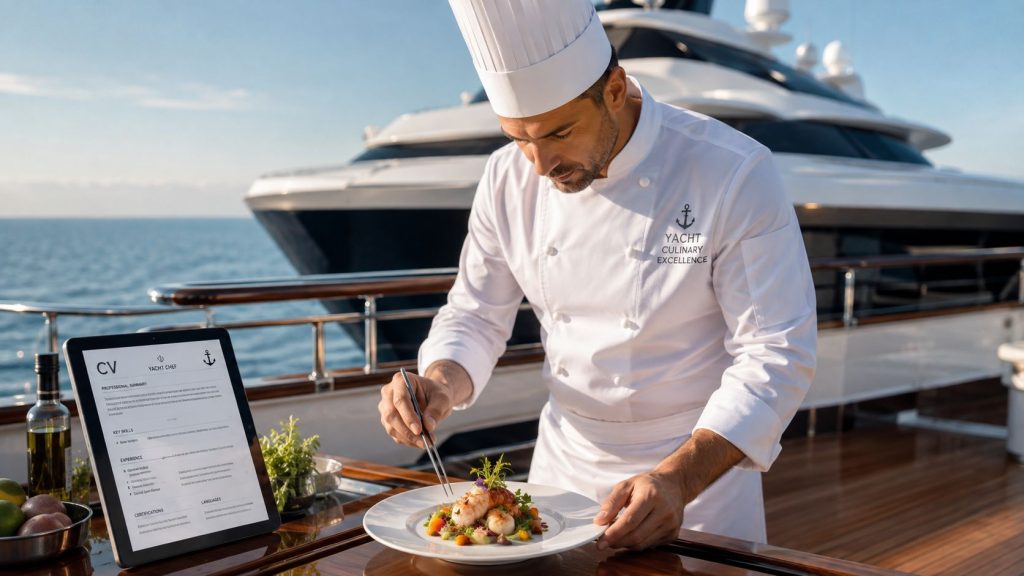
You've got the interview call, the yacht looks immaculate in the photos, and the captain still wants to know whether you can handle provisioning in a foreign port, crew meals after a rough crossing, and a guest who changes the menu three times before lunch. That's the world of yacht chef jobs, and it's not just about cooking well, it's about staying calm while the brief keeps changing.
The chefs who thrive at sea are usually the ones who understand the trade-off early. The job can open doors to elite placements, but it also compresses several roles into one, and the pace is very different from a restaurant kitchen.
The Reality of Yacht Chef Work Beyond the Galley
A London chef can step onto a yacht and assume the hardest part is the size of the galley. Within days, that same chef may be sourcing produce in a port with limited options, rewriting a menu because guests arrived late, and finding space for crew and owner meals without wasting storage. That shock is common, and it explains why strong restaurant credentials do not always carry cleanly into yacht chef jobs.
A more accurate mental model is a pyramid. Cooking sits at the top, but the base is provisioning, budget control, storage discipline, and constant adjustment to whatever the day throws at you.
What the work actually looks like
The job begins before guests arrive. Provisioning, menu planning, storage, and timing all sit under pressure, because once the yacht leaves port, the margin for error shrinks fast. On many boats, the chef is also responsible for keeping the galley spotless, using leftovers sensibly, and adjusting meals around allergies or preferences without making service feel complicated.
Practical rule: if a candidate talks only about plating and flavour, they usually have not understood yacht life yet. Captains and owners want a chef who can solve problems quietly and keep service moving when the brief changes.
The role also spills into tasks that restaurant chefs often do not touch. UK-facing listings note that chefs may be asked to help with deck or stew duties, which changes the rhythm of the day and the sense of personal space. Those duties matter because they compress the working day further, and the chef still has to keep standards high while shifting between cooking, cleaning, coordination, and practical support elsewhere on board. The same workload compression shows up in crew placement decisions, including how recruiters think about wider team fit in resources such as the Superstar Nannies luxury yacht crew guide.
That is why the trade-off is workload, stress, and compensation, not just menu creativity. A yacht chef may earn access to exceptional travel and guests, but the job can also mean longer days, less privacy, and less control over the pace of work. If you are comparing offers, look closely at whether the package accounts for provisioning responsibility, crew meals, and any extra hands-on duties beyond the stove.
A restaurant kitchen can be intense, but it usually separates jobs more clearly. On a yacht, one person often carries the planning, buying, cooking, cleaning, and problem-solving load at the same time.
For candidates who also need to understand related onboard standards, verified pool tech credentials with HomeProBadge can be useful background reading on how crew compliance expectations vary across specialist roles: verified pool tech credentials with HomeProBadge.
Essential Certifications and Compliance Requirements
A chef can be excellent on land and still miss the shortlist for yacht chef jobs if the paperwork is incomplete. Captains and owners want proof that you can work safely at sea, manage hygiene under pressure, and handle the practical side of shipboard life without creating extra work for the rest of the crew. In most cases, the first filters are STCW Basic Safety Training, an ENG1 seafarer medical, and Food Hygiene Level 2 Dockwalk's chef guide.
The order that makes sense
Start with the certificates that remove the biggest barriers. If you already have strong restaurant experience, the next step is usually yacht-specific compliance, then sea time where it applies. For larger commercially registered yachts, the Ship's Cook Certificate can also come into play, and one recruiter benchmark used in the industry is at least 1 month of sea time plus 1 year of professional chef experience before that certificate becomes realistic Dockwalk.
Another crew-industry source says the Ship's Cook Certificate may be required on commercial yachts with 10 or more crew, and it links that certificate to marine cookery assessment and prior professional experience Crew Network. That matters because the paperwork is a signal. It tells captains you understand food safety, safety at sea, and the formal expectations that come with working aboard a vessel.
For a useful comparison point, HomeProBadge explains verified pool tech credentials. Different trade, same principle, credentials matter because the work environment carries risk and employers need evidence, not assumptions.
What to prioritise first
- If you're restaurant-based already: add STCW, ENG1, and Food Hygiene Level 2 first, because those are the filters most likely to stop your application.
- If you're new to sea work: secure shore-side chef experience first, then build yacht-specific compliance around it, because that tends to be faster than waiting for a yacht role to train you in.
- If you're targeting larger yachts: look into the Ship's Cook pathway early, because that is where formal maritime cooking credentials start to matter more.
The recruitment mistake I see most often is people paying for every course before checking whether their current background fits the level of yacht they are aiming at. Spend the money in the right order, or you can end up certified but still not shortlist-ready.
For a broader view of how culinary credentials are presented to luxury-household employers, the what qualifications do chefs need guide is worth a look.
Understanding the Full Scope of Yacht Chef Responsibilities
A guest says they want a light lunch, then changes the plan after the provisioning run, the freezer is half full of the wrong items, and the crew still need dinner before night watch. That is the kind of pressure point that defines yacht chef jobs. Quality still matters, but the true test is whether the chef can keep standards up while space, time, storage, and guest behaviour keep shifting.
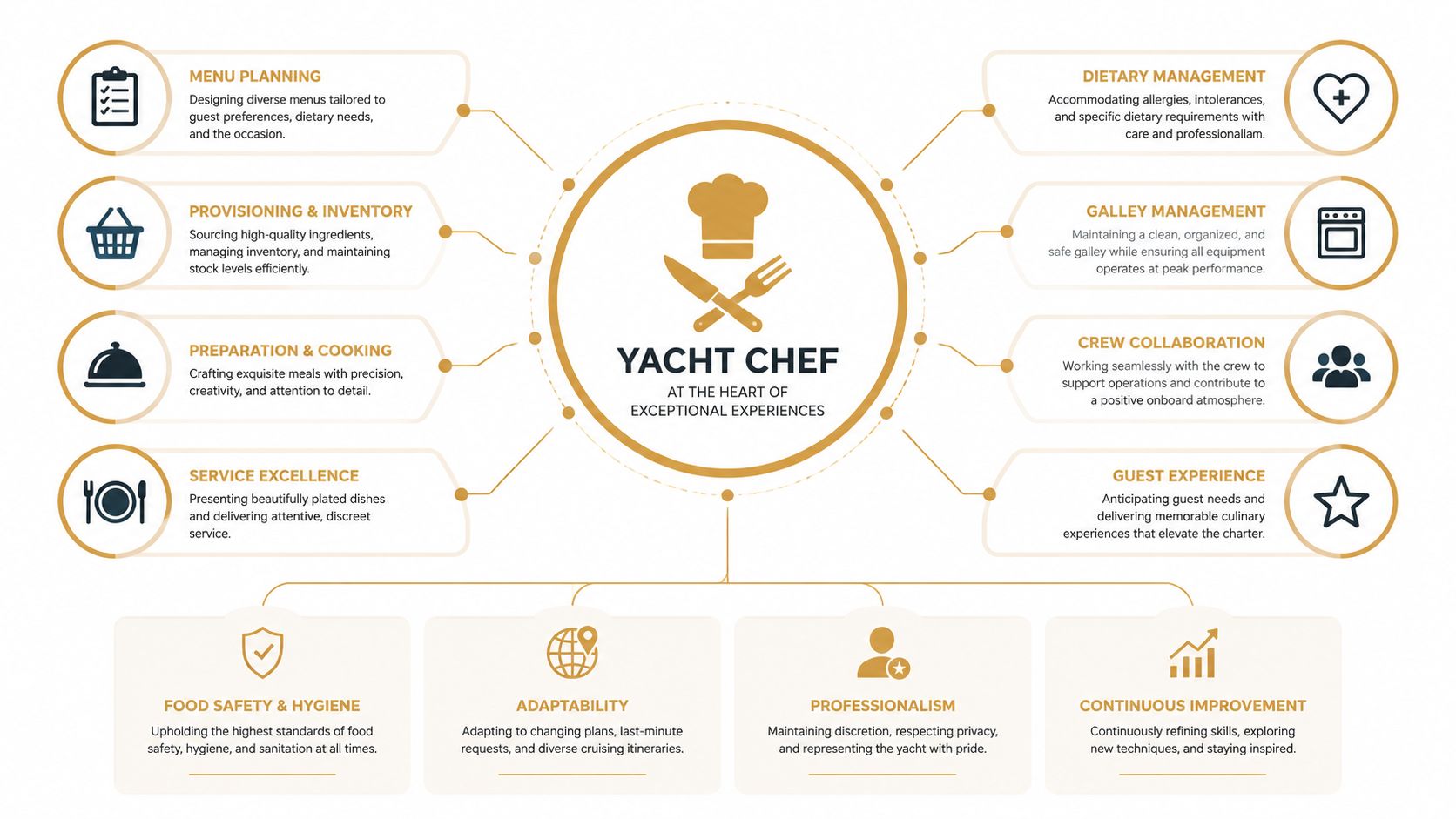
Role descriptions from Yachtcrew Agency show how much sits on one person's shoulders, provisioning, purchasing, menu planning, inventory control, galley cleaning, budgeting, and dietary adaptation all sit inside the role. On board, that list usually expands in practice, because the chef is also reacting to itinerary changes, service timing, and the limits of what can realistically be carried and stored.
Solo chef versus supervised galley
On smaller yachts, the chef often works alone and carries the full chain from shopping list to plate. On larger yachts, the job can become supervisory, with assistants in the galley and direction from an Executive Chef if one is onboard Yachtcrew Agency. The work changes fast. You may spend one day cooking, the next day coordinating prep, delegating simple tasks, and making sure service still runs on time.
That shift is where many strong restaurant chefs get caught out. A yacht galley compresses the work day, so provisioning, prep, service, crew meals, and cleaning all compete for the same narrow window. If an order arrives short, a guest changes plans, or weather affects the schedule, the chef has to reset quickly and keep the team fed without letting standards slip.
What captains and owners actually notice
- Dietary accuracy: can you handle allergies, intolerances, and multi-cuisine requests without drama.
- Inventory discipline: do you know what's left, what's usable, and what needs replacing before the next port.
- Decision speed: can you rewrite the plan when guests head ashore, stay onboard, or arrive back late.
- Crew food judgment: can you feed a working team well without using the guest menu as a distraction.
- Practical support: can you stay useful when the deck team needs an extra set of hands and the galley still has to keep moving.
Recruiters and captains usually care less about a dramatic menu description than about control. They want to see that you can budget, buy smart, avoid waste, and keep food moving in a tight space without creating stress for the rest of the crew. They also want evidence that you understand the split between guest service and crew welfare, because both matter and both can fail if the chef treats the job like a standard restaurant post.
That is also why a chef's background is often checked against the reality of the yacht rather than a job title alone. Superstar Nannies' private chef hire guidance is aimed at a different market, but the hiring logic overlaps. Employers want calm, adaptable cooking, clear communication, and a track record of handling dietary requests without turning service into a production problem.
A review of Luxyachts crew-position data shows how often yacht chefs arrive with formal culinary training and outside fine-dining experience, then settle into roles that can still change quickly from one contract to the next. That combination matters because the yacht kitchen is a moving target. The chef is expected to keep quality high while managing the hidden workload of provisioning, budgeting, crew meals, and occasional deck assistance, and that pressure affects hours, stress, and what the job should pay.
The chefs who last are usually the ones who treat the role as operations first and plating second. The kitchen is only part of the assignment.
Building a Yacht-Specific CV and Portfolio That Gets Interviews
A restaurant CV often reads like a list of stations, covers, and awards. For yacht chef jobs, that shape misses what the job demands. Recruiters want proof that you can work in a moving, space-limited, guest-facing environment, so the first page needs to foreground sea time, provisioning, dietary work, and safety credentials before it goes into the culinary detail.
What captains and owners look for
Open with a short profile that tells the reader what kind of yacht work you can handle, not only where you have cooked. If you have handled menu variation, special diets, tight prep space, or high-end private service, say so plainly. If your time is mostly shore-side, frame it around transferables, volume control, premium ingredients, and calm service under pressure.
That same thinking should shape the portfolio. Do not send ten random restaurant photos. Send a compact set of menu examples, plated dishes, and one or two pages that show how you plan around constraints, allergies, and guest variety. A trial-cook menu should look polished, but it also needs to show practical thought, because captains notice whether your ideas will hold up on board.
Owners and captains also pay attention to how a CV handles the hidden workload. If the document only talks about cooking, it can make the candidate sound unaware of provisioning, budget control, crew meals, and the occasional deck request that cuts across the day. A yacht kitchen runs on timing and coordination as much as technique, so the CV should show that you understand the pressure that comes with the role.
The CV gets you past the first glance. The portfolio gets you past the second.
For a career-change layout that translates well into a new sector, career changer resume guidance is a sensible reference point, especially if you are moving from land-based hospitality into yacht work.
What usually gets rejected
- Overdesigned pages: the layout overwhelms the information.
- Kitchen jargon with no proof: buzzwords without examples of delivery.
- Missing certifications: if STCW or ENG1 is not visible, the application slows down.
- Irrelevant volume: too many restaurant details, not enough yacht-relevant evidence.
If you are building a private-service profile as well, the private chef hire page shows the kind of skill set households expect when food service sits close to daily lifestyle management. That overlap matters, because many yacht chefs later move into private homes, estates, or hybrid hospitality roles.
A strong yacht CV does not try to impress with volume. It makes the recruiter's job easier in the first 30 seconds.
Where to Find Yacht Chef Positions and How to Network Effectively
A chef who can cook well still needs the right route in. In yacht chef jobs, the strongest openings usually come through specialist crew agencies, yacht job boards, direct contact, or recommendation, but each channel serves a different stage of the search. A first-time applicant needs visibility and a clear paper trail. An experienced chef needs access, speed, and a way to stay discreet.
A lot of candidates treat every route the same. That wastes time. A captain hiring for a busy charter boat wants proof that you can handle provisioning, crew meals, and the pressure that comes with changes to the day's plan. A family office or owner's team may care more about consistency, discretion, and whether you fit a quieter onboard routine.
Compare the channels honestly
Specialist agencies are usually the cleanest route because they already know the certificate stack, the yacht size, and the type of chef a captain wants. They also know which candidates can cope with the full workload, not just the cooking side. That matters in yacht work, where the role often stretches into ordering, budget control, dietary planning, and the odd deck request that interrupts the rhythm of service.
Job boards are useful for seeing what is live, but they reward speed more than fit. Direct applications can work when you already know the boat, the management company, or the owner's household style. They are weaker if your profile is still untested at sea, because the person reading it has less reason to take a chance.
Networking often beats cold applications because crewing is built on trust. Captains talk to each other, stewards pass names around, and good service tends to create repeat placements. Leave a boat in good shape and you are not just finishing a contract, you are creating the next introduction.
Reputable agencies do not just forward CVs. They filter the people who can handle the reality of the boat.
What makes a search worth your time
A proper agency or recruiter asks about certificates, sea time, yacht size, and dietary experience. That screening is a good sign. It shows they are matching you to the right type of operation instead of pushing every chef into every vacancy.
Repeat-client patterns matter too. If the same captains keep coming back, that usually says more than polished branding. Transparent expectations are another marker, because you need to know the hours, rotation, and onboard living conditions before you commit. If a recruiter will not talk plainly about those trade-offs, they are not helping you.
The market has shown steady demand for capable chefs. YPI Crew reported that chef placements were up 24% versus 2018 in its 2019 yacht crew trends report, and that 2019 was its second-busiest year in 17 years for chefs YPI Crew. That does not mean every opening is easy to secure, only that the role has real movement and not just occasional turnover.
If you are also looking at shore-side private service, the private chef job UK page is a useful reference for the kind of profile households tend to expect. The crossover is real, and many chefs move between yachts, estates, and private homes at different points in their career.
A sensible search rhythm is simple. Register with one or two credible agencies, keep your documents current, and build relationships instead of spraying applications everywhere. The chefs who get placed fastest are usually the ones who make themselves easy to trust.
Salary Expectations, Contract Lengths, and Career Progression
A yacht chef contract is about more than menu quality. Owners, captains, and chief stews look at whether you can handle provisioning, budget control, crew meals, and the extra tasks that come with life onboard. That wider load affects hours, pressure, and the way compensation should be judged, so the salary discussion needs to start there.
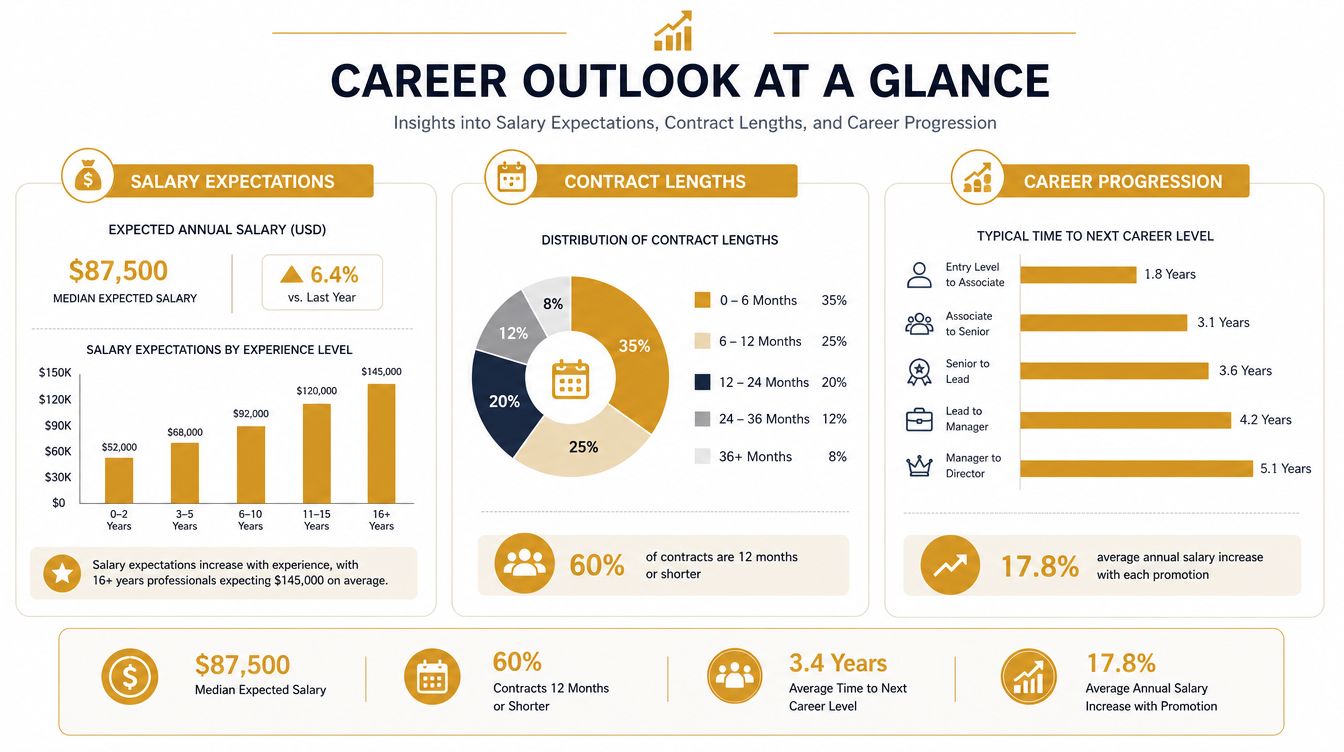
The money in yacht chef jobs is one part of the equation, but it is usually the first thing candidates want to pin down. Public-facing crew data shows how much the job varies by yacht type and level of responsibility, and it also shows why reputation and reliability matter as much as cooking ability. A Luxyachts dataset lists 173 currently available chef roles at the time of snapshot, which gives a useful sense of active market movement.
What the market is telling you
That same dataset shows an average longevity of 330 days in the yacht chef position. In practice, that points to shorter tenures than many land-based hospitality jobs, and it matches what crew recruiters see across seasons. Yachts move, guests change, owners refine the setup, and chefs often change more often than they expect when they first step onboard.
The 2024 head-chef survey data adds another layer. With 46% of head chefs on their current yacht for less than a year, plus 90% holding professional culinary training and 63% having Michelin-star experience, progression is clearly skill-led. The people who move up usually do it through consistency, discretion, and repeatable standards, not by chasing the flashiest posting.
How progression usually works
The first step is moving from strong shore-side cooking into a dependable yacht chef role. After that, the path often leads to larger vessels, more complex provisioning, and eventually supervisory responsibility if the yacht size supports it. Many chefs later use the yachting line on their CV to move into private households, estate kitchens, or private chef work, because onboard service shows you can cook under constraint and still deliver at a high level.
A useful comparison is the private chef job UK page, especially if you are thinking about where yacht experience can take you after a season or two. The point is to position yourself for the next step before you are ready to leave the current one.
If you negotiate well, the contract should reflect the full load you are carrying. Hours, leave, storage responsibility, crew meals, and any auxiliary duties belong in that conversation. The chefs who do best over time are the ones who read the role clearly and choose the right boat, not just the first available berth.
If you are weighing a move into yacht chef jobs or need help finding private-service culinary placements that match your experience, visit Superstar Nannies and speak with a team that understands elite household and yacht-adjacent hiring. They can help you assess whether your background fits the role, and point you towards the kind of placement where your skills will be used well.