


Hiring a private chef isn’t just about outsourcing meals anymore. For discerning households, it’s about curating a bespoke culinary experience right in the heart of your home—a strategic move that, from my experience, champions hyper-personalised nutrition, unparalleled convenience, and absolute discretion.
The Real Value of a Private Chef

While convenience is an obvious perk, the real driver for bringing a chef into your home runs much deeper. I’ve seen firsthand that for many UHNW families, it’s a fundamental shift in their approach to health, family time, and entertaining. It’s about taking back the countless hours lost to menu planning, grocery shopping, cooking, and clearing up.
This isn’t just a niche trend; the market reflects this growing demand. The UK’s private chef services market has surged, hitting USD 607.0 million in 2024. This growth is a direct result of high-net-worth individuals seeking culinary support that fits their unique lifestyles. The market is projected to climb even higher, forecast to reach an estimated USD 873.6 million by 2030. You can explore the data behind this culinary shift in a report from Grand View Research.
More Than a Cook: A Lifestyle Partner
Think of a private chef as a crucial partner for your household. A true professional learns the rhythm of your home, from knowing your children’s favourite after-school snacks to effortlessly catering for the dietary needs of a last-minute dinner guest. In my years of placing candidates, I’ve seen them become a seamless, intuitive part of a family’s daily life.
The value they bring extends far beyond the kitchen. They enhance your lifestyle in tangible ways:
- Hyper-Personalised Nutrition: Menus are crafted to align perfectly with your family’s health goals, allergies, and specific dietary needs, whether that’s low-FODMAP, vegan, or performance-based nutrition for athletic training.
- Seamless Entertaining: Hosting becomes a pleasure, not a chore. From an intimate family birthday to a large-scale reception, your chef manages every culinary detail, freeing you to focus entirely on your guests.
- Unwavering Discretion: In a VIP household, privacy is non-negotiable. A professional chef operates with the utmost discretion, safeguarding your family’s privacy at all times.
The right chef doesn’t just cook for you; they elevate your quality of life. They introduce new flavours, manage kitchen inventory with precision, and create a calm, organised culinary environment that simplifies your world.
Ultimately, hiring a private chef is an investment in your well-being and, most importantly, your time. It’s about creating an environment where every meal is a source of nourishment and enjoyment, tailored precisely to you. Grasping this, I believe, is the first real step towards finding the perfect culinary expert for your home.
Defining Your Household’s Culinary Needs
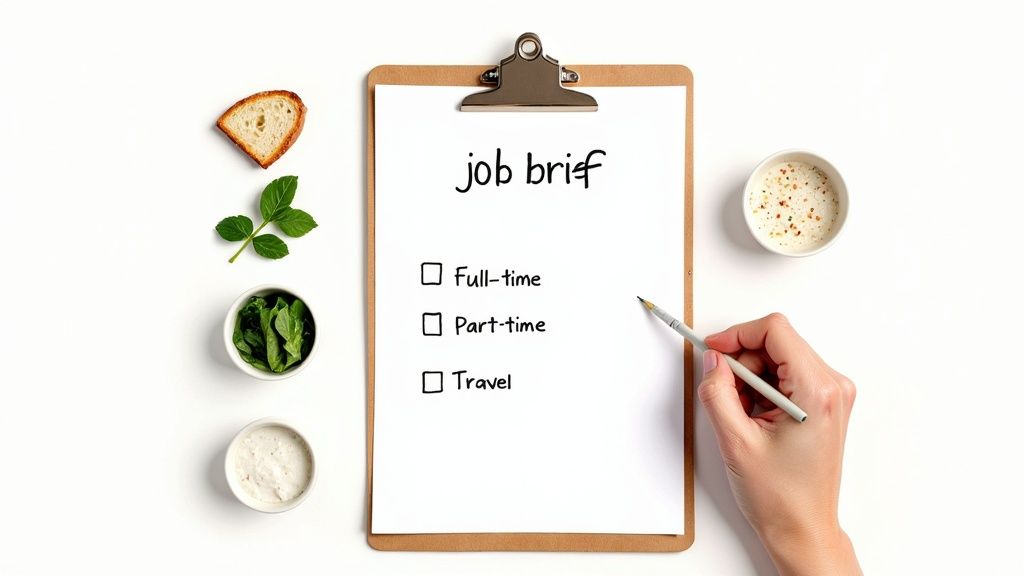
Before you even think about placing an advert or calling an agency, the single most important step is to look inwards. A successful hire, in my experience, is built on a foundation of absolute clarity about your own lifestyle, routines, and expectations. This isn’t just about what’s on the plate; it’s about finding a professional who can integrate seamlessly into the rhythm and culture of your home.
I always advise clients to start with the big picture: what does the structure of the role actually look like? Are you looking for a full-time chef to manage every meal, day in and day out? Or would a part-time professional for specific dinners and events be a better fit? The answer depends entirely on your family’s unique cadence.
A bustling family with school-aged children and a packed social calendar has entirely different needs from a professional couple who travels constantly for business. The former might prioritise a chef skilled in nutritious family meals and large-scale entertaining, while the latter needs a flexible, adaptable professional—perhaps even a dedicated travel chef—who can excel in any kitchen, anywhere in the world.
Full-Time, Part-Time, or Travel Chef
Understanding the real-world differences between these roles is crucial. Each demands a distinct skill set, level of commitment, and personality.
- The Full-Time Chef: This is often a live-in or daily live-out position, forming the culinary backbone of the household. They manage everything from menu planning and grocery shopping to daily meal preparation and total kitchen management. This is the go-to for busy families who need consistent, high-quality meals, every single day.
- The Part-Time Chef: A part-time chef offers targeted expertise. They might work a few days a week or be brought in for specific occasions like weekend gatherings or formal dinner parties. It’s a flexible solution for households that don’t require daily support but want professional flair when it matters most.
- The Travel Chef: A true specialist, this role is for principals who live a global lifestyle. A great travel chef is supremely adaptable, able to produce exceptional meals in any environment, from a holiday villa in St. Barts to a private yacht in the Mediterranean, often with whatever equipment and ingredients are at hand.
Of course, a realistic budget is central to defining your needs. For a wider perspective on financial planning, this guide to budgeting for an event offers some helpful principles, even though it’s not specific to hiring staff.
Translating Lifestyle into a Job Brief
Once you’ve settled on the role’s structure, it’s time to drill down into the details. This is where you translate your lifestyle into a compelling job brief that will attract the right calibre of professional. You need to think beyond the food and paint a clear picture of the entire culinary operation of your home.
Your brief has to be a candid, detailed reflection of your reality.
Cuisine and Dietary Requirements
I always say, get specific. Don’t just say “healthy.” Do you favour classic French, modern Mediterranean, or innovative plant-based cuisine? You must list any and all dietary requirements, from coeliac disease and lactose intolerance to serious nut allergies or a strictly vegan diet. An elite chef can handle these with ease, but they must know from the outset.
Entertaining Style and Frequency
How often do you entertain, and what does it look like? Be honest. Are they intimate, formal dinner parties for six people, or are they large-scale cocktail receptions for fifty? A chef who excels at one may not have the temperament or logistical skill for the other. This clarity is vital for finding a professional whose experience genuinely matches your social life.
A truly great brief goes beyond a simple list of duties. It paints a picture of your household’s culture—outlining the expected level of formality, your preferred communication style, and the degree of autonomy the chef will have.
Kitchen Management and Sourcing Philosophy
Finally, you need to detail your expectations for the day-to-day running of the kitchen. This covers everything from hygiene standards and inventory management to the protocols for provisioning. Many UHNW households now have a distinct philosophy on ingredient sourcing, and this needs to be in the brief.
Sustainability isn’t just a buzzword anymore; it’s a cornerstone of modern private service. In fact, over 65% of private chefs in the UK now prioritise using locally sourced, seasonal ingredients. This reflects a major shift towards farm-to-table practices, driven by a desire for fresher, more flavourful food and a lower environmental footprint.
Be clear if you expect your chef to build relationships with local farmers, visit markets regularly, or even manage an estate kitchen garden. This kind of detail, I find, is what attracts a chef whose values and culinary philosophy align perfectly with your own. For a deeper dive into the role, our guide on what a private chef is can provide more context on their wide-ranging responsibilities.
How to Source and Vet Elite Culinary Talent
With a clear picture of what you need, it’s time to start the search. Finding a truly exceptional chef isn’t like posting an ad on a public job board; the best talent in this field is often found through more exclusive channels. For a high-calibre private chef hire, you really have two main paths: working with a specialist recruitment agency or embarking on a discreet, direct search.
Choosing Your Search Strategy: Agency vs. Direct Hire
For most UHNW households, engaging a reputable agency is the most efficient route. I might be biased, but these firms are deeply networked, with a roster of pre-vetted professionals who understand the nuances of private service. They handle everything—from the initial screening right through to contract negotiations—saving you an incredible amount of time. Of course, this expertise comes at a price, usually a placement fee based on the chef’s first-year salary. If you’re considering this path, looking into the top household staff recruitment agencies will give you a good feel for how they operate and what to expect.
The alternative is a direct search, relying on trusted personal and professional networks. This approach gives you complete control and saves on agency fees, but believe me, it’s a heavy lift. It demands a lot of your own time and, frankly, a very well-connected network. Success here is built on word-of-mouth referrals from people who truly understand your standards of quality and, just as importantly, discretion.
The Uncompromising Vetting Process
No matter how you find your candidates, the vetting process has to be rigorous. This is where you filter the good from the genuinely brilliant and ensure they are the right fit for the trusted environment of your home. It’s about looking far beyond a well-written CV.
Start with the fundamentals:
- Verify Every Credential: Don’t just glance at their culinary qualifications, whether it’s a degree from a top school or a specialised certification. I always tell my team to take the time to confirm everything with the issuing institutions.
- Run Multi-Layered Background Checks: This is non-negotiable. A thorough check should cover everything from criminal records (a DBS check in the UK) and driving history to a full identity verification. It’s all about peace of mind.
A massive part of a chef’s professionalism is their commitment to food safety. This includes an almost obsessive approach to preventing cross-contamination, which is absolutely critical if anyone in the household has allergies or specific dietary requirements. Use the interview to ask direct questions about their hygiene protocols; their answers will quickly reveal their level of expertise.
Beyond the Resume: The Art of the Reference Check
A CV shows you what a chef can do. References tell you who they are. When you speak to past employers, you’re digging for the subtle but essential traits that separate a good chef from an indispensable one. You need to ask better questions.
I’ve learned to forget “Were they a good chef?”. Instead, try more insightful, open-ended questions like these:
- “Could you tell me about a time they had to handle a last-minute change of plans? How did they cope with the pressure?”
- “How did they get on with the rest of the household staff? Were they a team player?”
- “What was their approach to discretion and privacy? Can you share an example of how they handled this?”
- “How did they respond to feedback, both positive and critical?”
It’s not just what people say, but how they say it. A moment’s hesitation or a very carefully chosen phrase can speak volumes. You’re listening for signs of adaptability, a calm demeanor under pressure, and an intuitive grasp of professional boundaries.
These qualities are every bit as important as their ability to execute a perfect dish. A chef’s temperament and their ability to slot seamlessly into your household’s unique ecosystem are what make for a successful, long-term relationship. This meticulous vetting ensures the professional you invite into your home has the skill, integrity, and personality to become a trusted part of your world.
Structuring the Trial Dinner and Offer
After all the interviews and reference checks, the trial dinner is where the real magic happens. A polished CV and glowing recommendations are great on paper, but seeing a chef command your kitchen is the ultimate test. This is your chance to see beyond the food—how they handle pressure, their cleanliness, and their overall presence in your home.
Think of it as a live audition. It reveals everything from their organisational flair to their grace under pressure. In my experience, it’s the single most reliable predictor of whether a candidate will truly fit into your household.
Before you even get to this stage, you’ve likely sourced candidates from various channels. Each has its merits.
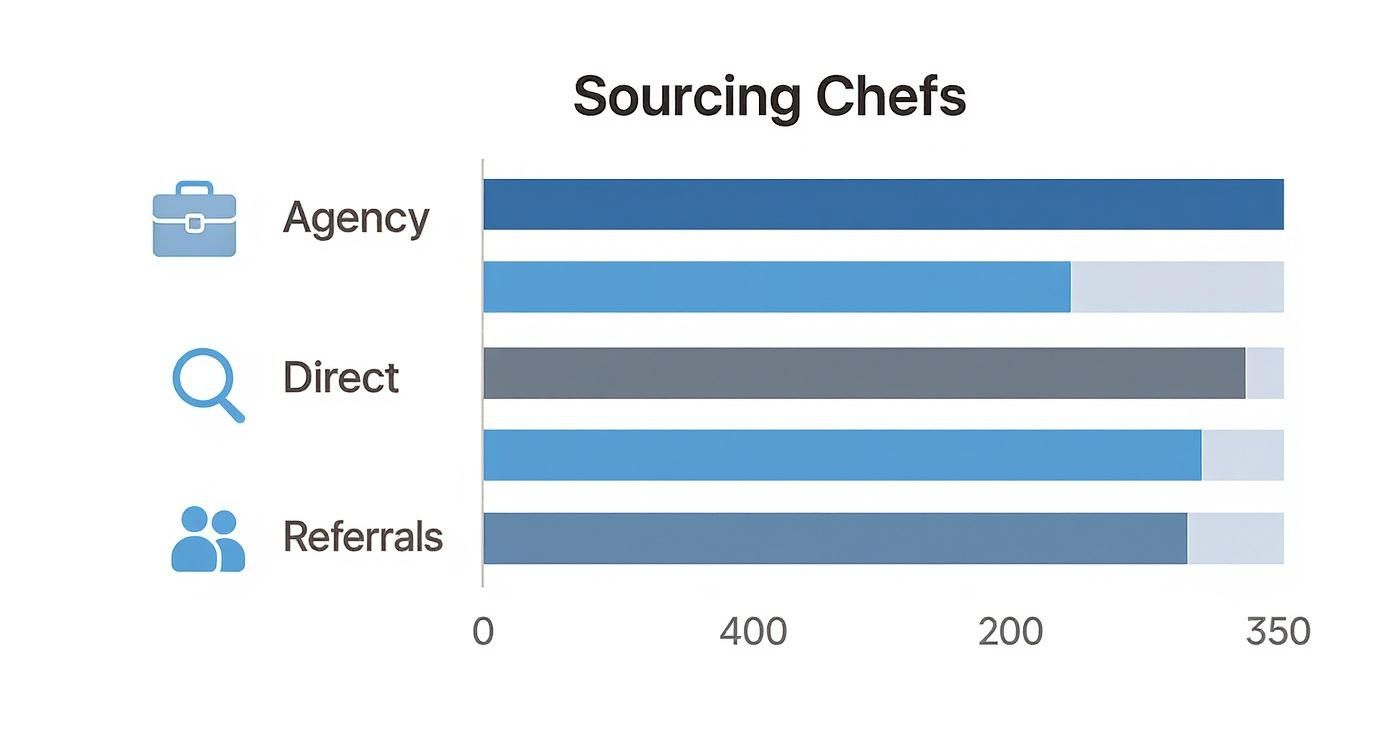
As you can see, while agencies are a popular route, don’t underestimate the power of a trusted referral. Candidates from your network often come with a built-in understanding of the discretion and demands of private service.
Designing a Meaningful Menu Challenge
The secret to a telling trial is to design a challenge that reflects your actual needs. I tell my clients not to ask them to cook their signature dishes—that’s a performance, not a practical assessment.
A brilliant method is the “mystery basket.” Provide a selection of core ingredients, including a few family favourites and maybe one or two curveballs to see how they innovate. Of course, give them access to a well-stocked pantry and larder. This mirrors real-life situations and shows you how they think on their feet.
Your trial brief could ask for:
- A three-course meal for two to four people, giving you a full picture of their skill set.
- Inclusion of a specific dietary need, like a gluten-free main or a vegan dessert, to test their adaptability.
- A clear timeframe for preparation and service. This is vital for judging their efficiency.
Pay attention to the entire process, not just the final plate. Are they clean and organised? How do they react if a timer goes off unexpectedly or you ask a question mid-prep? Their composure in the kitchen speaks volumes.
Building a Competitive Compensation Package
Once you’ve found a chef who impresses you both in and out of the kitchen, it’s time to build an offer they can’t refuse. The market for top-tier private chefs is incredibly competitive, and your compensation package needs to reflect that. It’s a clear signal that you value their craft and are serious about a long-term professional relationship.
Salaries for private chefs in the UK can vary widely depending on experience, the role’s demands, and location. Let’s break down what you can expect in 2025. According to recent industry data, an entry-level private chef might earn between £50,000 and £70,000. An experienced professional with a proven track record typically commands £70,000 to £120,000. For those with Michelin-star backgrounds or highly specialised skills, salaries can easily exceed £120,000. For a deeper dive, it’s worth reviewing the latest insights from Abode Staff on private chef demand.
To give you a clearer picture, here’s a breakdown of typical salary benchmarks across the UK.
Private Chef Salary Benchmarks in the UK
| Experience Level | London Salary Range (£) | Rest of UK Salary Range (£) | Key Responsibilities & Skills |
|---|---|---|---|
| Junior / Entry-Level | £50,000 – £70,000 | £45,000 – £65,000 | Menu planning, grocery shopping, daily meal prep, maintaining kitchen hygiene. Strong foundational cooking skills. |
| Experienced | £70,000 – £120,000 | £65,000 – £100,000 | Advanced menu creation, catering for dinner parties, managing dietary needs, potential staff supervision, and budget management. |
| Elite / Michelin | £120,000+ | £100,000+ | World-class cuisine, managing multiple properties, extensive travel, high-profile event catering, kitchen staff management. |
These figures are a guide, and the final salary will always depend on the unique specifics of the role you’re offering.
Components of an Irresistible Offer
A truly compelling offer is about more than just the base salary. To secure the very best talent, you need to consider the entire package.
Here are a few elements that can make your offer stand out from the crowd:
- Performance-Based Bonus: A discretionary annual bonus is standard practice and a fantastic incentive.
- Health and Pension Benefits: Private medical cover and pension contributions show you’re invested in their long-term well-being.
- Accommodation: For live-in roles, high-quality private accommodation is a non-negotiable and highly valued benefit. For live-out chefs, a travel allowance is a thoughtful perk.
- Professional Development: Great chefs are lifelong learners. Offering a budget for specialist courses or culinary trips shows you support their growth and passion.
Putting together a thoughtful, market-aware offer is the final, critical step in your private chef hire journey. It sets the stage for a relationship built on mutual respect and ensures a successful, long-lasting partnership.
You’ve navigated the trials, tasted the food, and finally found the perfect chef. Now comes the final, and arguably most important, phase before they officially start: formalising the relationship.
Getting the contract right is absolutely essential. This isn’t just paperwork; it’s the foundational document that protects both you and your chef, setting crystal-clear boundaries and expectations from the get-go. A thoughtfully drafted agreement is your best tool for preventing future misunderstandings and fostering a professional, respectful dynamic.
Think of the employment contract as the blueprint for your working relationship. It takes all the verbal agreements and expectations discussed during the hiring process and translates them into a legally sound document, leaving no room for ambiguity. This clarity is what allows a smooth, trusting partnership to flourish within the unique setting of your home.
Crafting an Ironclad Employment Agreement
A generic, off-the-shelf employment contract simply won’t cut it for a role this personal and high-profile. The agreement for a private chef in a UHNW household must be a bespoke document, meticulously detailed to cover the nuances of private service and your specific lifestyle.
There are several clauses that I consider non-negotiable for protecting a family’s privacy and ensuring the household runs like clockwork.
- A Watertight Confidentiality Agreement (NDA): This is the cornerstone of the entire contract. It needs to explicitly forbid the chef from discussing any details about your family, guests, conversations, travel plans, or personal affairs. I always advise clients to be clear that this obligation is indefinite and survives the termination of their employment.
- Strict Social Media and Photography Policy: Be direct. No photos or videos are to be taken inside your properties, on your yacht, or of your family and guests, ever. The policy must also prohibit any mention of their employment with your family on any social media platform. This isn’t about being difficult; it’s about protecting your privacy in a world of oversharing.
- Clearly Defined Scope of Duties and Hours: Go beyond just “cooking.” Will they be responsible for kitchen inventory, managing budgets, provisioning for multiple properties, or preparing staff meals? Outline the expected working hours, days off, and the protocol for handling overtime or accommodating those inevitable last-minute dinner parties.
A robust contract isn’t about a lack of trust; it’s about creating a framework of mutual respect. By defining every aspect of the role with precision, you empower your chef to excel and give your family total peace of mind.
Beyond the Signature: Integrating Your Chef for the Long Haul
The work isn’t over once the ink is dry. Those first few weeks are a critical integration period that can truly set the tone for their entire tenure. From my experience, a thoughtful onboarding process is often the difference between a hire that lasts six months and one who becomes a valued member of your household for years.
A smooth integration is about making them feel welcome, but also fully equipped for success. It’s not just about showing them where the pans are kept; it’s about integrating them into the unique culture of your household.
Onboarding for Success
Your goal is to foster a professional, respectful environment from day one. A structured, considered approach to their introduction is the key to achieving this.
- Introduce Them to the Team and Family: Make formal introductions to your house manager, personal assistant, and other key staff. It’s vital they understand the household hierarchy and the proper channels for communication. A brief, friendly introduction to family members also helps set a warm but professional tone.
- Establish Clear, Predictable Routines: Don’t leave them to guess how you operate. In the first week, take the time to walk them through your established routines for things like menu planning (“We like to review the upcoming week’s menus on Sunday evening”), grocery budgeting and approvals, and how you prefer special requests to be handled.
- Create a System for Feedback: Let them know how you prefer to give and receive feedback. A regular, scheduled check-in—even just for 15 minutes a week—can be a fantastic tool. This creates a dedicated, calm space for constructive conversation, allowing you to praise what’s working well and address any minor issues before they become major ones.
This initial effort is a direct investment in the long-term success of your private chef hire. By laying a foundation of clear communication and mutual respect, you pave the way for a partnership that doesn’t just meet your culinary expectations, but exceeds them for years to come.
Answering Your Questions About Hiring a Chef
As we get to the end of this guide, you probably have a few specific questions swimming around. That’s completely normal. The process of a private chef hire is full of detail, and it’s often the little things that can feel the most complicated. I want to tackle some of the most common questions I hear from clients, giving you clear, practical answers so you can move forward with total confidence.
These are the day-to-day realities that pop up long after the ink on the contract is dry. Getting these right from the start is the secret to a happy, long-lasting relationship with your new chef.
How Should We Handle Chef Holidays and Time Off?
This is one of the first logistical puzzles families need to solve, and it all comes down to planning. Just like any professional, a full-time private chef is entitled to paid holiday. It’s vital to agree on the exact number of weeks per year and get it in the contract.
Usually, a couple of their holiday weeks will naturally coincide with your own family trips when you’ll be away or dining out. The rest of their time off should be scheduled at a time that works for everyone. My advice? Always ask for at least two months’ notice for any planned leave. It just prevents any last-minute scrambling.
So, what do you do when your chef is away? Most households go for one of two options:
- Stocking the Freezer: A great chef can prepare and freeze a fantastic selection of meals to see you through before they leave.
- Hiring a Temp: A good recruitment agency can almost always find a vetted, high-calibre temporary chef to step in and cover the absence.
Managing Evolving Dietary Needs and Preferences
Life changes. Health needs evolve. One day, a family member might be told to go gluten-free, or you might decide to try a plant-based diet for a month. How do you bring this up without throwing the kitchen into chaos?
It’s all about clear, collaborative communication. The best way is to sit down with your chef and explain the new requirements, framing it as a new culinary project you can work on together. Treat them like a partner. This gives them the space to research new recipes, find the best suppliers, and thoughtfully adjust their menus. It’s a process, not an overnight switch.
A true professional chef will often embrace these requests. They see it as a chance to flex their creative muscles and add new skills to their repertoire. The strongest client-chef relationships are built on this kind of open dialogue and respect for their craft.
Don’t forget that big dietary shifts can have financial implications. Our detailed article on the full cost of a private chef breaks down how sourcing different ingredients or creating more complex dishes can affect your budget.
The Etiquette of Providing Constructive Feedback
Giving feedback, especially when it’s about something as personal as food, can feel a bit awkward. But it’s absolutely essential for getting things right. The trick is to be prompt, specific, and professional. Please don’t let small issues build up until they feel like a huge problem.
A simple, direct approach is always best. For instance, instead of a vague, “We didn’t love dinner last night,” you could try something far more helpful: “The fish on Tuesday was cooked to perfection, but we found the sauce a little rich for our taste. Perhaps we could try a lighter, citrus-based one next time?”
This kind of specific, respectful feedback gives the chef clear, actionable direction. It shows you appreciate their skill while gently guiding them toward your family’s unique palate. Making these informal check-ins a regular part of your routine helps these conversations feel normal and productive, cementing a brilliant working relationship for years to come.
At Superstar Nannies, we understand that finding the right culinary professional is about more than just food; it’s about finding a trusted individual who enhances your entire lifestyle. We specialise in sourcing and vetting elite private chefs for discerning households worldwide. Learn more about our private staffing services.