
Boosting staff morale is about so much more than just trying to keep people happy. It's about building a stable, high-performing team rooted in respect, recognition, and crystal-clear communication. When you get this right, you create a loyal, productive environment that solves the problem of high turnover and inconsistent service. This guide will show you exactly how to improve staff morale for long-term success.
Why Morale Is the Bedrock of Household Excellence
In an elite household, staff morale isn't a 'nice-to-have'—it's the very engine that drives service quality, security, and harmony. A team running on low morale isn't just a group of unhappy employees; they represent a tangible risk to your family and your home.
When a dedicated nanny, chef, or housekeeper feels unappreciated, their commitment will start to fade. This is where you see high staff turnover, which creates instability for your children and pulls you into a constant, costly cycle of recruitment. Even more critically, poor morale can lead to dangerous lapses in discretion and a noticeable drop in the quality of care and attention your family receives.

The unique pressures of living and working within a fully staffed private residence make a positive culture absolutely essential. The stakes are simply higher for everyone involved. A valued, motivated team is the foundation of a harmonious, beautifully managed home. Investing in their morale isn't an expense; it’s a direct investment in your family's safety, privacy, and wellbeing.
This isn't just anecdotal. Groundbreaking research from Oxford University's Saïd Business School found that happy workers are 13% more productive. In the world of private service, this productivity surge means more focused childcare, impeccable household management, and a team that intuitively anticipates needs rather than just reacting to them. You can read the full study on staff productivity on the University of Oxford's website.
By truly understanding what it takes to improve staff morale, you create a powerful, self-sustaining cycle of loyalty and excellence. The following sections will give you the practical, actionable solutions you need to build exactly that kind of team.
Foster Trust with Clear Communication
In any elite service environment, trust is the currency of a happy, high-performing team. But trust doesn't just happen. It’s built, one conversation at a time, through clear, consistent, and transparent communication. It’s about moving beyond simply delegating tasks and creating a culture where open dialogue is the norm.
This begins with creating predictable, structured opportunities for staff to connect with you. For example, a quick 'weekly debrief' with your rota nanny team can be invaluable. It's a chance for everyone to align on the week ahead, troubleshoot any challenges from the past week, and ensure seamless continuity of care. This simple ritual does more than just prevent misunderstandings; it shows your team their professional insights are genuinely valued.

Implement Regular Pulse Checks
For the entire household team, a more formal ‘monthly pulse check’ can work wonders. This is not a performance review. Think of it as a dedicated time to simply listen. The aim is to create a safe space where everyone, from nannies to housekeepers, can voice concerns, share ideas, and feel heard without any fear of judgement.
Taking this proactive step helps build what experts call psychological safety, and it’s a game-changer. Sadly, there's a huge trust deficit in many workplaces. Research from MHR highlights a shocking statistic: only 38% of UK employees actually trust their senior leaders. This lack of trust kills morale, especially in a private household where staff depend on leadership to feel secure. When you're visible and approachable, it makes all the difference. You can read more on this MHR UK research and what it means for your team. When you prioritise being an approachable leader and schedule regular check-ins, your staff stop being just employees. They become respected partners in the success of your household.
Lead with Empathy and Clarity
While scheduled meetings are essential, the quality of your daily interactions is where the real magic happens. Being an approachable leader means being present, asking good questions, and listening far more than you speak.
- Be Specific with Praise and Feedback: A generic "good job" is nice, but it's forgettable. Try something like, "The way you handled the children's schedule change yesterday was brilliant, thank you." This shows you are paying attention.
- Explain the 'Why': When you ask for something to be done a certain way, briefly explain the reason. "Could we try serving dinner at 6:30 pm sharp this week? We're trying to get the children into a better bedtime routine." This little bit of context fosters a sense of shared purpose.
At the end of the day, clear communication is about reducing anxiety and empowering your staff to do their best work. It's a skill that pays you back tenfold in loyalty and exceptional service. For more practical advice on this, take a look at our guide to effective communication strategies for parents and nannies.
Show Appreciation Beyond the Paycheque
Of course, fair and timely compensation is the bedrock of any professional relationship. But what truly moves the needle on loyalty and performance isn't just the salary—it's the authentic, consistent appreciation that shows your staff you see them as valuable individuals. In private service, where the lines between professional and personal can blur, this is even more critical.
Sincere recognition doesn't have to be grand or expensive; the simplest, most personal gestures often have the biggest impact. A handwritten note left for a nanny after she’s masterfully navigated a toddler’s tantrum says more than a simple "thanks." It tells her you noticed her specific skill and grace under pressure, reinforcing exactly the kind of thoughtful care you value.
Finding Your Rhythm: Formal and Informal Recognition
Appreciation isn't a one-off event; it's a culture you build through a mix of spontaneous gestures and more structured acknowledgements. You need a balance that feels genuine to your household.
Informal, In-the-Moment Praise: These are the small, daily acts that create a positive atmosphere. It’s saying, "That meal was absolutely outstanding, thank you," or praising a housekeeper for how immaculate the home looks before guests arrive. These small deposits into the "appreciation bank" add up significantly.
Formal, Planned Acknowledgement: This is about creating specific moments to celebrate contributions. It could be a "win of the week" spotlight during a brief team meeting or, after a particularly demanding trip, granting an extra day of paid leave as a thank you for going above and beyond. Acknowledging effort is good, but celebrating specific results is far more powerful. It shows you not only see the work but also understand its positive impact.
If you're looking for more inspiration, it can be helpful to explore various methods for improving team morale from the corporate world and adapt them to the unique environment of a private home.
Effective Recognition Strategies for Household Staff
| Recognition Method | Potential Cost | Implementation Effort | Impact on Morale |
|---|---|---|---|
| Personalised, Handwritten Note | £0 (plus stationery) | Low (5 minutes) | High (Shows specific, personal gratitude) |
| Verbal Praise (Specific & Timely) | £0 | Low (Requires mindfulness) | High (Builds confidence and positive culture) |
| Extra Paid Day Off | Cost of one day's salary | Medium (Requires rota adjustment) | Very High (Shows you value their wellbeing) |
| Small, Thoughtful Gift | £20 – £100 | Medium (Requires knowing their preferences) | Medium-High (Shows personal thoughtfulness) |
| Professional Development/Training | £100 – £1,000+ | High (Involves research and planning) | Very High (Invests in their future career path) |
| Annual or Performance Bonus | Varies | Low (Typically part of the contract) | Medium (Expected, but still appreciated) |
Ultimately, the goal is to create a consistent rhythm of recognition. When your team feels genuinely seen, respected, and valued for their commitment, their motivation and loyalty will follow. This is one of the most powerful tools for improving staff morale.
Invest in Wellbeing and Professional Growth
When you shift from seeing staff as just fulfilling a role to investing in them as individuals, you transform a job into a career. This is where long-term morale is truly built. It’s about creating an environment that supports both personal wellbeing and professional ambition, showing a genuine commitment that goes far beyond the day-to-day.
This starts with the fundamentals. Fair and sustainable rotas and proper breaks to recharge aren't luxuries. In the high-pressure world of private service, they are the absolute bedrock for preventing burnout and maintaining exceptional standards.
Championing Mental and Physical Health
One of the most powerful ways to boost morale is to actively prioritise your team’s health. Think about it: a confidential Employee Assistance Programme (EAP) provides a safe, external outlet for staff to handle personal or professional challenges without judgment. For more insights on this, experts like Therapy with Ben for workplace support offer excellent guidance.
We only need to look at other high-stress professions to see why this is so critical. Following the pandemic, NHS England watched employee morale plummet between 2021 and 2022. The main culprits? Overwhelming 'Work Pressure' and a sharp rise in staff 'Thinking of Leaving'. It’s a stark reminder of how fragile morale can be without robust support systems in place.
Fostering Professional Ambition
Nothing says "we value you" quite like investing in someone's future. When you fund relevant training, you're not just improving their skills; you're building profound loyalty and showing you believe in their career path. This could mean sending a Norland nanny on a child psychology course or helping a housekeeper become an expert in advanced fabric care.
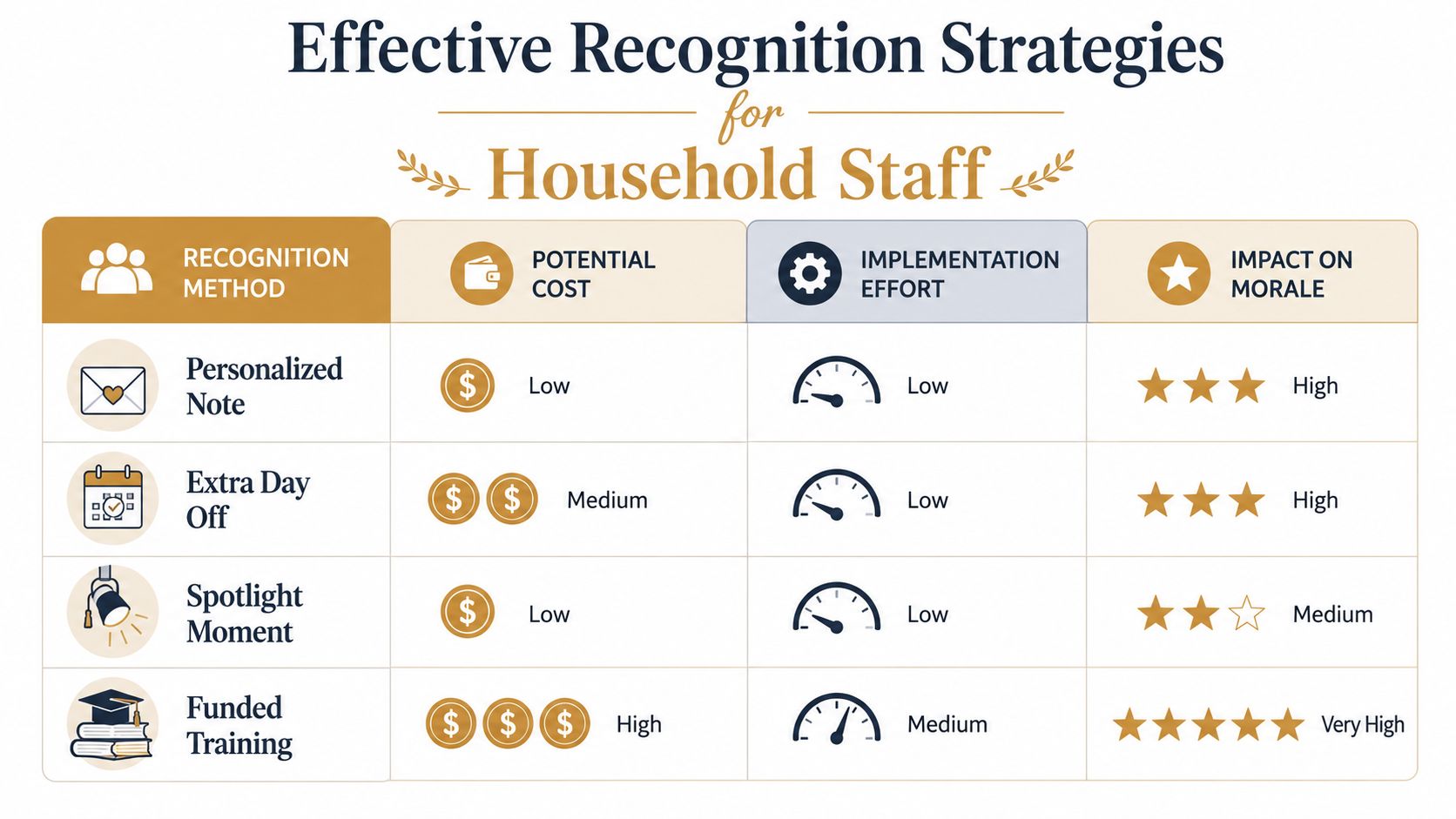
As you can see from the chart, funded training might have a higher upfront cost, but its effect on morale is second to none. It signals a true partnership and is a clear investment in both your staff member and the quality of service in your home.
Measure Morale to Ensure Success
So, you’ve put in the effort to boost team morale. But how can you be sure it's actually working? Guessing is a risky game. You need a simple, respectful way to gauge how your staff are feeling so you can make data-driven improvements.
Tracking morale isn't about bringing a stuffy corporate vibe into the home; it's about keeping the lines of communication open to nurture a genuinely positive and supportive environment. The trick is to use methods that feel natural and non-intrusive. A few straightforward techniques can give you a clear picture, helping you turn good intentions into real, lasting improvements.
Simple Ways to Gather Meaningful Feedback
Putting a few structured feedback methods in place can demystify what your staff are truly feeling. This is about being proactive and catching small issues before they grow into bigger problems.
Confidential 'Pulse Surveys': A quick, three-question email sent once a month can be incredibly revealing. Keep it simple: "On a scale of 1-10, how is your morale this month?" followed by two open questions like, "What’s one thing going well right now?" and "What’s one thing that could be improved?"
Proactive 'Stay Interviews': Unlike an exit interview, a stay interview is all about the future. Schedule a brief, informal chat once or twice a year. The goal is to ask what keeps your valued staff members happy. Questions like, "What do you look forward to when you start your day?" can uncover powerful motivators.
Structured 360-Degree Feedback: For senior roles like a House Manager or Head Nanny, organised feedback from the team they manage is invaluable. It offers a rounded view that is instrumental for their professional growth and leadership skills. By actively seeking out feedback, you build a rhythm of continuous improvement.
When you consistently ask for, acknowledge, and act on feedback, you demonstrate a level of respect that builds deep, authentic loyalty. For more information on this, explore our guide on tracking and improving staff performance metrics.
Conclusion: Building Your Exceptional Household Team
Ultimately, what we've seen time and again is that creating a world-class household environment isn't about a single grand gesture. It’s the combination of consistent, everyday actions: clear communication, genuine recognition, a real focus on staff wellbeing, and a culture where people feel heard. This is the foundation that attracts—and keeps—the very best talent when you want to improve staff morale.
When you get these fundamentals right, the result is more than just flawless service. You cultivate a team that is resilient, deeply motivated, and loyal, giving your family true peace of mind. If you're looking to dive deeper into the operational side, our guide on how to manage household staff effectively offers even more practical strategies.
A household built on respect and support doesn't just run smoothly—it thrives. If you’re ready to find and nurture the perfect staff for your family, contact Superstar Nannies today for a confidential consultation.
FAQs: How to Improve Staff Morale
Here are answers to some of the most common questions about improving staff morale in a private household.
How can I improve morale if staff are hesitant to give feedback?
When your team is quiet, it’s often a sign they don’t feel safe enough to speak up. The first move is to build that trust by creating a channel for anonymous feedback. A simple, free tool like a SurveyMonkey poll works wonders for gathering initial thoughts without personal risk. Once you have some feedback, acknowledge the themes publicly and act on one or two items. When your staff see that their confidential input leads to real, positive change, they'll become more comfortable sharing thoughts directly.
What is the most effective way to boost morale quickly?
If you need a fast-acting remedy for low morale, nothing works better than sincere, specific, and timely recognition. While big-picture changes like salary reviews are essential, they take time. A thoughtful, personalised 'thank you' for a job well done provides an immediate boost. For instance: "Sarah, thank you for how calmly you handled the children's meltdown today. You made a stressful situation so much easier." This detailed praise shows you’re paying attention and value their specific skills.
What are some low-cost ways to show appreciation?
Meaningful appreciation absolutely does not require a big budget. One of the most valued rewards is the gift of time. Letting a staff member leave a few hours early on a Friday or giving an extra day off after a demanding week can mean more than a cash bonus. Personal touches, like remembering their favorite coffee, or investing in an affordable online course in an area they're interested in, are fantastic, low-cost ways to show you believe in them.
How do I handle morale issues between two staff members who don't get along?
You must address interpersonal friction head-on before it poisons the team's atmosphere. First, meet with each person privately to understand their individual perspectives. Your job here is to listen, not to take sides. Next, bring them together for a facilitated conversation, setting clear ground rules for professional communication. Your role is to steer the discussion toward shared professional goals. If the conflict persists, it may be time to bring in an external mediator.