


Excellent communication with parents is what separates a good nanny from a truly indispensable one. It's not just about giving updates; it's about building a professional partnership based on trust, clarity, and mutual respect. When everyone is on the same page, the child’s well-being always comes first. This guide provides actionable strategies to master the art of communication, ensuring you are seen as a trusted, capable partner in any household.
Building a Foundation of Trust from Day One
In any high-calibre household, clear and professional dialogue is the very foundation of trust and security. Getting the communication right from the start is one of the most important things you can do to ensure a successful placement. It prevents crossed wires down the line and establishes a seamless, child-focused partnership from the outset.
Your very first conversation should touch on the family's preferred communication style. Some principals will appreciate a formal, scheduled update at the end of the day, while others may prefer quick, informal check-ins. Taking the initiative to ask shows real professionalism and a respect for their time and lifestyle.
Define Your Communication Channels
Agreeing on the right channel for the right message is key to keeping communication efficient and appropriate. You don't want to be sending a casual photo via a formal email, or a detailed medical concern via a quick text.
Here’s a simple framework that works well:
- WhatsApp or Quick Texts: These are brilliant for those brief, in-the-moment updates. Think confirming your arrival at a playdate, sharing a lovely photo from the park, or letting them know you’re running five minutes late.
- Formal Daily Log: A digital app or a classic notebook is perfect for detailed end-of-day reports. This is where you track meals, naps, developmental milestones, and any noteworthy social interactions. It provides a comprehensive overview for the parents to review when they have a moment.
- Scheduled Calls or Emails: Keep these channels for more significant, non-urgent topics. This could be anything from planning the logistics for an upcoming holiday to discussing a behavioural pattern you’ve noticed over a few days.
Building this kind of open and honest communication with parents is crucial, and it mirrors the same principles found in effective family counselling. If you're looking for professional guidance, you can find family support in Vernon for excellent resources.
The goal is to create a system where parents feel perfectly informed but not overwhelmed. At the same time, you should feel empowered to share important details in a professional manner. This proactive approach eliminates guesswork and solidifies your role as a trusted, capable partner in their home.
By setting these standards early, you demonstrate a high level of professionalism and a genuine commitment to collaborative care. As you begin this journey, our guide on finding a trustworthy nanny for your baby offers even more insight into building that essential bond right from the start.
Establishing Daily and Weekly Communication Rhythms
For busy parents, especially those in demanding UHNW or VIP roles, consistent and predictable communication isn’t just a nice-to-have; it’s the bedrock of trust. Knowing their children are not only safe but thriving provides immense peace of mind. Your role extends beyond basic care—you're a partner in their child's development. A well-oiled reporting system for communication with parents showcases your professionalism and proactive approach, keeping everyone on the same page.
The goal is to find a rhythm that delivers rich, meaningful information without adding to a parent’s already full plate. It's about finding that sweet spot between comprehensive updates and overwhelming detail.
Crafting Your Daily and Weekly Reports
A great daily report is a snapshot that a parent can absorb in minutes, yet it tells the full story of the day. Think of it as your professional handover. The weekly check-in, on the other hand, is your opportunity to zoom out, discuss patterns, and collaboratively plan for the week ahead.
Here’s how you can structure these updates effectively:
- The Daily Digital Log: An end-of-day summary via a dedicated app or a shared digital note is perfect. This should cover the essentials like meals, nap durations, and nappy changes, but also the delightful details—a new word, a funny quote, or a milestone reached.
- The Weekly Check-In: This could be a brief scheduled call or a more detailed email at the end of the working week. It’s the ideal moment to share observations, look at the bigger picture of the child's progress, and align on goals. If you're sharing photos, having a streamlined process for managing client image reviews can keep feedback organised and professional.
- Real-Time Updates: For those small, in-the-moment updates—like a safe arrival at the park or an adorable photo—a quick, pre-agreed message (like a text or WhatsApp) works beautifully. It’s a simple way to share a smile during the day.
Deciding on the right blend of communication styles is a conversation you should have right from the start. This infographic provides a useful comparison.
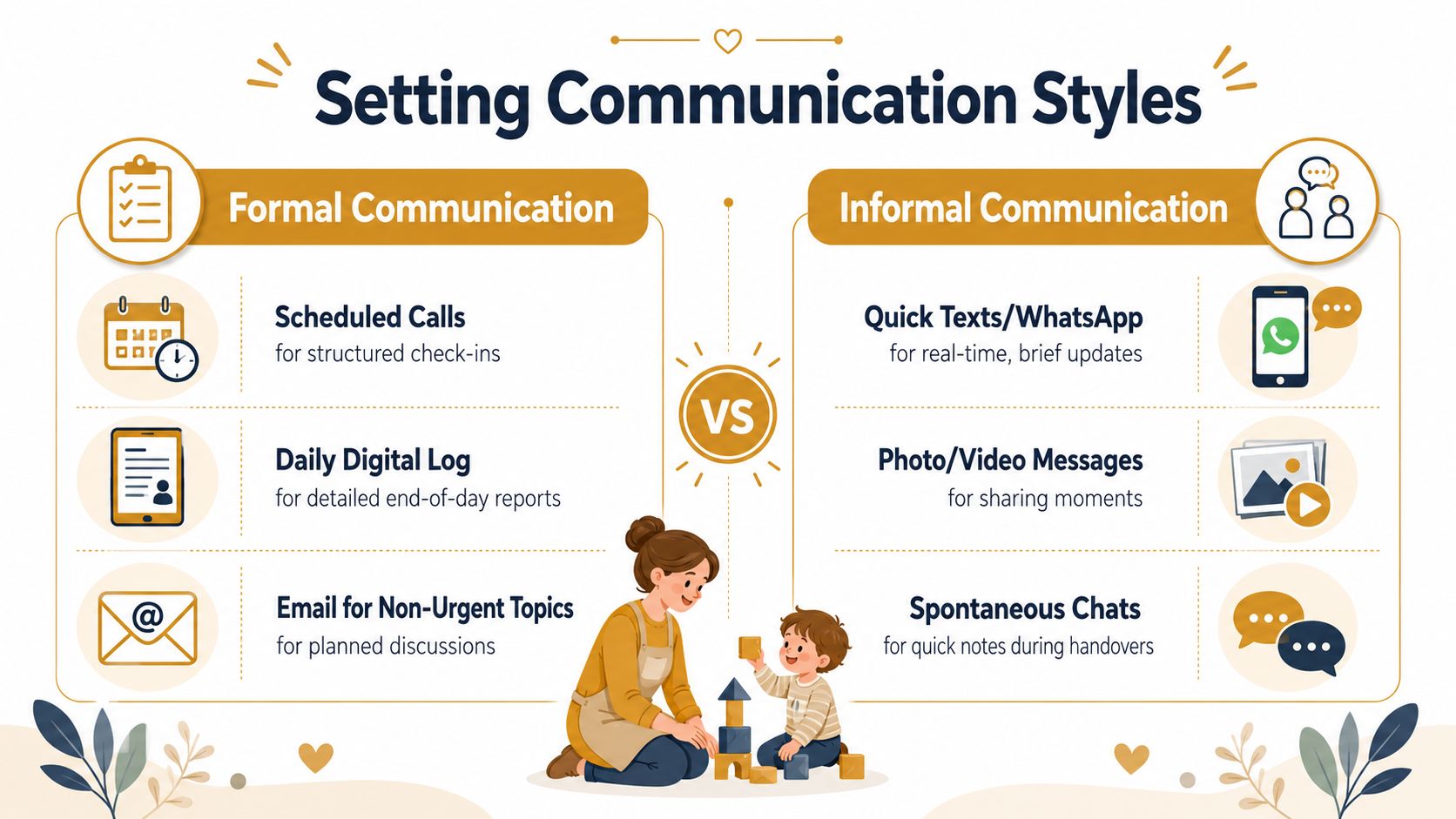
As you can see, the most effective systems often mix formal and informal methods, choosing the right tool for each specific situation.
Choosing the Right Communication Channel
Selecting the right method for each type of update is crucial for maintaining clarity and professionalism. A quick text is great for an urgent note, but a developmental concern warrants a scheduled conversation. This table can help guide your choices.
| Communication Channel | Best For | Example Use Case |
|---|---|---|
| Phone Call | Urgent matters, sensitive topics, or discussions requiring immediate feedback. | "The school just called to say Maya is feeling unwell and needs to be picked up." |
| Text/WhatsApp | Quick, non-urgent updates, logistics, and sharing photos or brief videos. | "We've arrived safely at the museum! Here's a picture of Leo enjoying the dinosaur exhibit." |
| Detailed weekly summaries, scheduling, or non-urgent questions that need a documented response. | Sending the weekly report on Friday afternoon with observations, photos, and a proposed activity for next week. | |
| Dedicated App | Centralised daily logs, tracking meals, naps, activities, and sharing photos in one secure place. | Logging a 1.5-hour nap, a full lunch, and a note about a successful potty-training moment at the end of the day. |
| In-Person Handover | The beginning and end of the day for a brief, personal exchange on moods, plans, and immediate needs. | "He was a little tired this morning but cheered up after breakfast. We have a playdate at 10 AM at the park." |
Ultimately, using the right channel shows respect for the parents' time and ensures your important messages are received and understood in the manner you intended.
Key Takeaway: A successful communication rhythm is not one-size-fits-all. It requires an initial agreement on the methods and frequency that work best for the family, ensuring everyone feels informed and respected.
Mastering these reporting cadences is a tangible measure of your professional excellence. If you're interested in how these practices fit into a broader professional framework, explore our guide on staff performance metrics.
The Art of the In-Person Handover
That moment when the parents walk through the door is more than just the end of your workday; it's a vital touchpoint. It’s your chance to wrap up the day on a high note and reinforce their trust in your care. When you get this transition right, it ensures your communication with parents remains seamless, even when everyone is short on time.

The secret weapon here is preparation. Parents, especially those in demanding UHNW or VIP roles, are juggling a lot and truly value efficiency. Having a quick, clear summary ready to go shows respect for their time and your professionalism.
Crafting the Perfect "Welcome Home" Update
When a parent arrives home, they're switching gears from a busy professional day to family life. Your update should make that transition easier, not add to their mental load. The goal is to be brief, reassuring, and impactful.
Think about how a quick, confident summary can set a positive tone. It could be as simple as:
"Welcome home! We had a lovely day. The absolute highlight was building a brilliant fort in the living room. She ate all of her lunch but seemed a little tired this afternoon, so she might appreciate an earlier night. Everything else is detailed in the daily log for you to look at when you have a moment."
This simple exchange accomplishes three things brilliantly:
- It starts with a positive story, creating an immediate, happy connection.
- It delivers the need-to-know details on food and mood.
- It smoothly directs them to the written report for more detail later.
Remember, what you don’t say speaks volumes. Your calm, organised presence—even during a chaotic end-of-day moment—projects confidence and reassures parents that everything is under control. It’s a silent signal of your professional grace.
This kind of structured exchange is a cornerstone of a well-managed household. It turns a potentially rushed moment into a valuable, professional touchpoint. For a deeper look into creating these effective systems, we share more insights in our guide on how to manage household staff effectively.
Navigating Difficult Conversations with Professionalism
Sooner or later, you're going to have to talk about something tricky. Whether it's a concern about a child's behaviour, a change in their sleep patterns, or a sensitive health issue, these conversations are part of the job. How you handle them can make or break the trust you’ve built with the family.
Rushing in without a plan is a recipe for disaster, often leading to defensive parents and a breakdown in your working relationship. The key is to approach these moments with the care and professionalism they deserve.
Before you say a word, get your facts straight. Vague statements like, "He was naughty today," are unhelpful and sound judgmental. Instead, ground your observations in specific, neutral details.
For example, try this: "I noticed Charlie threw his toys three times this afternoon when it was time to tidy up. This has happened a few times this week, and I'd love to work out how we can best support him together." This approach isn't an accusation; it's an invitation to collaborate.
Creating the Right Environment for a Productive Chat
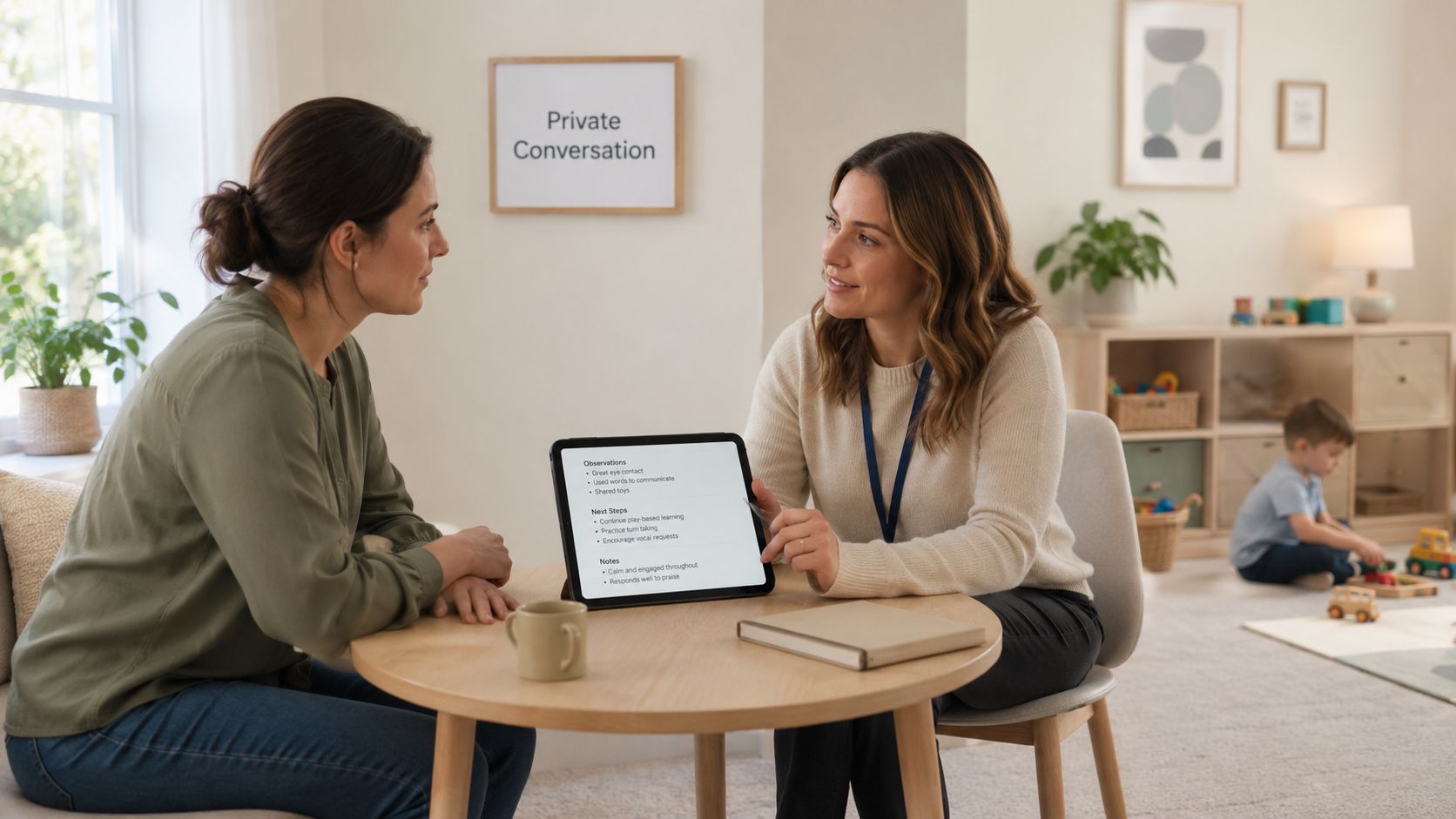
The setting and timing of your conversation are just as important as the words you choose. Never, ever bring up a sensitive topic in front of the children or during a rushed, five-minute handover at the door. It shows a lack of respect for the issue and the parents' feelings.
Instead, ask for a specific time to talk privately. This signals that the matter is important and that you value their input. You can open the door with collaborative, non-confrontational language:
- "I’ve noticed something I'd like to discuss to make sure we're aligned on our approach."
- "Could we set aside ten minutes this evening to have a proper chat about Thomas’s sleep patterns?"
This immediately frames the discussion as a team effort, positioning you and the parents on the same side, focused on what's best for the child.
Adding to the complexity, the very structure of the households we work in is changing. For instance, recent ONS data revealed that 35% of young men aged 20-35 lived in their parents' homes in 2025 — a significant jump from 26% in 2000. This trend means private staff increasingly need the finesse to navigate multi-generational dynamics, where a simple conversation might involve grandparents or other relatives. You can read more about this demographic shift in the full ONS report.
When you prepare with objective facts, choose a private setting, and use collaborative language, you immediately lower the risk of conflict. This isn't just about avoiding an argument; it's about reinforcing your position as a skilled professional and a vital member of the child's support team.
Discretion and Cultural Dexterity: The Hallmarks of a Top-Tier Nanny
Working in a high-profile home isn't just about childcare; it's about becoming a trusted part of a very private world. Two pillars support this trust more than any other: unwavering discretion and genuine cultural understanding.
Confidentiality is the absolute bedrock of your role. Think of it as a professional code of honour. It's not simply about avoiding a bit of gossip; it's about understanding that everything you see and hear within the family's life is privileged information. Their schedules, travel plans, private conversations, and even their shopping lists are not for outside ears.
When in doubt, the golden rule is silence. Assume everything is confidential unless you've been explicitly told otherwise. It’s a simple mindset that prevents missteps and builds the unshakable trust your employers need. For a deeper dive into the nuances of this critical responsibility, our definitive guide to private staff confidentiality is an essential read.
Moving Beyond the Obvious: True Cultural Awareness
Just as important as discretion is your ability to navigate the family’s unique culture with grace. Every household has its own rhythm, its own set of unspoken rules, values, and traditions. True professionalism is shown in how quickly and respectfully you can observe, learn, and adapt to their way of life.
This might mean aligning with their specific parenting philosophies or understanding the subtle etiquette of their social circle. It's about paying attention to what is—and isn't—said. Family dynamics are never static, either. Think back to the lockdowns, when a survey found 25% of UK parents felt their bond with their children strengthened. It’s a powerful reminder of how external events can profoundly shift a family’s internal world, and you need to be sensitive to these changes.
Sometimes, the key to understanding a family’s culture lies within their language itself. For families with deep roots, certain expressions carry generations of meaning. Taking the time to understand things like Gaelic phrases and meanings can be a wonderful way to connect and show you care about their heritage.
Proactively learning and respecting a family’s culture isn’t just about being polite. It’s how you build a resilient, trust-based partnership and prove you are more than just an employee—you are a thoughtful and indispensable part of their household.
Conclusion: Becoming an Elite Communicator
Mastering the art of communication is what truly sets a good nanny apart from an indispensable one. It isn't just about sharing daily updates; it's about building a genuine partnership with parents, grounded in clarity, trust, and mutual respect. Effective communication with parents creates a seamless, supportive environment where children flourish and parents feel completely at ease.
We've covered a lot, from establishing expectations and creating a reporting rhythm to handling those tricky conversations with confidence. Think of these skills not just as tools for your current role, but as the building blocks of your entire professional reputation. Exceptional communication tells families you are more than a caregiver; you are a trusted, integral partner in the harmony of their home.
Ready to connect with a family who will truly value your expertise and dedication? Contact Superstar Nannies today for a consultation and let's find the perfect next step for your career.
Frequently Asked Questions (FAQs)
How often should I communicate with parents each day?
There's no single right answer; it all comes down to the parents' preferences, which you must clarify right at the start. A good rhythm many families appreciate is a quick morning text to confirm the day’s schedule, a concise update during the day via a shared app, and a brief in-person handover when they return. Ultimately, consistency is more important than volume. Knowing when and how they'll hear from you provides immense peace of mind.
What if the parents and I disagree on a childcare approach?
Disagreements will happen. The first step is to request a private moment to chat, away from the children. When you talk, aim for collaboration. Share your observations using "I" statements, anchor your perspective in your professional experience, and genuinely listen to their viewpoint. The goal is to work together towards a unified front for the child’s benefit. While your expertise is valued, remember that the parents have the final say.
What’s the best way to handle communication with parents who are always busy?
For exceptionally busy parents, your communication needs to be efficient and structured. A shared digital log or a dedicated app is indispensable for daily updates they can review at their convenience. To maintain a personal connection, try scheduling a brief, regular weekly call—even 10-15 minutes can make a huge difference. Providing clear, organised information that respects their packed schedule is a powerful way to demonstrate your professional value and enhance communication with parents.
Are text messages okay for all communication with parents?
Texting is fantastic for quick, logistical updates—a simple "We've arrived safely" or "Running 5 minutes late" is perfectly fine. However, it is not the right place for detailed reports, developmental concerns, or sensitive conversations. These topics require more formal channels like a scheduled call, email, or your agreed-upon daily log to avoid misinterpretation and maintain professional boundaries.
How can I build trust with new parents from the very beginning?
Build trust by being proactive and professional from day one. In your initial conversations, ask about their preferred communication styles, channels, and frequency. Follow through consistently. Document important information in a daily log, be punctual, and maintain a positive, calm demeanour. When parents see that you are organised, respectful of their preferences, and completely focused on their child's well-being, trust will naturally follow.