

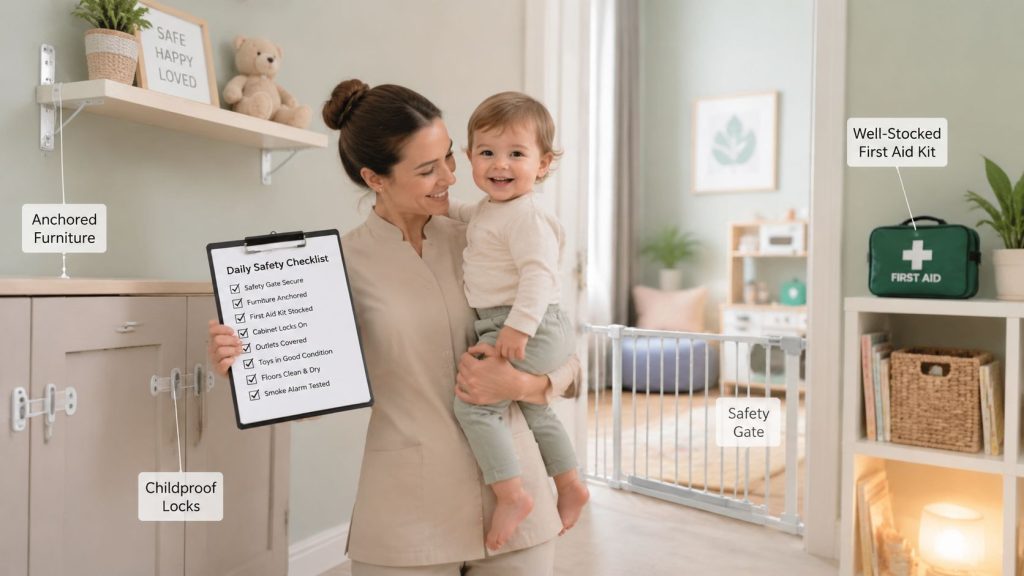
You're likely dealing with this in a real home already, a toddler who knows where the stairs are, a nanny who covers a handover while dinner is being plated, and a second adult who assumes someone else checked the bathroom cupboard. In a private household, health and safety in childcare isn't a paper file on a shelf, it's the daily system that keeps children safe while the house stays liveable, private, and organised.
That means the controls have to fit the home, not the other way round. A nursery can rely on a single layout, a fixed team, and a controlled gate. A townhouse, penthouse, or travelling household has mixed staff, changing routines, multiple floors, visitors, vehicles, pets, and often more than one adult making assumptions at the same time.
Why Household Childcare Needs Its Own Safety Frame
A live-in nanny may follow every instruction and still face an unmanaged risk if the residence was never assessed for childcare. A library ladder becomes a climbing route, a vase sits within reach, and a service entrance brings a chauffeur, housekeeper, or visitor into the children's space. Nursery policies rarely cover private libraries, housekeeping cupboards, several floors, or a weekend handover between carers.
A private home therefore needs its own operating model rather than a nursery handbook copied word for word. It must account for blended staffing, informal handovers, adult-designed rooms, travelling households, and overlapping care from a maternity nurse and nanny. Housekeepers, drivers, family members, and guests may also move through the same areas, so responsibility must be clear whenever care changes hands.
Practical rule: if a hazard depends on someone “just knowing” the house, it has not been controlled properly.
The legal backdrop still matters. Families owe a duty of care, and negligence principles apply when a foreseeable risk is left unmanaged. In the UK, EYFS-style thinking provides a useful benchmark for child-facing standards, alongside clear child protection policies for private households. The latest publication, Ofsted's latest childcare provider and inspection findings, reports 60,000 childcare providers registered in England as of 31 August 2025. It also records 98% judged good or outstanding at their most recent inspection, while 96% of 9,540 full early years inspections completed since 1 September 2024 were judged effective for safeguarding. These figures reinforce the value of formal safeguarding controls, but a residence still needs rules built around its people, rooms, routines, and handovers.
Reviewed by the Superstar Nannies recruitment team.
Building a Risk Assessment for Your Home
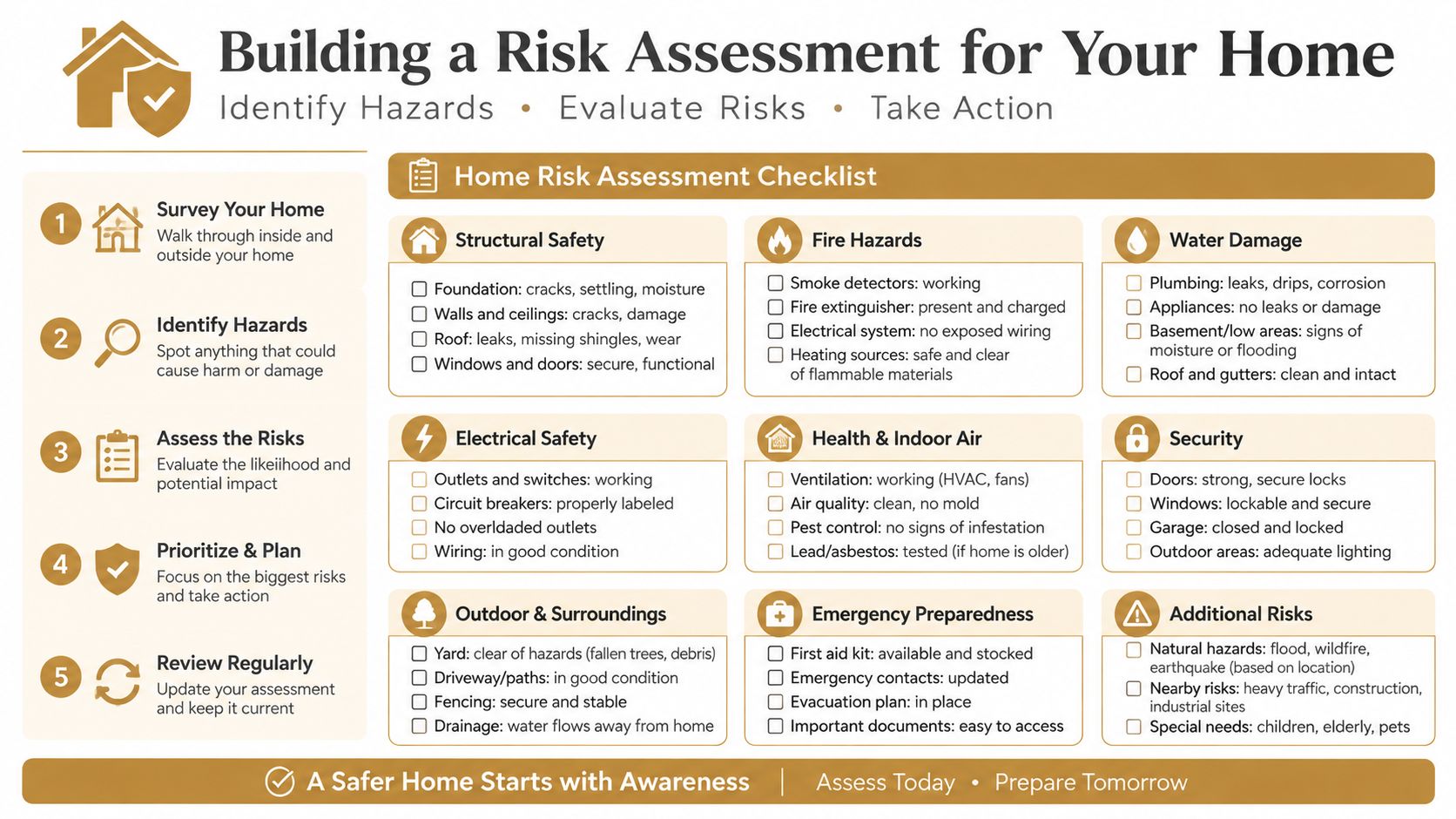
A good home risk assessment is live, not laminated. It should change when the baby starts rolling, when the toddler reaches handles, when a stair gate is moved, or when the household adds a dog, a travel nanny, or a new cleaner.
Sweep the house room by room
Start with the places children can reach first. In the kitchen, list cleaning products, hot surfaces, dishwasher pods, and sharp tools. In bathrooms, note water temperature, medicines, hair tools, and anything stored at child height. In bedrooms and nurseries, look for blind cords, unsecured furniture, choking hazards, and cot placement.
Living areas need a separate pass. Fireplaces, glazing, balcony access, and cables should all be listed as hazards, not just “things to keep an eye on”. Stairs, gardens, terraces, pools, and plant rooms deserve their own entries too, especially in larger homes where one adult cannot monitor every zone at once.
Use a shared register that anyone can follow
Each entry should record the hazard, who is at risk, likelihood, severity, and the control agreed with the nanny. That language matters because it makes the discussion specific, not vague. A cupboard lock is a control. “Be careful” is not.
A useful kitchen entry might read like this:
- Hazard: cleaning spray under the sink
- Who is at risk: toddler and visiting child
- Likelihood: high if cupboard is left open
- Severity: poisoning risk
- Control: lock fitted, products moved upstairs, nanny checks after every clean-up
A weekend outing template can be just as simple:
- Destination: park, playgroup, or school run stop
- Known risks: water, dogs, crowds, road crossing
- Controls: pram brake check, child counted before leaving, mobile charged, first-aid kit packed
- Back-up: agreed meeting point and return time
For families who need help managing a broader indoor air and allergen picture, Covenant Aire Solutions allergen reduction is a useful reference point for thinking about dust, filters, and the environmental side of child health.
A risk assessment only works if the nanny can use it without asking for a translation.
Review it quarterly, and also after developmental changes. Crawling, standing, climbing, and school age all change the risk profile. A home that was safe for an infant can become a different environment once the child is mobile.
Safe Sleep, Infection Control and Daily Health Routines
Safe sleep, infection control, and paediatric first aid work best when they sit in one routine, not three separate folders. The nanny needs one written standard, agreed during onboarding, that covers sleep position, hygiene, and what happens if a child seems unwell.
Build one daily standard and keep it visible
Safe sleep should follow the familiar ABCs, alone, on the back, in a clear cot. Room-sharing for under-sixes, swaddling limits, and dummy hygiene should all be written down in the household policy so no one improvises during a tired handover. The same document should set out how bottles, high chairs, and changing mats are cleaned, because hygiene failures usually come from small shortcuts repeated every day.
Infection control is where private homes often drift. Handwashing needs to happen before and after toileting, nappy changes, food handling, and contact with animals, and the home should have a clear rule for illness exclusion and cleaning. UK local guidance also sets a practical baseline for hygiene and exclusion procedures, including agreed illness protocols and immediate cleaning of faecal or vomit contamination, as described in this childcare infection-control policy example.
A one-page daily health log keeps the routine honest. It should capture feeds, sleep, temperature checks if relevant, and anything unusual the nanny noticed. That log becomes especially useful when more than one adult cares for the child across the week.
| Routine Area | Key Standard | Documented In |
|---|---|---|
| Safe sleep | Alone, on the back, clear cot | Sleep plan and bedroom checklist |
| Infection control | Handwashing, cleaning, exclusion | Illness and hygiene policy |
| Feeding equipment | Clean bottles, high chairs, mats | Kitchen and feeding log |
| First aid readiness | Current paediatric training, kit location | Emergency folder and rota notes |
First aid training should be treated as a documented expectation, not a nice-to-have. In many homes, that means keeping the paediatric certificate date, renewal point, and first-aid kit location in the onboarding pack, alongside allergy and medication notes.
If the household is choosing specialist newborn support, the internal infant sleep specialist page is a sensible next step for families comparing sleep support with broader nanny care.
Emergency Procedures and Incident Reporting
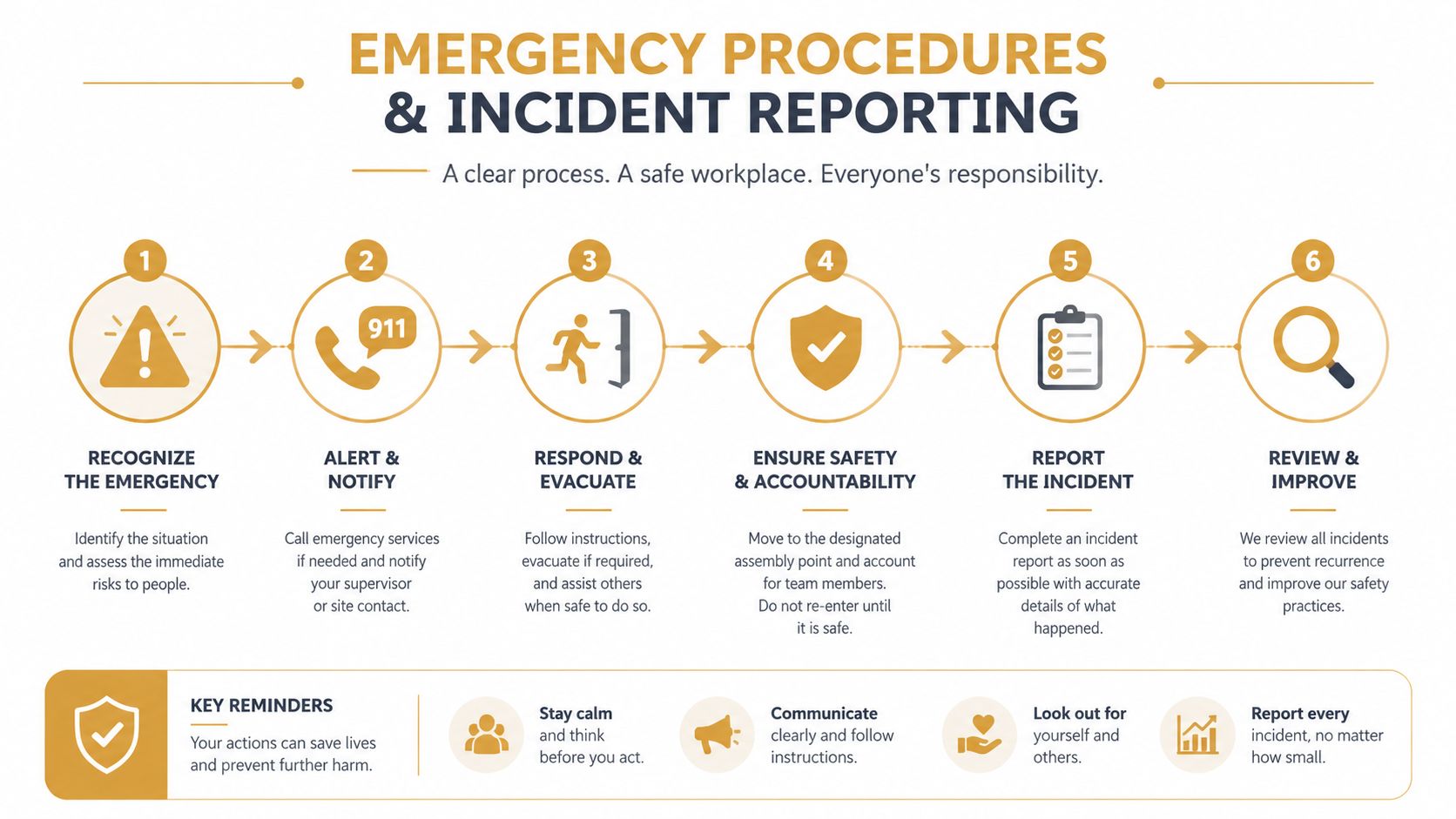
The first sixty seconds matter more than any beautifully written policy. Stabilise the child, call 999 or the family's agreed private paediatric service, notify parents on one channel that everyone uses, and preserve the scene if a hazard, product, or object might be relevant later.
Set the incident tier before anything happens
Families and nannies should agree four incident tiers in advance. A near miss means nothing happened, but it could have. A minor injury needs cleaning, comfort, and a written note. A medical-attention event triggers escalation and likely parental review. A serious notifiable event needs formal reporting, fast.
The reporting habit should mirror the discipline used in regulated childcare. UK childcare providers must notify Ofsted of a serious accident, illness, injury, or death involving a child in their care within 14 days, and food poisoning affecting at least two children is reportable, according to government guidance on serious childcare incidents. For household use, the point is the same, document the event, the decision, the names of the adults involved, and where the record is stored.
For families building an escalation tree, emergency communication for families is a useful reference for structuring who gets called, in what order, and with what information.
Keep the record boring. Clear dates, plain language, and no guessing are what protect everyone later.
Keep the paper trail clean
Write the incident note on the same day, sign and date it, and attach any relevant medication administration record. If photos are allowed by household policy, use them only to document the injury or scene, then store them securely with the report. A weekly review between parent and nanny catches patterns early, especially repeated bumps, kitchen slips, or return-to-sleep issues.
For households that want a formalised response standard, the internal paediatric first aid page is a useful companion when checking that the caregiver's training aligns with the home's emergency plan.
School Runs, Travel and Supervised Outings
A school run, a museum trip, and an international flight are three different risk profiles. Treating them as one transport policy is where households usually lose control, because each one changes supervision, documentation, and handover points.
Match the controls to the journey
The school run is repetitive, which is helpful, but repetition can breed complacency. Keep the route fixed, use the right car seat or booster, agree who handles the kerbside handover, and maintain a sign-in and sign-out record with the school if that's part of the arrangement.
Day trips need a different lens. Crowd density, animals, water, public toilets, and transport type all change the risk picture, so the ratio of adults to children should never dip below the level the parents have signed off. The nanny should also know where the meeting point is if the group splits for any reason.
| Scenario | Supervision Ratio | Key Controls | Post-Trip Records |
|---|---|---|---|
| School run | Agreed family standard | Fixed route, car seat, handover protocol | Sign-in and sign-out note |
| Local outing | Agreed family standard | Headcount, venue check, first-aid kit | Arrival and return time |
| Travel day | Agreed family standard | Itinerary, IDs, medical kit, supervision hours | Written trip log and parent summary |
International or multi-stop travel needs another layer. Copies of passports and insurance should be held separately, the itinerary should be written, and the household office or family assistant should know where the child is supposed to be at each stage. The nanny returns with the log, any receipts for child-specific supplies, and a note of anything that changed.
For households moving between London, New York, and Dubai, the operational point is consistency. The route may change, the standard shouldn't.
Onboarding a New Nanny Without the Gaps
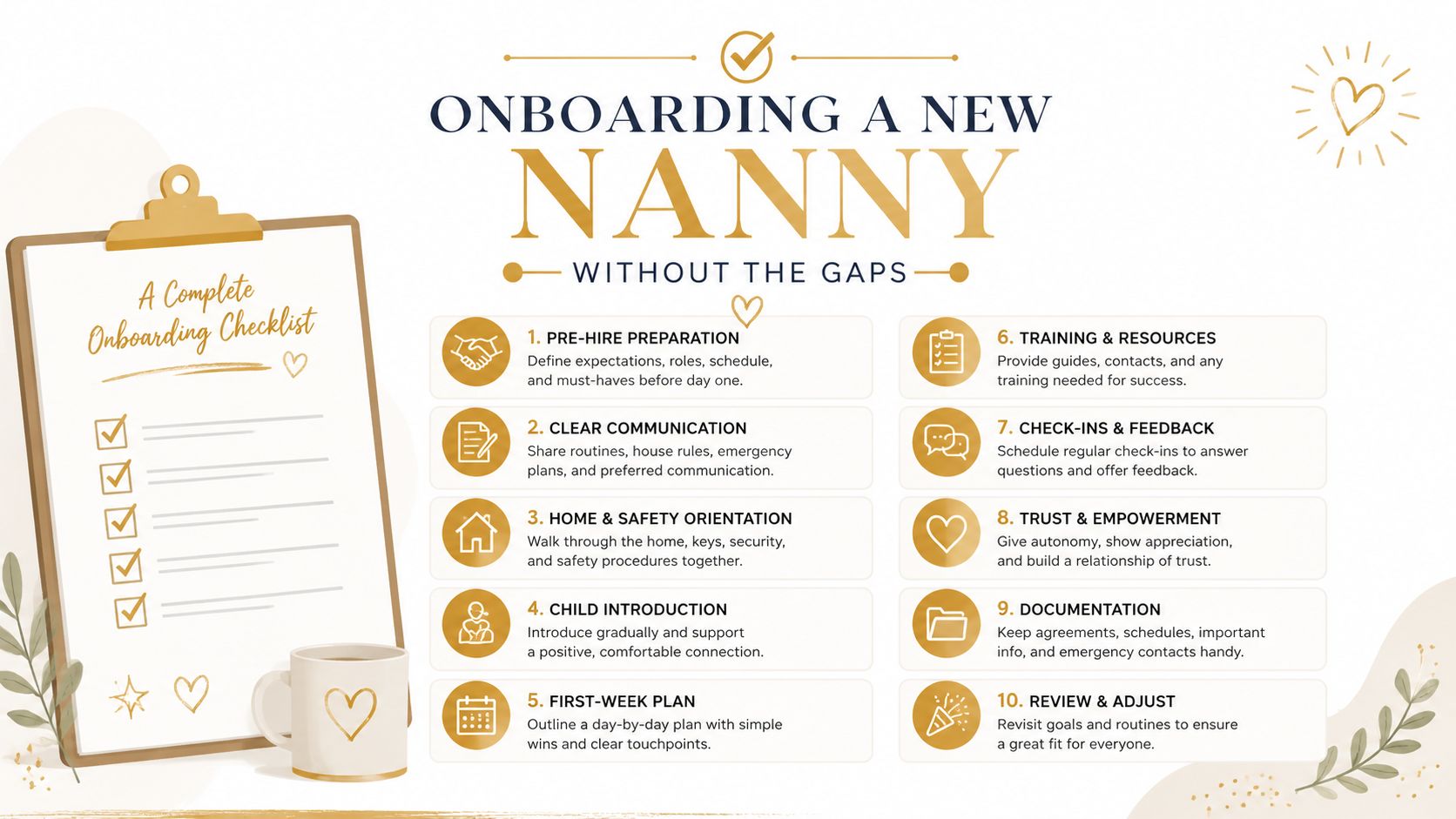
A safe start begins before day one. The family should exchange the background check, paediatric first aid certificate, references from the last two employers, right-to-work evidence, and a signed copy of the household policies before the nanny arrives.
Walk the house, don't just hand over a folder
The first tour should cover every room, every lock, the allergy list, sleep standards, medicine storage, and any child-specific items that need explanation. That includes the nursery, kitchen, playroom, bathrooms, garden access, and any staff-only areas that are off limits.
The first two weeks should be supervised, especially if there is an outgoing carer to shadow. Daily debriefs between parent and nanny help catch misunderstandings before they turn into habits. A trial period should be treated as a training window, not just a performance test.
If you want a practical reference point for screening, the internal nanny background check page sits naturally alongside this stage of the process. For families comparing different screening layers, complete background check overview is also a useful external read on the wider logic of identity, employment, and online footprint review.
The best onboarding documents are the ones the nanny can actually use at 6.30 a.m. when the house is already moving.
Common mistakes are predictable. Families skip the written sleep plan, forget to log medication authorisation, or assume the outgoing nanny has “covered everything”. In practice, those omissions are where avoidable errors start.
Common Questions Families Ask About Childcare Safety
A basic DBS check is only one layer. Families should also verify identity documents, examine employment gaps, triangulate references, and review the digital footprint where appropriate for the role and jurisdiction. In private households, the practical standard is a full picture, not a single certificate.
Pets need a written addendum too. Resident dogs, visiting animals, and even calm family pets can change the risk profile around infants, so the nanny should know who handles feeding, hygiene, gates, and supervision. Where allergies are present, keep an allergen chart, the child's action plan, and clear household instructions in one place.
Shared households need boundary rules. Guests, staff, cousins, and school friends all move differently through a home, so door locks, photo consent, and chaperone etiquette should be written down, not negotiated in the moment. London, New York, and Dubai households can also differ in ID expectations, domestic-worker accommodation rules, and travel documentation, so the household file should reflect the place the child is living in.
Allergies, asthma plans, and religious or cultural dietary rules should travel with the child. Anaphylaxis plans, EpiPen storage, and medication responsibility need to be documented, signed, and shared with any caregiver who might take over, including grandparents or a temporary nanny.
If you're refining a household child-safety plan, Superstar Nannies can help you shape the recruitment side of it, from screening and references to matching the right nanny, maternity nurse, or rota team to the way your home runs. Visit Superstar Nannies to discuss a discreet placement that fits your family's routines, travel pattern, and safeguarding expectations.