

You've found a nanny with an impressive CV, relevant references and a folder full of course certificates. Then you notice that the paediatric first aid certificate is out of date, the training dates aren't clear, and the candidate can't explain how a recent course changed the way they work with children. That's the point at which continuing professional development becomes more than a line on a profile.
For private households, CPD is rarely governed by a professional regulator. Families choose what matters, agencies assess relevance, and candidates decide whether their learning is current enough to support the role they want. The strongest development record isn't the longest one. It shows sound judgement, practical application and a clear understanding of the household's needs.
What Continuing Professional Development Means in Private Households
In regulated UK professions, continuing professional development is closely tied to public protection and the right to practise. A 2020 review of regulated health and care professions found that mandatory CPD applied to approximately 1.5 million people across 32 regulated health and care titles, with 1,491,032 individuals working under those titles in 2018/19. The Health and Care Professions Council audits CPD by selecting a random sample of 2.5% of registrants when a profession renews registration.
That structure gives regulated professionals a clear external benchmark. The Government Statistical Service CPD policy expects members to complete 60 to 100 hours of CPD each year, including 30 to 50 hours of statistical or data-science development, supported by a documented logbook. The Government Communication Service uses a different model, requiring at least 30 CPD points per performance year, approximately 30 hours or 4 to 5 days of learning, with a 70:20:10 blend of on-the-job learning, learning from others and formal training.
Private childcare doesn't operate under one equivalent framework. Nannies, governesses, tutors, household managers, estate staff and personal assistants may develop professionally without a statutory CPD register or annual renewal system. Their development still needs structure, however, because families are making high-trust hiring decisions without a formal licence that answers every question.
What CPD looks like in a household role
I define CPD for private staff as the ongoing process of gaining, recording and applying competencies that are relevant to a specific role. It can include:
- Formal learning, such as a recognised childcare qualification, Montessori training or paediatric first aid.
- Short courses, including safeguarding, SEND awareness, nutrition or language development.
- Supported practice, such as shadowing a senior nanny, tutor or household manager.
- Reflection, where the candidate records what changed in their approach and what result they observed.
Families may not ask to see a CPD log during every interview. They will still notice whether a candidate can discuss recent learning intelligently, relate it to the children in question and identify areas where they need further development. In a private household, the placement conversation is often the true test.
The Core Components of a Strong CPD Plan
A credible plan starts with the role, not with a catalogue of available courses. A maternity nurse, a travelling nanny, a governess and a household manager face different risks, routines and expectations, so the learning plan should reflect the work they'll perform.
The first component is a clear development objective. “Complete more courses” is weak. “Improve support for a child with dyslexia by developing practical literacy strategies and reviewing them with the parents” gives the family and candidate something meaningful to evaluate.
The second is a sensible balance between formal and informal learning. A recognised qualification can establish a foundation, but a short course only becomes useful when the candidate can show how they applied it. Contact hours, self-directed study and reflective writing should be recorded separately rather than combined into one unexplained total.
Formal and informal learning in practice
| Activity Type | Examples | Evidence Required | Typical Hours |
|---|---|---|---|
| Formal CPD Activities | Level 3 childcare qualification, Montessori diploma, paediatric first aid certification | Certificate, awarding body or provider details, completion date | Varies by course |
| Short-course learning | Safeguarding update, SEND awareness, nutrition or language module | Certificate, course outline, learning objectives | Varies by provider |
| Guided workplace learning | Shadowing a senior nanny, supervised routine planning, feedback from a tutor | Supervisor note, dated learning record, agreed outcomes | Agreed with the household |
| Self-directed study | Reading on child development, preparing a learning activity, researching a family's educational approach | Reading log, notes, materials created | Candidate records time spent |
| Reflective practice | Reviewing a behaviour strategy, sleep routine or transition between homes | Short reflection, action taken, follow-up observation | Candidate records time spent |
What belongs in the portfolio
A useful portfolio should contain dates, providers, learning outcomes and evidence of application. It might include a certificate, a reflective note, a lesson plan, anonymised feedback or a record of a supervised activity. Sensitive family information must never be uploaded casually. Confidentiality takes priority over demonstrating experience.
Mandatory refreshers deserve their own section. The early years guidance on paediatric first aid states that childminders must hold a current 12-hour paediatric first aid certificate, renewed every three years. In group settings, at least one person with a current 12-hour certificate must be present at all times and on outings. The guidance also says that staff who gained Level 2 or Level 3 qualifications after 30 June 2016 must complete full or emergency paediatric first aid within three months of starting work to count in staff ratios.
Discretionary development, such as language lessons or culinary training, can distinguish a candidate, but it shouldn't obscure the essentials. A senior principal will usually trust a concise, current, well-evidenced portfolio more than a CV crowded with unrelated attendance certificates.
Training Families Most Commonly Request
A family with a newborn will usually begin with paediatric first aid, safe sleep knowledge and evidence of newborn experience. A family with school-age children may focus on educational support, emotional regulation and the ability to work alongside tutors. The training request changes with the household, but the underlying question remains consistent. Can this person make sound decisions when the parents aren't present?
Paediatric first aid and safeguarding form the baseline for most childcare searches. They don't replace experience, judgement or references, but gaps in these areas can prevent a candidate from progressing. In England, the Early Years Foundation Stage statutory framework requires providers to support staff with appropriate training and professional development so they can continually improve children's learning and development experiences.
Matching development to the brief
A Montessori-trained nanny may appeal to parents who want carefully prepared activities and independence-building routines. A family using Steiner-informed principles may ask how the candidate approaches rhythm, imagination and screen exposure. Another family may prioritise gentle parenting, sleep support or positive behaviour strategies, but they'll still need to hear how the candidate applies those ideas without undermining parental authority.
SEND awareness has become an important screening area in many private searches. Training related to autism, dyslexia or ADHD can be valuable, particularly when it's paired with practical experience and a willingness to work with parents, schools and specialists. A certificate alone doesn't establish that a candidate can adapt communication, plan transitions or recognise when further professional advice is needed.
Bilingual households may value language acquisition skills alongside fluency. A nanny who can create consistent opportunities for both languages during play, reading and daily routines offers more than a language listed under “additional skills”. Families may also request cultural sensitivity, particularly when children move between countries or attend international schools.
For older children, a nanny who can support homework, tutoring or exam preparation may be considered for a broader role. Culinary and nutrition training can matter to families seeking a chef-style nanny, while etiquette, protocol, confidentiality and technology skills are relevant in UHNW residences where several staff members share responsibility for the household.
The strongest candidates don't collect every possible qualification. They choose learning that makes them more useful to a particular family.
How Agencies Structure Ongoing Development
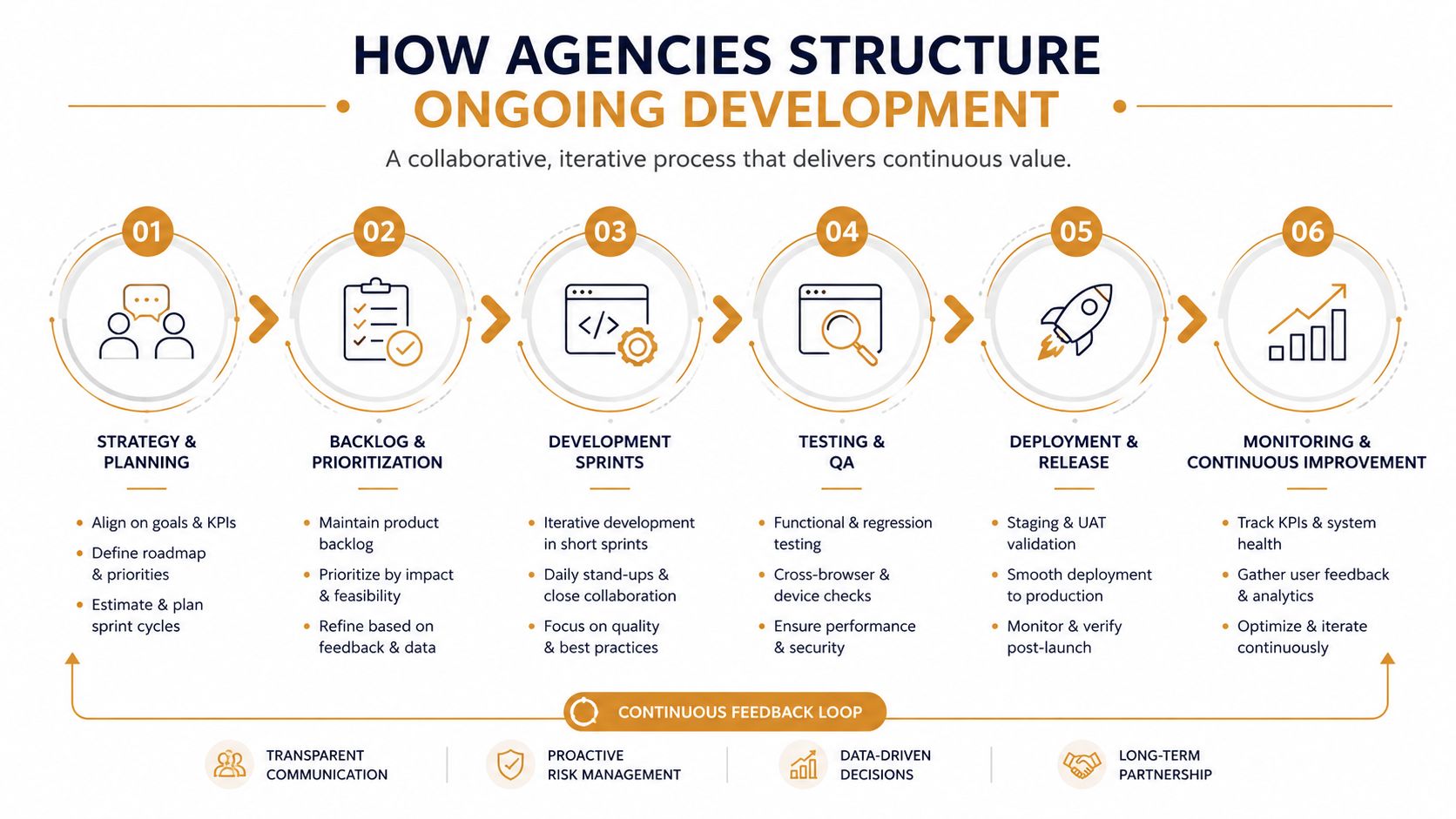
A mature agency treats development as part of the professional relationship rather than a one-off document check. The process should begin with a review of the candidate's current role, qualifications, refreshers, ambitions and any gaps that could affect future placements.
An effective workflow commonly includes:
- Initial assessment, covering certificates, experience, references and the candidate's intended direction.
- Placement planning, where the family's requirements are translated into practical learning priorities.
- Written agreement, setting out training costs, study time, scheduling and responsibility for keeping records.
- Regular check-ins, giving the consultant, family and candidate an opportunity to discuss progress.
- Portfolio maintenance, with certificates, reflective notes and appropriate supervisor feedback.
- Annual review, updating the plan as the children, household or candidate's career changes.
Who owns the process
The candidate owns their professional responsibility. They should track expiry dates, select relevant development and bring honest questions to the agency and family. The family sets the household context, agrees reasonable access to training and decides which capabilities matter most to the children and wider team.
The consultant helps reconcile those interests. A candidate may want to study a language, while the family needs stronger support for a child with additional needs. Both priorities can be valid, but the placement plan should explain what will happen first and how the learning will fit around working hours.
Families and candidates should confirm in writing who pays for a course, whether travel or study time is included, how time away from the household is arranged and whether the agency records outcomes. An agency that only forwards job alerts may not offer this continuity. Before accepting a placement, candidates should ask what review process exists, who their point of contact will be and how development concerns will be documented.
Why CPD Shapes Career Credibility and Long-Term Placements
Private childcare has no single licensing route that automatically signals current competence. That makes a candidate's development history unusually important. It gives families a way to assess professional habits, not just completed education.
During interviews, current learning helps a candidate answer the questions that matter. How would you adapt an activity for a child who struggles with reading? How would you support a bilingual routine? What would you do differently after your latest safeguarding update? A thoughtful answer shows application, reflection and professional maturity.
Recruiter's recommendation: Ask candidates to explain one recent change in practice, not simply to name their latest course.
Current documentation also affects confidence around risk. Families vetting staff for high-net-worth households may pay closer attention to a dated first aid certificate, safeguarding evidence and clear references than to an impressive but unrelated degree title. The certificate matters because it supports a specific responsibility. The conversation around it matters because it reveals whether the candidate understands the limits of their training.
Development creates mobility
A well-chosen CPD record can help a candidate move between roles. Child development training may support progression from nanny to governess. Language development, tutoring and travel experience may strengthen a travelling nanny profile. Organisation, confidentiality and team coordination can support a move towards household management.
CPD also provides continuity when a former employer relocates. A documented history of learning, paired with references that describe how the candidate applied it, gives a future family a clearer basis for trust. In a market without formal licensing, ongoing learning is one of the few factors a candidate can control directly.
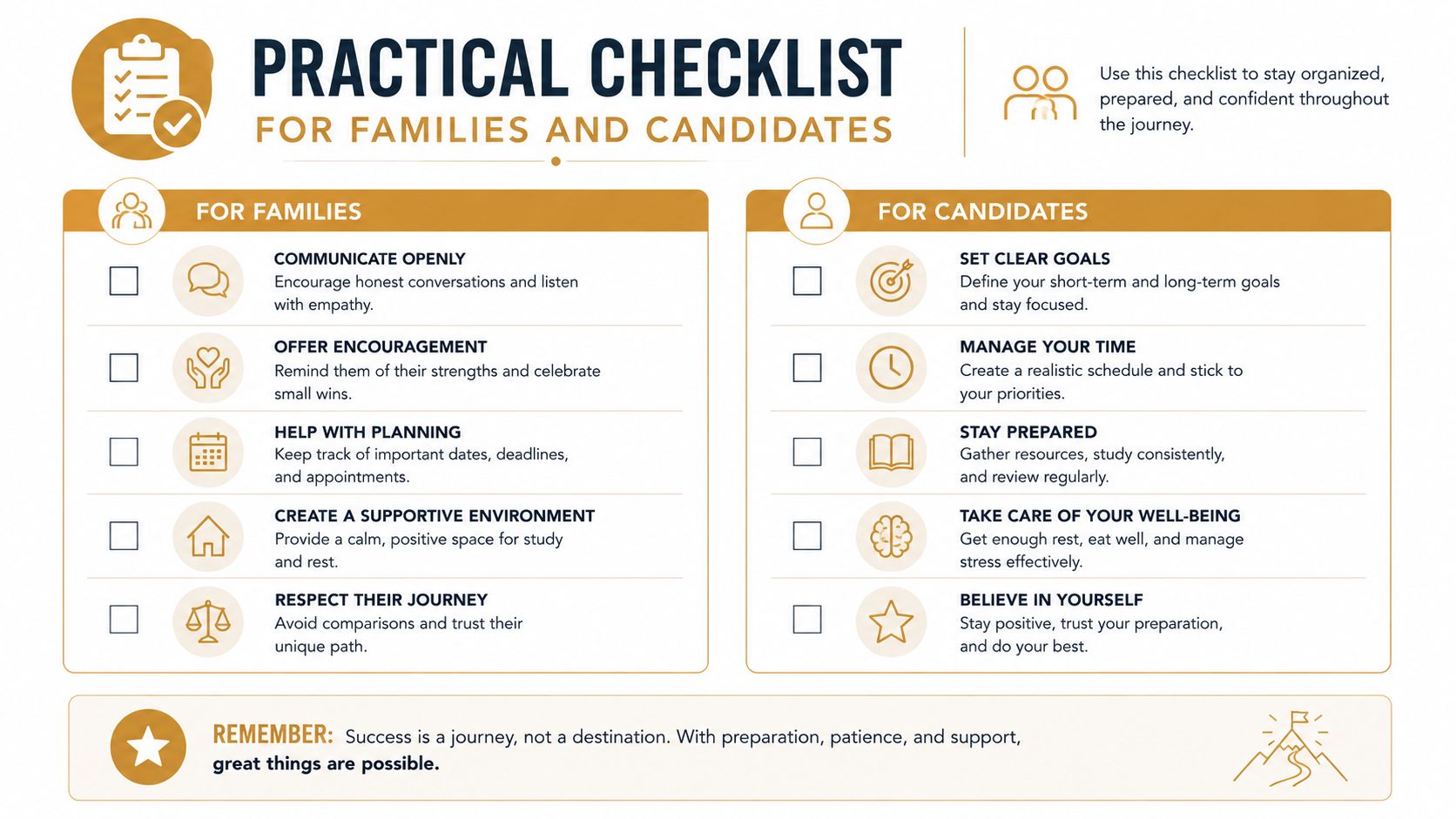
Practical Checklist for Families and Candidates
Families should assess CPD as part of the hiring conversation, not as an administrative exercise completed after the offer. The following checks are simple, but they expose gaps that a polished CV can conceal.
For families
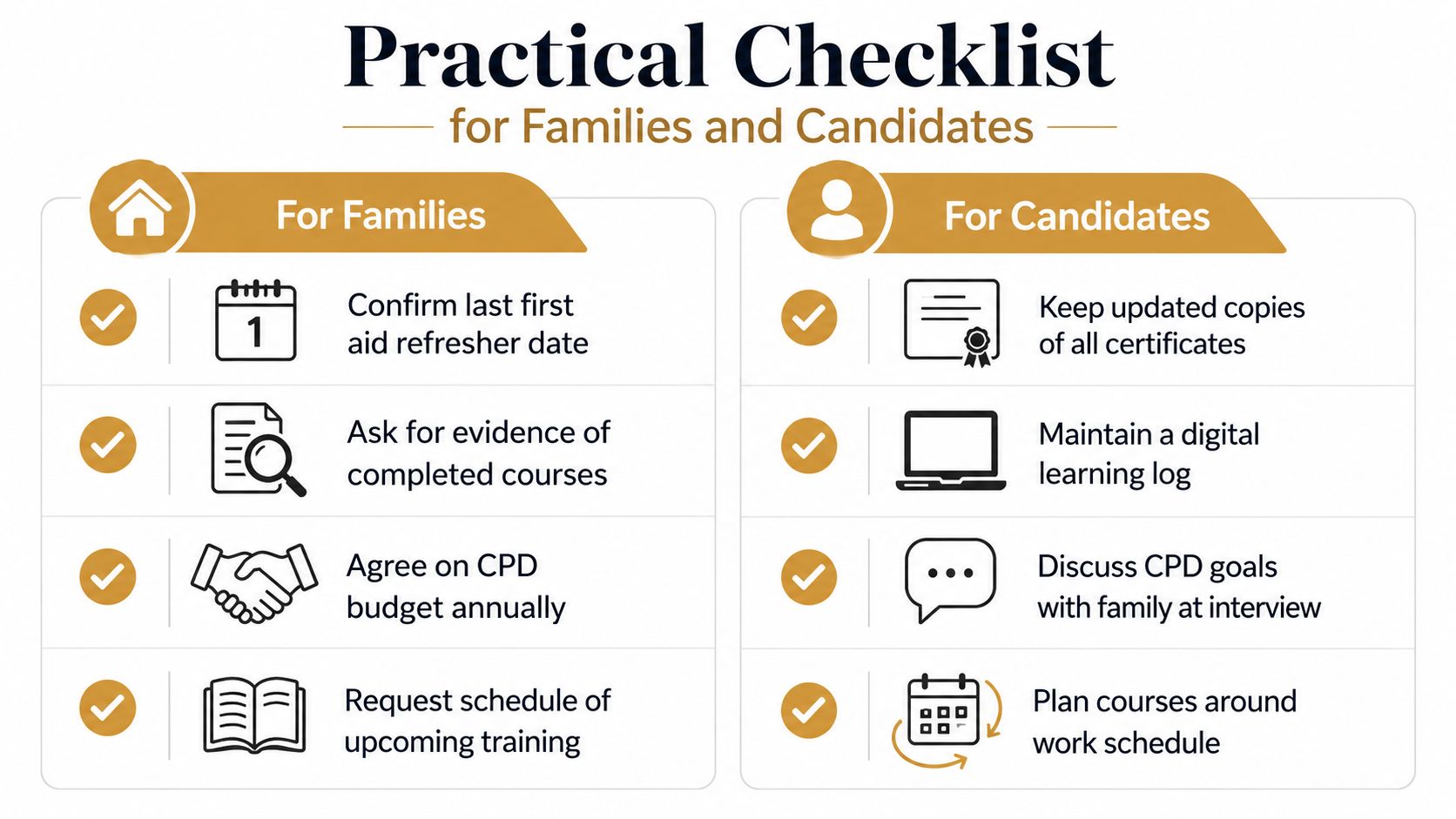
- Confirm first aid dates: Check the candidate's last paediatric first aid refresher and renewal requirement.
- Request relevant evidence: Ask for certificates or provider details for child development, safeguarding and any specialist training named in the profile.
- Agree study arrangements: Record training costs, study days and scheduling expectations in the employment documentation.
- Review the plan annually: Discuss whether the children's needs or the household's structure have changed.
For candidates
- Keep one secure folder: Store certificates, course outlines, reflective notes and appropriate feedback together.
- Flag renewal dates early: Set a reminder 90 days before a certificate expires so there's time to arrange a refresher.
- Record informal learning: Include language lessons, shadowing, specialist workshops and supervised practice, not just accredited courses.
- Discuss goals at interview: Explain which capability you're developing and how it relates to the family's brief.
- Ask the agency to update its records: A current agency file helps consultants present your experience accurately.
A development plan should remain live. The agency, family and candidate should review it every 12 months, or sooner when the children's needs, travel pattern or staff structure changes. The purpose isn't to create paperwork. It's to keep professional learning connected to the work.
Common Questions About Continuing Professional Development
How many CPD hours should a nanny complete each year?
There isn't one universal annual target for private nannies. A stronger profile comes from relevant, documented learning and evidence of application rather than an arbitrary total. Candidates should discuss priorities with the family or agency and record formal study, workplace learning and reflection separately.
Are online CPD courses credible?
Online courses can be credible when the provider, learning objectives, assessment and completion evidence are clear. They're less persuasive when the candidate can't explain what they learned or how it changed their practice. For practical subjects, families may reasonably expect additional hands-on or assessed training where appropriate.
Which certificates will an agency verify?
Agencies commonly check the identity of the provider, the candidate's name, completion date and renewal requirements for documents relevant to the placement. Candidates should retain certificates and supporting course information. A family may also ask to see evidence directly during the hiring process.
Is CPD the same as statutory training?
No. CPD is the broader process of professional development. A statutory or role-specific requirement, such as paediatric first aid within the English early years qualification guidance, may be one part of that process. The guidance states that a full and relevant Level 3 qualification is normally required for early years applicants, with a specific route for childminders involving a relevant Level 2 qualification, at least one Level 3 module and significant early years experience.
Does CPD affect visa requirements for overseas placements?
CPD doesn't automatically establish visa eligibility. Immigration requirements depend on the destination, the individual's circumstances and the relevant official rules, so families and candidates should obtain jurisdiction-specific advice rather than treating a training portfolio as immigration evidence.
Superstar Nannies supports families with discreet international recruitment for nannies, governesses, maternity nurses, tutors and wider private household staff, with development records considered alongside experience, references and role fit. Visit Superstar Nannies to discuss a carefully matched placement or to present your professional profile for future household opportunities.