


You can feel the tension before anyone says it out loud. A family wants a Waldorf-trained nanny, the staffing team wants a clear brief, and the question underneath is practical, not philosophical, what does this training change in a home, a nursery, or a child's daily rhythm?
Waldorf education training is often discussed as if it were only about stories, craft, and a beautiful classroom atmosphere. In private households, though, it becomes something more concrete, a way of shaping routines, transitions, behaviour support, and the feel of the day so children can settle, focus, and flourish.
Understanding Waldorf Education Principles
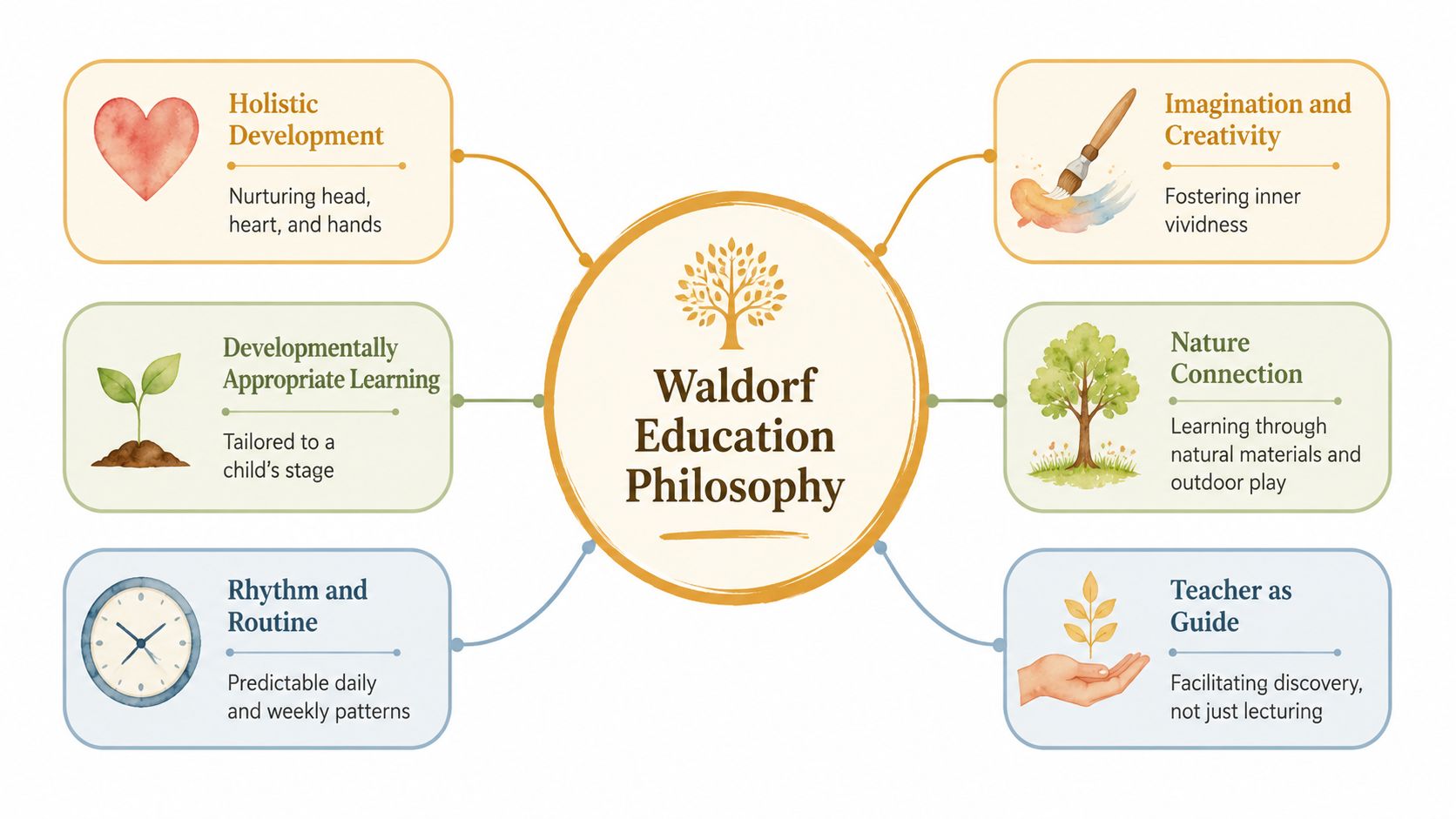
A family I worked with wanted a nanny who could bring calm to a busy London household without turning the nursery into a rigid timetable. Their children needed predictability, gentle authority, and a daily rhythm that didn't feel overstimulating. Waldorf pedagogy starts from the child's whole development, so the approach can be translated into a home in a way that supports daily life, not just lesson delivery.
What the philosophy asks adults to do
Waldorf pedagogy is explicitly developmentally appropriate, experiential, and arts-integrated from preschool through 12th grade, with the arts woven across subjects rather than added on as decoration Waldorf education overview. In a household, that usually means an adult who knows how to slow the pace, protect concentration, and choose materials and activities that fit the child's stage rather than the adult's agenda.
That sounds abstract until you see it in daily life. A Waldorf-informed nanny might choose a walk in the garden, a bread-making task, or a story sequence instead of jumping straight to screens or a packed activity schedule. Families comparing child-centred approaches often find it useful to read the Montessori method UK guide, because it helps separate one philosophy from another without flattening their differences.
Practical rule: if a child is dysregulated, the adult's rhythm matters more than the child's instructions.
Why families notice the difference
The Waldorf tradition treats the adult as a guide, not a lecturer. In a private household, that matters because children often copy the emotional climate of the room before they copy the words being spoken. A well-trained nanny in this style does not only “occupy” a child, she shapes the conditions in which the child can concentrate, imitate, and play with purpose.
For staffing teams, that distinction is important. The strongest placements are not the ones with the most activities on paper. They are the ones where the nanny can hold a steady rhythm, notice mood shifts early, and keep the day coherent without making everything feel performative. For families and agencies, that practical interpretation of Waldorf education is what turns philosophy into household value.
The Structure and Rigour of Waldorf Training Programmes
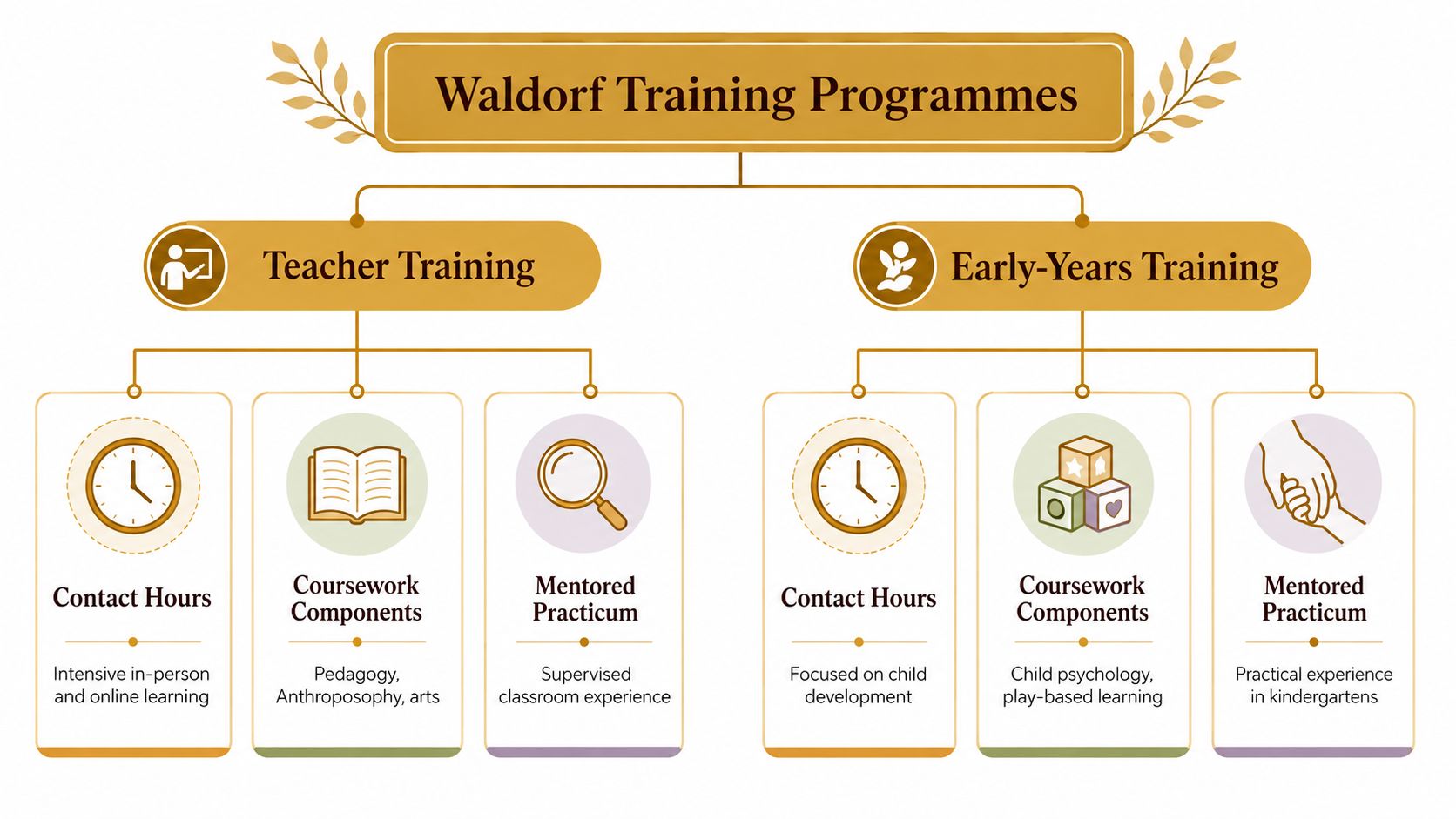
A family can hear “Waldorf-trained” and assume the preparation is light or informal. In practice, the training is carefully structured, with substantial contact hours, mentored practicum, and coursework that brings together pedagogy, child development, the arts, and reflective work AWSNA-recognised preparation. For households hiring nannies, governesses, or wider private staff, that level of formation matters because it shapes how an adult holds rhythm, observes behaviour, and supports a child without turning every moment into a performance. It also aligns with broader educational trends that show Why professional development matters for teachers.
What the hours actually mean
For elementary preparation, AWSNA-recognised programmes require at least 500 hours of coursework plus 6–12 weeks of field work AWSNA-recognised preparation. Early-childhood training recognises a minimum of 300 contact hours for birth-to-three and 450 hours for birth-to-seven, with mentored practicum as an additional component. Those figures matter because they show this is specialist preparation, not a short workshop that someone can absorb in a weekend, then carry straight into a demanding household role.
The content balance is just as revealing. One widely used framework allocates 10–15% to inner work and self-development, 10–25% to child development, 25–40% to the art of teaching, 15–25% to social and organisational governance, 10–15% to arts, and 5–16% to independent research teacher preparation framework. That balance explains why a Waldorf-trained professional is usually comfortable with both the practical and the relational demands of a private home. They are expected to understand children, but also to bring steadiness, judgement, and self-awareness to the adults around them.
Why this affects placement planning
The European Council for Steiner Waldorf Education reports 102 teacher trainings across member countries, including 38 full-time and 60 part-time programmes, plus 4 offering both modes ECSWE key numbers. The same source places the wider European network at 190,000 pupils in 802 schools, with about 18,400 teachers and 1,380 kindergartens and day-care centres. For UK families and staffing agencies, that scale shows the talent pool sits inside a mature transnational system, not a small informal circle.
Good Waldorf training produces adults who can observe first, respond second, and plan the day around the child's state, not the other way round.
For parents and agencies, that usually means lead times are longer and screening needs more care. A well-prepared candidate may have completed a full teaching route, early-years work, or a layered foundation plus practicum pathway, and each route develops at a different pace. If you are building a shortlist for private household staff, treat Waldorf-trained candidates as a specialist pool and allow time for scheduling, reference checking, and developmental fit. For a closer look at how that preparation connects to domestic placements, see household staff training.
Choosing the Right Waldorf Training Pathway
A family may hear “Waldorf-trained” and assume it points to one fixed qualification. It does not. Some practitioners complete full-time teacher certification, others study part-time while working, and some begin with foundation studies in anthroposophy before moving into early-years, elementary, or secondary preparation becoming a Waldorf teacher. The right path depends on the role you need filled, because a nursery nanny, a governess, and a class teacher are not being asked to do the same work.
Matching training to the job
A nursery-focused nanny needs different preparation from a governess supporting school-age children. The early-years route is usually more relevant where the job centres on rhythm, imitation, sensory life, and play, while teacher preparation is more suitable when the role includes curriculum planning, structured learning, and parent-school communication. That distinction matters in private households, because it tells you whether a candidate is ready for the realities of family life or still developing the skills needed to hold a child's day with confidence.
For staffing teams, the useful question is evidence, not labels. A candidate can be warm and sincere without being ready for Waldorf practice in a live household. Look for practicum, reflection, and enough supervised experience to steady the day under pressure, much as a skilled cook needs more than a recipe to run a busy kitchen.
Waldorf training pathways compared
| Pathway | Duration | Focus | Ideal For |
|---|---|---|---|
| Full-time teacher certification | Structured, often multi-term | Pedagogy, child development, classroom practice | Classroom teachers, lead educators |
| Part-time teacher or early-years training | Flexible, ongoing | Same core principles with slower pacing | Working professionals, career changers |
| Foundation studies in anthroposophy | Introductory | Philosophical grounding, self-development | People testing fit with the movement |
| CPD workshops and refresher courses | Short, periodic | Specific skills, updated practice | Practising staff, teams needing development |
| Early-years specialist preparation | 300 to 450+ contact hours plus practicum | Birth-to-seven or birth-to-three care | Nannies, nursery staff, early-years practitioners |
The table above shows why families should read beyond the headline. A short course can strengthen a team member's understanding of rhythm or storytelling, while a longer route usually signals deeper preparation for planning, observation, and child development. For a household role, the fit often depends less on the title of the course and more on how directly it prepares the person for waking routines, meals, transitions, rest, and communication with parents.
Accreditation and recognition questions
Families often get stuck here. Waldorf training can be respected within the Steiner/Waldorf sector, but that does not automatically tell you how it maps onto UK regulatory expectations or mainstream teacher pathways. The UK still needs clear route-to-employment information, especially with teacher supply under pressure. The Department for Education reported that only 59% of postgraduate initial teacher training targets were met in 2024/25, which makes practical guidance on career routes even more relevant teacher training targets context.
For staffing directors and parents comparing private domestic routes, Norland College inside the world's most elite nanny training offers a useful contrast in how premium training frames professionalism, care, and household fit. If you are weighing how a candidate will work inside a family office environment, with travel, changing routines, and close parent contact, that sort of comparison is often more helpful than a simple yes or no on “Waldorf” alone.
Some families also want staff who can use modern communication tools without losing the calm, human quality that Waldorf work values. The link between philosophy and delivery shows up clearly in digital tools for school communities, where the method is still relational even when the format is online. That matters in households too, because the strongest candidates know how to keep the child-centred tone intact whether they are speaking with parents in person, sharing updates by message, or coordinating care with other staff.
Applying Waldorf Methods in Private Households
The easiest mistake is to think Waldorf practice means wooden toys and a basket of crayons. In a private home, it's really about how the day feels. The rhythm, the transitions, and the adult's tone are the method, and the materials only work when they support that wider structure.

What a Waldorf-informed day looks like
A skilled nanny might begin with a simple morning rhythm, dressing, breakfast, a shared task, then movement or outdoor time before any table-based learning. Later, she might bring a story, handwork, baking, or watercolour work, depending on age and temperament. The point isn't to pack the day. It's to make the day coherent enough that the child doesn't have to keep reorienting.
That approach also helps with family management. If parents are moving between meetings, travel, and shifting schedules, the nanny becomes the anchor point that keeps the child's internal clock stable. In real placement work, I've seen that reduce friction around meals, transitions, and bedtime, because children are less likely to feel ambushed by the day.
How to explain the value to parents
If the parents are unfamiliar with Steiner practice, avoid abstract language. Talk about what they will see. A child who knows what comes next is often easier to guide. A child who spends time outdoors, helps prepare food, and hears stories in a calm setting usually settles more readily than a child whose day is constantly interrupted.
You can also connect Waldorf methods to language growth and practical communication. If you need a simple resource for families, the language development activities page is a useful complement, because it helps translate child-centred routines into speech, vocabulary, and conversation support.
Household test: if the routine is working, the child can move from one activity to the next without the adult having to negotiate every transition.
For elite households, Waldorf-trained staff often add value. They are not just planning activities; they're protecting the emotional climate of the day. That's a different skill, and families usually feel the difference before they can name it.
Addressing Gaps in Waldorf Training and Inclusion
The strongest version of Waldorf training still has gaps, and it's better to name them than pretend they don't exist. Inclusion, SEND awareness, safeguarding, and UK alignment remain areas where families should ask careful questions rather than rely on the label alone. The training tradition is evolving, but modern households need practical competence, not just philosophical alignment.
Recent research on inclusive Waldorf schooling notes that the model is still actively working through tensions between traditional practice and current inclusion goals inclusive Waldorf schooling research. That matters in the UK because the number of pupils with Education, Health and Care Plans reached 638,745 in January 2025, up 11.6% year on year, and SEND support needs continue to rise DfE SEND data. A home that serves neurodivergent children or children with additional needs needs staff who can adapt, record concerns clearly, and work alongside therapists or school teams.
The practical question for families is simple. Has the candidate supplemented Waldorf learning with current safeguarding practice, inclusion strategies, and household-specific training? If not, they may still be a strong philosophical fit, but not yet a complete hire for a high-expectation environment.
Useful filter: ask for examples of how the candidate would support mixed-ability siblings, sensory sensitivities, or a child who resists transitions.
That question reveals more than a certificate ever will. It shows whether the training has been integrated into lived practice, which is what matters when the home is the child's main environment.
Your Next Steps in Waldorf Education Training
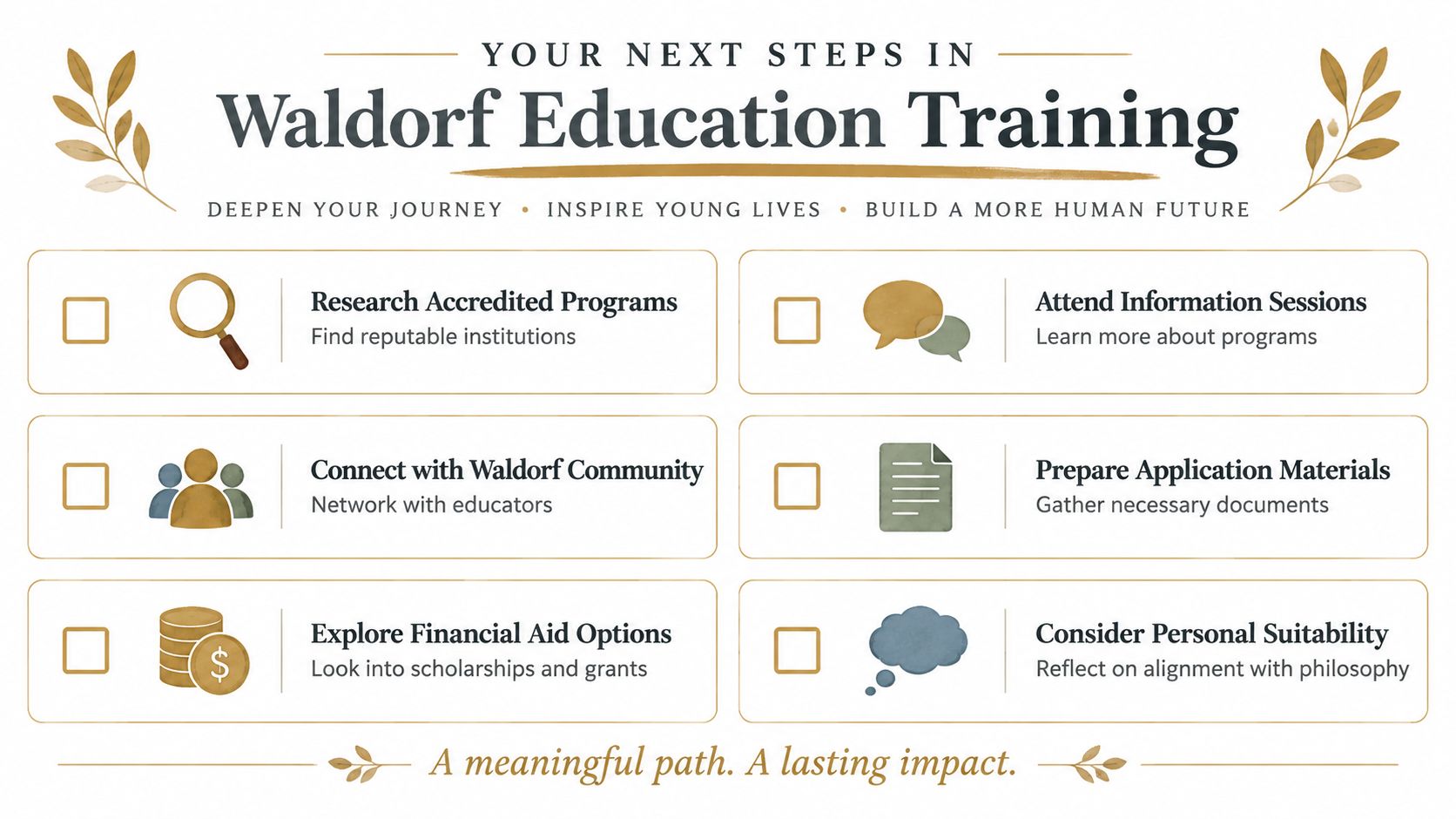
A private household can feel the difference quickly. One candidate may speak fluently about Steiner principles, yet still need closer scrutiny before being trusted with a child's daily routine, transitions, and emotional cues. The next step is to separate polished language from real preparation. Ask what the candidate studied, how much supervised practice they completed, and whether that practicum matched the age group you need. If you are training yourself, check whether the course includes reflective work, mentoring, and enough hands-on exposure to make you useful in a real home, not only thoughtful in theory.
A sensible shortlist for families and professionals
Start by checking whether the programme is recognised within the Steiner/Waldorf network, then look at its practicum requirements and its balance of child development, arts, and teaching practice. After that, ask whether it includes ongoing refresher courses, because the movement treats development as continuous rather than finished.
For a family, that question matters in a very practical way. A training path that stops at theory can sound elegant in conversation, but it may not prepare a nanny, governess, or tutor-like professional for the pace of a staffed home, where boundaries, routines, and handovers matter just as much as the philosophy behind the care.
A good next step is practical due diligence. Speak to agencies that understand the difference between classroom preparation and household deployment, especially if the role is for a rota nanny, governess, or tutor-like position. A bespoke search saves time because the strongest candidate is often the one whose training and temperament fit your home's rhythm, not only the one with the longest CV.
For families who want that kind of support, Superstar Nannies works with private household staffing across childcare and education-focused roles, including placements where educational philosophy needs to sit comfortably alongside daily family life. If you are ready to hire, or you need help judging whether a Waldorf-trained professional is the right fit, speak with the team and ask for a shortlist built around your child's needs, your household rhythm, and the level of educational support you expect.