


Bringing a new baby into your life is a moment of unparalleled joy, but it also ushers in a period of intense adjustment and can be overwhelming. For families accustomed to structure and excellence, the uncertainty and exhaustion of those first few weeks can be particularly jarring. This is where professional maternity and nursing support becomes invaluable, offering the expert guidance needed to ensure both mother and baby can truly thrive.
The Value of Postnatal Support: More Than Just an Extra Pair of Hands
Welcoming a newborn is, without a doubt, a wonderful and life-changing experience. However, the reality of the first few weeks often involves sleepless nights, physical recovery from childbirth, and a steep learning curve. For families who value a calm, confident, and well-managed start, engaging professional postnatal support is less of a luxury and more of a practical investment in the family's wellbeing.

This kind of support isn't about stepping in for you as a parent; it's about empowering you. Think of a maternity specialist as a calm, knowledgeable partner for a short, crucial time. They bring a wealth of experience directly into your home, allowing you to focus on bonding with your baby and recovering your strength, safe in the knowledge that an expert is handling the intricate details of newborn care. Managing those early weeks often hinges on sleep, and the excellent Little Venture Co. tips for new parents offer a great starting point for families.
The benefits of having this specialised care in place are profound. A maternity professional offers:
- Expert Guidance: They don’t just do; they teach. From bathing and feeding to deciphering your baby’s unique cues, their goal is to build your confidence as parents.
- Rest and Recovery: This is perhaps the most immediate and appreciated benefit. By taking over night feeds and helping to settle the baby, they give you the gift of restorative sleep, which is essential for both physical healing and mental clarity.
- Routine Establishment: A specialist can help you gently establish sustainable feeding and sleeping rhythms, creating a predictable and harmonious foundation for the weeks and months to come.
- Emotional Reassurance: In a time of immense change, their calm, experienced presence provides a steadying influence, normalising the challenges and celebrating the milestones alongside you.
We believe so strongly in the positive impact of this support that we have created a dedicated resource to explore it further. For a comprehensive look at the choices available, our elite guide to postnatal support provides the detailed information you need. Ultimately, securing this level of support is an investment in a peaceful, positive, and well-supported start to your new life as a family.
Understanding Key Maternity and Nursing Roles
When you’re bringing a new baby home, the world of postnatal support can feel like a maze of confusing job titles. While people often use the terms interchangeably, a Maternity Nurse and a Newborn Care Specialist (NCS) bring very different, though equally valuable, skill sets to the table.
Understanding which professional is the right fit for your family starts with getting clear on these distinctions.
Maternity Nurse vs. Newborn Care Specialist
Think of a UK-trained Maternity Nurse as a holistic guide for the entire family. They often come from a formal nursing background or have decades of hands-on experience. Their focus is beautifully balanced: supporting the mother’s physical and emotional recovery while gently helping the newborn settle into sustainable, healthy routines. A Maternity Nurse is there to empower parents and ensure everyone in the household transitions smoothly into this new chapter.
A Newborn Care Specialist (NCS), on the other hand, is a highly trained expert focused almost entirely on the baby. These professionals hold advanced certifications specifically in infant care, sleep conditioning, and feeding schedules. Their primary goal is to manage every aspect of your baby's day-to-day needs, with a particular talent for establishing positive sleep habits right from the very beginning.
If your main priority is getting structured sleep training in place and having an expert manage your baby’s feeding and scheduling, an NCS is an excellent choice. You can discover more about their specialised role by reading our detailed guide on what a Newborn Care Specialist can offer.
To make this even clearer, let's compare these roles side-by-side, along with the often-requested Night Nanny.
Maternity Nurse vs. Newborn Care Specialist vs. Night Nanny
| Attribute | Maternity Nurse (UK Focus) | Newborn Care Specialist (NCS) | Night Nanny |
|---|---|---|---|
| Primary Focus | Holistic support for mother and baby; establishing gentle routines and supporting parental confidence. | Infant-focused care, specialising in sleep training, feeding, and scheduling from birth. | Overnight infant care to allow parents to rest; follows established routines. |
| Typical Qualifications | Often have a nursing (RGN), midwifery, or health visitor background. May hold a Level 3+ OCN qualification. | Specialised certifications (e.g., CACHE, NCSA) in newborn care, sleep, and lactation. | Experience in childcare, often with a Level 3 qualification and specific newborn experience. |
| Scope of Duties | All aspects of baby care, maternal postnatal support, light nursery duties, advising on routines and feeding. | Manages all baby care, implements sleep and feeding plans, maintains detailed logs, troubleshoots issues like reflux. | All overnight baby duties: feeding, changing, settling, and preparing bottles for the next day. |
| Best For | Families seeking comprehensive support for both mother's recovery and baby's integration into the family. | Families prioritising structured sleep training and expert management of their newborn's schedule. | Families needing night-time relief so they can sleep, particularly after the first few weeks. |
Ultimately, choosing the right professional comes down to what your family needs most during those precious early weeks.
The Critical Role of Feeding Support
One of the most valuable services a postnatal professional provides is feeding support, especially for mothers who choose to breastfeed. The NHS consistently emphasises that practical, hands-on help is a key factor in successful breastfeeding. This is a crucial point, as national data often shows a steep drop-off in breastfeeding rates just weeks after birth, highlighting a gap in support that a specialist at home can fill.
A Maternity Nurse offers comprehensive guidance for the new family, focusing on both mother and baby. A Newborn Care Specialist is a dedicated expert for the infant, specialising in sleep and feeding routines.
Having a skilled Maternity Nurse to help with latching, positioning, and building a feeding routine can make all the difference between a stressful experience and a confident one. Answering whether you need nurturing for the whole family or an infant expert is the first step to finding the perfect support.
What Goes into Vetting World-Class Newborn Care?
When you invite a professional into your home during those precious first few weeks, complete peace of mind is paramount. The difference between a good newborn carer and a truly world-class one often comes down to the depth of their qualifications and the thoroughness of their vetting. For any role involving maternity and nursing support, the standards must be exceptionally high.
This visual guide quickly breaks down the key differences between the most common types of newborn support professionals you might consider.
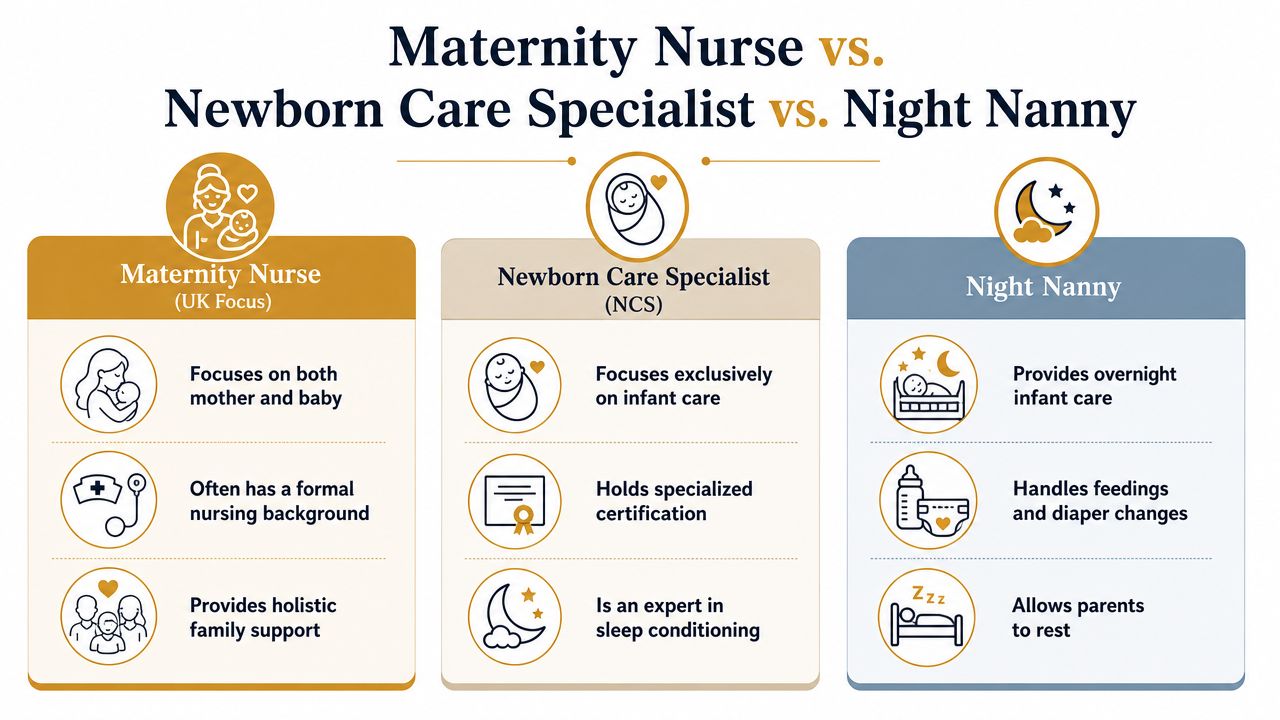
As you can see, a UK-based maternity nurse often provides holistic care for both mother and baby, whereas a Newborn Care Specialist typically has a laser focus on infant sleep conditioning. Understanding these nuances from the start is the first step in finding the right person for your family.
Defining Superstar Calibre
An elite professional brings far more than just a love for babies; they arrive with accredited qualifications and a wealth of proven experience. This means we look beyond basic credentials to identify individuals who possess:
- Accredited Qualifications: We look for certifications from respected bodies like NEST or CACHE, which show a formal, tested understanding of infant care principles.
- Verifiable Experience: A solid track record of successful placements, especially with other high-profile families, proves their ability to provide outstanding care while respecting the unique dynamics of a private household.
- Specialised Training: Emergency training is a cornerstone of our vetting standards. Current knowledge of first aid and proof of completing compliant BLS courses for carers are non-negotiable for ensuring your newborn’s safety.
This foundation of skill is also shaped by culture. Here in the UK, the approach to maternity and newborn care has been heavily influenced by a strong midwifery tradition, with its first national body formed way back in 1881. This long history is partly why our professionals are so adept at bridging the gap between hospital and home. They excel at blending medically informed support with the discretion and polish of private service.
An elite vetting process assesses not just technical skill but also emotional intelligence, discretion, and adaptability—qualities that define a truly world-class professional.
Our own multi-layered screening process is meticulously designed to verify these exact attributes. Every single candidate undergoes an enhanced DBS check and participates in extensive interviews that probe their problem-solving abilities and alignment with our core values of confidentiality and respect. This ensures the professional who joins your family isn't just qualified on paper, but is the perfect fit for your home.
Daily Duties and When to Start Your Search
So, what does a maternity nurse actually do all day? Their role is far more profound than just cuddling the baby; they are the architects of calm in your home, skillfully establishing routines that allow both your newborn and your family to thrive. Think of them as a guiding hand, bringing structure and expertise to the beautiful chaos of those first few weeks.

From a practical standpoint, your maternity professional handles every aspect of newborn care. This includes everything from feeding support and nappy changes to bathing and umbilical cord care. They also take charge of the nursery, keeping it a pristine and organised sanctuary by sterilising bottles and equipment, managing the baby's laundry, and maintaining impeccable hygiene.
Common Working Arrangements
Most families find that one of two arrangements for maternity and nursing support works best for their needs:
- 24-Hour Cover: This is the most comprehensive, immersive support you can get. The nurse lives in, typically on a 24/5 or 24/6 basis, and is on call around the clock, save for a short daily rest break. They manage daytime routines and all night feeds, providing constant reassurance and creating a truly seamless transition into parenthood.
- Nightly Cover: A night nanny or nurse works overnight shifts, often from 9 PM to 7 AM. Their focus is singular: to care for the baby while you get the restorative sleep you desperately need. This is a brilliant option for parents who feel capable during the day but recognise the critical importance of avoiding total exhaustion.
It's no secret that UK maternity services are under immense pressure. With over 600,000 births in the UK back in 2021, both NHS and private providers have been stretched thin, sometimes affecting the consistency of care. For families who want to guarantee uninterrupted nights and expert guidance on setting routines, a private maternity nurse bridges that crucial gap between leaving the hospital and feeling confident at home. The pressures on the wider nursing field are well-documented, making this specialised private support even more valuable; you can read more about the challenges nurses face on usa.edu.
When to Begin Your Search
When it comes to securing a top-tier professional, timing is everything. The very best maternity nurses are in high demand and are often booked months, if not a year, in advance.
For the most sought-after maternity professionals, we strongly recommend beginning your search during your second trimester, around the 20-week mark.
Starting your search this early isn't just about getting ahead; it's a strategic necessity. It gives you access to the widest selection of candidates, allowing you to find someone whose experience, qualifications, and personality are a perfect match for your household. More importantly, it provides the breathing room needed for meticulous interviews, reference checks, and finalising contracts without any last-minute pressure.
If you are considering an international placement or require specialist skills for twins or triplets, an early start is absolutely non-negotiable for a stress-free and seamless arrangement.
Navigating Contracts, Costs, and International Placements
Once you've decided to bring in professional support for your newborn, the next step is often the most practical one: figuring out the finances and logistics. Understanding the investment and the contractual side of things is crucial for a smooth and successful placement.
Understanding Salary Expectations
It’s no surprise that what you’ll invest depends heavily on the professional's background, the demands of the role, and of course, where you're located. A top-tier maternity nurse’s salary is a reflection of their experience and the specific expertise they bring to your family.
Rates in major global cities, for example, are set by the high demand for truly world-class talent:
- London: A seasoned professional with specialist skills will naturally command a premium in this competitive market.
- New York: As a major metropolitan centre, salaries here are in line with the high cost of living and the calibre of professional required.
- Dubai: The international community here places a high value on elite, UK-trained professionals, and their compensation reflects this.
Of course, other factors will influence the final salary. If you're expecting twins or triplets, require extensive international travel, or need someone with specialised medical or sleep conditioning training, this will be factored into their rate. For a much deeper dive, you can learn more about what impacts the cost of a maternity nurse per week in our complete 2026 guide.
The Importance of a Professional Contract
A professionally drafted contract is not just a formality; it's the foundation of a successful working relationship. It provides absolute clarity for both your family and your caregiver, protecting everyone involved.
A well-structured contract is the cornerstone of any professional placement. It eliminates ambiguity and ensures that both parties have a shared understanding of expectations from day one.
A robust contract is your roadmap for the placement. It should always detail:
- Defined Salary and Payment Schedule: Outlining the agreed-upon remuneration and exactly when and how it will be paid.
- Specific Working Hours: Detailing the daily schedule (e.g., 24/5 or 24/6), including provisions for breaks and on-call arrangements.
- Accommodation Standards: For any live-in role, this should specify the private, comfortable living quarters that will be provided.
- Travel Expenses: Clarifying how costs for joining the family and travelling with them will be handled.
- Confidentiality Clause: A non-negotiable Non-Disclosure Agreement (NDA) is absolutely essential to legally protect your family’s privacy.
Logistics for International Placements
For families with a global footprint, hiring a maternity nurse for an international placement just requires a little more planning. We are well-versed in navigating the complexities of visas and work permits, ensuring every legal requirement is met for a seamless transition.
Beyond the paperwork, we also make sure our candidates are prepared for the cultural nuances of your destination. This means they arrive not just with the legal right to work, but with the cultural awareness to integrate effortlessly into your household, no matter where in the world you call home.
Ensuring Discretion in High-Profile Households
For high-profile families, privacy isn't just a preference—it's paramount. When you bring maternity and nursing support into your home, you need absolute assurance that your private life will remain just that: private. It’s about more than just finding someone with the right clinical skills; it’s about welcoming a professional who instinctively understands the unspoken rules of a prominent household.

This is why our vetting goes far beyond checking qualifications. We are looking for an innate sense of discretion and a high degree of emotional intelligence. An ironclad Non-Disclosure Agreement (NDA) is, of course, a mandatory starting point. It provides the legal foundation, but true confidentiality comes from character, which is something we screen for rigorously.
Beyond Skills: Finding the Right Personality and Fit
While legal agreements are essential, the real success of a placement comes down to a much more personal factor: cultural fit. The perfect professional for a formal, traditionally staffed estate might not be the right person for a more relaxed, modern family, and vice versa.
Getting this match right is a careful art. We focus on your family's unique rhythm and values, considering details like:
- Household Atmosphere: Is your home run with formal hierarchy, or is it a more relaxed, integrated environment? We find someone who is comfortable and experienced in your specific setting.
- Interaction Style: We look for a professional who knows precisely when to be present and when to fade into the background, respecting your personal space and family time.
- Cultural Sensitivity: It is crucial that the professional has a genuine respect for and understanding of your family’s specific traditions, values, and way of life.
True discretion is more than simply keeping quiet. It’s an intuitive grasp of a family’s boundaries and a deep-seated respect for their privacy—a quality that has to be vetted, not just taught.
This careful, bespoke approach ensures the professional you welcome into your home not only performs their duties flawlessly but also harmonises with your family's culture. Ultimately, our goal is to find someone who enhances the peace and security of your home during this incredibly special time.
FAQs on Maternity and Nursing Support
As you prepare for your new arrival, it’s completely normal to have questions about finding the right professional support. We’ve answered some of the most common queries we receive from families to help you make your decision with clarity and confidence.
When Is the Best Time to Book a Maternity Nurse?
Our best advice is to start your search for maternity and nursing support during your second trimester, ideally right around the 20-week mark. The most experienced and sought-after professionals are often booked 4-6 months in advance. Beginning the process early gives you the best selection of candidates and allows for a relaxed, thorough process of interviewing, checking references, and finalising contracts. This is especially crucial for international placements or roles that require very specific skills.
How Is a Maternity Nurse Different from a Postnatal Doula?
This is a fantastic question, as they perform very different, though equally valuable, roles. A postnatal doula’s primary focus is on the mother. She provides emotional support, helps with physical recovery, and assists with light household tasks to ease the new mum’s burden. A maternity nurse, on the other hand, is an infant specialist. Their role is entirely hands-on with the baby, establishing feeding and sleeping routines, and managing all aspects of newborn care. Essentially, a doula "mothers the mother," while a maternity nurse cares for the baby and empowers parents with expert knowledge.
Can a Maternity Nurse Implement a Sleep Schedule?
Absolutely. In fact, this is a cornerstone of their expertise. A great maternity nurse or Newborn Care Specialist is a master at establishing healthy, sustainable sleep habits right from the start. They work with your baby’s natural rhythms to gently guide them, helping them distinguish day from night and fall into a routine that works for the whole family. Their goal is to empower you with the knowledge and techniques to continue these positive sleep patterns long after their placement concludes.
What If the Baby's Arrival Date Changes?
This is something we plan for with every single booking—babies rarely arrive exactly on schedule! A standard maternity nurse contract includes a flexibility clause, which typically reserves their availability for a two-week window before and after your estimated due date. If your baby comes early, your nurse will make every effort to start immediately. If the baby is late, the start date simply shifts. Clear communication and a well-drafted contract ensure everyone is prepared for any eventuality.
How Much Does a Maternity Nurse Cost?
The cost of hiring a maternity nurse varies widely based on their experience, qualifications, and your location. In major cities like London or New York, rates can range from £300-£500+ per 24 hours for a highly experienced professional. Factors such as care for multiples (twins, triplets) or extensive international travel will also increase the cost. For a complete breakdown, refer to our detailed cost of a maternity nurse per week guide.
Are you ready to find the perfect postnatal support for your family? Contact Superstar Nannies today for a confidential consultation and let us connect you with our world-class maternity and nursing professionals.