


Deciding to welcome a live-in nanny into your home is a huge, personal choice, and I find that the live in nanny cost is often the biggest question on a family’s mind. The final figure is about much more than just the weekly salary; you have to factor in National Insurance, pension contributions, and living costs to get the complete financial picture.
Unpacking the True Cost of a Live-In Nanny
Hiring a live-in nanny is a real investment in your family’s wellbeing and the smooth running of your home. It’s a decision that goes far beyond spreadsheets—it’s about finding that perfect person to help nurture your children and support your household. Getting a firm grip on the financial commitment from the very beginning means you can make this choice with confidence and clarity.

Many families I speak with initially focus only on the net weekly salary, but that’s just one piece of the puzzle. As an employer, you’re legally responsible for several other costs that are essential for building a fair and professional relationship. These include:
- Gross Salary: This is the nanny’s total earnings before any tax or other deductions are made.
- Employer’s National Insurance Contributions: A mandatory payment you make on top of their salary.
- Pension Contributions: It’s a legal requirement to enrol eligible staff into a workplace pension scheme.
- Household Costs: You’ll naturally see an increase in your bills for utilities, food, and other household supplies.
Thinking of these elements together is a bit like calculating the ‘on-the-road’ price of a car. It gives you the true, all-in cost, preventing any unwelcome surprises later on.
Your Location Shapes the Cost
Without a doubt, the single biggest factor influencing the overall live in nanny cost is where you live. Just as property prices fluctuate across the country, so do nanny salaries. Major cities and their surrounding areas always command higher rates due to greater demand and a higher cost of living.
For example, the average gross hourly rate for a nanny in London is £19.51, which is significantly higher than elsewhere. Families in the South East can expect to pay around £16.60 an hour, while in Scotland, it’s closer to £14.75. It’s always a good idea to discover more insights about regional nanny pay rates to get a feel for your local market.
Estimated Weekly Live-In Nanny Cost at a Glance
To give you a clearer starting point, the table below breaks down the estimated weekly costs across different UK regions. This should help you visualise the kind of budget you’ll need, showing how the nanny’s take-home pay translates into your total financial outlay as their employer.
| Region | Average Weekly Net Salary (Live-In) | Estimated Total Weekly Cost to Employer (Gross Salary + NI + Pension) |
|---|---|---|
| London | £500 – £700+ | £700 – £1,050+ |
| South East (Home Counties) | £450 – £600 | £615 – £850 |
| Midlands & North | £400 – £550 | £540 – £760 |
| Scotland & Wales | £380 – £500 | £500 – £690 |
These figures provide a solid baseline, but remember that a nanny’s experience, qualifications, and specific duties will also play a key role in determining their final salary.
Understanding Nanny Salaries and Experience
At the heart of your live-in nanny costs is, of course, the salary. But from my experience placing nannies in premium households, this figure is shaped by far more than just location. It’s a bit like hiring a specialist consultant versus a general practitioner; you aren’t just filling a role, you’re investing in a specific level of expertise and support for your family. This is where experience, qualifications, and unique skills really come into play.
A nanny with five years of experience who has worked with newborns, toddlers, and school-aged children simply brings a deeper well of knowledge to the table. They understand developmental milestones intuitively, which is an invaluable comfort, especially for first-time parents looking for guidance. Likewise, formal qualifications are a clear signal of a nanny’s commitment to their profession.
The Value of Qualifications and Specialisms
While hands-on experience is absolutely vital, formal training provides a solid, theoretical foundation in things like child psychology, safety protocols, and how to create educational play. This is why certain credentials can have a significant impact on salary expectations.
Key qualifications that often command a higher salary include:
- CACHE Level 3 Diploma in Childcare and Education: This is a widely respected industry standard, proving a nanny’s competence in caring for children from birth to five years old.
- Norland College Diploma: Widely considered the gold standard in nanny training, Norland nannies complete an intensive, world-renowned education. They’re trained in every aspect of early years development, from practical skills to emotional intelligence. Their expertise is highly sought after and naturally comes at a premium.
- Specialised Skills: Nannies who are bilingual, can teach a musical instrument, have experience with special educational needs, or are trained chefs also bring a unique value that justifies a higher compensation package.
For many families, especially those with unique needs or exceptionally high standards, hiring a qualified specialist isn’t an expense—it’s an essential investment. It buys peace of mind and enriches your child’s daily life in ways that go far beyond basic supervision.
London and Regional Salary Benchmarks
Experience sets the foundation, but geography still plays a massive role. The competitive London market, for instance, sets a high bar for nanny salaries simply because of the intense demand and higher cost of living. In the UK, live-in nanny costs can vary quite a bit, and you can explore our full guide on how much nannies really make to get a more detailed picture.
As a general rule of thumb, you can expect typical net weekly salaries (after tax) for live-in nannies in London to fall somewhere between £500 and £700. This often translates to a gross annual salary, before tax, of approximately £32,500 to £45,500. These professionals are usually working 10 to 12 hours a day, five days a week, with all their accommodation and meals provided.
Outside the capital, in the Home Counties or other major UK cities, you might find slightly lower rates. However, it’s important to remember that top-tier candidates will always command competitive salaries, regardless of their post code. The key is to see the salary not just as a weekly payment, but as a reflection of the skill, dedication, and positive influence a professional nanny brings into your home. It’s about securing the right support to help your entire family thrive.
Navigating Your Financial and Legal Duties
When you hire a live-in nanny, you’re doing more than just welcoming someone into your home; you’re officially becoming an employer. It’s a significant step, and one that brings a set of financial and legal responsibilities that are absolutely crucial to get right from the very beginning.
Think of it like buying a new car. The sticker price is just the starting point. The real cost to run it includes tax, insurance, and fuel. In the same way, the true live-in nanny cost isn’t just their take-home pay; it’s the total package.
This is the part where many families I work with start to feel a little lost, but I promise it’s more straightforward than it sounds. As their employer, you’re responsible for handling their Pay As You Earn (PAYE) tax and National Insurance (NI) contributions. These aren’t just optional extras—they’re legal requirements that ensure your nanny is paid correctly and you’re operating by the book.
The process involves registering with HMRC as an employer. From there, you’ll make the necessary deductions from your nanny’s gross salary each payday, and you’ll also pay your own employer’s NI contribution on top. Many families find it easier to use a specialist nanny payroll service to handle all the number-crunching and paperwork. It can offer real peace of mind.
Understanding Gross Salary And Deductions
The most important thing to remember is to always agree on a gross salary with your nanny. This is the total figure before any deductions are taken out. From this amount, you’ll then calculate and deduct their income tax and their slice of National Insurance. If they’re eligible, you’ll also need to contribute to a workplace pension for them.
This is a good way to visualise how different factors build up to that final salary figure.
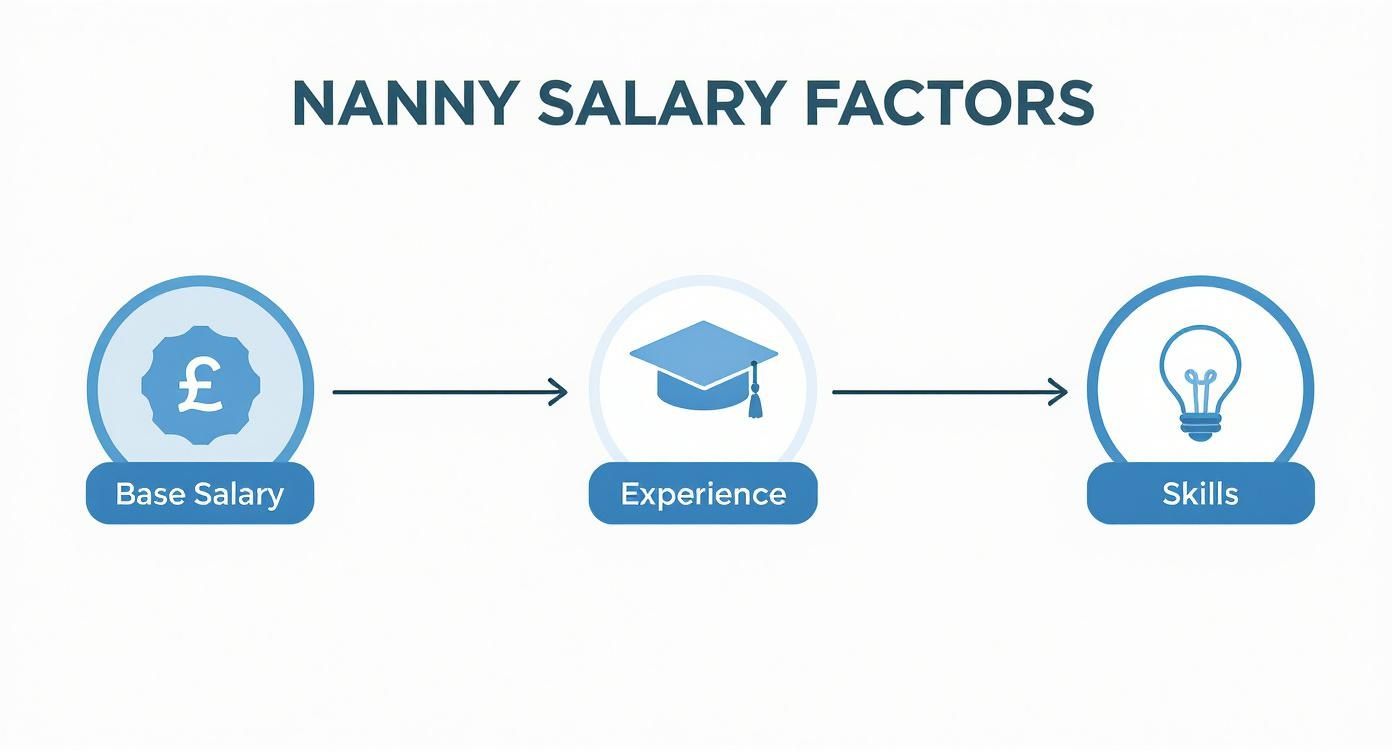
As the flowchart shows, the base salary is just the foundation. A nanny’s experience and any specialist skills they bring to the role will add significant value, directly impacting the final gross figure you’ll be working with for payroll.
Another legal point you can’t overlook is the National Minimum Wage. The government sets minimum pay rates based on age, and for nannies aged 21 and over, the current rate is £12.21 per hour. For live-in nannies, there’s a specific rule where the value of their accommodation is factored in as a fixed offset of £74.62 per week.
Your Legal Responsibilities As An Employer
Beyond the payroll, your legal duties are all about creating a fair, safe, and professional working environment. Getting this right is fundamental to building a strong, lasting, and respectful relationship with the person entrusted with your children’s care.
Here are the key obligations you’ll have:
- Provide Payslips: You are legally required to give your nanny a payslip on or before each payday, which clearly itemises their gross pay and all deductions.
- Paid Holiday Entitlement: Every full-time employee in the UK is entitled to a minimum of 5.6 weeks of paid holiday each year.
- A Formal Employment Contract: A written contract isn’t just good practice; it’s essential. It should spell out duties, hours, salary, notice periods, and grievance procedures.
- Statutory Sick Pay (SSP): If your nanny is unwell and can’t work, you’re required to pay SSP, as long as they meet the eligibility criteria.
Becoming an employer for the first time can feel a bit daunting, but these rules are in place to protect both you and your nanny. By managing your duties correctly from day one, you establish a professional foundation built on trust and clarity—and that’s priceless.
It’s vital to get to grips with the wider picture of complying with employment laws to ensure you’re fully protected. On another note, you might also be interested in our guide on Ofsted registration for nannies and the benefits it can bring to your family.
Accounting for Household and Living Expenses
When families start budgeting for a live-in nanny, it’s all too easy to focus on the numbers that hit the payslip. But from my experience, the day-to-day costs of providing room and board are what often catch parents by surprise. These aren’t direct cash payments to your nanny, but they are very real expenses that will absolutely impact your monthly budget.
Bringing another adult into your home naturally means you’ll use more of everything. It’s that simple. Your utility bills will creep up—more electricity, more hot water for showers, another phone charging overnight. Your weekly grocery bill will also need to expand to cover another person’s meals, snacks, and preferences.

It’s also a good idea to have a quick chat with your home insurance provider. Letting them know you have a live-in employee is often a requirement of your policy and just ensures all your bases are covered. While these costs might seem small on their own, they add up and are a crucial piece of the total financial puzzle.
The Value of a Private and Comfortable Space
Beyond the bills, one of the most important investments you can make is providing a truly private and comfortable living space for your nanny. This isn’t just about putting a bed in a spare room; it’s about creating a genuine sanctuary where they can properly rest and recharge. A private bedroom and, ideally, a separate bathroom are now the standard expectation for any professional live-in role.
Try to see it from their perspective. After a full-on day with the children, having their own space to retreat to is absolutely essential for their well-being and job satisfaction. A nanny who feels respected and at home is far more likely to be happy, build a lasting bond with your family, and stay for the long term.
This provision of a comfortable living space is a key part of the compensation package. A high-quality accommodation arrangement can be a significant negotiating point, sometimes allowing for more flexibility on the gross salary, as it represents a substantial saving for the nanny on rent and bills.
Budgeting for Variable Household Costs
The tricky part, of course, is that these expenses fluctuate. To get a realistic grip on your budget, I always advise families to pull their utility and grocery bills from the last six months to get a clear baseline. From there, you can work out a sensible estimate for the increase.
Here’s a practical way to break it down:
- Utilities (Gas, Electric, Water): It’s wise to plan for a 15-20% increase in your monthly bills. This builds a solid buffer for the extra daily usage.
- Groceries: Add a specific amount to your weekly food shop. A figure between £60 and £100 per week is a realistic starting point, though this can vary based on your family’s habits and what you agree in the contract.
- Household Supplies: Don’t forget the little things like extra toiletries, cleaning products, and ensuring you have robust Wi-Fi. Factoring in a small monthly amount for these shared resources is a good move.
Getting everything down in writing in the employment contract is vital. Be specific about what “board” includes—for instance, meals are typically covered on working days. Being completely upfront about these details from day one prevents any misunderstandings and helps build a respectful and harmonious living arrangement for everyone.
Factoring in Agency Fees and Other Essential Costs
Beyond the nanny’s monthly salary and the day-to-day household expenses, there are a few other key costs to keep in mind. These one-off and variable expenses are a crucial part of the total live in nanny cost, and thinking about them from the very beginning will save you from any unwelcome surprises.
The biggest single cost you’ll encounter right at the start is the agency placement fee. It’s best to think of this not just as a fee, but as an investment in professional matchmaking for your family. A top-tier agency does so much more than just forward you a pile of CVs; they handle the entire time-consuming and complex recruitment process, ensuring you only meet exceptional, fully-vetted candidates. This investment doesn’t just save you dozens of hours—it gives you priceless peace of mind.
Why a Good Agency is Worth the Investment
Partnering with a premium nanny agency means you’re paying for expertise, a deep network, and security. Their fees cover a meticulous process designed to find someone who not only has the right skills but also truly fits into your family’s unique lifestyle and values.
Here’s a glimpse of what that process usually involves:
- A Deep Dive into Your Needs: It all starts with a detailed consultation to understand exactly what you’re looking for, from your children’s personalities to the specific rhythm of your home.
- Sourcing and Vetting: The agency then actively searches for and interviews promising candidates. This is followed by exhaustive background checks, including DBS and thorough reference verification.
- A Carefully Curated Shortlist: Instead of overwhelming you, they’ll present a small, handpicked selection of nannies who are a genuine match.
- Coordinating Interviews and Trials: They handle all the logistics of arranging interviews and setting up trial periods, making the process seamless for you.
- Expert Contract Support: You’ll get professional guidance and solid templates to help you draft a clear, comprehensive, and legally sound employment contract.
Agency fees are almost always calculated as a percentage of the nanny’s gross annual salary. You can expect this to be anywhere from 15% to 25%. For a top live-in nanny earning £45,000 or more, this one-time fee can easily fall between £6,750 and £11,250.
To give you a clearer picture, here’s how different types of agencies might structure their fees.
Sample Nanny Agency Fee Structures
This table offers a snapshot of typical agency models. It helps illustrate how the service level and candidate pool are often reflected in the placement fee, which is a significant one-off investment.
| Agency Type | Typical Fee Structure | Services Included |
|---|---|---|
| Boutique/Specialist Agency | 20-25% of annual gross salary or a high fixed fee. | Highly personalised service, access to exclusive candidates (e.g., Norland), extensive post-placement support. |
| Standard Nanny Agency | 15-20% of annual gross salary or a moderate fixed fee. | Comprehensive vetting, strong pool of experienced candidates, standard contract support. |
| Online Platform/Database | Lower flat fee or subscription model. | Access to candidate profiles; vetting and interviewing are typically the family’s responsibility. |
While it’s a considerable initial outlay, it’s helpful to see the placement fee as an investment in a secure, successful, and long-lasting relationship. The due diligence a great agency performs protects your family and ensures the entire arrangement is built on a solid foundation right from day one.
Don’t Forget the Variable Costs
On top of the agency fee, other expenses will naturally arise during the year. Building a small buffer for these into your annual budget means you’re always prepared.
A common one is holiday travel. If you plan to take your nanny on holiday with you—a fantastic perk for them—you’ll be expected to cover all their travel expenses, from flights and hotels to meals. It’s an important line item to add to your own holiday budget. For more professional advice on these industry norms, it’s worth exploring the role of household staff recruitment agencies and their standard practices.
You’ll also need to think about temporary cover for when your nanny takes their own well-earned annual leave. A temp nanny often comes at a higher daily or weekly rate, so it’s wise to budget for this in advance.
Finally, many families choose to give an annual or performance-based bonus. While it’s not compulsory, it’s a common practice in many households and a wonderful way to show your appreciation for a job well done.
Building a Strong Employment Relationship
Once you have the budget sorted, you arrive at what I believe is the most important part of the entire process: turning those numbers into a genuine, lasting partnership with your nanny. In my experience, this is where a family’s foresight really pays off. A great working relationship isn’t just about the salary; it’s built on mutual respect, clear communication, and a professional framework that protects both you and your nanny.
This means looking past the weekly pay and thinking about the entire package. How will you handle paid leave? What are the ground rules for accommodation and privacy? Getting these details right from the start shows your nanny you value them not just as an employee, but as a vital part of your children’s lives.
From Negotiation to Contract
The negotiation phase is your chance to lay everything on the table. Be ready to talk about the gross salary, of course, but also pension contributions, a travel allowance, or even the use of a car. A candidate who feels they are being heard and treated fairly during these initial conversations is always more likely to start the job with real enthusiasm.
After you’ve shaken hands on a deal, it is absolutely critical to get it all down in a proper employment contract. This document becomes your single source of truth, heading off misunderstandings before they can even start. A well-written contract should clearly cover:
- Detailed Job Duties: Don’t just write “childcare.” Specify everything from preparing meals and doing the school run to managing the children’s laundry.
- Working Hours and Time Off: Clearly define the daily schedule, days off, and how holiday requests will be handled.
- Confidentiality and Privacy: This is especially crucial for high-profile families. Set clear boundaries around social media and sharing personal information.
- Notice Periods and Termination Policies: Outline the terms for ending the employment relationship, which provides security for everyone involved.
Think of the contract as the foundation of a house. A solid, well-constructed foundation allows you to build a strong, stable, and enduring structure on top. Rushing this stage is a risk you can’t afford to take.
Setting Up for Success
Becoming an employer for the first time brings with it a fair bit of admin you simply can’t ignore. To make sure you get it right, a comprehensive checklist for hiring your first employee can be an invaluable guide. It walks you through all the necessary legal and financial steps to ensure you start on solid ground.
Ultimately, putting in the effort to build this professional foundation is an investment that pays back tenfold. It fosters trust, reduces the chance of conflict, and frees up your nanny to focus on what really matters—giving your children exceptional care. This thoughtful approach to the live in nanny cost and contract is what creates a positive, supportive environment for everyone in your home.
Common Questions About Live-In Nanny Costs
When you start to add up the numbers, it’s completely normal for a few practical questions to bubble up. Over the years, I’ve found that families often circle around the same key details, so I’ve put together some straightforward answers to the most common queries I hear.
Do I Pay for a Live-In Nanny’s Food on Days Off?
Great question. The “board” part of your nanny’s package usually covers their meals during their contracted working week. What happens on their days off really needs to be agreed upon and written clearly into the employment contract.
While there’s no legal rule saying you have to, many families I work with see providing food on days off as a welcome gesture of goodwill. It’s a small thing that can go a long way. The key is to be upfront about it from the very beginning to ensure everyone is on the same page and maintain a great working relationship.
Is a Live-In Nanny Cheaper Than Full-Time Nursery?
This one truly comes down to the number of children you have. If you have one child, a full-time nursery spot—especially outside of London—can often look like the cheaper option at first glance.
However, the second you have two or more children, the maths often tips in favour of a live-in nanny. And it’s not just about the raw numbers. A nanny gives your children undivided attention and brings a level of flexibility that nurseries simply can’t match. Not to mention the extra help with child-related tasks around the house.
When you’re weighing the costs, don’t forget to put a value on the convenience and personal touch a nanny provides. For many busy families, the reduction in daily stress and logistical headaches is priceless.
What Is a Nanny Kitty and Should I Provide One?
A ‘kitty’ is simply a small cash fund you give your nanny to cover day-to-day, child-related expenses. Think of it as a float for paying entry fees to toddler groups, grabbing art supplies for a crafty afternoon, or buying an ice cream at the park.
Providing a kitty is absolutely standard practice. It means your nanny isn’t constantly dipping into their own wallet for work expenses. You’ll just need to agree on a sensible weekly amount and a simple way for them to show you where the money has gone.
Can I Pay My Nanny Cash in Hand to Reduce Costs?
This is a firm no. Paying a nanny ‘cash in hand’ to sidestep your legal duties as an employer is illegal in the UK. You are legally required to register with HMRC, run a PAYE (Pay As You Earn) payroll, and handle all the necessary tax and National Insurance contributions.
Trying to get around this can land you in serious trouble, including hefty fines. If the payroll side of things feels overwhelming, using a specialist nanny payroll company is a brilliant way to make sure everything is handled correctly and you stay on the right side of the law.
Figuring out the costs and duties of hiring a live-in nanny is a big step, but you don’t have to navigate it on your own. At Superstar Nannies, we specialise in placing exceptional, fully-vetted nannies with discerning families across the UK and worldwide. Find the perfect support for your family today.