


Getting ready for your baby’s arrival is one of the most profound journeys you’ll ever take, and it starts long before your due date. As someone who has guided countless families—and navigated this path myself—I want to shift your focus from endless to-do lists to what truly matters: creating a calm, organised, and loving environment for your growing family. It’s about breaking down what feels like a mountain of tasks into manageable, heartfelt steps. The aim? To help you move from feeling overwhelmed to feeling deeply connected and ready.
Your First Steps in Newborn Preparation
The news you’re expecting brings a rush of pure joy, often followed by a wave of questions and a to-do list that seems to stretch into infinity. I remember that feeling so clearly. It’s completely normal, but knowing where to start can transform that sense of anxiety into focused, calm action. The secret isn’t to do everything at once, but to gently prioritise what will bring you the most peace in these final months.
From my own experience, I can tell you the third trimester isn’t for frantic shopping sprees. It’s for quiet, foundational planning. This is the time to finalise your list of genuine must-haves, not the endless gadgets you’ll see marketed online. It’s a time for you, for rest, and for connection.
This visual timeline gives you a bird’s-eye view of the journey, mapping out the key stages from the second trimester right through to bringing your baby home.
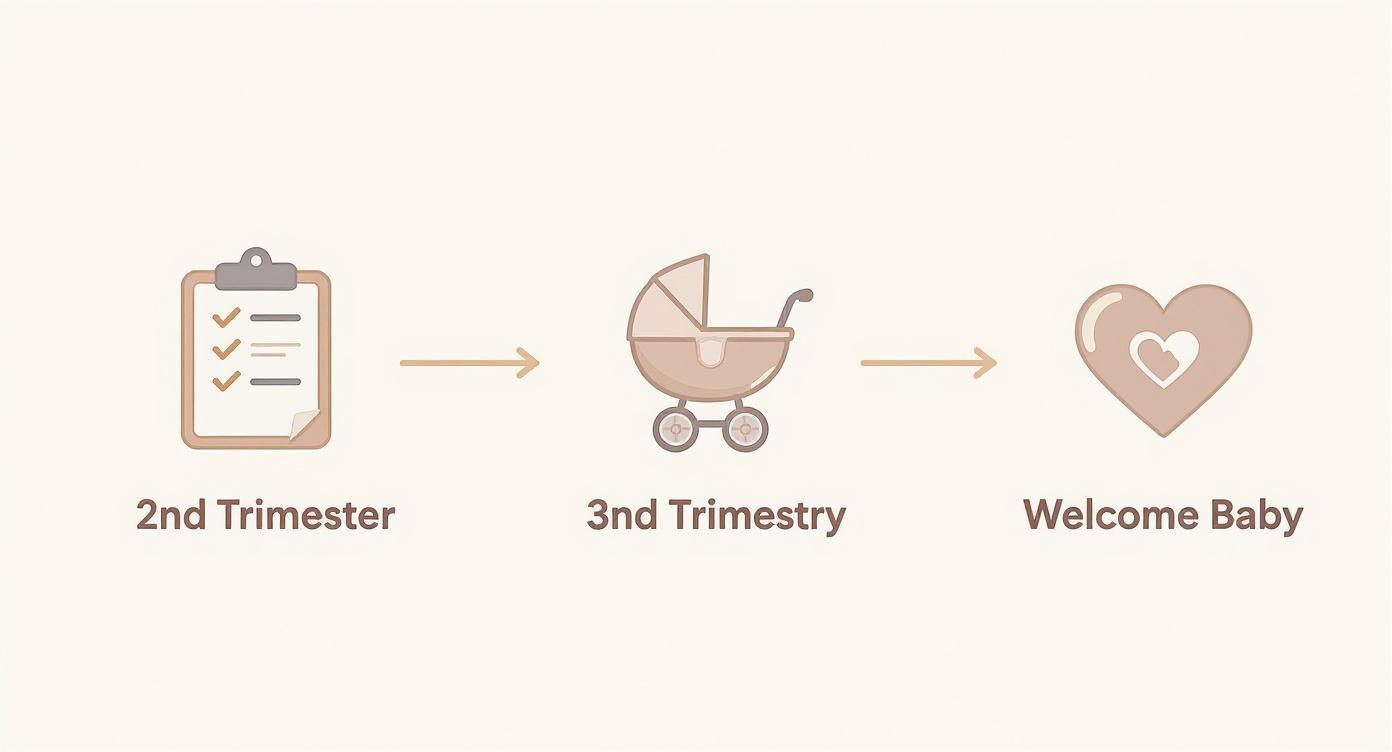
As you can see, preparation is a gradual, loving process, not a last-minute scramble. It’s all about building a stable and serene foundation for your new life together.
To help you visualise this, here is a summary of key tasks organised by trimester to help you plan without the pressure.
A Realistic Newborn Preparation Timeline
| Preparation Area | Second Trimester Focus | Third trimester Focus |
|---|---|---|
| Home & Nursery | Dreaming and researching key furniture. Gently decluttering and preparing the space. | Assembling furniture, washing tiny baby clothes, and stocking changing stations. |
| Household Staff | Initial warm conversations with potential maternity nurses, night nannies, or household managers. | Finalising agreements, arranging trial periods, and welcoming your chosen support into your family. |
| Healthcare | Routine prenatal appointments. Finding a paediatrician who feels right for your family. | Discussing your birth preferences with your midwife/consultant. Packing your hospital bags with care. |
| Legal & Financial | Reviewing and updating wills. Exploring parental leave options with your employer. | Finalising life insurance and guardianship arrangements, giving you peace of mind. |
| Postpartum Support | Researching lactation consultants, postpartum doulas, and comforting meal delivery services. | Booking initial appointments and confirming the schedule for your support network. |
This timeline isn’t rigid; it’s a gentle guide to help you spread out the decisions and actions, ensuring everything is in place for a smooth and peaceful transition.
Building Your Essential Support Circle
Beyond any physical item you can buy, your most valuable asset will be your support system. This isn’t just about a baby shower; it’s about mindfully identifying the people who will be your lifeline during those demanding, beautiful first few weeks.
Think about the friends who will drop off a hot meal without needing an invitation, or the family member who will happily hold the baby for an hour so you can have a proper, soul-reviving shower.
Have honest, open conversations now. Let your closest circle know what practical help would mean the most. For example, you could say, “We would be so grateful for any help with meals in the first couple of weeks,” or “Would you be open to helping walk the dog for us?” People genuinely want to help; they just need to know how.
The strength of your support network is one of the most significant factors in a smooth transition to parenthood. It’s about having people you can be truly vulnerable with when you’re exhausted and learning on the go. This is your village.
Navigating Early NHS Appointments
Your third-trimester NHS appointments are so important. They evolve from routine checks into detailed, personal discussions about your birth preferences and what to expect. Please use this time wisely. Ask every single question that comes to mind—I promise you, nothing is too small or silly. Your midwife is there to provide reassurance and clarity.
Key topics to raise with your midwife include:
- Your Birth Plan: Go through your preferences for pain relief, labour positions, and those precious, sacred moments immediately after birth.
- Signs of Labour: Make sure you are absolutely clear on when to call the hospital or your midwife. There’s no prize for waiting too long, and it’s always better to call.
- Postnatal Support: Ask about local breastfeeding support groups, the schedule for health visitor check-ins, and what mental health resources are available should you need them.
Thinking through these practicalities beforehand provides an immense sense of peace. It frees you up to focus on the incredible experience of meeting your baby, knowing you’ve already laid the groundwork for a calm and well-supported start.
Getting Your Finances Ready for a Baby

Let’s talk frankly and kindly about the financial side of welcoming a new baby. While it’s wonderful to choose the perfect pram or design a beautiful nursery, true financial preparation is about creating a secure and flexible foundation for your growing family. It’s not about obsessively tracking every penny, but about building a plan that brings you genuine peace of mind.
Getting this right allows you to focus completely on your baby when they arrive, without administrative hurdles or unexpected costs causing any stress. Think of it as building a financial cushion that allows you to navigate the first year with total confidence.
Mapping Out First-Year Expenses
When you actually start listing the potential costs, you quickly see how they add up far beyond nappies and sleepsuits. The first year brings a mix of significant one-off purchases and new, recurring monthly outgoings. It helps to group these into distinct categories to get a truly clear picture.
One-Off Investments:
- Nursery Furniture: The real essentials are the cot, changing table, and a wardrobe.
- Travel System: A high-quality pram and a professionally fitted car seat are absolute non-negotiables for your baby’s safety and your peace of mind.
- Initial Wardrobe: It’s wise to think beyond just newborn sizes and plan for clothing that will see them through the first six to nine months.
Recurring Costs:
- Feeding: This could range from support from a lactation consultant to sourcing high-quality organic formula.
- Nappies and Wipes: This becomes a constant and surprisingly considerable expense.
- Classes and Activities: Things like baby massage, sensory classes, or early swimming lessons that you might want to enjoy together.
A simple spreadsheet can be a great tool to visualise these expenses, helping you allocate funds and see exactly where your money is going. This isn’t about restriction; it’s about informed, strategic planning.
Understanding the True Cost
Having a firm grasp of the full financial picture is a vital part of preparing for a newborn. In the UK, the total cost to raise a baby in their first year is estimated at around £7,850. This figure covers essentials like feeding, clothing, furniture, and healthcare, but the single largest expense is often childcare.
For families needing full-time care, this could average around £3,600 for the first year. However, significant government support is changing this landscape. The rollout of the 30-hour funded childcare programme for children over nine months will substantially reduce this burden, dropping the average first-year childcare cost to approximately £1,440. This shift effectively reduces the total first-year cost by about £2,000 for many families.
From my experience, creating a specific ‘baby fund’ can be a powerful psychological tool. Setting aside a dedicated amount helps compartmentalise these new expenses and reduces the feeling that they are draining your primary accounts. It’s a little act of kindness to your future self.
Navigating UK Financial Support Systems
The UK offers several government schemes to support new parents, and knowing how to access them is a key part of your financial preparation. It’s so important not to overlook these entitlements; they are designed to ease the transition into parenthood.
Maternity Allowance and Pay
If you’re employed, you will likely be eligible for Statutory Maternity Pay (SMP) from your employer. If you’re self-employed or don’t qualify for SMP, you may be able to claim Maternity Allowance directly from the government for up to 39 weeks.
Child Benefit
This is a regular payment from the government to help with the costs of raising a child, available to anyone responsible for a child under 16. It is worth noting that if you or your partner have an individual income over £60,000, you may have to pay a tax charge, known as the High Income Child Benefit Charge.
Funded Childcare Hours
The government’s funded childcare scheme is expanding. From September 2025, eligible working parents of children aged nine months and up will be entitled to 30 hours of funded childcare per week. This is a real game-changer for managing return-to-work costs.
Budgeting for In-Home Childcare
For many families I work with, in-home support from a maternity nurse or a highly experienced nanny is absolutely essential. I see it not as a luxury, but as a vital investment in the family’s wellbeing, allowing for a smoother, more restful postpartum period.
Costs can vary widely depending on the professional’s experience, whether they are live-in or live-out, and the number of hours you require. When you’re planning, remember to factor in not just the salary but also the associated costs like employer’s National Insurance contributions, payroll services, and any potential agency fees.
To help with your planning, take a look at our detailed guide for a complete breakdown of the costs of a nanny. This will ensure there are no surprises and that you can arrange the perfect support for your family’s needs.
Your Guide to Antenatal Care in the UK
Your health, and that of your baby, is the absolute priority throughout your pregnancy. The UK’s antenatal system is designed to provide consistent, supportive care from your very first appointment right up to the moment you give birth. Understanding how this journey unfolds helps you move from being a patient to being an active, confident partner in your own healthcare.
This is about so much more than just physical check-ups. It’s a dedicated time for you to ask questions, voice any concerns, and make informed decisions that feel completely right for your family. Think of your midwife and GP as your primary guides—they’re there to offer a wealth of knowledge and reassurance every step of the way.
Your Schedule of Midwife and GP Appointments
In the UK, your antenatal care is typically led by a midwife. It all kicks off with your ‘booking appointment’ somewhere between 8-12 weeks. This first meeting is quite comprehensive; your midwife will want to know about your medical history, your partner’s health, and any previous pregnancies. It’s the perfect time to build a real rapport.
After that initial meeting, the rhythm of your appointments will pick up as your pregnancy progresses. You can generally expect to be seen:
- Every four weeks until you reach 28 weeks
- Then, every two weeks until 36 weeks
- Finally, weekly from 36 weeks until your baby arrives
These appointments are essential for tracking your health and monitoring your baby’s growth. To gain a deeper understanding of your health during this time, many expectant parents find it reassuring when exploring dedicated pregnancy blood tests.
Key Scans, Screenings, and Health Checks
The routine scans and screenings offered by the NHS are invaluable, giving you incredible insights into your baby’s development. For many parents, these are real highlights of the pregnancy journey—the first precious glimpses of your little one. I still remember the feeling of seeing that tiny heartbeat for the first time.
- Dating Scan (around 10-14 weeks): This first ultrasound is a big milestone. It confirms your due date and, most importantly, checks for a healthy heartbeat. It’s an emotional and wonderfully reassuring moment.
- Anomaly Scan (around 18-21 weeks): This is a much more detailed scan to check your baby’s physical development from head to toe, ensuring all their organs are growing as they should. This is also when you might be able to find out the baby’s sex, if you choose to.
- Routine Checks: At every midwife appointment, expect to have your blood pressure taken and to provide a urine sample, which is tested for protein. These simple, quick checks are vital for spotting the early signs of conditions like pre-eclampsia.
All these screenings are designed to empower you with information, helping you and your care team make the best decisions for a healthy pregnancy.
Crafting a Flexible Birth Plan
The term ‘birth plan’ can be a bit misleading. It’s less of a rigid script and more of a list of preferences—a way to open a conversation. Thinking about your wishes for labour and delivery is a fantastic way to feel prepared, but the real key is to stay flexible. Birth is beautifully unpredictable, and an open mind is your greatest asset.
Start by considering your preferences for:
- The Environment: Do you picture yourself in the calm of a birthing centre, or do you prefer the immediate medical support available on a hospital labour ward?
- Pain Relief: What are your initial thoughts? From a birthing pool and gas and air to an epidural, it’s good to know your options.
- Birthing Partners: Who do you want by your side for support?
Your birth plan is a conversation starter with your midwife, not a contract. The goal is to feel heard and respected, knowing your care team understands your wishes while being ready to adapt if your baby has other ideas. Trust your body, trust your baby, and trust your team.
Understanding Neonatal Care
Part of feeling truly prepared means understanding that some babies need a little extra help when they arrive. It’s a reality that over 90,000 babies—that’s roughly 1 in 7—are admitted to neonatal units across the UK each year.
These admissions aren’t just for premature babies; in fact, most babies in neonatal care are born at full-term but arrive with health complications that need specialist attention. Knowing that this is a relatively common experience helps demystify it and allows you to appreciate the incredible support available, should you need it. You can discover more insights about UK neonatal care statistics on bliss.org.uk.
This isn’t about causing worry. Quite the opposite—it’s about peace of mind. Understanding the system highlights the incredible, expert support that is always ready, ensuring that if your baby needs that extra care, they will be in the very best hands from their very first moments.
Creating a Calm and Safe Home for Your Baby
Getting your home ready for a new baby is about so much more than what you see in magazines. It’s about creating a space that feels calm, safe, and truly functional for this new chapter. Think of it as nesting with purpose – turning your house into a sanctuary that works for you, not against you.
The aim is to build a practical, organised environment that anticipates your needs. This way, you can spend less time searching for things and more time bonding with your new arrival. This preparation isn’t just about the nursery; it’s a rethink of your entire living space to support the new rhythm of your life. Every small adjustment, from comfortable feeding stations to early baby-proofing, makes the transition smoother for the whole family.
Designing a Safe and Serene Nursery
The nursery is often the centre of all the excitement, but it’s easy to get lost in aesthetics. The real priorities, the absolute non-negotiables, are safety and function. Your main focus should be on creating a completely secure sleep environment that follows all the current safe sleep guidelines.
This means a firm, flat mattress in a cot or Moses basket with nothing but a fitted sheet. No pillows, no bumpers, and definitely no loose blankets. Everything else in the room, from the furniture to the changing supplies, needs to be organised for pure efficiency – especially for those 3 a.m. nappy changes when you’re half-asleep.
Here’s what I consider the true essentials for a nursery that just works:
- A Safe Sleep Space: A cot approved to British Standards with a new, firm mattress is the most important purchase you’ll make.
- Smart Storage: A changing table where everything (nappies, wipes, creams) is within arm’s reach is vital. You should never have to turn your back on your baby, even for a second.
- Blackout Blinds: These are crucial for helping your newborn learn the difference between day and night, which is a cornerstone of developing healthy sleep patterns.
- A Comfortable Chair: You’ll spend countless hours here feeding, cuddling, and soothing. Make it a space you genuinely love to be in.
If there’s one piece of advice I give to every new parent, it’s this: the best investment for the nursery isn’t a fancy piece of furniture, but a high-quality white noise machine. It can be an absolute game-changer for helping a baby settle and sleep through the normal sounds of a busy household.
Extending Comfort Beyond the Nursery
Let’s be realistic – your baby won’t be staying in just one room, so your supplies shouldn’t either. A little forethought about how you use your whole home can make daily life infinitely easier. Setting up ‘baby stations’ in key areas is a simple trick that pays off massively.
For example, why not create a small, comfortable feeding nook in the living room? It could be as simple as a basket with muslin cloths, nipple cream, a water bottle, and some snacks, placed right beside your favourite spot on the sofa. No more scrambling for essentials mid-feed.
Early and Practical Baby Proofing
Your newborn won’t be crawling for a few months, but getting a head start on baby-proofing saves a frantic rush later on. It also helps you build safety into your daily habits right from day one. You don’t need to bubble-wrap the entire house, but a few key steps provide immediate peace of mind.
Focus on the fundamentals first:
- Install smoke and carbon monoxide detectors, and get into the habit of testing them regularly.
- Secure any heavy furniture like bookcases or chests of drawers to the wall. It’s a small job that prevents a serious risk.
- Tidy away loose cables and cords that could become hazards down the line.
Knowing the basics of infant safety is just as important. Building your confidence by taking a course can make all the difference, preparing you to handle minor incidents without panic. For instance, Superstar Nannies provides excellent information on why paediatric first aid training is so reassuring for new parents.
Preparing Your Pets for a New Arrival
If you have a furry member of the family, their world is about to be turned upside down, too. A gentle, successful introduction depends on thoughtful preparation long before the baby comes home. Dogs, especially, thrive on routine, so starting to make small adjustments early can ease the transition for everyone.
Begin by gradually introducing new baby sounds and smells. You can play recordings of a baby crying at a low volume or let your pet sniff a blanket the baby has used before you even bring them home from the hospital. It’s also a great time to refresh their obedience training, focusing on commands like ‘leave it’ or ‘go to your bed’. This groundwork helps establish calm boundaries from the very beginning, setting the stage for a positive, safe relationship.
Building Your Postpartum Support Plan

In the whirlwind of preparing for a baby’s arrival, it’s all too easy to focus every ounce of energy on the newborn. But the ‘fourth trimester’—those crucial first three months after birth—demands its own thoughtful preparation. This isn’t about indulgence; it’s about building a robust postpartum support plan that is fundamental to your family’s wellbeing.
Think of this plan as your personal safety net. It’s a structure you put in place now to protect your physical health, your emotional balance, and the irreplaceable time you’ll have to bond with your new baby when you are at your most vulnerable.
Assembling Your Core Support Team
Your support team is the group of people you can truly count on, whether for practical help or a moment of reassurance. This circle might include close family, trusted friends, and professional caregivers, each playing a vital role.
It’s wise to think beyond visitors who simply want to hold the baby. Who can you call on to drop off a proper meal, walk the dog, or just listen without judgement when you’re feeling utterly overwhelmed? The time to have these honest conversations is now, before sheer exhaustion takes over.
For many of our clients, professional support is the absolute cornerstone of a smooth fourth trimester. Hiring a dedicated postpartum professional can be transformative.
- Postpartum Doula: A specialist focused on the new mother and family. They provide emotional, physical, and practical support, helping you navigate recovery and adjustment.
- Maternity Nurse: An expert in newborn care who offers hands-on support with feeding, sleep routines, and the baby’s general wellbeing, often working through the night.
- Night Nanny: Focuses specifically on overnight care, giving parents the gift of restorative sleep while their baby is in expert hands.
Bringing in this level of help frees you to focus entirely on your recovery and bonding. If you’re exploring this route, it’s worth understanding exactly what a maternity nurse does and how that role can be tailored to your family.
Practical Preparations for a Smoother Transition
A little practical planning now can dramatically reduce your daily stress levels later, freeing up mental and physical energy for what truly matters.
One of the most effective things you can do is stock your freezer. Dedicate a few weekends in your third trimester to batch-cooking nutritious, easy-to-reheat meals. You will thank yourself later.
Another key area is managing visitors. Well-meaning guests can quickly become draining. It is more than acceptable to set clear, loving boundaries. A simple message—”We are so excited for you to meet the baby! We’re taking the first two weeks just for us to rest and bond, but will let you know when we’re ready for short visits”—works wonders.
The most overlooked preparation is often the conversation between partners. Discussing how you will share the mental and physical load—from night feeds to household chores—before the baby arrives is one of the most powerful things you can do for your relationship and your sanity.
Prioritising Your Physical Recovery
Your postpartum plan must also map out how you’ll manage the common physical challenges that follow childbirth. Your body has been through an immense ordeal, and acknowledging its needs is crucial. This might mean pre-booking appointments with a pelvic floor physiotherapist or researching resources for common issues. For instance, many women find it helpful to look into actionable steps for postpartum hemorrhoid treatment as part of their self-care planning.
Nurturing Your Mental and Emotional Health
The emotional landscape after birth can be complex. Alongside the profound joy, significant hormonal shifts and the sheer adjustment of it all can leave you feeling vulnerable. Having an honest conversation about mental health is vital.
The ‘baby blues’ are incredibly common, affecting up to 80% of new mothers in the first week or two. But if feelings of sadness, anxiety, or being completely overwhelmed persist, it could signal postpartum depression (PPD) or anxiety. Knowing the signs and having resources at the ready is a critical part of your plan.
Ultimately, preparing for a newborn is about preparing to care for yourselves. By thoughtfully building your postpartum plan now, you give your family the greatest gift of all: a calm, supported, and confident start to this incredible new chapter.
Your Questions Answered: Newborn Preparation

Even with the most detailed plans, you’ll find questions popping up as you get closer to your due date. It’s completely natural. Lingering concerns about the small, practical details are something every expecting parent experiences.
This is where we address those frequent, real-world questions we hear from families just like yours. We’ve pulled together some straightforward advice to give you that last bit of clarity on topics we haven’t yet covered in depth.
When Should I Really Start Preparing?
There’s no magic date, but from experience, the second trimester is the absolute sweet spot to begin. Hopefully, the early nausea has passed, and you still have plenty of energy for the bigger jobs.
This is the perfect window for the more demanding tasks: researching prams, creating a detailed budget, and sourcing key pieces of furniture. Getting these ticked off early allows you to save the third trimester for the final, lighter touches.
Think of the third trimester as a time for nesting and resting, not for stressful decision-making. That’s when you should be focusing on setting up the nursery, attending antenatal classes, and packing your hospital bag. Spreading the tasks out makes the journey feel far more manageable and calm.
What Are the Absolute Must-Haves?
It’s so easy to get carried away with baby gadgets and accessories. But when you strip it all back, you only need a handful of core items to be truly ready for your baby’s arrival.
Boiled down to its basics, your focus should be on four key areas:
- A safe place for baby to sleep: This means a cot or Moses basket that meets all current UK safety standards.
- An approved car seat: A non-negotiable for the journey home from the hospital. It must be fitted correctly, well in advance.
- Plenty of nappies and wipes: You will go through far more of these than you can possibly imagine, so having a good initial stock is essential.
- A way to feed your baby: This could be breastfeeding essentials like nipple cream and nursing bras, or bottles, sterilising equipment, and formula if you’re planning to bottle-feed.
Everything else is genuinely a ‘nice-to-have’. By concentrating on safety, warmth, feeding, and changing first, you cover all the immediate needs. You can always buy other items later, once you discover what you actually require.
How Can We Prepare Our Relationship as a Couple?
This is arguably one of the most vital preparations you can make, and it’s so often overlooked. Before the baby arrives, make a point to sit down together and have a series of open, honest conversations.
Talk about the practicalities. How will you split the night feeds? Who will handle nappy changes and household chores when you’re both utterly exhausted?
The most important thing is to agree to be kind and patient with each other. Commit to communicating openly, even when it feels difficult. Acknowledging that this is a monumental change for both of you is the first step; planning how you’ll actively support each other is just as crucial as any other preparation. Your partnership is the foundation of your new family.
At Superstar Nannies, we understand that exceptional support is the key to a calm and confident transition into parenthood. From expert maternity nurses to dedicated household staff, we provide the trusted professionals your family needs. Learn more about how we can support your journey at https://superstar-nannies.com.