


Let me tell you, hiring a French nanny in London is about so much more than just finding reliable childcare. As a parent, I know that what you’re really looking for is a chance to bring an immersive linguistic and cultural experience right into the heart of your home, shaping your children’s development from the very beginning. It’s a genuine investment in your child’s global future, blending professional care with the magic of natural language acquisition.
Why London Families Choose a French Nanny
For so many families I’ve worked with across London, the decision to hire a French nanny is a conscious choice to weave another language and culture into the fabric of daily life. This isn’t about structured lessons or flashcards; I’ve seen it firsthand. It’s about hearing French spoken naturally during playtime, at the dinner table, and in the soothing rhymes sung before bedtime. It’s watching your child learn to count in two languages without even realising they’re ‘learning’.
Often, the motivation is to give children a powerful cognitive head start. We’ve all read the studies about how early exposure to a second language sharpens problem-solving skills, boosts memory, and enhances mental flexibility. Think of it as giving your child two linguistic toolkits to navigate the world with, allowing them to switch between them effortlessly. This daily interaction with a native speaker builds a deep, intuitive grasp of language that a classroom setting simply can’t match.
More Than a Language Lesson
A French nanny brings a little piece of their culture with them. This might be as simple as the joy of baking a galette des rois in January, or introducing classic French games at the park. Your children get to learn firsthand about different customs, foods, and ways of seeing the world, which naturally fosters an open-mindedness and curiosity that will serve them for life. I’ve seen how this cultural exchange enriches the entire household, creating a far more dynamic and globally aware environment.
For busy parents, the practical support is, of course, a huge plus. A key factor is getting expert help to implement effective strategies for busy parents of babies and toddlers, ensuring daily routines and developmental milestones are managed with professional ease.
By choosing a French nanny, you’re not just hiring a caregiver; you’re appointing an educator, a cultural ambassador, and a pivotal figure in your child’s early years. This creates a foundation for lifelong learning and global citizenship.
The Long-Term Value
Ultimately, families seek a French nanny in London because they recognise the incredible long-term rewards. They are preparing their children for a future where cross-cultural communication isn’t just a skill, but a necessity. The investment pays dividends in a child’s confidence, adaptability, and intellectual curiosity. For anyone exploring this rewarding path, taking a closer look at the unique benefits of specialist French nannies is the perfect place to start.
Decoding Nanny Salaries and Contracts in London
Let’s talk about the practicalities, because I know this is where it can feel a little daunting. Understanding the financial side of hiring a French nanny in London is the first step towards building a successful, long-term relationship. This isn’t just about finding someone to look after your children; it’s a professional arrangement. Getting the salary and contract right from the very beginning sets a tone of mutual respect and security. It means no awkward conversations or surprises down the line, allowing everyone to focus on what truly matters: your children.
What Does a French Nanny in London Earn?
Navigating salaries can feel a bit like a maze, but it’s actually quite straightforward once you understand the key variables. The nanny’s role, their experience, and whether they live with you all play a part.
In a city like London, a talented French nanny is a sought-after professional, and their salary reflects that. A live-in nanny, for example, might have a net weekly salary of between £500 and £700. Because their accommodation and meals are covered, the take-home pay looks different, though you’ll need to factor in the increase in your household utility bills.
For a live-out nanny, who travels to your home each day, you’ll be looking at an hourly rate, typically between £15 and £17 net. For more flexible arrangements, like a weekend or part-time nanny, the rates are often higher to reflect the non-traditional hours, ranging anywhere from £16 to £25 net per hour.
To give you a clearer picture, here’s a breakdown of what you can typically expect to budget for different roles.
Typical Nanny Salary Guide for London
This table compares average net salaries for common French nanny roles in London, helping you plan your budget with confidence.
| Nanny Role | Average Net Weekly Salary (Live-In) | Average Net Hourly Rate (Live-Out) | Notes |
|---|---|---|---|
| Full-Time Nanny | £500 – £700 | £15 – £17 | Standard roles covering daily childcare, meals, and activities. |
| Nanny-Tutor | £700 – £900+ | £20 – £30+ | Includes formal language tutoring or homework support. |
| Rota Nanny (24/7) | £800 – £1,200+ | N/A (Based on a day rate) | For 24-hour cover, often working ‘one week on, one week off’. |
| Weekend Nanny | N/A (Typically Live-Out) | £16 – £25+ | Higher hourly rate due to weekend/unsociable hours. |
Remember, these are average figures. A candidate with exceptional experience or specialist skills will naturally command a higher salary. Getting this right is key to attracting and retaining the best talent for your family. For a deeper dive into all the associated costs, our guide on the https://superstarnannies.com/costs-of-a-nanny/ offers a comprehensive overview.
This infographic neatly summarises the incredible value a French nanny brings to a child’s development, touching on the linguistic, cognitive, and cultural benefits.
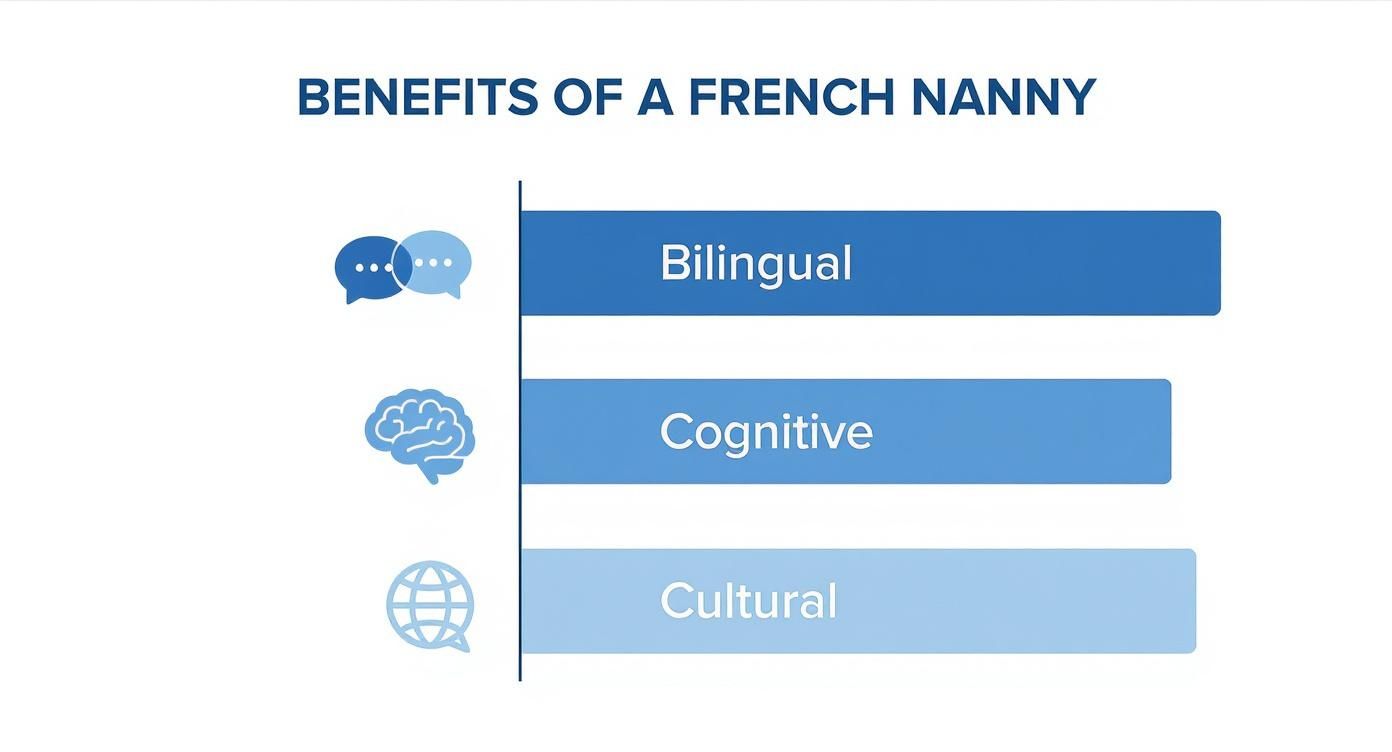
As you can see, the investment goes far beyond simple childcare; it’s a direct contribution to your child’s education and their understanding of the world.
Crafting a Contract That Protects Everyone
Once you’ve found your perfect nanny and agreed on the salary, the employment contract is the next critical step. This isn’t an optional extra; it’s a legal document that protects both your family and your new employee. It’s what turns a verbal agreement into a professional, secure partnership.
Think of the contract as your roadmap for the entire employment. It should be written in clear, simple language—no confusing jargon—and lay out every detail of the role. This clarity prevents misunderstandings and is the foundation of a great working relationship.
“A well-drafted contract is the foundation of trust. It ensures everyone understands their roles, rights, and responsibilities, creating an environment where the focus can remain on the children’s well-being.”
Your contract needs to be thorough. It should cover everything from the job description and working hours to arrangements for overtime or travel. It must also clearly state the gross salary (what you pay before tax), how often they’ll be paid, and details on sick pay, holiday entitlement, and pension contributions as required by UK law.
Here are the absolute must-haves for your nanny’s contract:
- Full Names and Addresses: The legal names and addresses for both you (the employer) and your nanny (the employee).
- Job Title and Start Date: Be specific, e.g., “French-Speaking Live-Out Nanny,” and state the official first day.
- Place of Work: Your primary family residence where the duties will be carried out.
- Duties and Responsibilities: A detailed, bulleted list of everything expected, from preparing meals and organising playdates to language practice and light, child-related housekeeping. The more detail, the better.
- Working Hours: The standard weekly schedule, including specific start and finish times.
- Remuneration: The agreed gross salary, payment frequency (weekly/monthly), and payment method.
- Holiday and Sick Pay: The paid holiday allowance (the UK statutory minimum is 28 days per year, including bank holidays) and the process for reporting sickness.
- Notice Period and Procedures: The notice period required from either side to end the employment and a clear disciplinary and grievance procedure.
Putting together a legally sound contract gives everyone peace of mind. If you’re looking for more guidance on this, there are great resources that explain how to draft contracts that actually work. Taking the time to get this right formalises your commitment and helps you build a strong, professional relationship from day one.
Finding Top Talent Through a Specialist Nanny Agency
For many families, the thought of finding the perfect French nanny in London can feel overwhelming. I get it. You could try a private search, sifting through online job boards or asking around your network, but that path is often riddled with complexities and risks. When it comes to your children’s safety and well-being, partnering with a specialist nanny agency isn’t just a convenience—it’s an investment in peace of mind.
Think of it this way: a private search is like trying to recruit a senior executive by yourself. You’re left to sort through a mountain of CVs, attempting to verify qualifications and read between the lines on references without any real industry insight. A specialist agency, however, is your dedicated headhunter. We’ve already done the hard work, tapping into our established network of high-calibre, fully vetted professionals.

The Rigorous Vetting Process
The single biggest benefit of using a reputable agency is the rigorous, multi-layered screening every candidate must pass. This is a world away from a simple CV check.
A top-tier agency’s vetting process is meticulous and will always include:
- In-Depth Interviews: These are designed to probe a candidate’s professionalism, childcare philosophy, and personality, ensuring they meet the highest standards.
- Verbal Reference Checks: Good agencies don’t just rely on written letters. We get on the phone with previous employers to get a candid, unscripted account of a nanny’s performance, reliability, and character.
- Documentation Verification: This covers everything from passports and childcare qualifications to confirming their legal right to work in the UK—a critical step post-Brexit.
- Enhanced DBS Checks: This is completely non-negotiable. It ensures every candidate has a clean criminal record and is safe to be around children.
A Matchmaker For Your Family’s Ethos
A great agency doesn’t just fill a position; they make a lasting match. Our job is to get to know the unique dynamics of your home—your parenting style, daily rhythms, and core values—and then find a candidate who truly fits. It’s a bespoke service that’s all about human connection, not just ticking boxes on a profile.
An agency acts as a trusted advisor, investing time to understand your family’s unique personality. This ensures the placement is not just about qualifications, but about finding a nanny who will become a harmonious and respected part of your home life.
This personal touch is what turns a potentially stressful hiring process into a trusted partnership. It saves you countless hours interviewing candidates who might look perfect on paper but simply aren’t the right cultural fit for your family. For those weighing up their options, learning about the best nanny agencies in London can offer more insight into this highly personalised approach.
The Professional Standard in London
The French nanny agency scene in London has evolved into a highly professional and regulated field. Leading agencies have built their reputations by serving hundreds of families, all while sticking to uncompromising vetting standards. This includes thorough background checks, multiple reference verifications, and mandatory DBS (Disclosure and Barring Service) checks to guarantee child safety.
Beyond the checks, the nannies themselves are often career professionals. Many hold certifications in childcare, paediatric first aid, and early childhood education. This commitment to excellence means that when you hire through an agency, you’re not just getting a babysitter—you’re welcoming a true professional into your home.
Getting the Paperwork Right: Legal and Immigration Checks
When you hire a nanny, you’re not just bringing someone into your home—you’re officially becoming an employer. This shift comes with serious legal responsibilities, and while the paperwork might seem a bit daunting, getting it right from the outset is crucial. Think of it as laying the proper foundations; it’s about protecting your family, ensuring your child’s safety, and building a professional relationship with your new nanny.
Getting this right gives you the confidence that your decision is not just a good one, but a secure and legally sound one. The process really boils down to two key areas: ensuring they are safe to be around your children, and confirming they have the legal right to work here in the UK.
The Non-Negotiable DBS Check
For anyone working with children in the UK, the Disclosure and Barring Service (DBS) check is the gold standard for safety. It’s an in-depth criminal record check that flags any past convictions, cautions, or warnings. The highest level, an Enhanced DBS check, is what you need for a nanny.
This isn’t just a box-ticking exercise. It’s your fundamental assurance that a candidate doesn’t have a history that would make them unsuitable for a role caring for your little ones. No family should ever, ever skip this step.
When you get the DBS certificate, here’s what to look for:
- Make sure it’s an Enhanced DBS check, not a standard one.
- Check the issue date—it needs to be recent.
- Ideally, your nanny will be subscribed to the DBS Update Service. This is a brilliant online system that lets you check their certificate’s status at any time, ensuring no new information has come to light since it was first issued.
Peace of mind is everything when it comes to your children. A clean, up-to-date Enhanced DBS check is the first, most important step towards building that trust and ensuring your home remains a safe haven.
Navigating Post-Brexit Immigration Rules
Things have changed quite a bit since Brexit. It’s no longer a simple matter for a French citizen to pack their bags and come to work as a nanny in London. As their employer, the responsibility falls squarely on your shoulders to verify that your chosen candidate has the right to work in the UK.
The old, informal arrangements are a thing of the past. A French nanny now needs a valid UK visa that allows them to work. This could be a Skilled Worker visa, a Youth Mobility Scheme visa (if they meet the criteria), or settled/pre-settled status if they were already living here before 31 December 2020.
Before their first day, you must physically see their original documents—usually their passport and their visa or biometric residence permit. You can also use the government’s digital share code system to check their status online. Taking someone’s word for it isn’t enough, and making a mistake can lead to hefty fines and legal trouble. Diligent checks from the very start are your best protection.
Getting the Nanny Interview Right
The interview is where a candidate’s CV truly comes to life. It’s that pivotal moment when you move beyond the qualifications on paper and get a real sense of the person you might welcome into your home—their warmth, their philosophy on childcare, and their unique personality.
A great interview isn’t an interrogation. I always tell my clients to think of it more as a structured conversation, designed to see if there’s a genuine connection. You’re looking for someone who doesn’t just fit the job description, but who fits into the heart of your family. It’s about digging deeper than generic questions to see how a candidate thinks on her feet and handles the messy, unpredictable reality of life with children.
Asking Questions That Truly Matter
To really get to know a candidate, you need to go beyond the standard script. Forget “What are your greatest strengths?” Instead, focus on open-ended, scenario-based questions that encourage a thoughtful story rather than a simple ‘yes’ or ‘no’. This is how you’ll discover their natural instincts, their patience, and their problem-solving skills.
Think about the daily challenges and joys your children bring. What happens when there’s a tantrum over toast? How do they handle a sudden rainy day when the park is off-limits? Frame your questions around these real-life moments. It will give you a much clearer picture of how they’d actually integrate into your family dynamic.
Here are a few key areas to explore to get you started.
Interview Question Checklist
This checklist is designed to help you cover all the important bases, from practical skills and safety awareness to their core childcare beliefs.
| Category | Sample Question 1 | Sample Question 2 |
|---|---|---|
| Childcare Philosophy | “Can you tell me about a time you handled a particularly tricky tantrum? What was your approach?” | “How would you encourage a shy child to make a new friend at the playground?” |
| Communication & Culture | “How will you balance immersing the children in French while making sure they also hit their English language milestones?” | “Imagine we disagreed on a routine matter. How would you approach that conversation with me?” |
| Safety & Emergencies | “Talk me through the exact steps you would take if a child had an allergic reaction under your care.” | “What’s your protocol if you were at a busy park and briefly lost sight of one of the children?” |
| Daily Routine & Fit | “What does your ideal, fun-filled daily schedule look like for a child of [your child’s age]?” | “What are some of your favourite screen-free activities to help children learn and play?” |
Remember, the goal here isn’t to catch them out or find a ‘perfect’ answer. It’s about understanding their thought process, their values, and how they would respond to the unique needs of your children.
The Art of the Reference Check
Once you’ve found a candidate you feel great about, the final, crucial step is the reference check. This is so much more than a box-ticking exercise; it’s your ultimate layer of due diligence. Speaking directly with past employers offers an honest, unfiltered perspective on a candidate’s reliability, character, and day-to-day professionalism.
“A reference check is your window into a candidate’s past performance. It’s where you validate that gut feeling from the interview and gain the candid insights you need for complete peace of mind.”
When you get a referee on the phone, don’t just ask if they’d recommend the nanny. Go deeper. You want to paint a full picture, so ask specific, open-ended questions that will get you the most valuable feedback.
Here’s a simple but effective way to structure that call:
- Confirm the Basics: First, just verify the simple facts: dates of employment, the specific role, and the ages of the children they looked after.
- Ask About Strengths: “What would you say were [Nanny’s Name]’s greatest strengths when she was with your family?”
- Probe for Areas of Growth: It’s always good to frame this one gently. “Was there any area where you felt she could have used a bit more support or development?”
- Enquire About Reliability: “How was her punctuality and attendance? Was she someone you could always count on?”
- The Deciding Question: “If you had the chance, would you hire her again without any hesitation?” The pause before they answer this one can often tell you everything you need to know.
This structured approach ensures you gather the detailed, honest feedback needed to make your final choice. It’s what gives you the confidence that the French nanny in London you select is the perfect, trusted addition to your family.
Building a Lasting and Positive Relationship
So, you’ve found your perfect French nanny in London, the contracts are signed, and you’re ready to begin. This is where the real work—and the real reward—starts. The success of this partnership isn’t just about the logistics; it’s about nurturing a strong, positive, and lasting relationship. The goal is to move beyond a simple employment contract and build a supportive bond that makes your nanny feel like a genuinely respected and valued part of your household.
Creating that environment begins with a warm welcome. Those first few days are about so much more than learning schedules and routines; they’re about making a human connection. A thoughtful orientation, a comfortable and well-prepared room for a live-in nanny, and clear, friendly introductions to the family’s rhythm can make a world of difference. This initial kindness sets a tone of mutual respect that will echo for years to come.

Establishing Open and Honest Communication
Clear communication is the absolute bedrock of any healthy relationship. Right from the beginning, set up a regular, easy way to check in with each other. This doesn’t need to be a formal meeting. A quick chat at the end of the day or a relaxed sit-down once a week creates a safe space for you both to share updates, ask questions, and iron out any tiny wrinkles before they become bigger issues.
It’s crucial that this is a two-way street. It gives you the chance to offer constructive feedback and express your appreciation, but it also gives your nanny a voice to share her own thoughts or concerns. This dynamic of mutual respect is what prevents misunderstandings and builds a solid foundation of trust.
Remember, your nanny is a professional childcare expert with valuable insights. When you actively listen to her observations about your children’s development, their moods, and their little victories, it shows that you truly value her expertise. This collaborative approach ensures everyone is on the same page, working together for the good of your children.
Navigating Cultural Differences with Grace
Bringing a nanny from another country into your home introduces a wonderful cultural exchange, but it can also bring subtle differences in communication styles, family traditions, or even approaches to child-rearing. The key to a strong bond is navigating these moments with grace and an open mind.
A successful relationship is built on empathy and a willingness to learn from each other. See cultural differences not as hurdles, but as opportunities to broaden your family’s perspective and enrich your children’s understanding of the world.
For example, communication styles between British and French cultures can differ in their directness. What one person might perceive as blunt could simply be a different cultural norm for being clear. It’s best to approach these nuances with curiosity, not judgement. A simple question like, “That’s an interesting way of looking at it, could you tell me more?” opens the door to understanding and shows respect.
Setting the Stage for Long-Term Success
To keep the relationship thriving for years to come, you need to think about the long term. A happy, motivated nanny is one who will provide the very best care for your children.
Here are a few cornerstones for building a lasting professional partnership:
- Regular Reviews: Make time for annual or bi-annual reviews. This is a dedicated space to celebrate successes, set goals for the year ahead, and discuss salary and responsibilities.
- Show Appreciation: It’s often the small gestures of gratitude that mean the most. Acknowledging her hard work, remembering her birthday, or offering a small, unexpected bonus can make her feel truly seen and valued.
- Respect Professional Boundaries: While your nanny is an integral part of your home life, it’s vital to respect her personal time and privacy, particularly in a live-in arrangement.
By investing in a respectful, communicative, and supportive relationship, you create an environment where your French nanny can truly flourish. And this positive dynamic is what ultimately benefits your children the most, giving them a stable, happy, and enriching home life.
Your Questions Answered About Hiring a French Nanny
As you get closer to making a decision, the practical details of hiring a French nanny in London start to come into focus. It’s completely normal to have a list of questions at this stage. We’ve put together answers to the most common queries we hear from families, giving you the clarity and confidence to move forward.
What Is the Difference Between a Nanny and an Au Pair?
This is a crucial distinction, and one that often causes confusion. Put simply, a French nanny is a qualified, professional employee. They have dedicated training and years of experience in childcare; this is their career. You hire them under a formal contract, they work set hours, and you pay them a professional salary for their expertise.
An au pair, on the other hand, is usually a young person who comes to live with a family as part of a cultural exchange. Their primary goal isn’t a career in childcare. Their hours are limited, they receive “pocket money” rather than a proper salary, and they aren’t expected to hold professional qualifications. It’s also worth noting that since Brexit, the official au pair visa route for French nationals has closed, making the professional nanny route the only legally correct path for this kind of arrangement in the UK.
Do We Need to Pay for a Nanny’s Taxes?
Yes, absolutely. When you hire a nanny, you become their employer in the eyes of the law. This means you are responsible for managing their PAYE (Pay As You Earn) scheme.
This involves registering as an employer with HMRC, calculating and deducting the correct income tax and National Insurance from their gross salary, and also making your employer’s pension contributions. It sounds like a lot, but most families find it much simpler to use a specialist nanny payroll service to handle all the paperwork. They ensure everything is done correctly, keeping you fully compliant with UK law.
A professional nanny is your employee, not a self-employed contractor. Getting the legal and financial setup right from day one is the foundation of a respectful and lasting working relationship.
How Much Should We Budget Annually?
Getting a clear picture of the total financial commitment is essential. While salaries can vary quite a bit, the average for a nanny position in the UK is around £42,681 per year. Think of this as a solid starting point. The final figure will naturally depend on the specifics of the role – whether it’s live-in or live-out, the number of hours, and of course, the nanny’s level of experience. For a deeper dive into what affects pay, you can find more insights about UK French nanny compensation.
But the salary is only part of the story. When budgeting, you also need to account for:
- Employer’s National Insurance and pension contributions.
- The possibility of a performance-based bonus or an annual raise.
- The placement fee if you partner with an agency.
- Slightly higher household costs (food, utilities) if you opt for a live-in nanny.
Factoring in these extras will give you a much more realistic view of the total annual investment.
Finding the right professional to welcome into your home and entrust with your children is a deeply personal journey. At Superstar Nannies, we specialise in connecting discerning families in London and across the globe with exceptional, fully vetted bilingual nannies. We’re here to make the process seamless and secure.
Contact our expert team to find the ideal French nanny for your home.