
You're usually making a decision about housekeeping maid uniforms when the old system has already started to fail. Someone's clothes look different from shift to shift, laundry is getting mixed with household items, guests can't tell who's on duty, and the team is wearing garments that look tired before the month is out. Treat the uniform as an operating standard, not decoration, and you'll get something that supports hygiene, presentation, and retention instead of creating another small problem for the household to manage.
Why Housekeeping Maid Uniforms Deserve a Real Decision
A uniform choice is a workplace decision, not a styling exercise. In British homes, maid uniforms became clearly gendered and class-marked during the Victorian era, with dark dresses, white aprons, collars, cuffs, and caps used to signal rank and domestic duties, then becoming more standardised by the early 1900s as clothing separated upstairs presentation from downstairs labour (Screen Archive South East). That history still shapes how a household is read by guests, trades, and other staff.
The test is more practical. The garment has to survive cleaning work, identify the role at a glance, and stay presentable through repeated laundering. If it fails on any of those points, the household ends up replacing items piecemeal, which is poor control and usually poor value.
What employers usually underestimate
The first error is treating uniform selection as a one-time purchase. A sensible system allows for replacement cycles, spare sets, stain management, and the way fabric behaves after repeated hot washing. If you are still defining the role, start by reading how to find a housekeeper before you buy clothing for it.
The second error is ignoring laundering logistics. If the household expects hygiene discipline, the uniform must support it. UK guidance for uniforms and workwear places weight on separating uniforms from other laundry and using heat appropriately, because those controls reduce contamination risk (NHS England guidance).
The third error is assuming the legal and tax position is casual. HMRC distinguishes true uniforms from ordinary clothes, and job-related clothing relief depends on who pays for cleaning and whether the item is a proper uniform worn only for work. That affects cost control as much as it affects compliance (GOV.UK uniform tax relief).
Practical rule: choose the uniform for the work first, then refine the look. If the garment cannot be washed, altered, and replaced sensibly, it is not a usable uniform.
Choosing a Style That Matches the Household
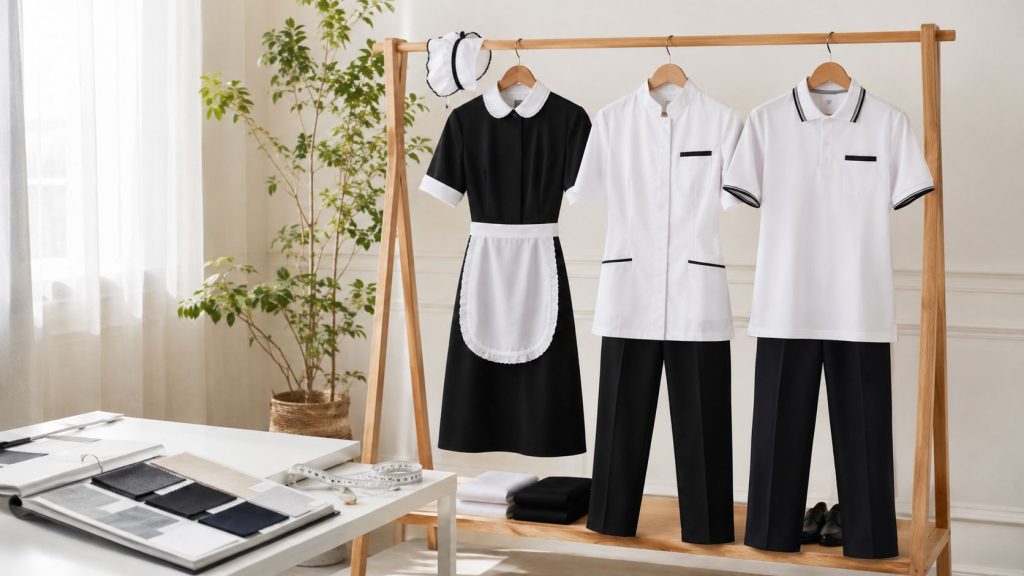
The right style follows the household's daily flow, not the principal's nostalgia. In a formal home with visible front-of-house service, the classic black dress with white apron and cap still makes sense because it signals role and order immediately. In estates where housekeeping overlaps with childcare, deliveries, or multi-level movement, a tunic-and-trouser set is more practical. For maintenance-heavy roles, second homes, and properties with a more active operational rhythm, a polo-and-trouser combination is usually the cleanest answer.
Match the garment to the tasks
Collar height, sleeve length, and apron coverage are not small details. A high collar can look disciplined, but it may be uncomfortable during long shifts. Short sleeves wash down well and stay cooler, but they can look too casual in a reception-facing property. Pocket placement matters too, because staff need somewhere to carry cloths, pens, checklists, or small tools without distorting the shape of the garment.
A household that hosts often should favour a more structured profile. A household that wants quiet efficiency should favour movement and durability. Don't force a formal dress code onto a working environment that spends most of its time cleaning bathrooms, laundering bedding, and turning rooms.
| Uniform Styles by Household Function | Best For | Workflow Strength | Limitation |
|---|---|---|---|
| Classic dress with apron and cap | Formal reception, traditional service, visible guest areas | Clear role signalling and strong house presentation | Less practical for heavy or fast-moving cleaning work |
| Tunic and trouser set | Split-level homes, mixed housekeeping and childcare duties | Better mobility and a modern professional line | Can read too plain if fabric and fit are weak |
| Polo and trouser combination | Second homes, maintenance-led roles, delivery handling | Easy movement and simple laundering | Lower formality in guest-facing spaces |
If you want a useful parallel, the logic in a 2026 chef uniform buyer's guide is similar, even though the role is different. The best garments are chosen for movement, heat, laundering, and presentation, not for sentimental ideas about tradition.
The household's reception pattern should set the formality level. If guests rarely see staff, don't over-style the uniform. If staff are visible daily, don't under-spec it.
Selecting Fabrics That Survive Housekeeping Work
A uniform fabric that looks tidy at fitting room stage can still fail once it goes through stain treatment, repeated laundering, and long shifts. For housekeeping, fabric choice is an operational decision. It affects replacement cycles, staff comfort, presentation, and how much time is lost to ironing and repairs. Judge it on durability, hygiene tolerance, comfort, and appearance retention.
Compare the main fabric families
Polyester-cotton blends are the safest default. They usually handle frequent washing, keep their shape, and stay neater than many natural fabrics. 100% cotton works well where breathability or skin sensitivity matters, but it creases more and needs stricter laundering if you want it to stay sharp. Performance synthetics can improve stain release and drying speed, but only if the finish feels professional rather than shiny or flimsy. Wool blends belong mainly in outerwear and structured winter pieces, where shape matters more than easy laundering.
Practical rule: cheaper cloth often costs more over time because it pills, distorts, or needs replacing sooner.
| Fabric Comparison for Housekeeping Uniforms | Durability | Hygiene Tolerance | Comfort | Appearance Retention |
|---|---|---|---|---|
| Polyester-cotton blend | Strong for repeat wear | Good for hot washing when constructed well | Balanced and manageable | Usually strong |
| 100% cotton | Moderate, depends on weave | Good if fabric tolerates heat | Breathable and familiar | Creases more easily |
| Performance synthetic | Good if quality is high | Often strong, but check care labels | Can be light and practical | Can vary by finish |
| Wool blend | Good for structured outerwear | Best for light-duty or outer layers | Warm and polished | Very strong for shape |
| Lightweight viscose | Poor for hard-use housekeeping | Weak under repeated washing | Initially soft | Drops off quickly |
| Untreated linen | Moderate, but unstable under abuse | Limited for intensive cleaning | Cool, but demanding | Reads rumpled fast |
Avoid lightweight viscose and untreated linen for daily housekeeping. They may look polished on day one, but repeated washing and ironing expose their weaknesses fast. If you want a broader procurement comparison from another sector, Dirt Cheap Product uniform advice reaches the same conclusion, good fabric is the fabric that survives service, not the sample that photographs well. For the wider job context, housekeeper duties and expectations also matter, because fabric has to match the actual work, not an abstract uniform idea.
UK laundering guidance belongs in the buying decision too. NHS England guidance says uniforms should be laundered separately and washed at the highest fabric-safe temperature possible, which means any cloth that cannot handle proper hygiene routines is the wrong cloth for this job. If the fabric fails under heat, frequent washing, or stain removal, reject it at procurement stage.
Getting Sizing, Fit, and Inclusivity Right
A badly fitted uniform tells people the household is careless. It hangs on the wearer instead of sitting cleanly on the body, and it often gets blamed on the employee when the problem is procurement. Fit needs to be designed, not guessed.
Build the sizing process around people, not labels
Measure each staff member individually. Don't rely on a loose small, medium, large system and then act surprised when sleeves ride up or trousers drag on the floor. Budget for two complete sets per employee plus one spare, so laundering gaps and emergencies don't leave anyone in an improvised outfit.
Ask for adjustable waistbands, side-seam zips, cuffs that allow rolling, and graded trouser lengths for shorter and taller staff. A single hemline across a mixed team looks sloppy in a real household. It also creates wear-and-tear issues, especially where staff are moving between cleaning, ironing, and guest-facing duties.
Make inclusion operational, not cosmetic
Maternity-friendly cuts, modest neckline options, and sleeve choices for religious requirements are basic good management. So are adaptive shapes for staff with mobility differences. A neutral colour palette also photographs better across different skin tones and reads consistently when teams change or expand.
Document alterations as part of the starter package. Don't leave hems, waist adjustments, or sleeve changes to chance. Then check fit again at the six-month review or after any extended absence, because bodies, duties, and seasons change.
Housekeeping note: fit is part of the service standard. Staff who can move comfortably usually present better, work more efficiently, and stay in role longer.
If you're comparing the role itself as well as the clothing, the duties laid out in The Ultimate Guide to the Duties of Housekeeper show why mobility and practical detailing matter so much in real homes.
Discreet Branding and Personalisation
In a private residence, loud branding is usually a mistake. The uniform should belong to the household, not advertise the supplier. That means simple finishes, restrained identification, and no visible fashion statements that compete with the setting.
Keep identification small and removable
If name badges are needed, use small engraved or woven pieces in a material that sits with the uniform. Avoid laminated cards that catch the light or peel at the edges. If embroidery is required, place it where it can be removed or covered later, such as the inside back neckband, an inner cuff, or a discreet hip pocket.
Surname embroidery is a poor choice because it exposes staff outside the property. For homes that host frequent corporate or charity events, a restrained monogram on a cuff or apron bib can work, but only if it stays subtle. Anything larger turns the uniform into marketing, which most principals haven't agreed to.
| Branding placement vs. suitability in private residences | Suitable | Risk in private setting |
|---|---|---|
| Inside neckband embroidery | Yes | Low visibility, easy to manage |
| Inner cuff marking | Yes | Minimal, but needs careful placement |
| Discreet hip pocket embroidery | Yes | Low risk if the uniform design allows it |
| Small woven name badge | Sometimes | Can still feel too visible in formal homes |
| Chest logo | Rarely | Reads promotional and too public |
| Surname embroidery | No | Exposes staff unnecessarily outside work |
If garments arrive with a supplier logo, remove or cover it. The household should read the uniform, not the manufacturer.
Laundering, Hygiene, and the Cost of Clean Uniforms
Laundering is where uniform policy stops being cosmetic and starts affecting hygiene, cost, and staff management. Decide at the outset whether the household will wash in-house, use a contracted laundrette, or require staff to wash at home, then put that decision in writing. If you leave it vague, you get arguments later about responsibility, condition, and expense.
Choose the cleaning model before the first order
In-house laundering gives the household the most control. It allows hotter cycles, separate loads, and storage away from domestic laundry, which aligns with UK guidance on keeping workwear separate and properly managed (NHS Borders laundering guidance). The trade-off is practical, it needs machines, drying space, and paid time.
A contracted laundrette can work if the service is reliable and the turnaround is tight. Use a written schedule and clear handover terms, because casual arrangements fail as soon as several staff members are involved. A service that looks cheap on paper can become expensive once collection, delays, and reissue costs are added in.
Home washing is the lowest direct household spend, but it gives up control. If you choose it, the protocol should cover temperature, detergent, drying, transport in a sealed bag, and what happens when a garment is too contaminated to return to service. That is not a detail to leave to individual judgement.
Replace garments before they look tired
Plan for wear, not optimism. A daily-worn dress or tunic will usually need replacement sooner than trousers, and aprons take the hardest punishment because they absorb stains and friction first. Use a simple cycle of inspection, repair, downgrade, and disposal so staff do not appear in kit that looks neglected.
For roles where the household wants a clearer divide between work space and living space, live-in housekeepers need especially disciplined laundry handling. The closer the staff member lives to the job, the more important it is to separate personal clothes from uniform rotation.
| Laundering route comparison for housekeeping maid uniforms | Indicative Weekly Cost | Hygiene Control | Tax/HR Consideration |
|---|---|---|---|
| In-house laundering | Variable, depending on machine use and labour | Strongest control | Cleaner if the household provides and manages it |
| Contracted laundrette | Variable by item and turnaround | Good if collection and return are reliable | Needs written responsibility terms |
| Home laundering by staff | Lowest direct household spend | Inconsistent unless protocol is tight | Relief may apply where the employee bears the cost |
HMRC also recognises deductions for laundering uniforms or protective clothing when the conditions are met, and the amount depends on the clothing type and wash frequency (HMRC manual). The GOV.UK job expenses guidance makes the same point in plain terms, if the employee carries the cleaning burden, the tax position needs to be checked properly. If the household expects staff to maintain the uniform themselves, the employment terms should say so clearly.
Putting It Together in an Employer Policy
A uniform policy should read like an operating rule, not a polite suggestion. If a household leaves the details informal, staff will make their own assumptions about style, laundry, replacement, and who pays when a garment is ruined.
What the policy must cover
State the approved uniform clearly. Specify whether the role uses tunics, dresses, trousers, aprons, or a mix, and say when branded clothing is permitted. Then define fabric standards, alteration limits, accessories, and how many sets each role receives. If the household expects staff to handle laundry themselves, say that plainly and link it to the hiring terms in this maid hiring guide so expectations are set before work starts.
Laundering responsibility needs to be explicit. Say whether cleaning is done in-house or by the employee, what happens with stained or contaminated items, and how garments are kept separate during rotation. If the policy gives staff the cleaning burden, tax treatment and any reimbursement question should be checked against current UK guidance, not guessed at. That is where your HR and payroll adviser should be brought in.
Cover presentation and conduct too. The uniform should be clean and pressed, jewellery should stay discreet, footwear should be practical, and defects should be reported at once. If an employee needs a religious, disability-related, pregnancy, or other adjustment, handle it directly and keep hygiene and safety standards intact.
Keep records and review them
Keep receipts for purchase, repair, and cleaning where they matter. The household should also keep a written record of what was issued, what was replaced, and why. That protects both the employer and the staff member if there is later disagreement about wear, loss, or damage.
Review the policy regularly and after role changes, incidents, or supply issues. If you are comparing production options or fabric consistency for repeat use, clothing manufacturer solutions can help you judge what can be supplied at a consistent standard across properties.
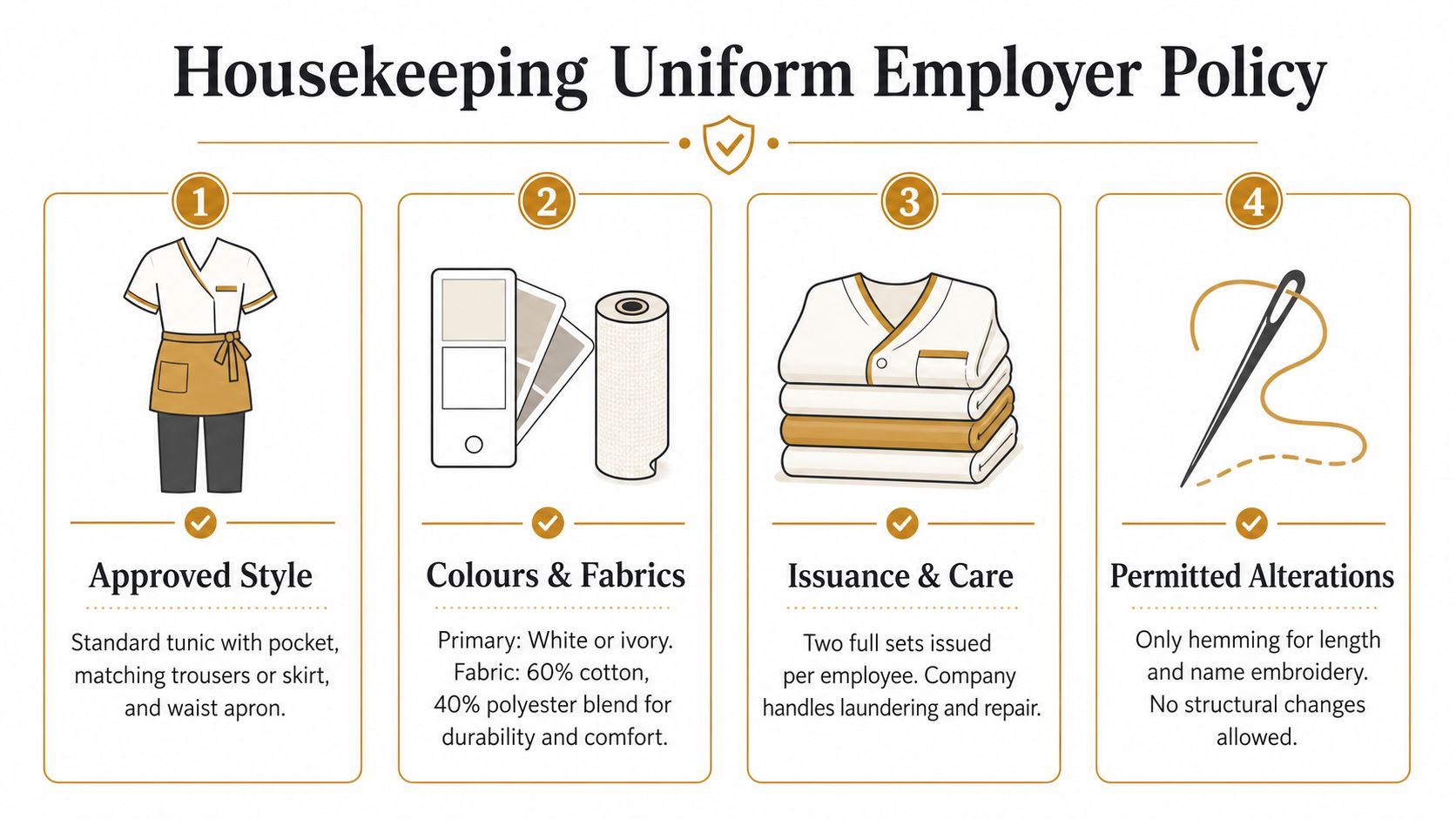
Policy rule: if it is not written down, people will interpret it differently. Uniform policy should be as specific as any other household operating standard.
For a practical next step, speak with Superstar Nannies about setting a household staffing standard that fits the property, the team, and the level of presentation you expect.