


Finding the right housekeeper is about more than just a clean home; it’s about bringing a trusted professional into the heart of your family life. The process can feel overwhelming, but with a clear strategy, you can find a reliable and skilled individual who seamlessly fits your household’s needs. This guide will walk you through everything, from defining the role to ensuring a successful start, making your search for the perfect housekeeper a confident and smooth experience.
Get this part right, and you’ll attract the calibre of professional you’re looking for from day one.
Defining Your Household’s Needs

Before you place an ad or contact an agency, the single most important step in finding a housekeeper is getting crystal clear on what you actually need. A vague job description is a recipe for disaster. It attracts unsuitable applicants and, worse, plants the seeds for future frustration. To avoid this, you need to conduct a thorough analysis of your household’s requirements. Think of it as creating a detailed blueprint for the role, leaving no room for guesswork.
Detailing Core Responsibilities
First, let’s get the non-negotiables down on paper. These are the fundamental tasks that form the bedrock of the position. Be explicit about what “cleaning” actually entails in your home.
For instance, your core duties might look something like this:
- General Cleaning: Daily tidying, plus regular dusting, vacuuming, mopping, and polishing surfaces throughout the entire residence.
- Kitchen Management: Deep cleaning of all appliances (ovens, fridges), managing pantry inventory, and daily sanitisation of worktops and sinks.
- Bathroom Upkeep: Meticulous, daily cleaning of all fixtures, tiles, and glass, ensuring a pristine environment.
- Bedroom Organisation: Making beds to a high standard, changing linens on a set schedule, and maintaining overall order.
Laying out these baseline expectations is crucial. If you’re looking for more inspiration, our guide on what a housekeeper does provides a comprehensive look at the scope of the role.
Housekeeper Role Definition Checklist
Use this checklist to create a precise job description before you begin your search.
| Category | Key Questions to Consider | Example Specification |
|---|---|---|
| General Duties | What are the absolute daily, weekly, and monthly tasks? | “Daily tidying of all common areas; weekly deep clean of 2 bathrooms and 1 kitchen; monthly window cleaning.” |
| Specialist Care | Do we have antiques, fine art, marble, or silver that need expert handling? | “Must have demonstrable experience in polishing and maintaining antique silverware and caring for delicate marble surfaces.” |
| Laundry | Does the role involve laundry? What kind? Delicate fabrics? Ironing to a high standard? | “Responsible for all family laundry, including washing, ironing, and steaming. Expertise with couture and fine fabrics is essential.” |
| Household Support | Will the role include errands, pet care, or simple cooking? | “Occasional grocery shopping, accepting deliveries, and feeding the family’s two small dogs in the afternoon.” |
| Timings & Hours | Is this a live-in or live-out role? Full-time or part-time? What are the core hours? | “Live-out position, Monday to Friday, 9 am to 5 pm. Occasional flexibility for evening events is required with advance notice.” |
Taking the time to complete this exercise will give you immense clarity and make the entire hiring process smoother.
Identifying Specialised Skills and Duties
For many properties, standard cleaning just scratches the surface. It’s often the specialised skills that separate a good housekeeper from an exceptional one.
These details really matter:
- Fine Surface Care: Proven expertise in cleaning and preserving materials like marble, antique wood, silver, or fine art.
- Laundry and Wardrobe Management: Professional-level washing, ironing, steaming, and organisation of clothing, including couture pieces.
- Errand Running: Is the housekeeper expected to handle grocery shopping, dry cleaning runs, or post office trips?
- Event Support: Will they need to assist with preparation and cleanup for family gatherings or dinner parties?
By defining these higher-level responsibilities from the outset, you attract candidates with the specific skill set and experience required to manage the complexities of a discerning household.
Where to Find a Great Housekeeper
With a crystal-clear job description in hand, you’re ready to start the search. Finding exceptional talent requires a targeted approach. Your best bet is almost always one of two avenues: a specialist domestic staffing agency or a trusted personal referral. Both paths can lead to a fantastic hire, but they offer very different experiences. The right choice comes down to what your family values most – speed and confidentiality, or the comfort of a personal recommendation.
The Specialist Agency Route
For most busy families, partnering with a high-end domestic staffing agency is the most efficient and secure way to hire. They do the heavy lifting, saving you time and ensuring you only meet candidates who are a perfect match.
A top-tier agency takes care of the initial screening process:
- Deep Vetting: They conduct rigorous interviews, run exhaustive background checks, and personally speak with former employers to verify every detail.
- Exclusive Candidates: The best housekeepers often work with reputable agencies who bring them exclusive opportunities.
- Time-Saving: Instead of you wading through applicants, the agency presents a curated shortlist of two or three exceptional candidates who meet your standards.
A great agency acts as a true consultant, understanding the unique rhythm and culture of your home to ensure a seamless and confidential process. If this sounds like the right path, it’s worth understanding how to choose the right partner. Our guide on selecting household staff recruitment agencies can help.
The Power of a Personal Referral
Never underestimate the value of word-of-mouth. A recommendation from a trusted friend, family member, or colleague whose standards you respect can be worth its weight in gold. The biggest advantage here is the built-in trust from a source you already value. This can often make the process feel more comfortable and lead to a wonderful, long-lasting working relationship.
Of course, this approach isn’t without its drawbacks. Your search is limited to your immediate circle, which can make it a slow and unpredictable process. You also have to navigate the situation carefully to maintain professional boundaries.
Finding the Right Balance
So, which is better? It truly depends. An agency offers structure, a wider pool of vetted talent, and speed. A referral provides a powerful layer of personal trust. The UK cleaning industry has grown from under 46,000 businesses in 2010 to over 75,500 by 2023. With so many professionals out there, a focused strategy is key. Whether you opt for an expert agency or a trusted network, choosing your path wisely is the first step to finding the perfect addition to your household staff. You can explore the full UK cleaning industry statistics to get a better sense of this expanding market.
Mastering the Interview and Vetting Process
A CV rarely tells the full story. It won’t reveal the discretion, integrity, or personality needed to harmonise with your household. Getting the cultural fit right is everything, discovered only through a meticulous interview and vetting process. The goal is to understand how a candidate thinks, what they do when faced with a challenge, and how deeply they respect a private home. This is where you uncover the qualities that don’t show up on paper.
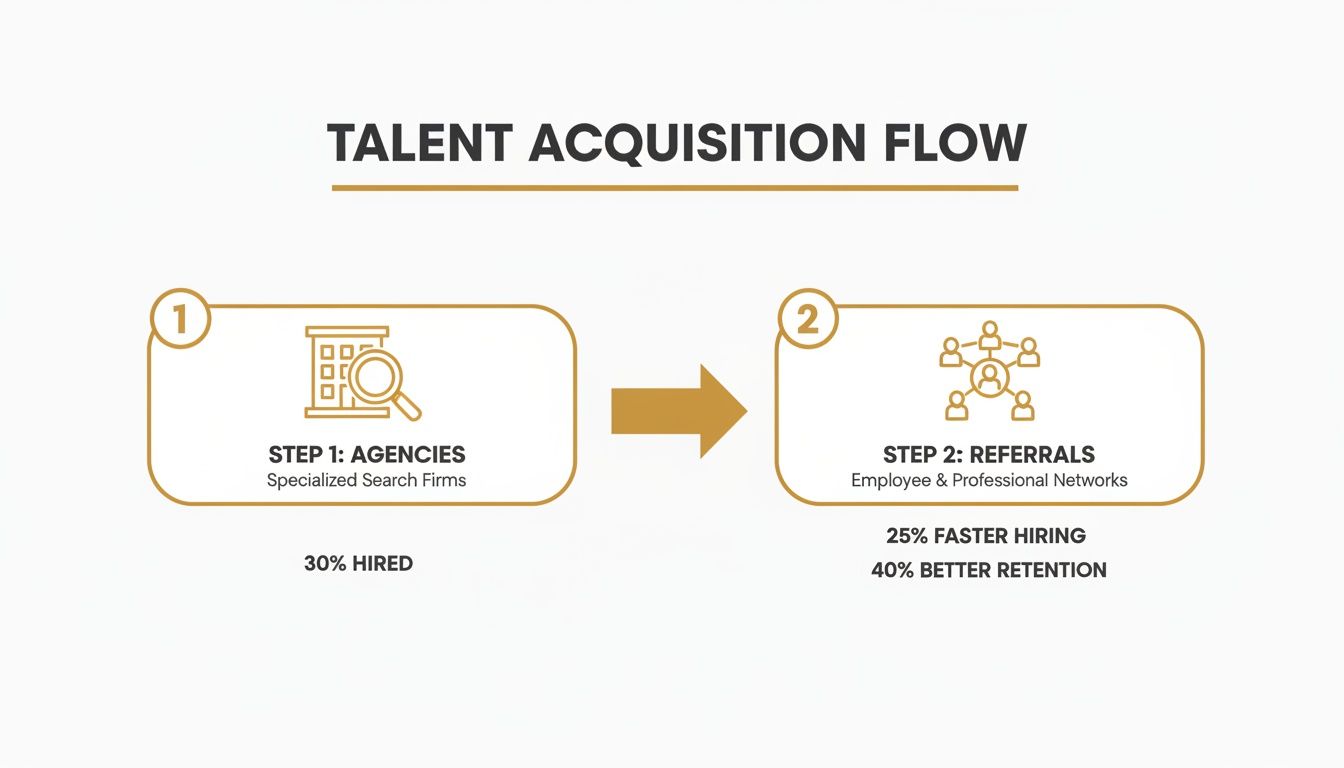
Whether you lean on an agency or a referral, what comes next—the vetting process—remains the most critical stage.
Conducting an Insightful Interview
Think of the interview as your chance to gauge a candidate’s professionalism and problem-solving approach. Your questions should be designed to peel back the layers and see how they think.
For instance, don’t just ask, “Do you have experience with delicate surfaces?” Instead, try a scenario-based question: “Imagine you’ve discovered a small water stain on an antique wooden table. Talk me through your immediate next steps.” Their answer reveals their thought process, caution, and communication style.
To help you prepare, we’ve put together a detailed list of essential interview questions for a housekeeper that gets into these crucial areas.
The Value of a Paid Practical Trial
A successful interview should always lead to a paid practical trial. This working interview gives a candidate the opportunity to demonstrate their skills in your home. It is, without a doubt, the single most effective way to see what they can really do.
A trial day is invaluable. It’s your chance to observe their attention to detail, efficiency, and how they navigate the space. More importantly, it allows both of you to determine if the fit feels right before any commitments are made. This step provides tangible proof of their expertise before you make a final offer.
Thorough Background and Reference Checks
The final piece is a comprehensive verification process. Never skip checking references. Speaking directly with previous employers offers unfiltered insight into a candidate’s reliability, punctuality, and character.
When you call, ask specific questions:
- “Can you describe a situation where they showed exceptional initiative?”
- “How did they respond to constructive feedback?”
- “Was discretion ever a concern?”
Beyond references, a formal background check is a non-negotiable part of your due diligence. To make a confident hiring decision, consult a detailed guide to the pre-employment screening process. This ensures you’re covering all necessary legal and security bases, giving you peace of mind.
Making the Offer and Finalising the Agreement
You’ve found your perfect candidate. Now, it’s time to make it official with a formal offer and a watertight employment agreement. This stage is about laying the foundation for a professional, respectful, and long-term working relationship. Getting this right prevents misunderstandings and establishes a professional tone from day one.
The UK cleaning industry contributed an estimated £66.9 billion to the economy in 2022. This highlights why a formal employment approach is so crucial. If you’re interested in the scale of this vital sector, the British Cleaning Council’s research offers fascinating insights.
Putting Together a Competitive Package
To attract and keep the best talent, your offer needs to be genuinely competitive. This means doing your homework on the going rate for housekeepers with the skills you need in your local area.
Think about the complete offer:
- The Salary: How does it stack up against industry benchmarks for similar roles?
- The Benefits: Are you including a pension contribution, private health insurance, or a travel allowance?
- Time Off: Be clear about annual leave, sick pay policy, and paid bank holidays.
A thoughtfully constructed package demonstrates that you value the role and the professional you’re bringing into your home. For a deeper dive into pay scales, our article on figuring out a live-in housekeeper salary is a great resource.
The Nuts and Bolts of the Employment Contract
The employment contract is the legal backbone of your arrangement. It needs to be clear, comprehensive, and leave no room for interpretation. Once you have a verbal agreement, it’s vital to follow up with a well-drafted offer letter; excellent guides can help you create a compelling offer letter.
The contract is the roadmap for your professional relationship. It’s the single source of truth you can both refer back to, ensuring total clarity.
Your agreement should spell out every detail:
- Job Title and Start Date: The official role name and start date.
- Scope of Duties: An exhaustive list of every responsibility, pulled from your job description.
- Work Schedule: Specify the exact working hours, days, and how overtime is handled.
- Confidentiality Clause: This is non-negotiable for protecting your family’s privacy.
- House Rules and Policies: Be clear on expectations for guests, use of household amenities, and other protocols.
- Termination and Notice Period: Define the terms clearly for ending the employment.
Onboarding: Setting Your New Housekeeper Up for Success

The moment your new housekeeper accepts your offer isn’t the finish line; it’s the start of the most important phase: integration. Those first few weeks are vital for building a positive, productive relationship that lasts. A thoughtful onboarding process sets the tone, clears up confusion, and gives your new team member the confidence to do their best work. Investing time upfront transforms an awkward transition into a smooth, professional integration.
Craft a Detailed Household Manual
The single most valuable tool you can create is a comprehensive household manual. This document is the ultimate guide to your home, outlining everything your housekeeper needs to know to meet your standards. It removes guesswork and shows you’re serious about clear communication.
Here’s what your manual should include:
- Detailed Checklists: Go room-by-room with specific guides for daily, weekly, and monthly tasks. Be detailed: “wipe down marble countertops with approved cleaner, sanitise sink, check fridge for expired items.”
- Product and Equipment Guide: List preferred cleaning products and provide clear instructions for using specific appliances, especially high-end or custom equipment.
- Security Protocols: Clearly document procedures for locking up, setting alarms, and handling deliveries. Cover gate codes, key locations, and emergency contacts.
- Family Preferences: Note the little things that make a big difference, like family routines, allergies, pet care instructions, or off-limits areas.
Build a Culture of Open Communication
A manual is a fantastic start, but nothing replaces human connection. Establishing a rhythm of regular, open communication is essential for a great working relationship. Schedule a brief check-in at the end of the first week and again after the first month. These meetings are a two-way street—your chance to provide constructive feedback and their opportunity to ask questions.
A supportive environment where feedback is welcomed is the bedrock of a trusting professional relationship. It encourages proactive problem-solving and ensures small issues are addressed before they grow into larger frustrations. This open dialogue builds a foundation of mutual respect that will make it easier to navigate any challenges down the road.
Conclusion: Finding Your Perfect Household Partner
Knowing how to find a housekeeper is a journey that requires clarity, diligence, and excellent communication. By thoroughly defining your needs, exploring the right channels, conducting meticulous interviews, and establishing a professional agreement, you set the stage for a successful and lasting partnership. A well-planned onboarding process further solidifies this foundation, ensuring your new housekeeper feels valued and confident from day one. Taking these steps will help you find not just a cleaner, but a true professional who enhances the harmony and efficiency of your home.
At Superstar Nannies, we specialise in sourcing and vetting exceptional household staff for discerning families worldwide. If you need assistance finding the perfect housekeeper for your home, our expert team is here to help.
Contact us today for a confidential consultation
Frequently Asked Questions (FAQs)
What is the difference between a housekeeper and a cleaner?
A cleaner is typically hired to perform specific cleaning tasks within a set timeframe, like vacuuming and mopping. A housekeeper, however, plays a more integrated role in managing the household. Their duties often extend beyond cleaning to include laundry, ironing, wardrobe organisation, running errands, and ensuring the home runs smoothly overall. Their role is about holistic household management, not just task-based cleaning.
How do I calculate a fair salary for a housekeeper?
A fair salary depends on location, the scope of duties, and the candidate’s experience. Research local benchmarks for similar live-in or live-out roles. If the job includes specialised tasks like wardrobe management or pet care, the compensation should reflect that. Experienced candidates with a proven track record in high-end homes will command a higher salary. Consider the entire package, including benefits like a pension or health cover, to create a competitive offer.
Do I need employers’ liability insurance when I hire a housekeeper?
Yes, absolutely. In the UK, it is a legal requirement for any employer to have employers’ liability insurance. This protects you in case your housekeeper is injured or falls ill as a direct result of their work in your home. It covers compensation costs and legal fees. Failing to have this insurance can result in significant fines and personal liability. Ensure your policy is in place before your new housekeeper’s first day.