


You can have a household that runs with restaurant-level precision, but only if the chef behind it understands more than recipes. The hard part is not finding someone who can cook well once, it's finding a professional who can handle your family's dietary needs, your calendar, your staff, and the quiet expectations that come with a private home. That is where specialist agencies for chefs earn their place.
A strong agency does more than introduce talent. It filters for discretion, confirms technical fit, and reduces the risk of a mismatch that can disrupt the whole household. For high-net-worth families, that difference matters, because the right appointment needs to work at service level, at personality level, and in practical day-to-day life.
The Modern Household's Need for Culinary Excellence
A family dinner can look effortless from the outside and still require a surprising amount of coordination behind the scenes. One child needs a strict allergy-safe meal, another is training for sport, guests may arrive with short notice, and travel plans can shift without warning. In that environment, a private chef is not a decorative luxury, but a working part of household continuity.
Public restaurants and catering teams can do excellent work, yet they are built for service windows, not for your household rhythm. They rarely learn the long pattern of what a family likes on school nights, what works before travel, or how to adapt when a formal dinner turns into a quieter evening at home. A private chef, placed properly, solves for consistency as much as cuisine.
For households that want a broader understanding of how knives, prep standards, and kitchen discipline affect service quality, understanding Japanese knife types and steel is a useful resource because the right tools often reflect the chef's working style. In the private home, those details matter. They shape speed, presentation, safety, and the calm feel of the kitchen.
The best agencies for chefs recognise that the brief is never just “cook for us.” It is often “create a stable culinary environment that fits our pace, our preferences, and our standards.” That is a very different assignment, and it demands a very different recruitment process.
Understanding the Role of a Private Chef Agency
A premier agency is not a noticeboard with a fee attached. It is a curator, a filter, and a risk manager. Instead of searching through general job boards, you get access to a network that has already been screened for professionalism, presentation, and private household readiness.
Curation is where the value lies. Public listings often attract candidates who can cook but have never worked around family routines, staff hierarchies, confidentiality expectations, or the pace of a fully staffed home. An established agency can narrow the field before you ever meet anyone, which saves time and protects the privacy of the household.
Practical rule: if a candidate sounds excellent on paper but can't explain how they manage dietary constraints, timing, or service flow, they're not ready for a private household brief.
A strong agency also shapes the brief before the search begins. It should clarify the number of covers, service style, dietary complexity, travel expectations, and whether the role is designed for one residence or multiple properties. For HNW families, that early definition prevents expensive misunderstandings later.
For a wider view of how a discreet household staffing partner operates, the private staffing approach outlined on Superstar Nannies' private staff agency page shows how closely the right appointment is tied to household culture, not just qualifications. That is the standard to look for.
For UK employers hiring chefs for private households, the most useful benchmark is technical verification. Agencies should confirm transferable skills such as à la carte service, dietary constraint handling, multi-course timing, and HACCP-aligned kitchen discipline before placement. Those checks are not optional polish, they're the difference between a pleasant hire and a dependable one.
Types of Chef Placements for Private Households
Different households need different working patterns, and the wording matters. If a family asks for a “chef,” they may need one of several placement models. The right agency will define the role clearly before it ever reaches candidates.
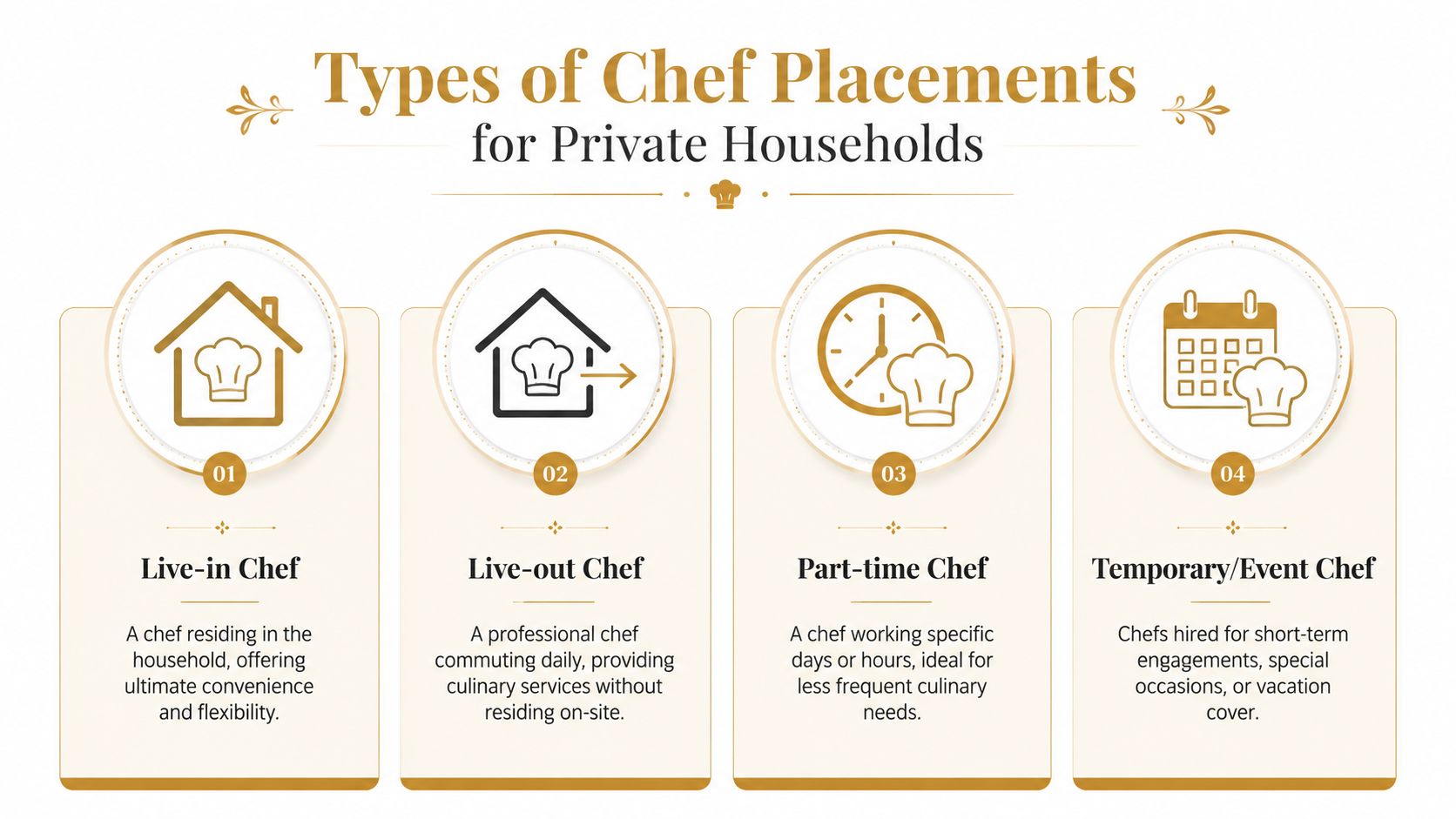
Live-in chef
A live-in chef suits households that want complete integration and immediate availability. This arrangement works well where the kitchen is central to daily family life, or where hospitality demands can change quickly. Accommodation quality, privacy, and boundaries need to be agreed early, because the role is as much about household harmony as it is about cooking.
Live-out chef
A live-out chef is often the better fit when the household prefers a cleaner separation between work and private life. This model gives you strong culinary support without requiring on-site residence. It's often easier to manage for families who already have a structured staff setup and want the chef to slot into a defined daily routine.
Rota chef
Rota placements are common where coverage must be uninterrupted and the household cannot afford service gaps. Large estates, yachts, and families with complex travel patterns often need this format because it allows continuous support while preserving rest periods. The key is scheduling discipline, because handovers have to be exact.
Temporary or seasonal chef
This is the practical choice for holiday cover, special events, or short-term family needs. The challenge here is speed without sacrificing standards, so agencies need to know exactly what kind of service the client expects. If the household is entertaining, the chef must be able to step in with minimal onboarding.
Travel chef
A travel chef needs adaptability above all else. The role suits families who move between residences or spend long periods abroad, and it demands someone who can work calmly in unfamiliar kitchens. For a family considering this format, private chef hire guidance can help clarify what service style and household rhythm require.
The right placement type saves everyone trouble. The wrong one creates friction that no level of cooking skill can fully fix.
The Vetting and Matching Process Explained
A reputable agency should treat chef selection like a controlled process, not a quick introduction. The first stage is a careful review of experience, service history, and presentation. That's where the shortlist begins, but it's nowhere near enough on its own.
What gets checked before a family ever meets someone
The process should move through structured interviews, practical culinary assessment, and reference checks that go beyond confirming dates. A candidate may have an impressive CV, but that doesn't reveal how they behave under pressure, how they communicate with household staff, or whether their style fits a quiet family home.
The UK market supports this kind of screening because chef hiring is tied to formal training pipelines and qualifications. In practice, that lets specialist agencies screen candidates by exact kitchen discipline, service style, and experience level, from commis chef through to head chef, using proven, structured competencies rather than broad generalisations. That model is reflected in the way chef recruiting agencies work in the UK.
The best matches usually come from patience at the front end, not speed at the back end.
Why the trial matters
A culinary trial lets both sides test the suitability of the role. In a private home, that may involve a professional kitchen or the family residence, depending on the brief. The purpose is simple, to see whether the chef's timing, discretion, and communication style fit the environment.
Agencies should also evaluate softer qualities that matter in lived-in homes. Adaptability, discretion, and respect for existing staff are not extras. They're core requirements, especially where the household already has established routines and expectations.
For families comparing options, a useful question is not “Can this chef cook?” It's “Can this chef operate well here?” That distinction keeps the process grounded and avoids avoidable turnover.
Navigating Contracts Fees and Salary Expectations
A private chef appointment should be financially clear from the start. Families do best when they understand both the agency's role and the cost structure attached to the search. Hidden assumptions create friction, especially when the role is senior, specialised, or international.

Most agency relationships are built around service value rather than simple transaction price. You are paying for search, screening, confidentiality, and the judgement to know what a realistic brief looks like. That can save time and reduce the cost of a poor hire, which is where substantial budget damage usually occurs.
There's another reason to be careful with salary framing. A household that wants elite culinary talent has to offer terms that reflect both competence and responsibility. If the role includes travel, private service, dietary precision, or irregular hours, those factors should be built into the offer from the start.
For a useful overview of how household chef budgets are normally approached, this guide to the cost of private chef hire is a practical starting point. It helps families think about the role as a long-term household function rather than an isolated hire.
When comparing offers, use this lens:
- Clarify scope first: define whether the chef is cooking daily, hosting formally, travelling, or covering multiple properties.
- Match pay to responsibility: a chef managing complex service usually carries more operational pressure than a family cook.
- Plan for retention, not just arrival: competitive terms help keep a strong chef in place once the fit is right.
The financial conversation should feel discreet and precise, not vague or rushed. The best agencies help the family arrive at a brief that is competitive, realistic, and respectful of the market.
International Placements and UK Compliance
International chef recruitment can look straightforward until paperwork, eligibility, and timing enter the picture. In the UK, the issue is not just finding a talented candidate, it's establishing whether that candidate can work lawfully and whether the household is ready to support the process properly.

The compliance burden is real. Under the Skilled Worker route, chef roles have been affected by occupation code updates, shortage-list treatment, and salary thresholds, and the UK government changed the minimum salary threshold sharply in 2024. The practical result is that agencies now have to think like compliance partners as well as recruiters, because the wrong assumption about sponsorship can stop a placement before it starts. The Restaurant Association's research hub reflects how central immigration and right-to-work questions have become for hospitality employers.
A good agency should be able to separate three questions clearly. Can the role be filled by someone already eligible to work in the UK, does the candidate require sponsorship, and does the salary level support the route being considered? That distinction matters because not every excellent chef can be placed into every household.
For families hiring across borders, documentation discipline is just as important as culinary fit. Right-to-work checks, passport review, and clear communication about lead times all need to happen before a start date is promised. Many generalist services often struggle with these precise requirements, as they prioritize talent search and underweight legal risk.
If the household is also considering roles linked to yachts or travel-heavy assignments, yacht chef job pathways can help frame the kind of mobility and flexibility such appointments usually require. That is especially useful when the chef will move across jurisdictions or spend long periods away from a single residence.
A discreet household cannot afford uncertainty here. The agency should be the party that keeps the process lawful, documented, and calm.
Your Next Steps to Culinary Excellence
A strong private chef search should feel controlled, confidential, and exact. The right agency will define the brief properly, screen for technical competence, verify compatibility, and handle the compliance questions that can derail an otherwise excellent hire. That combination is what turns a search into a successful long-term appointment.
For families who value discretion and dependable process, specialist agencies for chefs are the sensible route. They bring access, judgement, and structure to a search that can otherwise become noisy and time-consuming. In a private household, those qualities matter as much as culinary flair.
If you're ready to appoint a chef who fits your home, your standards, and your schedule, contact Superstar Nannies for a confidential discussion. A careful conversation at the outset can save weeks of uncertainty later, and it puts your household on the right path from the first brief.
Frequently Asked Questions
How do I know if a chef agency is reputable?
Look for clear screening standards, direct questions about service style, and a serious approach to confidentiality. A reputable agency won't rush you into interviews before understanding the household, the calendar, and the exact level of culinary support you need.
How long does the process usually take?
It depends on how specific the brief is and whether the candidate needs UK work authorisation or sponsorship. A straightforward local placement can move faster than an international search, but the best result usually comes from a process that allows for careful vetting and a proper trial.
Should private households offer trial periods?
Yes, because a trial reveals how the chef works in your actual environment. Cooking talent in isolation isn't enough. You need to see timing, discretion, communication, and compatibility with staff and household rhythm before committing long term.
What's the biggest red flag with chef recruitment?
Any agency that treats compliance as an afterthought. If right-to-work status, salary suitability, or role scope isn't discussed early, the household can end up with delays, misaligned expectations, or a candidate who can't lawfully take the job.