


Saturday morning in London is when the weak applicants reveal themselves. They apply for weekend nanny jobs in London as if the work is a lighter version of weekday care, then stumble when a family asks about bedtime, Sunday lunch prep, Monday school kit checks, or how they handle a child who's overtired by 3 pm. The candidates who win are the ones who understand that weekend cover is a service contract, not a casual babysitting gig.
Families in this market want reliability, speed, and discretion. Candidates want fair pay and clear terms. The problem is that candidates often compare the wrong roles, so they either underquote, overpromise, or walk into interviews unprepared.
What a Weekend Nanny Role Actually Looks Like in London
A Saturday shift in London rarely starts with a quiet cup of tea and a simple play session. It starts with handover, a breakfast routine, and a household that already has a pace. By late morning, the main job is in motion, meals are being planned, children need structure, and parents want the day to run smoothly without being interrupted for every small decision.
The London market shows that weekend roles are often full working days, not short stints. A Wandsworth posting asked for Saturday and Sunday from 9 am to 6 pm, with a valid first aid qualification and £15 gross per hour, plus optional extra school-holiday hours, which tells you families expect proper coverage, not just supervision. A higher-end London role advertised through 19 London ran 7 am to 7 pm on Saturdays and Sundays and included meals, bath and bedtime routines, tidying children's spaces, and getting school uniforms and sports kits ready for Monday morning. For local context, Nannytax's 2025 salary guide places London nanny pay at £39,806 gross a year or £15.31 an hour, versus £32,552 or £12.52 an hour in the rest of the UK, with the Home Counties and Greater London at £35,438 or £13.63 an hour. That pay gap is one reason weekend coverage is treated as premium work in the capital. Superstar Nannies part-time nannying jobs
What families actually expect
Weekend work usually includes the bits candidates forget to mention on their CVs.
Practical rule: if you only describe “childcare”, you're underselling yourself. Families are buying continuity, household order, and a calm Sunday.
The most common tasks are simple to list and hard to do badly. They include meals, snacks, bath time, bedtime, tidying, and Monday prep. In higher-end homes, the role can also mean coordinating with parents, another nanny, or household staff so the weekend handover is clean on Monday morning.
Families don't want a sitter who watches the clock. They want someone who can carry the household through the weekend without creating extra work.
Weekend live-out work is common, but live-in or rota-style coverage changes the rhythm completely. If the role spans both days with long hours, you're not applying for a casual add-on, you're applying for operational family support.
Where to Find Weekend Nanny Jobs in London
Specialist agencies should be your first stop if you want serious weekend work. They're the channel that tends to see more private-household, rota, and VIP briefs, and they usually screen both sides more tightly than open platforms. That matters because the families paying for weekend cover often want experience, references, discretion, and fast turnaround.
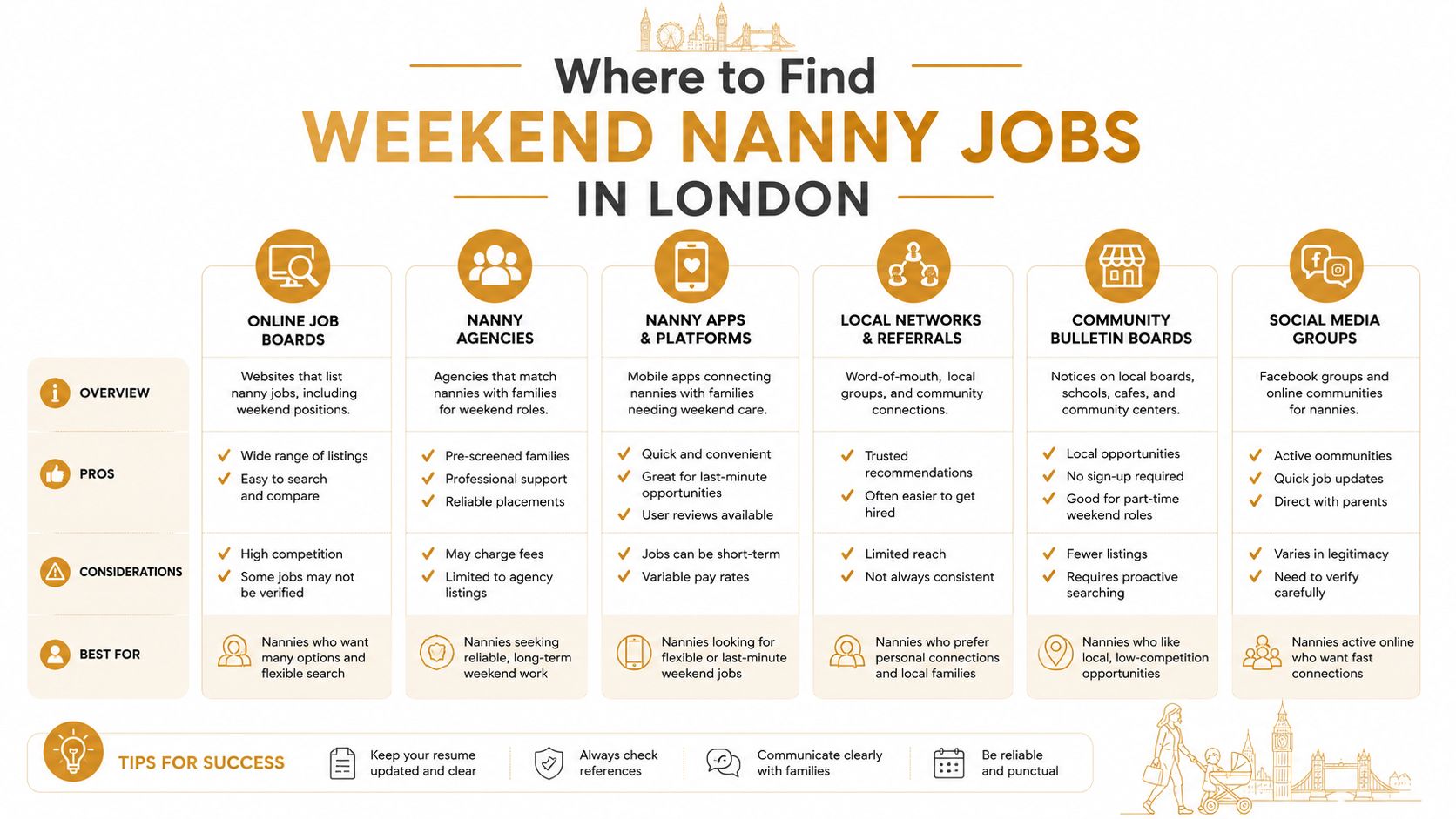
General childcare platforms are useful too, but you need to be selective. Childcare.co.uk currently shows 3,269 weekend nannies listed in London on its search results, and Care.com shows 368 nanny job opportunities in London on its platform, which tells you supply is broad but fragmented. That fragmentation helps if you're building recent references, yet it also means plenty of the roles are standard hourly care rather than premium household coverage. Superstar Nannies best nanny agencies in London
Use three channels at once
The best candidates don't pick one route and hope for the best.
- Specialist agencies: Best for private households, rota work, and higher-trust roles where vetting matters.
- General platforms: Good for volume, quick responses, and filling gaps in your diary.
- Private networks: School-gate chats, alumni circles, and word-of-mouth often close fastest because the family already trusts the referral.
Private networks are underrated because they often get you in front of the decision-maker without a long platform trail. But don't rely on them alone. If you only post in WhatsApp groups, you'll miss the better-structured roles.
One agency option in this space is Superstar Nannies, which places weekend and short-term private-household roles. Use it alongside broader searches, not instead of them, if you want a serious shortlist rather than a pile of low-quality messages.
Building a CV That Wins Weekend Roles
A weekend nanny CV needs a sharper lead than a weekday CV. Put your weekend availability, continuity, and household style at the top, because families scanning for Saturday and Sunday cover want to know immediately whether you're free and whether you can hold the line for a full weekend. If you've done rota, split-shift, or live-in work, name that clearly. That's the language London households understand.
Lead with the right details
A strong weekend CV should include the child age bands you've worked with, the number of days or hours, and the specific duties you handled. Don't hide behind broad phrases like “supporting families.” Say whether you managed meal prep, bedtime, school bag checks, weekend outings, or Monday readiness. If the family needs Sunday dinner, bath routines, and tidy handovers, they want to see that kind of operational detail on the page.
For the fundamentals of CV structure, a solid external starting point is the guide to building a strong resume. Then strip out anything that doesn't strengthen your weekend pitch. Generic personal statements waste space, and qualifications that don't relate to private-household childcare can sit lower down.

References need to be ready, not “available on request”
Weekend roles move quickly, so your referees need to be briefed before you apply. Choose people who can speak to reliability over a Saturday and Sunday pace, not just weekday school runs. A family that's hiring for weekends wants confirmation that you show up, stay calm, and handle the long stretch without drama.
Your master CV can stay broad, but your weekend version should be ruthless. Keep the format clean, prioritise recent private-household work, and make it easy for an agency or family to verify you fast. If you want the basics of entering the profession, the how to become a nanny page is a useful internal reference point, but your weekend CV still needs to be written for this exact market.
Pay Rates and How Weekend Roles Are Actually Priced
Weekend pay in London is where many candidates make their first expensive mistake. They see a headline figure, forget whether it's gross or net, hourly or block-based, and then quote themselves into the wrong bracket. If you want to negotiate properly, you need to know which pricing model the family is using.
Three pricing formats dominate the market
Hourly babysitting is the simplest model and often the least structured. Jooble's London weekend-babysitting results show vacancies advertising £35 per hour, which fits flexible, shorter-duty arrangements. Weekend live-out nanny roles are different. One London agency guide lists £20 to £30 gross per hour for a weekend live-out nanny, which is a better benchmark for proper household coverage. A separate London weekend listing platform shows £350 net to £500+ net per weekend, which suggests some families prefer a fixed block price for Saturday and Sunday rather than a pure hourly rate. Superstar Nannies how much to pay a nanny in London 2026 the elite salary guide
| Weekend Nanny Pay Formats in London | Typical Range | Best For | Watch For |
|---|---|---|---|
| Hourly babysitting | £35 per hour | Flexible evening or short-cover jobs | Often lighter duties than a true nanny role |
| Weekend live-out nanny | £20 to £30 gross per hour | Full-day Saturday and Sunday care | Check whether meals, tidying, and bedtime are included |
| Fixed weekend block | £350 net to £500+ net per weekend | Longer, structured weekend coverage | Convert net to gross before you compare offers |
The smartest way to test an offer is to convert the role into a weekend total. A Saturday-Sunday role of roughly 12 hours a day needs to be priced against the full workload, not just the face value of the hourly line. If the family wants meals, bedtime, tidying, and Monday prep, you're not quoting for “watching children”, you're quoting for a weekend service.
Use the right comparison
The most common pay mistake is comparing net and gross figures without conversion. That makes a role look generous when it isn't, or makes a fair offer look weak when it's competitive. If the contract is freelance or self-employed, the Umbrella Company's guide for freelancers is a useful reminder to check how your billing structure affects what you keep.
My rule for candidates: never answer a pay question until you've asked whether the number is hourly, per day, or per weekend block.
Weekend roles get expensive fast once the hours stretch, which is why families often want a tidy block rate. Candidates who understand that structure negotiate more confidently and waste less time on roles that were never priced properly.
DBS, Right-to-Work, and Safeguarding Basics
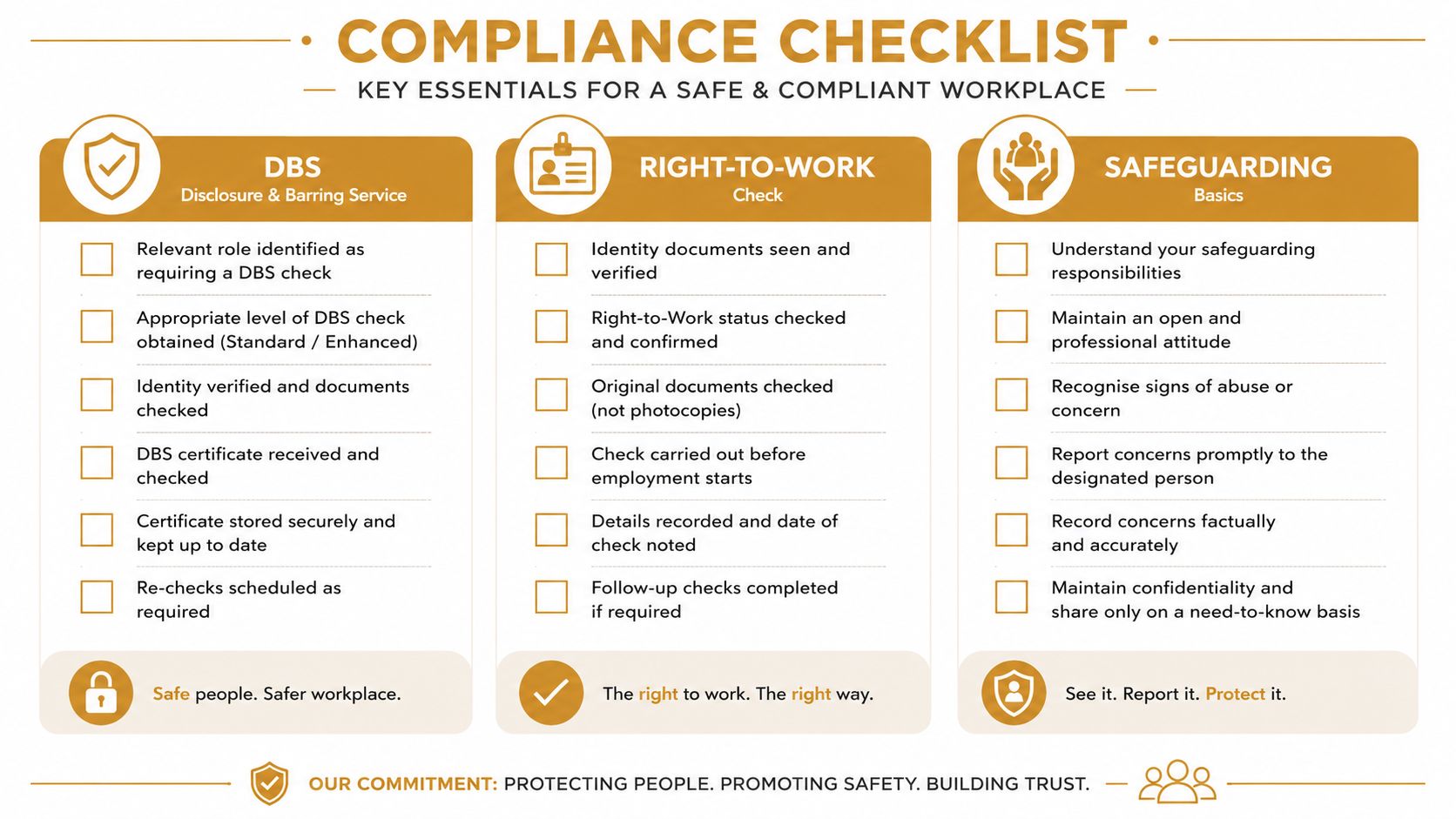
Families hiring for weekend care in London want compliance sorted before they talk about personality. If you're missing paperwork, the strongest CV in the world won't save the application. For high-trust homes, especially where the role touches long hours or private-household routines, the admin is part of the interview.
Have the core documents ready
You need an enhanced DBS check with children's barred-list check, paediatric first aid, proof of right to work in the UK, and two recent checkable references. London weekend postings commonly ask for these basics, and some also ask for prior private-household experience, which gives rota or live-in candidates an advantage because the family can see you already understand household rhythm. A role in this market can move fast, so a delayed referee can cost you the placement.
Make verification easy
Send a clean document pack, not a messy folder of scans. Put your DBS status, first aid date, passport or visa evidence, and references in one place so an agency or family can check you quickly. If a referee is slow, chase them before the family does.
For a useful external reference on checks, the Childcare background check resource is worth reading before you send out applications. It won't do the work for you, but it will keep you honest about what families expect.
If you've worked in private households before, say so plainly. That experience matters more in weekend searches than many candidates realise, because London families usually want someone who understands confidentiality, routine, and child safety without a long briefing.
Interviews and Trial Days That Match Weekend Realities
Weekend interviews should feel like a dry run for Saturday and Sunday, not a generic nanny chat. Families want to hear how you handle breakfast, activity planning, meal sequencing, bath time, and a child who's gone past their best by mid-afternoon. If you only answer in weekday school-run language, you're missing the point.
Ask direct questions. Who is in the property over the weekend. Is there a rota nanny handing over. Is this live-in or live-out. What does the family expect on Sunday evening, especially if Monday prep is part of the brief. Those answers tell you whether the household is organised or just hoping the nanny will absorb the chaos.
Practical rule: a good trial day should show you the real tempo of the home, not just how charming the children are for an hour.
Watch the logistics too. Parking, tube access, lift access, and arrival timing matter more on weekends than candidates think, especially if the house is busy, gated, or split across staff and family spaces. Trial days are also where vague descriptions show up. If the role mutates halfway through the day, or the duties expand without warning, that's a red flag.
Families are hiring judgement as much as childcare. They want to see whether you stay calm, manage transitions, and keep the children regulated while the house gets on with its own weekend rhythm. If you can do that cleanly, you're already ahead of most applicants.
Contracts, Negotiation, and Discretion for UHNW Households
Weekend contracts need sharper wording than many candidates expect. Push for clarity on overtime, bank holiday premiums, holiday pay accrual, and whether Saturday and Sunday are treated as equal hours or weighted differently. If the role includes evenings, sleepovers, or handover with other staff, make sure that's written down before you accept.
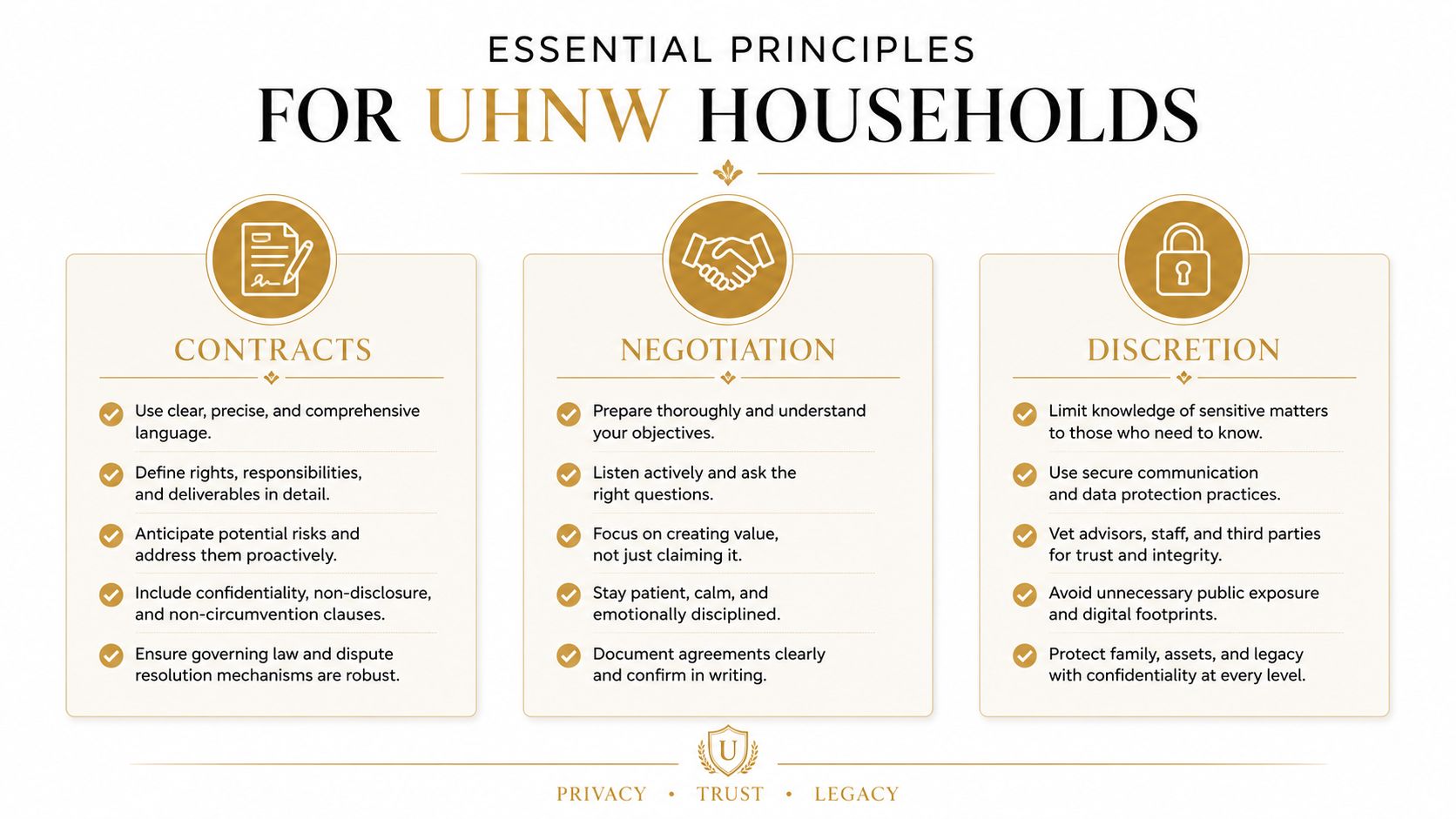
For UHNW and VIP homes, discretion isn't a nice-to-have. Expect NDAs, social media rules, photo restrictions, and tighter boundaries around travel, family events, and anything that identifies the household. That's standard in serious private work, not a sign that the family is difficult. It just means the role carries more trust and more exposure.
A premium weekend role should pay for more than hours. It should pay for availability, confidentiality, and the ability to keep the household stable while other people are resting. If the contract looks like basic babysitting but the responsibilities look like private-household management, the price is wrong.
If you want straight answers on rates, contracts, and which London weekend roles are worth your time, Superstar Nannies places vetted childcare professionals into private households that expect proper standards. Bring them your weekend availability, your references, and your documents, and they'll match you to roles that are priced and structured for a proper position.