


You may be at the point where part-time help no longer covers the full rhythm of your home. A parent needs support before breakfast and again during the night. A child with additional needs settles best with one familiar adult. An older relative becomes anxious when too many different carers rotate through the house.
That's where live in caregiver duties need careful definition. A live-in arrangement can bring steadiness, trust, and better continuity, but only if everyone understands what the role includes, what it doesn't, and how daily life will run without guesswork.
Introduction to Live In Caregiver Duties
A live-in caregiver is not just “someone who stays over”. They become part of the daily operating system of the home. That means the role must be organised with the same care you'd use for a school plan, a medical routine, or a household budget.
Families often get stuck in one of two places. Either they keep duties too vague, which leads to frustration, or they expect one person to cover everything, which leads to burnout. Neither works well for care.
Think of the role like a well-written map. If the route is clear, the caregiver can move confidently, the family can step back without worry, and the person receiving care feels safe because the day has a shape.
Practical rule: Write duties as observable tasks, not broad intentions. “Prepare lunch suited to dietary needs” is clearer than “help with meals”.
The strongest live-in arrangements usually share three features:
- Clear care priorities that match the person's actual needs
- Predictable routines so the day feels calm rather than reactive
- Professional boundaries so support remains kind, respectful, and sustainable
Core Responsibilities of Live In Caregivers
The heart of live in caregiver duties is simple. Support the person well, protect dignity, and keep the home functioning smoothly around the care plan.
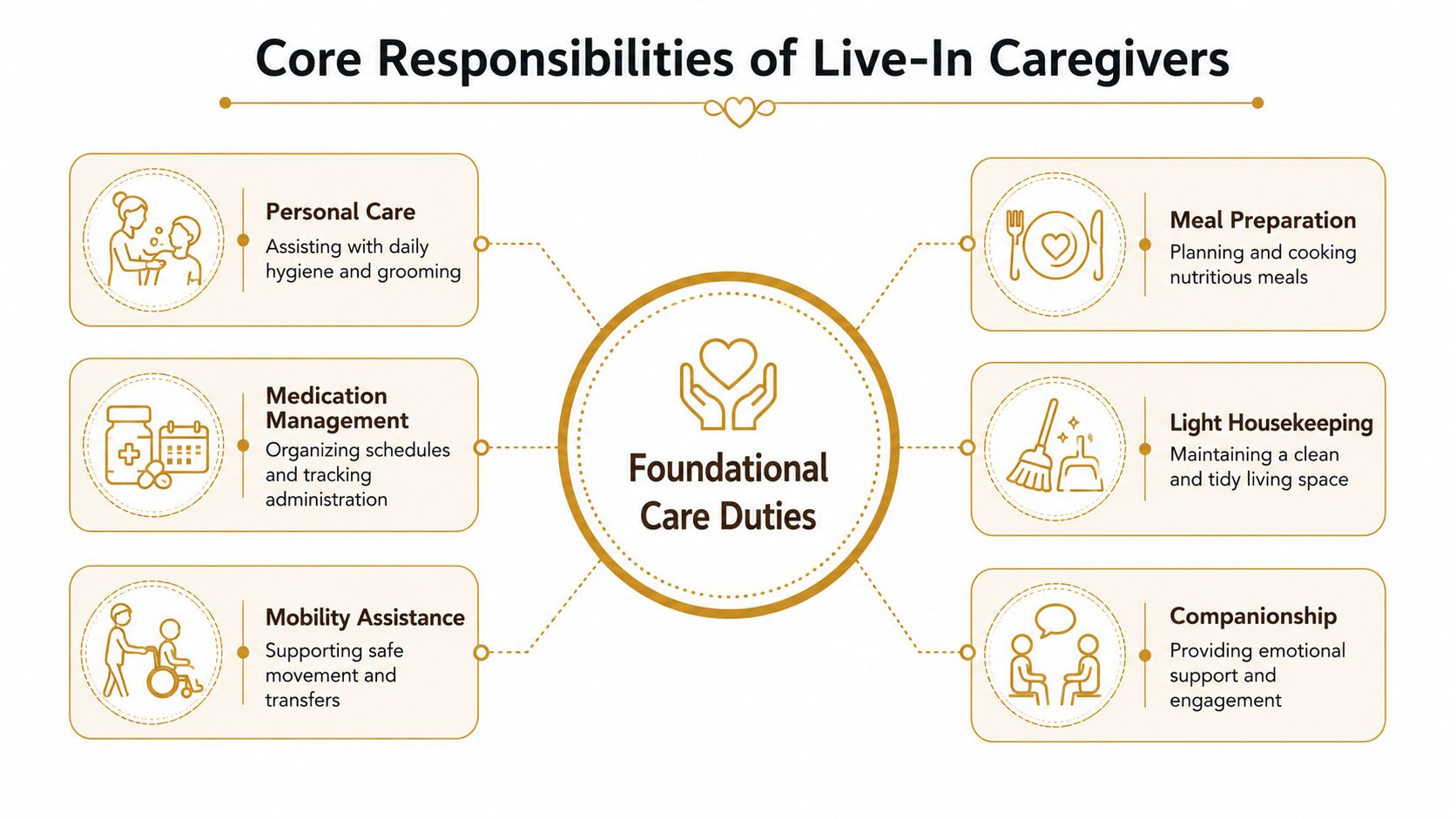
Personal care and daily living support
Personal care usually includes bathing, washing, dressing, grooming, toileting support, and bedtime routines. The key point isn't speed. It's preserving the person's comfort and sense of control.
For example, a skilled caregiver doesn't rush through dressing just to “get it done”. They might lay out two suitable outfits and let the client choose. That small choice can protect independence.
Common personal care tasks include:
- Morning hygiene: Washing face, brushing teeth, hair care, and skincare
- Dressing support: Choosing weather-appropriate clothing and assisting with fastenings
- Toileting assistance: Helping safely and discreetly, while watching for changes that may need family or medical follow-up
- Evening settling: Changing into nightwear, continence care if needed, and preparing the room for rest
Medication, meals, mobility, and light household support
Medication routines need accuracy. A caregiver may use a labelled pill organiser, a written medication administration chart, and phone reminders to make sure nothing is missed. If the person seems drowsier than usual or refuses medication, that should be recorded and reported rather than guessed at.
Mobility support is another area where families often underestimate detail. “Help Mum walk” sounds simple, but good support may include checking walking aids, clearing floor hazards, supporting transfers from bed to chair, and encouraging prescribed exercises exactly as instructed.
Meals sit at the centre of care because they affect energy, mood, and routine. A live-in caregiver may plan simple breakfasts, batch-cook soups, prepare texture-modified foods, or keep a notebook of likes, dislikes, and triggers such as swallowing difficulty or poor appetite.
Then there's household coordination. This doesn't mean full domestic service unless the contract says so. It usually means care-related tidiness such as laundry for the client, changing bed linen, washing dishes used in care, restocking continence items, and picking up essentials.
If you need a useful comparison for task clarity, the same discipline used in understanding security guard responsibilities applies here. A role works best when duties are defined by function, limits, and response expectations.
Good caregiving plans don't rely on mind-reading. They rely on routines, records, and clear responsibility.
Designing Daily and Weekly Schedules
A live-in placement runs best when the day is predictable. Not rigid. Predictable. That distinction matters.
A rigid plan breaks the moment real life changes. A predictable plan gives structure while leaving enough room for appointments, low-energy days, visitors, or disrupted sleep.
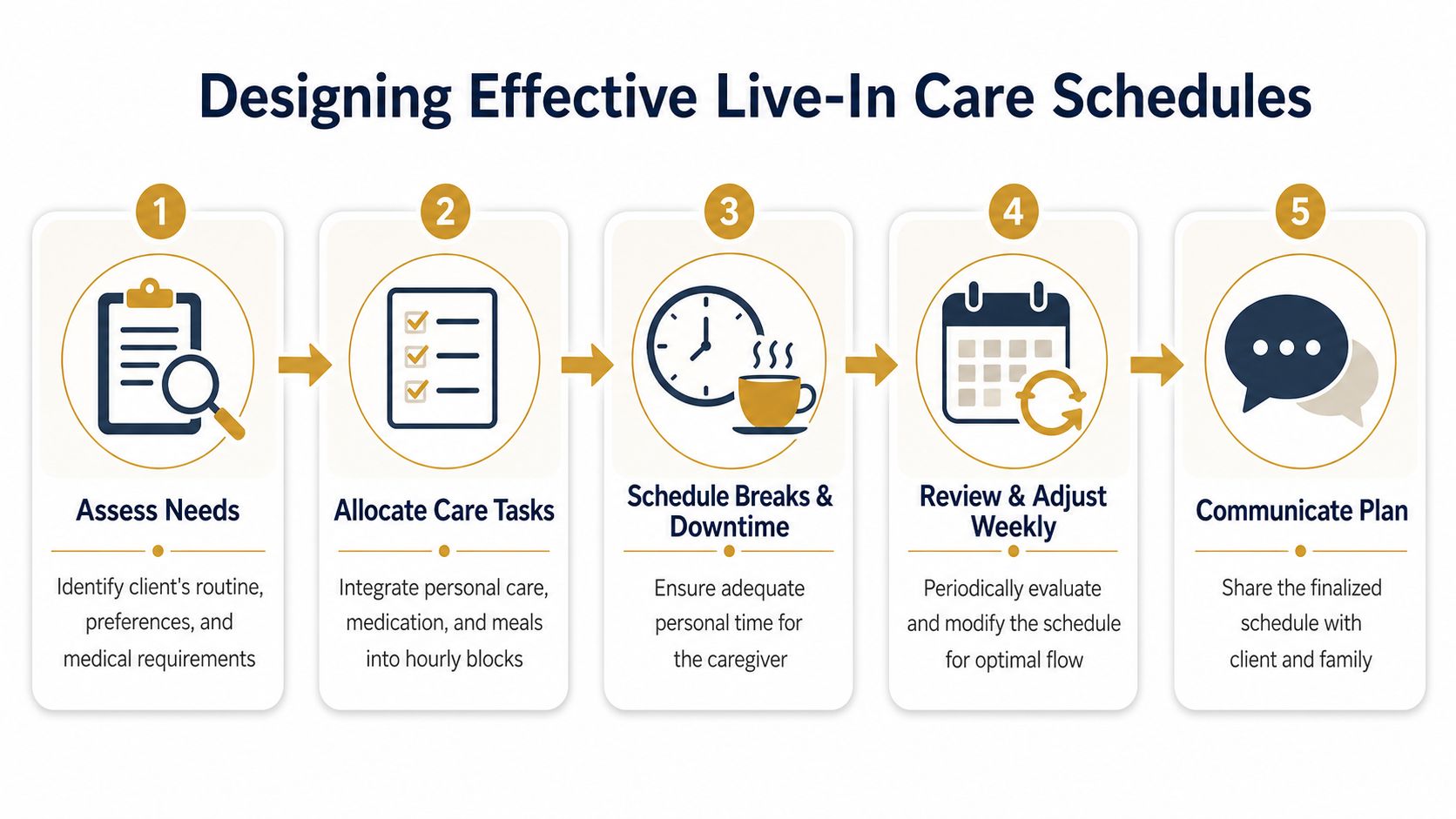
Build the day around anchors
Start with fixed points. These are the events that shape everything else, such as waking, medication times, school runs, therapy sessions, meals, bathing, and bedtime.
Once those anchors are in place, fill the gaps with realistic support tasks. Don't stack every task back to back. Care takes time, and transitions often take longer than families expect.
A practical daily schedule often includes:
- Morning block with washing, dressing, breakfast, and medications
- Midday block with movement, activities, lunch, and rest
- Afternoon block with appointments, outdoor time, or quiet companionship
- Evening block with supper, personal care, and bedtime preparation
Plan the week, not just the day
Many homes only schedule the daily routine. That creates chaos later because no one has accounted for the bigger pattern of the week.
Use a visible weekly planner, whether that's a paper wall calendar, Google Calendar, or a shared app such as Cozi. Mark:
- Appointments: GP visits, physio, therapy, tutoring, or specialist reviews
- Household needs: Grocery ordering, prescription collection, laundry day, and supply checks
- Family touchpoints: Visiting relatives, respite periods, or school events
- Caregiver rest: Agreed personal time, overnight expectations, and cover arrangements
Here's where people often get confused. A live-in caregiver is present in the home, but presence isn't the same as active duty every minute. The schedule should show when the caregiver is working, when they are on standby for agreed needs, and when they are off duty.
A workable schedule should answer one question at a glance: who is responsible for what, and when?
If the routine changes often, hold a short weekly review. Keep it brief. What worked, what didn't, and what needs adjusting before the next week begins.
Implementing Handover and Documentation Practices
Even in a single-caregiver household, documentation matters. In homes with rota cover, family involvement, therapists, or nurses, it becomes essential. Memory is not a care system.
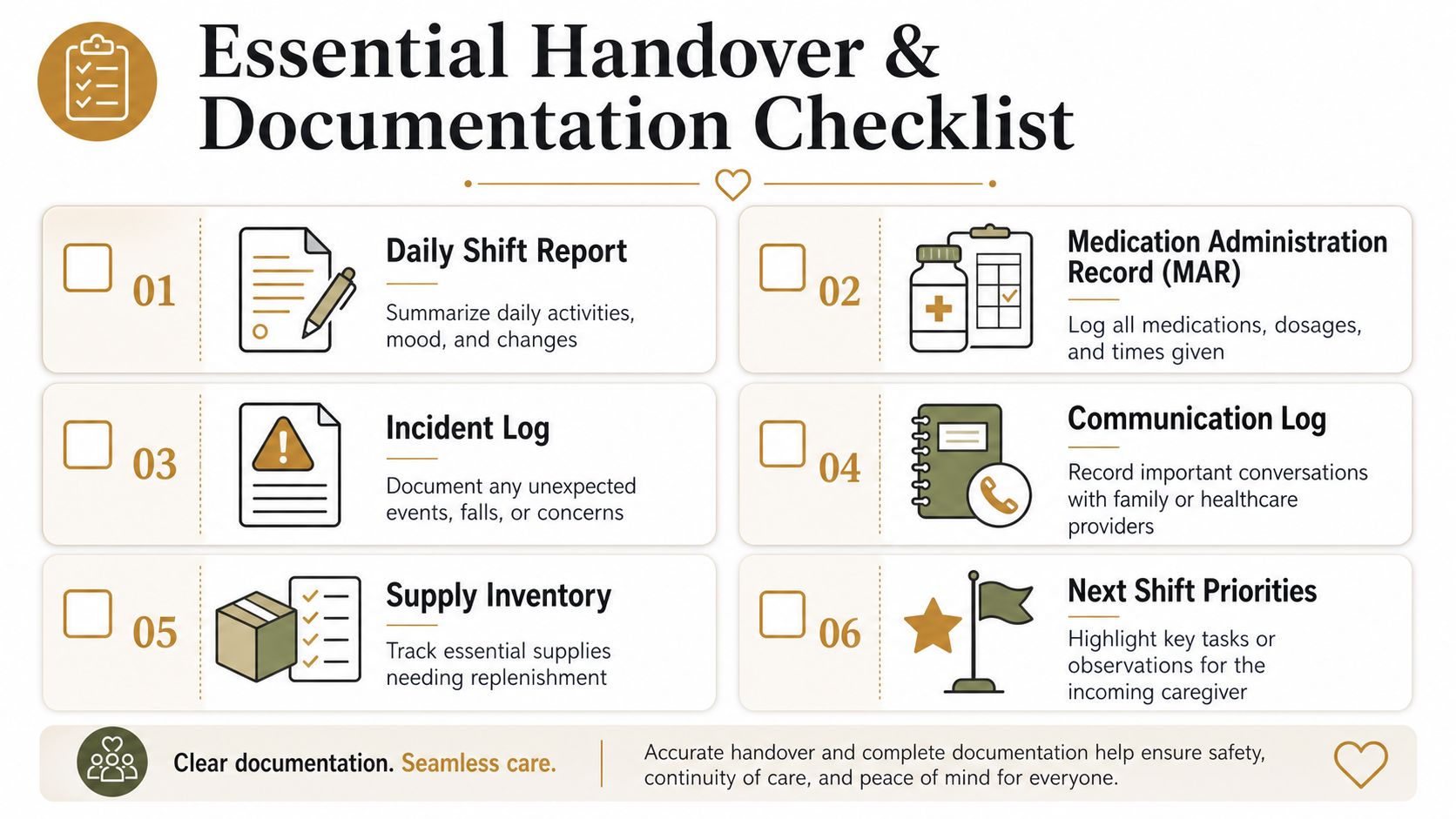
What a strong handover includes
A proper handover should be short, factual, and useful. It isn't the place for vague comments like “fine day” or “a bit off”. That tells the next person almost nothing.
Record practical facts such as:
- Care completed: Washing, meals, medication, exercise, school collection, or outings
- Observations: Appetite, mood, mobility changes, pain cues, sleep disruption, or unusual behaviour
- Incidents: Falls, near misses, refusals, skin concerns, spills, or missed doses
- Actions needed: Refill medication, monitor a cough, call a family member, or prepare for an appointment
A paper logbook can work well in the home. Digital notes can also work if everyone uses the same format. The method matters less than consistency.
A simple handover template
Use this sequence so notes stay clear:
| Handover item | What to record |
|---|---|
| Date and time | When the note was written and the period covered |
| Tasks completed | Personal care, meals, medication, activities, transport |
| Changes noticed | Mood, mobility, appetite, sleep, toileting, skin |
| Communication | Messages from family, clinicians, school, or therapists |
| Supplies needed | Medication, gloves, wipes, food items, laundry products |
| Next priority | The one or two things the next caregiver must know first |
For family-facing communication habits, clear communication with parents offers a useful model for sharing updates without creating confusion or overexplaining.
Write notes as if another trained adult needs to act on them later. That usually fixes both vagueness and oversharing.
Verbal handovers help too, especially after a difficult day. Keep them focused. Start with any immediate risk, then the routine, then the next action needed.
Establishing Boundaries Hours and Training
Many promising placements struggle. When someone lives where they work, lines blur fast unless those lines are drawn early and respected by everyone.
A caregiver needs to know where they can privately rest, when they are expected to respond, and what counts as an emergency. Families need to know when they can reasonably ask for flexibility and when they're stepping outside the agreed role.
Boundaries that protect the placement
Start with the practical basics in writing.
- Private space: Define the caregiver's room, bathroom access, storage, and whether family members may enter that space
- Working hours: Set out active duty hours, sleep arrangements, overnight expectations, and days off
- Household role limits: Clarify whether duties are care-focused only or include agreed domestic support
- Emergency protocol: State who the caregiver contacts first, what needs immediate action, and what can wait until morning
One common problem is the “while you're here” request. It may sound small. Extra ironing, dog walking, waiting in for tradespeople, or serving guests can gradually shift a care role into a broader household post. If that's required, it should be named, agreed, and reflected in the job description.
Training that supports safe care
Training shouldn't be treated as a box-tick. It's the difference between hopeful support and competent support.
Core areas often include:
- First aid: For rapid response to illness, injury, choking, or minor accidents
- Manual handling: For safer transfers and reduced risk to both client and caregiver
- Safeguarding: For recognising neglect, abuse, or unsafe dynamics
- Medication practice: For timing, storage, recording, and escalation of concerns
- Data protection and confidentiality: For handling private family and medical information correctly
Families hiring for roles involving medicines should review medication administration training so expectations stay grounded in proper practice rather than assumption.
A good rule is simple. If a task carries physical, medical, or reputational risk, don't rely on goodwill alone. Require training.
Legal Employment Considerations and Job Descriptions
Live-in care sits at the crossroads of care work, domestic employment, and household management. That's why a vague verbal arrangement is risky.
The legal details vary by region, and they can become more complicated when the caregiver sleeps in the home, travels with the family, performs mixed duties, or is hired privately rather than through an agency. Wage rules, tax treatment, rest periods, insurance, and termination terms all need checking in the place where the work happens.
What to clarify before hiring
Families often focus on personality fit first. That matters, but compliance needs equal attention.
Before a contract is issued, confirm:
- Employment status: Employee or another lawful arrangement under local rules
- Working time expectations: Active hours, rest periods, sleep arrangements, and on-call duties
- Pay structure: How wages are calculated for the actual work pattern
- Accommodation terms: What room is provided, what facilities are shared, and any house rules
- Travel expectations: Whether the caregiver may accompany the family and under what terms
- Confidentiality clauses: Especially important in high-profile households
- Notice and termination: How either side can end the placement properly
For a broader compliance overview, families can review employer wage and hour laws before finalising terms.
Sample Live In Caregiver Job Description
| Section | Details |
|---|---|
| Role title | Live-In Caregiver |
| Primary purpose | Provide day-to-day personal care, routine support, and companionship within the client's home |
| Core duties | Personal care, meal preparation, medication support, mobility assistance, care-related housekeeping, record-keeping |
| Schedule | Clearly defined working hours, rest periods, overnight arrangements, and days off |
| Reporting line | Family principal, care manager, house manager, or agency contact |
| Required skills | Discretion, reliability, communication, patience, and relevant care training |
| Preferred experience | Previous live-in care, special needs support, elder care, rehabilitation support, or private household experience |
| Boundaries | Duties limited to the agreed care scope unless otherwise stated in writing |
| Confidentiality | Strict protection of household, medical, and personal information |
| Accommodation | Private room and agreed use of household facilities |
| Review process | Regular performance and wellbeing reviews with written feedback |
A contract should mirror the job description. If the two documents tell different stories, conflict follows. Families drafting terms for in-home roles can use a live-in nanny contract guide as a starting point for thinking through scope, boundaries, and household expectations.
Interview questions should also test for real judgement. Ask how the candidate handles overnight interruptions, conflicting instructions, confidential information, and changes in routine. Those answers usually reveal more than polished CV language.
Tips for UHNW VIP Household Placements
In an ultra-high-net-worth home, technical care skills still matter. So does something less visible. Discreet service judgement.

A caregiver may be excellent in a standard family home and still struggle in a fully staffed residence. Why? Because the role often sits inside a wider ecosystem of principals, children, house managers, chefs, drivers, security teams, and visiting professionals. Timing, confidentiality, and chain of command matter every day.
One frequent mistake is overfamiliarity. In a VIP placement, warmth is welcome, but loose boundaries are not. A strong caregiver learns the household rhythm quickly. They know whether updates go to the parent, the estate manager, or the chief of staff. They don't discuss family movements with other staff unless the role requires it. They also adapt to cultural etiquette without making the family explain each standard repeatedly.
In elite households, professionalism often shows up in the small things. Knocking before entering, dressing correctly, using the right communication channel, and saying less rather than more.
Caregivers in staffed residences also need to work well alongside others. A child's sensory routine may affect meal timing with the chef. A vulnerable adult's rest period may shape housekeeping access. Families managing complex domestic teams may find value in this guide to managing household staff effectively, especially where care and service roles overlap.
Conclusion and Next Steps
Strong live in caregiver duties don't start with a long wish list. They start with precision. Define the care tasks, organise the daily rhythm, document what happens, protect boundaries, and match the legal terms to the actual job.
That's what turns a live-in arrangement from “help in the house” into dependable care.
If you're a family, begin by listing the essential support needs, the preferred routine, and the duties that are outside scope. If you're a caregiver, ask for written clarity on hours, sleeping arrangements, records, privacy, and reporting lines before the placement begins.
The best outcomes usually come from one shared standard. Everyone knows what good care looks like, and everyone works to the same plan.
If you need bespoke support finding a discreet, highly capable live-in professional for a private home, Superstar Nannies can help with placements designed for families who value trust, structure, and exceptional household standards.