


Securing an estate manager job in the UK is about more than just having a green thumb and an eye for detail. It’s about being the CEO of a private estate, a role that comes with immense responsibility and a salary to match. You’re stepping into a position that demands a sharp business mind, operational prowess, and absolute discretion, and this guide will show you how to succeed.
What an Estate Manager Role Really Involves
First, let's clear up a common misconception. The modern estate manager isn't just a glorified groundskeeper. While you might have a background in horticulture or property, your day-to-day reality is far more strategic. Think less hands-on maintenance, more high-level oversight.
You’re the orchestrator behind the scenes, ensuring a significant asset—be it a sprawling country estate or a portfolio of luxury city properties—runs flawlessly. This means managing huge budgets that can easily run into the millions and being the single point of contact for a network of specialist contractors, architects, and high-end suppliers.
Core Responsibilities and Demands
The job is incredibly varied, mixing leadership with complex project management. You'll find yourself wearing many hats. Typically, your key duties will include:
- Team Leadership: You'll be hiring, training, and managing entire teams of household and grounds staff, from gardeners and security to housekeepers and maintenance technicians.
- Financial Oversight: This is a huge part of the job. You'll create and manage annual budgets, handle payroll, approve invoices, and constantly look for ways to operate more efficiently without compromising on quality.
- Vendor and Contractor Management: From sourcing a rare artisan for a restoration project to vetting a new security firm, you are responsible for finding, hiring, and managing all external specialists.
- Property Maintenance: Forget reactive fixes. You’ll be developing long-term, proactive maintenance schedules to protect and enhance the value of the buildings, grounds, art, and all other assets on the estate.
Many of the organisational and gatekeeping skills required are also found in high-level support roles. It's worth looking at a personal and executive assistant comparison to see how those competencies translate to estate management.
The UK, with its long history of private country estates, has a unique market for these roles. These properties now demand sophisticated, modern leadership to preserve their legacy. You’re expected to oversee everything outside the main residence—from the gardens and gates to the building exteriors—while also managing the staff and contractors responsible for it all. This is why employers prize candidates with a proven track record of reliability and project coordination.
For a comprehensive breakdown of the duties, our guide on what an estate manager does goes into much greater detail. Ultimately, you’re not just being hired to maintain a property; you're hired to lead it.
What Can You Expect to Earn as an Estate Manager in the UK?
Let’s talk about money, because when it comes to estate manager jobs in the UK, the salary figures you see online can be incredibly misleading. Unlike a standard corporate role, there’s no neat and tidy pay scale. Your potential earnings are directly linked to the complexity of the estate, the expectations of your employer (the principal), and, of course, your own experience.
You might come across figures from job boards that seem a bit low. For instance, a site like Jobsite shows a national average of around £32,881, with most roles sitting between £25,499 and £42,499. But it’s crucial to understand the context here. These numbers are often skewed by commercial property management or roles overseeing smaller, less demanding residential properties.
For a seasoned professional aiming for the top tier of private service, this is just the starting line.
The London and UHNW Effect on Salaries
This is where the numbers start to get serious. Once you step into the world of Ultra-High-Net-Worth (UHNW) households, particularly in London and the Home Counties, the salary landscape changes completely.
Here, it’s not unusual for specialist recruitment agencies to be handling positions that start at £55,000 and climb well over £75,000 per year. These top-tier roles are for individuals managing vast country estates with significant land and staff, or complex, multi-property portfolios for a single family.
Why the huge jump? Because at this level, you’re not just managing a property; you’re the CEO of a private household. You’re expected to oversee multi-million-pound budgets, lead large and diverse teams, and execute high-stakes projects with flawless precision and absolute discretion.
The role itself can be split between two very different worlds—the hands-on, staff-focused management of a country estate versus the high-level financial and logistical oversight of an urban portfolio. Both command high salaries, but for very different skills.
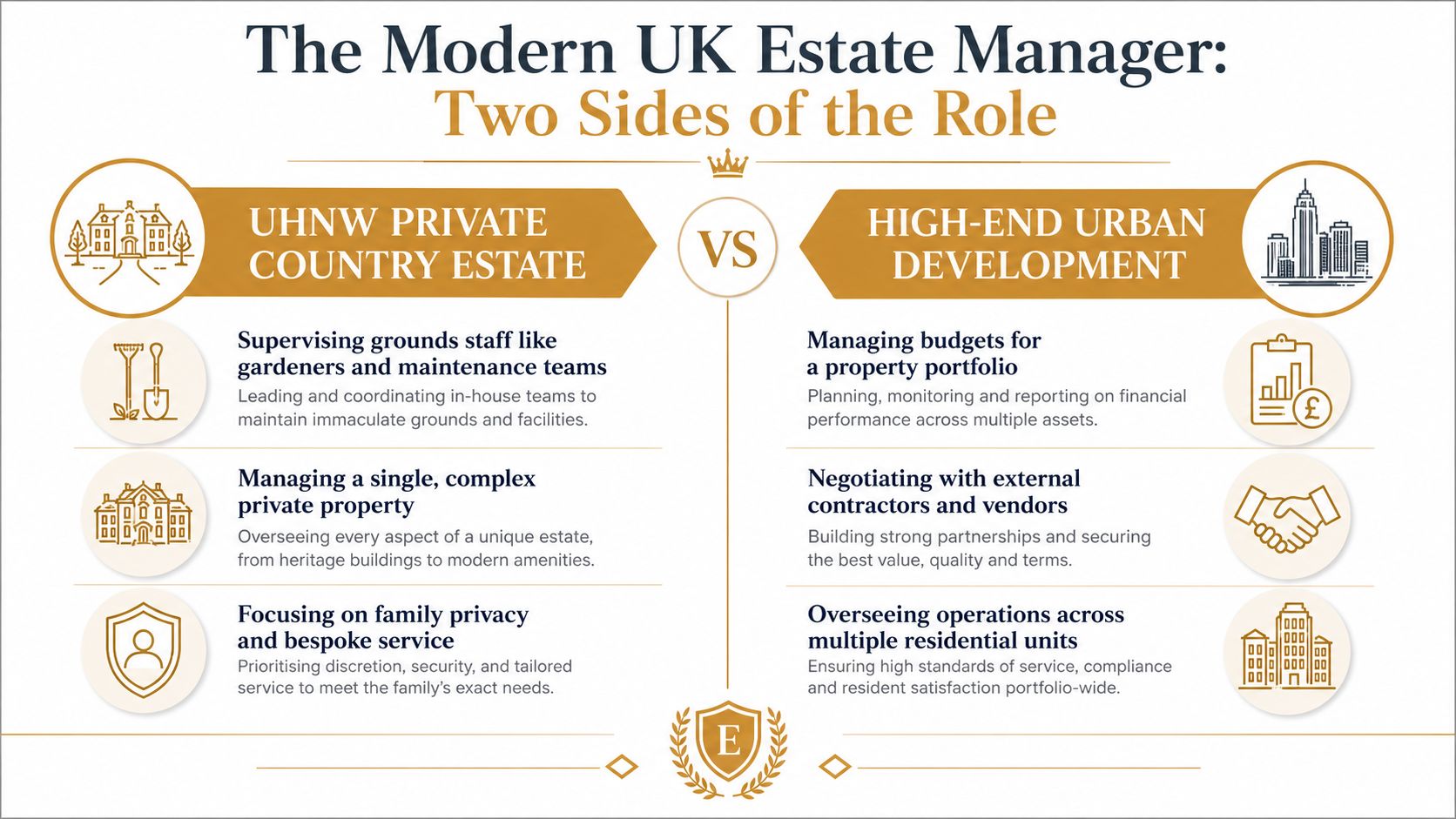
The market for top-tier estate managers is incredibly competitive, and principals are willing to pay for the right person who can provide peace of mind.
To give you a clearer picture, let's compare the general UK market with the premium London market.
Estate Manager Salary Comparison UK vs London 2026
| Salary Tier | Average UK Range | Premium London Range |
|---|---|---|
| Typical Range | £45,000 – £60,000 | £65,000 – £80,000 |
| High-End Range | £60,000 – £75,000+ | £80,000 – £120,000+ |
As you can see, a London-based role or one for a UHNW family carries a significant premium. This reflects not only the higher cost of living but also the immense level of responsibility and skill required.
A Word of Advice: Forget the advertised salary ranges for a moment. Your real earning power comes from the value you can prove. When you can walk into an interview and demonstrate a clear history of saving money, delivering major projects on time, and running an operation without a hitch, you’ve earned your seat at the negotiating table.
It’s also incredibly helpful to know where your salary sits in the wider context of private household staff. Understanding what a Head Butler, House Manager, or Chief of Staff earns can give you valuable perspective. For a deep dive, take a look at our comprehensive private staff salary guide for UHNW families. This knowledge will arm you with the confidence to benchmark your own worth accurately.
What It Really Takes to Be an Elite Estate Manager
Let's be clear: a top-tier estate manager does far more than just manage a diary and oversee the gardening rota. To excel in the world of estate manager jobs in the UK, you need to think like the COO of a complex, multi-million-pound operation. It’s a role that demands strategic vision, financial savvy, and impeccable leadership.
At this level, you’re the one entrusted with six-figure budgets. You're not just paying bills; you're negotiating high-stakes contracts with specialist vendors and constantly seeking ways to improve efficiency without ever letting the standards slip. This financial responsibility goes hand-in-hand with being a decisive leader, someone who can motivate and direct a varied team—from housekeepers and grounds staff to security personnel and external contractors.

The Qualifications That Actually Matter
While nothing beats a proven track record, certain qualifications on your CV can give you a distinct edge and open doors to the best opportunities. It’s not about collecting certificates for the sake of it, but about demonstrating a formal understanding of the complexities you’ll face daily, such as those detailed in this guide to stress-free London renovations.
Principals and family offices look for tangible proof of your capabilities. Here's what they value:
- Formal Industry Training: A qualification from the Institute of Residential Property Management (IRPM) shows you’re serious and have a command of industry best practices.
- Health & Safety Expertise: Holding an IOSH or NEBOSH certificate is non-negotiable for many top-tier roles. It proves you have the expertise to ensure the estate is a safe, compliant environment for everyone.
- Proven Project Management: You need to show you can take a major project—a full-scale renovation, a security overhaul, a major landscaping scheme—from a mere idea to a flawless execution.
A background in luxury hospitality, military logistics, or superyacht management is pure gold. It's not just about the skills you learned; it's about proving you have the right mindset—an ingrained discipline and an intuitive grasp of what five-star service truly means.
Ultimately, your ability to communicate is the glue that holds everything together. One moment you'll be presenting a concise financial report to the principal's family office; the next, you'll be giving crystal-clear instructions to a member of your household team. For a closer look at the sheer breadth of these duties, our household manager responsibilities checklist is an excellent resource.
Mastering this art of switching between audiences with confidence and diplomacy is what separates a good estate manager from a truly indispensable one.
Crafting a CV That Unlocks the UHNW World
Your CV isn't just a document; it's your key to gaining access to the exclusive world of UHNW households. When you're aiming for the top estate manager jobs in the UK, a simple list of duties just won’t do. Your application needs to tell a compelling story of quantifiable success, absolute discretion, and forward-thinking leadership. Believe me, the gatekeepers and family offices reviewing your application can spot a generic CV from a mile away and are only interested in tangible results.
Think of yourself as a CEO reporting to the board. Instead of vaguely stating you "managed contractors," you need to be specific. Show your impact by saying you "reduced contractor costs by 15% through strategic renegotiation." Don't just mention you "oversaw a renovation"; demonstrate your value by stating you "managed a £500k renovation project that was completed on time and under budget." These are the details that catch an employer's eye.

What to Include in Your Application
To make sure your CV lands on the 'yes' pile, you need a structure that immediately highlights the qualities that truly matter in private service. Focus on impeccable clarity, professionalism, and language that screams achievement.
A well-crafted CV is the foundation, but your cover letter is where you can really shine. It’s your chance to communicate the nuances that a formal CV can't capture. This is where you convey a deep understanding of the private service world, stressing your commitment to discretion and your innate ability to anticipate the principal's needs. Ultimately, this is how you prove you are ready for these immensely trusted positions.
Your CV should be meticulously organised to guide the reader through your professional story. Here’s a breakdown of the sections that will make the most impact.
Key Sections for an Elite Estate Manager CV
| CV Section | Purpose and Key Content |
|---|---|
| Professional Profile | A concise, powerful summary (3-4 lines) highlighting your years of experience, key areas of expertise (e.g., multi-property management, budget oversight), and core professional values like discretion and integrity. |
| Key Skills & Competencies | A bulleted list of your top skills. Include technical abilities (e.g., project management software, smart home systems) and soft skills (e.g., staff leadership, crisis management, vendor negotiation). |
| Professional Experience | The core of your CV. For each role, use achievement-oriented bullet points. Quantify your successes with numbers, percentages, and specific outcomes (e.g., "Managed an annual household budget of £2M," "Improved staff retention by 25%"). |
| Education & Qualifications | List relevant degrees, certifications (e.g., Butler qualifications, project management), and any specialised training in areas like security, wine cellar management, or fine art handling. |
| References | A simple statement: "Impeccable references available upon request." This maintains the privacy of your contacts and is standard practice in the industry. |
Each part of your CV works together to build a powerful narrative of a capable, trustworthy, and elite professional ready for the demands of a high-profile estate.
Key Takeaway: Your application package is a direct reflection of your professional standards. A meticulously crafted, error-free CV and a thoughtful cover letter signal the same attention to detail you would bring to managing a multi-million-pound estate.
Recruitment for these top-tier roles is a highly specialised field. For more insight into what principals and family offices are really looking for, our guide on private estate manager recruitment offers a much deeper look into their hiring process. It's all about building a compelling case that proves you are the most capable and professional candidate for the job.
How to Find Top Estate Manager Jobs in the UK
When it comes to finding the top Estate Manager jobs in the UK, you need to look beyond the usual job boards. The most desirable opportunities, especially those with UHNW and VIP principals, are rarely posted where the general public can see them. Privacy is paramount, so employers use more discreet channels.
Your most effective first step is to connect with a specialist private household staffing agency. Firms like Superstar Nannies and other leading recruiters have spent years building trusted relationships with elite families and their family offices. By registering with a reputable agency, you gain access to a hidden job market. A good consultant who truly understands the private service world is an invaluable ally; they'll champion you for roles that are a genuine fit for your experience and career goals.
Exploring Niche Platforms and Your Network
On top of working with agencies, keep an eye on certain niche job sites. Platforms that specialise in luxury property management, high-end hospitality, or prime residential developments are often where these roles first appear. Employers use them to zero in on candidates with very specific, high-calibre skills.
Don't underestimate the power of your own network, though. The world of private service is smaller than you think, and a good reputation gets around. Some of the best roles I’ve seen filled have come from a quiet recommendation. Attending industry events, staying in touch with former colleagues, and maintaining good relationships with previous employers can unlock doors that an online search never will.
The most senior and highly-paid roles are concentrated in London and the South East, where the complexity and demands of the job command a premium. In the prime London market, an Estate Manager is a top-tier operational leader, juggling everything from major works and contractor management to overseeing entire multi-building portfolios. This level of responsibility justifies salaries that can push up to £77,250.
You can see this premium reflected in live vacancies today. While you might see lower averages quoted elsewhere, experienced managers in London are consistently seeing roles advertised between £55,000 and £75,000, with comprehensive packages sometimes exceeding that. For a real-time look at what's being offered in the capital, you can explore the latest London-based roles on Caterer.com.
Ultimately, landing one of these premier roles is about a combined approach: cultivate strong agency relationships, monitor the right platforms, and actively nurture your professional network.
Conclusion: Your Next Steps to an Elite Career
Securing a top-tier estate manager job in the UK requires a blend of strategic leadership, financial acumen, and impeccable people skills. It’s a career path that rewards expertise and discretion with significant financial compensation and professional satisfaction. By focusing on your quantifiable achievements, leveraging your unique background, and partnering with specialist recruiters, you can position yourself as an indispensable candidate. The most prestigious estate manager jobs in the UK are within reach for those who understand what principals truly value: trust, competence, and flawless execution.
If you are ready to take the next step in your private service career, contact Superstar Nannies today for a confidential consultation. Our experts can help you find opportunities that match your elite skills and ambitions.
FAQs on Estate Manager Jobs UK
How can I get an estate manager job with no direct experience?
Focus on your transferable skills from fields like luxury hospitality, military logistics, or superyacht management. Highlight your experience in budget oversight, project management, and team leadership. Target Assistant Estate Manager roles as a perfect entry point to gain industry-specific experience while showcasing your service-oriented mindset and adaptability.
What does career progression look like for an estate manager?
An experienced Estate Manager can advance to roles like Director of Estates, overseeing a global portfolio of properties for a UHNW family. Other paths include becoming a specialist consultant or transitioning into a broader Household Manager role responsible for all interior staff and personal service. Your reputation for excellence and sharp financial skills will be key to unlocking these senior opportunities.
Are most estate manager jobs live-in or live-out?
It's a mix. Live-in roles are common for large country estates requiring 24/7 oversight, with accommodation included in the package. In cities like London, roles are often live-out, particularly for managing urban property portfolios. The job description will always clarify the arrangement, so be sure to factor the value of accommodation into any live-in offer.
How important is discretion in this role?
It is absolutely paramount and non-negotiable. As an estate manager, you will be privy to the family's private life, finances, and security details. A verifiable history of maintaining total confidentiality is as crucial as any operational skill. Any breach of trust is a career-ending mistake, and principals will conduct rigorous reference checks to confirm your discretion.