


You’re probably seeing the same thing most strong chefs see when they start looking at private chef jobs dubai. The listings look polished, the salaries look attractive, and the detail is thin where it matters most. Very little tells you how the top roles are won, why some chefs break into the UHNW market quickly, and why others stay stuck in generic household posts that don’t move their career forward.
At the upper end of this market, kitchens don’t hire on talent alone. They hire on judgement, presentation, discretion, and fit. A chef can cook beautifully and still lose the role because their portfolio feels sloppy, their trial lacks structure, or they treat Dubai like a standard relocation rather than a private service environment with its own rules.
Understanding the Dubai Private Chef Market
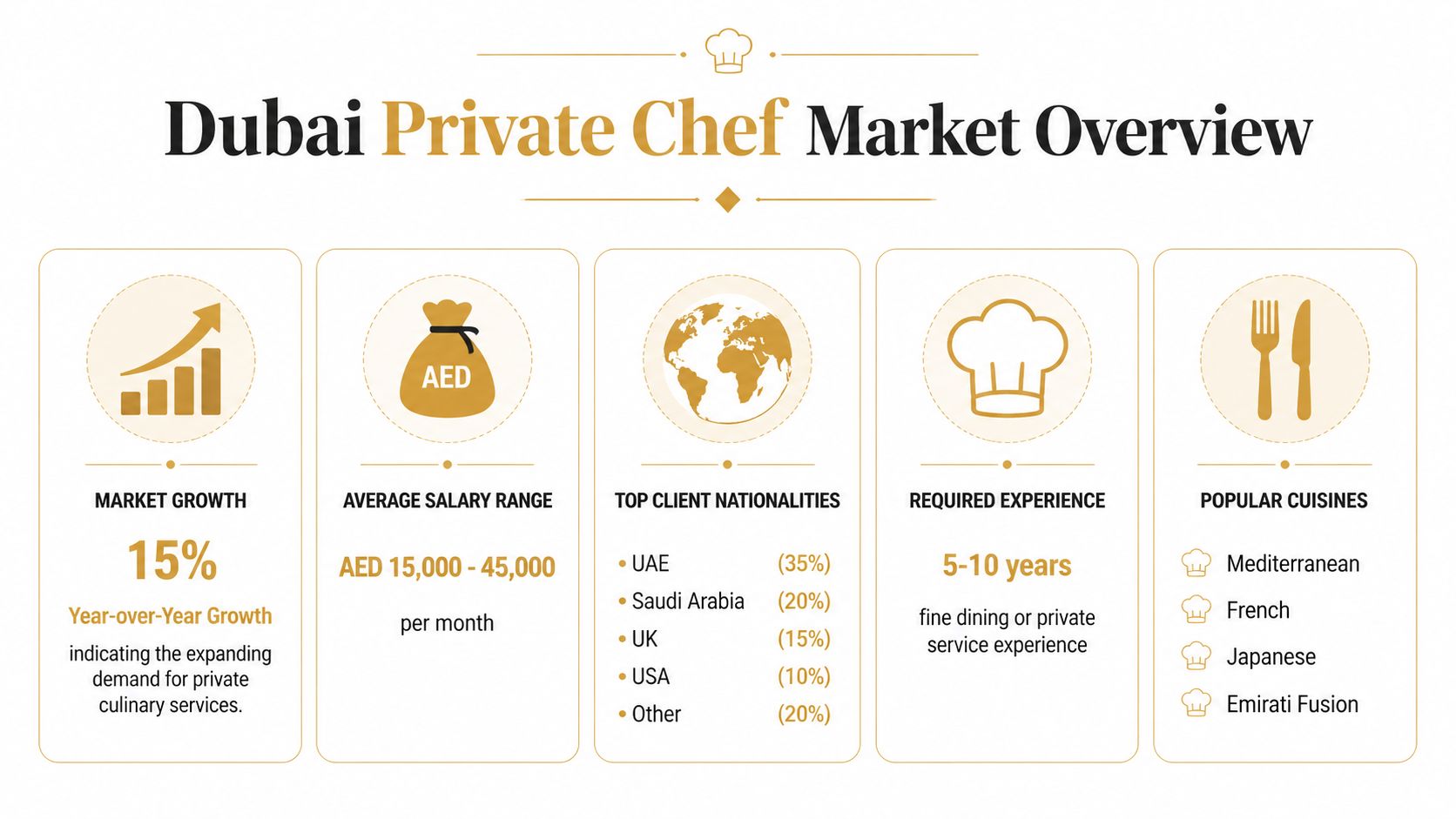
Most chefs enter this market with the wrong benchmark. They compare a Dubai private chef role to a head chef salary, a private members’ club package, or a superyacht contract. That’s too narrow. In Dubai, the key value sits in the total package, the household structure, and whether the role gives you access to serious principals, serious travel, and long-term stability.
What the roles actually look like
The term private chef jobs dubai covers very different jobs. Some are family-focused positions with daily breakfast, school-friendly meals, healthy suppers, and guest entertaining on short notice. Others are principal-led roles where the chef works around business schedules, late dinners, yacht weekends, and travel between residences.
Common role patterns include:
- Live-in household chef roles where continuity matters more than showmanship.
- Live-out family chef posts for principals who want boundaries and a cleaner work rhythm.
- Rota jobs where resilience, handover quality, and consistency matter as much as cooking.
- Event-heavy villa roles where chefs move from intimate service to guest dining with no fuss.
- Hybrid domestic posts where a chef is expected to understand child nutrition, staff meals, and formal dining in the same week.
If you want a broader feel for how elite domestic hiring works in the city, the Dubai nanny jobs market shows the same pattern. The best households hire for lifestyle fit, not just technical skill.
Salary is only one part of the decision
The most quoted salary band in public listings can be misleading. Job ads often sit around AED 15K to 20K per month, but that number only becomes meaningful once you know whether housing, transport, flights, insurance, and food are included. One published benchmark notes that AED 18K per month is roughly £3,800, yet a one-bedroom apartment in Downtown Dubai can cost AED 80K per year, and a UK chef may face a 30% drop in purchasing power compared with London according to the same source and cited Numbeo comparison in that listing analysis. That’s why package structure matters more than headline pay in many mid-market roles (live-out private chef job analysis).
Practical rule: Never judge a Dubai chef role by salary alone. Judge the package, rota, accommodation standard, transport arrangement, and how often the family travels.
What works and what doesn’t
A strong Dubai role usually has clear reporting lines, realistic service expectations, and a principal or house manager who understands private service. Weak roles tend to be vague on guest frequency, shopping authority, overtime, or whether you’re feeding two adults or an open-door residence with constant visitors.
A quick screen helps:
| What to clarify early | Why it matters |
|---|---|
| Who you report to | Avoid mixed instructions from principal, PA, and house manager |
| Whether it is live-in or live-out | Changes your net package and daily rhythm |
| Family style vs formal service | Determines plating, timings, and staffing support |
| Travel expectations | Affects visas, flexibility, and personal life |
| Child nutrition requirements | Common in family homes and often understated |
The chefs who do well here aren’t dazzled by Dubai. They stay commercial, ask direct questions, and assess whether the household is organised enough to let them perform at a high level.
Building Your Elite Chef Portfolio
The portfolio gets overlooked because many chefs still think a CV and references are enough. They aren’t. In private service, the client often buys confidence before they buy food. Your portfolio has to show that you understand standards, aesthetics, variety, and the tone of a private household.

A useful starting point is understanding the difference between restaurant cooking and private service. This short guide on what a private chef does in a household setting is worth reading because it reflects how clients think about the role.
Build a portfolio like a client will read it
Clients rarely read chef material in chef order. They don’t start with your commis job and work forward. They look for proof that you can handle their life. That means your portfolio should lead with relevance.
Use this structure:
A sharp opening profile
Keep it short. State your cuisine strengths, private service experience, dietary confidence, and whether you’re comfortable with family-style, formal dining, travel, and provisioning.A visual menu of your best work
Include polished dish photography. Not twenty versions of the same plate. Show range. Breakfast, family lunch, children’s meals, wellness-led suppers, elegant canapés, and one or two formal dinner examples.A service capability page
Spell out the environments you can work in. Villa service, chalet season, yacht crossover, guest weekends, child-focused nutrition, low-allergen cooking, Halal-aware menu planning, and discreet in-home entertaining.Sample menus that feel real
Avoid generic tasting menu language. Write menus that sound like they belong in a home. Refined, seasonal, and readable.
What separates a serious portfolio from an average one
The strongest portfolios do three things well:
They solve household problems
A principal wants to know whether you can feed adults and children without friction, pivot for guests, and maintain standards on busy days.They show judgement
Include menus that demonstrate restraint. UHNW clients don’t always want theatre. Often they want ease, precision, and food that fits the house.They make discretion visible without saying too much
Don’t name former principals. Don’t overshare. Frame experience professionally and protect confidentiality.
If your portfolio looks like a restaurant promotion deck, clients assume you’ll cook for your ego. If it looks like a private service document, they assume you’ll cook for their household.
Add one short video
A brief, clean video can help, especially when agencies or house managers are screening several chefs quickly. It doesn’t need dramatic editing. A calm introduction, clean uniform, good light, tidy station, and a short demonstration of knife work, plating, or menu explanation often does enough.
Keep in mind what private employers notice first:
- How you speak
- How you move in a kitchen
- How organised your station looks
- Whether your food appears appropriate for a home
- Whether you come across as steady, not performative
The goal isn’t to look famous. It’s to look employable at the highest level.
Strategic Channels for Finding Top Roles
Public job boards have their place, but they don’t usually produce the best private chef jobs dubai. They produce volume. Top household placements are usually conducted discreetly because the employer wants confidentiality, better filtering, and fewer mismatched applicants.
That’s why serious chefs stop applying everywhere and start building access.
Why specialist agencies outperform generic applications
In the upper tier of the market, a specialist agency does more than introduce your CV. Strong firms pressure-test the match. One verified benchmark states that top UK agencies use a 12-step methodology for Dubai placements and achieve a 92% long-term placement success rate, while skipping agency vetting can lead to a 65% failure rate, often due to cultural mismatch or unverified credentials (private chef hiring methodology).
That matters for chefs as much as for employers. A rigorous process protects you from unstable households, unclear expectations, and roles that sound premium but are operationally poor.
If you want a wider relocation framework alongside chef-specific advice, this ultimate roadmap on how to get a job in Dubai is a helpful general reference.
How to become the candidate agencies remember
Most chefs contact an agency once, send a CV, and then disappear. That’s passive. Better candidates act like professionals who understand placement mechanics.
Focus on these points:
Your documents must be clean
CV, food portfolio, references, and right-to-work details should be organised before you register.Be clear about your lane
Say whether you fit family chef, formal service chef, health-led chef, travel chef, or rota chef roles best.Show responsiveness
Good agencies move quickly when the right household appears. Delayed replies make consultants hesitate.Accept proper vetting
Technical tests, scenario questions, and service-led interviews aren’t obstacles. They’re filters that protect your reputation.
For chefs exploring the premium end of household recruitment, it helps to understand how domestic staffing agencies handle private household placements.
What doesn’t work
A few habits consistently weaken good chefs:
Mass applying through generic platforms
That buries your profile among unsuitable applicants.Leading with salary before suitability
Strong candidates ask about structure first, then negotiate from a position of value.Treating private service like restaurant progression
It isn’t. The rhythm, hierarchy, and success metrics are different.Overstating luxury experience
House managers spot inflated claims quickly, especially around service style and household etiquette.
The market is smaller than it looks. Consultants, principals, and house managers remember chefs who are polished, discreet, and easy to place.
Mastering the UHNW Interview and Trial
Interviews for private chef jobs dubai rarely feel like corporate interviews. They’re closer to a judgement exercise. The principal, house manager, family office representative, or PA is trying to answer a practical question. Can this chef make our life easier, maintain standards, and stay composed in our environment?
That means your answers need to be calm, concise, and operational.
What the interview is really testing
You’ll be judged on food, of course. But you’ll also be judged on how you think. If a principal asks how you handle a last-minute dinner for guests with conflicting dietary needs, they aren’t looking for culinary theory. They want to hear prioritisation, flexibility, and control.
Good interview answers usually show:
- Menu judgement that fits the household, not your personal style
- Discretion in how you discuss former employers
- Adaptability with travel, children, guest flow, and changing instructions
- Procurement sense around sourcing, substitutions, and stock control
- Temperament under scrutiny
Most chefs lose the interview by talking too much about what they like to cook. Private employers care more about what you can consistently deliver in their home.
The cooking trial is measured more closely than most chefs expect
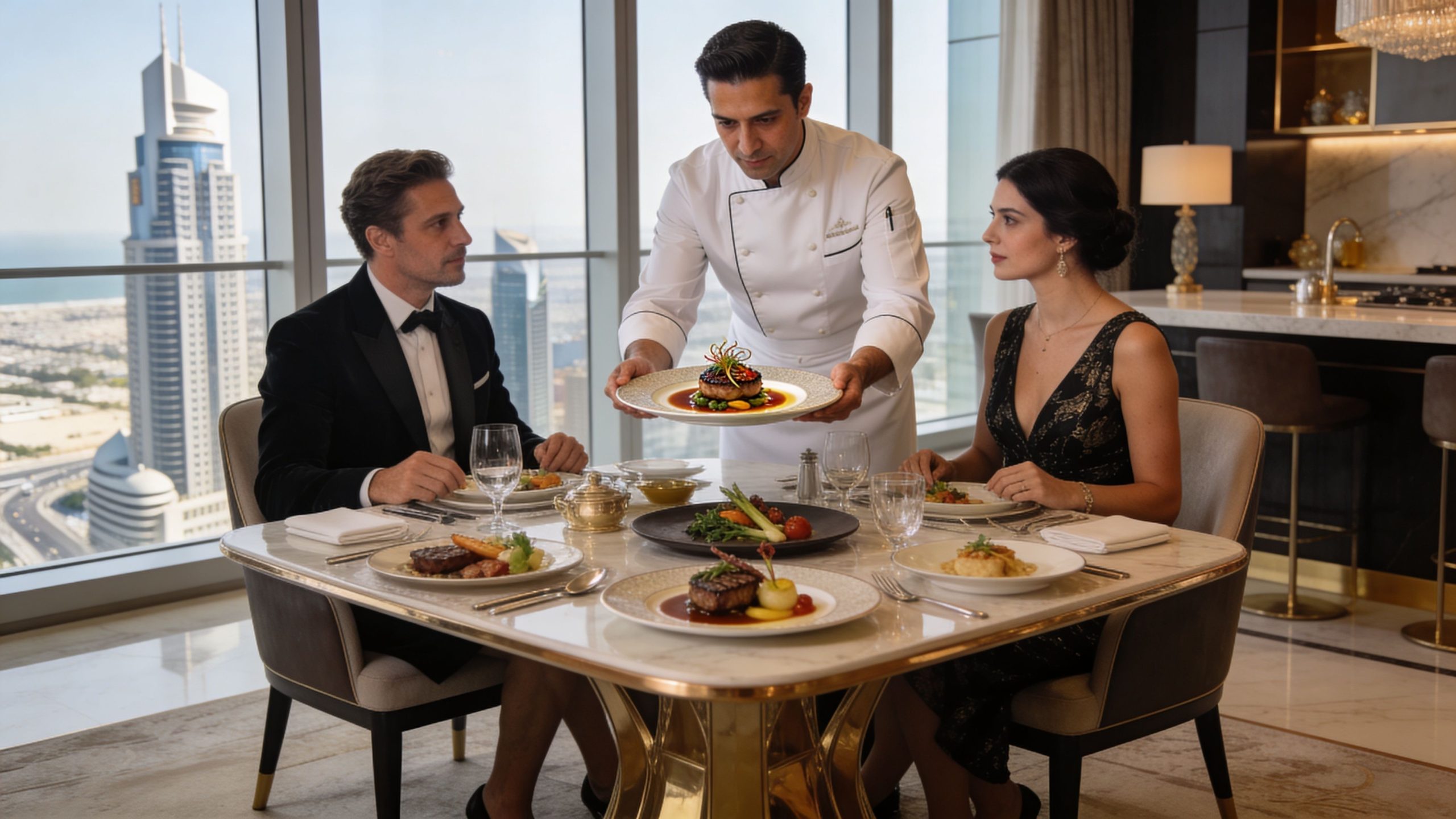
A proper trial isn’t just a cook-off. It’s a performance audit. One verified benchmark notes that candidates may be assessed on a 134-point matrix, with 40% of the score weighted to the live cook-off, and a target food waste ratio below 5%. The same hiring framework notes that technical tasks may include blast chiller operation and inventory management using ChefTec, and that non-agency hires have a 78% turnover benchmark, partly linked to weak technical capability (chef trial evaluation criteria).
That should change how you prepare.
How to handle the trial properly
Treat the trial like a service period in an unfamiliar property, not like a stage in your comfort zone.
Before the trial, clarify:
Who the food is for
Adults only, children included, or mixed household diningWhat service style is expected
Family-style sharing, plated dinner, buffet brunch, canapés, or all of the aboveWhat equipment is on site
Don’t assume layout, storage, or premium kitWho is shopping
You, a house assistant, a driver, or an existing kitchen support personWhat cannot go wrong
Allergens, prayer times, guest arrival windows, child meal timings
During the trial, the quiet details matter:
| Trial behaviour | What it signals |
|---|---|
| Clean mise en place | Organisation and respect for the house |
| Low waste | Commercial judgement |
| Calm communication | Confidence without ego |
| Sensible portioning | Household awareness |
| A tidy handover | Professionalism after service |
What principals remember
They remember whether you made the experience feel controlled. They remember whether the kitchen got calmer when you entered it. They remember whether your food felt appropriate, polished, and repeatable.
They also remember whether you behaved like someone who could live around a family without creating friction. In private homes, that often decides the result.
Finalising Your Contract and Relocation
A verbal yes means very little until the paperwork, visa, and reporting lines are clear. At this stage, many chefs get casual. They’re excited, they want the move, and they stop asking careful questions. That’s a mistake.
The final stage needs just as much discipline as the interview.

Visa first, assumptions never
For UK chefs, the route into the role usually depends on an employer-sponsored employment visa. The process includes medical tests and Emirates ID, and it typically takes 2 to 4 weeks, though delays can happen. A notable development in the same verified guidance is the post-2024 UAE Golden Visa expansion, which allows skilled chefs with 5+ years of experience to obtain 5-year renewable residency without being tied to one sponsor (Dubai chef visa overview).
That has two practical implications. First, you need to know exactly who is sponsoring you and when the process starts. Second, highly experienced chefs should ask whether an alternative residency route may suit their longer-term plans.
What to check in the contract
A private chef contract should answer operational questions, not just legal ones. If the document is vague, disputes start later.
Review these points carefully:
Role scope
Are you feeding only the principals, or children, staff, guests, and events as well?Working pattern
Daily schedule, split shifts, rota rhythm, travel expectations, and rest days all need to be explicit.Accommodation terms
If the role is live-in, check privacy, access, transport, and whether meals are included.Leave and flights
Clarify annual leave, return flights, and whether travel days count as working days.Confidentiality and exit terms
NDAs are normal. Notice periods, probation, and termination language should still be workable and clear.
For broader compensation context in private households, this private staff salary guide for UHNW families is useful when comparing package structures across roles.
Don’t sign a private household contract that leaves basic daily realities open to interpretation. Ambiguity almost always favours the household, not the employee.
How to make relocation smoother
The move itself can be straightforward if you prepare like a private service professional.
A simple relocation checklist helps:
- Keep digital copies of passport, certificates, references, and signed contract.
- Confirm your first address before arrival, even if temporary.
- Ask for a named point of contact in the household or family office.
- Pack for working life first. Uniform basics, suitable shoes, and practical personal items matter more than bulk shipping.
- Learn the house culture quickly. Formality, communication style, and boundaries vary sharply between households.
The chefs who settle fastest don’t just relocate well. They read the environment early, respect local norms, and avoid forcing their previous working style onto a new home.
Frequently Asked Questions about Dubai Chef Roles
How do private chefs work well inside a fully staffed household
Start by understanding the chain of command. In some homes, the principal gives direct instruction. In others, the house manager or PA controls the day-to-day. Don’t guess. Ask early who signs off menus, guest plans, shopping budgets, and staff meals.
Good chefs also build trust with the rest of the team. Housekeepers, butlers, nannies, chauffeurs, and security staff often affect your day more than the principal does. Respect their workflow, communicate clearly, and don’t create bottlenecks around meal timings or kitchen access.
How should a chef handle changing dietary demands from principals and guests
Keep a live dietary system rather than relying on memory. Use a disciplined format for allergies, preferences, medical restrictions, fasting patterns, child requirements, and guest dislikes. Private households change plans quickly, so your notes need to be current and easy to action.
The best approach is layered. Maintain a core menu bank, a wellness menu bank, and a short list of fast pivots you can execute without stress. That allows you to stay elegant when the household changes direction at short notice.
A private chef isn’t judged by whether requests change. You’re judged by how little disruption the change creates.
Can a restaurant chef move into private chef jobs dubai without previous household experience
Yes, but the transition has to be handled realistically. Fine dining pedigree helps, but it doesn’t automatically prove private service fit. Employers want to know whether you can operate without brigade structure, read family rhythms, and maintain standards in a domestic setting.
If you’re crossing over, your portfolio and interviews must show household awareness. That means child-friendly meals, nutrition literacy, discretion, provisioning skill, and the ability to move from casual family food to polished guest service without losing control.
What does career progression look like after a strong Dubai placement
A successful Dubai post can open several routes. Some chefs move into larger household or estate roles with staff oversight. Others become trusted travel chefs for multi-residence families. Some use a strong Middle East placement to step into principal-led roles in Europe, the US, or on yachts and private islands.
The pattern is usually the same. Once you’ve proved that you can handle private service at a high level, the market becomes more relationship-driven. Your next role often comes through reputation rather than active searching.
What usually causes good chefs to fail in Dubai households
It’s rarely food alone. More often it’s poor adaptation. Chefs struggle when they overcomplicate menus, resist changing household routines, communicate badly with staff, or act like the kitchen is separate from the rest of the home.
The strongest private chefs keep standards high while making service feel effortless. That balance is what households remember, and it’s what keeps careers moving upward.
If you’re pursuing high-level private chef roles and want discreet guidance on placements, packaging, and household fit, Superstar Nannies supports elite private staffing across Dubai and other major international markets. Their team understands what UHNW households require, and that makes the search far more precise.