


Picture this: you’re hosting a dinner party, but instead of being stuck in the kitchen, you’re actually enjoying yourself with your guests. Or imagine weeknight family meals, perfectly crafted to everyone’s tastes and dietary needs, without you having to lift a finger. This isn’t a fantasy; it’s the modern reality of using private chefs for hire.
What was once seen as an exclusive luxury is now a practical and accessible solution for busy families, health-conscious individuals, and anyone seeking unforgettable dining experiences. This guide will walk you through everything you need to know about finding the perfect culinary expert to elevate your home life.
The New Era of At-Home Bespoke Dining

The concept of at-home dining has been completely transformed. Our homes are no longer just for formal occasions; they’ve become the premier venues for intimate, high-quality, and deeply personal culinary events. This shift reflects a growing desire for experiences that even the most exclusive restaurant cannot always provide.
Bringing a private chef into your home is about more than just exceptional food; it’s about reclaiming your time and enhancing your lifestyle. It’s the ultimate way to create stress-free meals tailored precisely to your family’s needs and preferences. This guide will give you the confidence to find the perfect culinary professional for your household.
The Growing Demand for Personalised Cuisine
The appeal of a private chef extends far beyond convenience. It aligns with a larger trend: the increasing demand for bespoke, personalised services. This is particularly evident in the UK, where the private chef market is experiencing significant growth. Projections indicate the market could reach £873.6 million by 2030, driven by a powerful shift away from traditional luxury toward more accessible, modern hospitality. You can explore this trend in more detail in the latest UK market research on private chef services.
So, what’s fuelling this change?
- A Taste for Flexibility: Post-pandemic, many people prefer intimate at-home gatherings over the rigid schedules and bookings of restaurants.
- Generational Shifts: Millennials and Gen Z are leading the demand for customised meals that fit their dynamic schedules and specific dietary preferences.
- A Focus on Wellness: With a greater emphasis on health, more families seek chefs who can create nutritious, delicious meals using high-quality, fresh ingredients.
A private chef is more than a cook. They are a culinary partner—someone dedicated to understanding your tastes, dietary needs, and lifestyle to create a truly personal dining experience in your own home.
Think of this guide as your starting point. It’s designed to provide the knowledge you need to hire the right professional, whether for a one-off celebration or ongoing culinary support. Finding the perfect chef can genuinely transform your home life.
What Does a Private Chef Actually Do?

It’s easy to picture a private chef as someone who simply cooks great food, but their role is far more comprehensive. In reality, they are the culinary heart of your home, orchestrating everything from menu planning to the final, spotless cleanup.
A private chef takes care of it all: designing menus that fit your life, sourcing the freshest ingredients, preparing every dish with precision, and serving it beautifully. When the meal is over, they leave your kitchen looking immaculate. This is where the true value of private chefs for hire shines. They lift the entire weight of meal planning, shopping, and cooking off your shoulders, giving you back precious time to enjoy with family and guests.
More Than Just a Cook
A top-tier private chef brings much more than culinary skill to the table; they are experts in logistics and personalisation. They collaborate with you to design menus that accommodate dietary needs, allergies, or specific health goals, ensuring every plate is perfectly suited to the individual. This deep level of customisation is what sets the private chef experience apart from any restaurant. You’re not just choosing from a menu; you’re co-creating a unique culinary journey.
The real magic of a private chef is their ability to transform your home into the most exclusive restaurant in town, where every flavour and every detail is designed exclusively for you.
They manage the entire process, from visiting farmers’ markets for peak-season produce to sourcing rare spices for an authentic international dish. In many ways, their service is akin to running a boutique catering operation from your home. If you’re curious about the business side, this guide on starting a catering business offers excellent insights.
Types of Private Chef Services
The world of private chefs is not one-size-fits-all. There are various service models designed to meet different needs. Understanding these options is the first step to finding the ideal culinary professional for your household. The table below outlines the main service types you’ll encounter.
Comparing Private Chef Service Types
This table breaks down the different types of private chef services, outlining their typical scope, ideal use case, and common engagement model to help readers choose the right option.
| Service Type | Best For | Typical Engagement | Key Responsibilities |
|---|---|---|---|
| Full-Time Residential Chef | Families needing daily, consistent culinary support. | Salaried, exclusive contract. | Manages all daily meals, pantry stocking, and kitchen operations. |
| Part-Time or Rota Chef | Households that don’t need a chef every day or require 24/7 coverage. | Set weekly hours or rotational shifts (e.g., 2 weeks on, 2 weeks off). | Prepares meals on scheduled days; rota chefs ensure continuous service. |
| Event-Based Chef | One-off occasions like dinner parties, holidays, or special celebrations. | Hired for a specific event or a set number of days. | Plans, sources, prepares, and serves for the event; manages cleanup. |
| Travel or Yacht Chef | Families on holiday or for staffing private yachts. | Contracted for the duration of the trip. | Highly adaptable; sources ingredients in new locations and cooks in varied kitchen environments. |
By identifying which model best fits your lifestyle, you can focus your search and find a professional whose skills and working style are a perfect match for your home.
How to Budget for a Private Chef
Understanding the costs is a crucial first step. It’s not a single price tag but a flexible investment that adapts to your specific needs. Whether you need a chef for a one-off dinner or a full-time culinary artist, the payment structure will differ. Getting to grips with the factors that shape the final cost will help you budget with confidence.
Common Pricing Models for Private Chefs
As you explore private chefs for hire, you’ll encounter three common fee structures, each designed for a different type of service.
- Per-Person Rate for Events: Ideal for dinner parties and special occasions. The chef sets a price per guest that includes menu creation, ingredient sourcing, cooking, serving, and cleanup.
- Daily or Weekly Fee: If you need a chef for a shorter period—like a holiday week—they will often charge a flat daily or weekly rate. This fee covers their time and skill, while the cost of groceries is typically billed separately.
- Annual Salary for Full-Time Placements: For a permanent chef, you’ll agree on an annual salary. This reflects their deep integration into your household and their comprehensive management of your family’s culinary needs.
Key Factors That Influence the Cost
Several factors influence the quote you receive from a chef or agency. Understanding these will help you manage your budget effectively.
- Chef’s Experience and Reputation: A chef with Michelin-star experience or a portfolio of high-profile clients will naturally command a higher salary than a rising star. You are paying for proven expertise.
- Menu Complexity: A five-course tasting menu with specialist techniques will cost more than a beautifully executed three-course meal. The more time and skill required, the higher the price.
- Number of Guests: For events, the total budget will increase with more guests, as it requires more food, prep time, and often additional staff for service.
- Location: A chef in a major hub like London will typically have higher rates than one in a quieter part of the UK, reflecting the local cost of living and demand.
The true value of hiring a private chef isn’t just in the food itself, but in the time you get back and the perfectly tailored, stress-free experience you receive. It’s an investment in your lifestyle.
For a more detailed breakdown of what to expect, take a look at our comprehensive guide on the cost of a private chef. It dives into specific price ranges and offers more tips for budgeting.
A Practical Guide to Finding and Vetting Chefs
You’ve decided to hire a private chef—now comes the most critical step: finding the right culinary talent. This is about more than just food; it’s about finding a professional who fits seamlessly into your home and lifestyle.
You have two main paths: partnering with a specialised agency or hiring directly. An agency offers a curated, secure experience, while a direct hire gives you complete hands-on control. The best choice depends on your available time and comfort level with the vetting process. This decision tree can help you determine which path suits your needs.
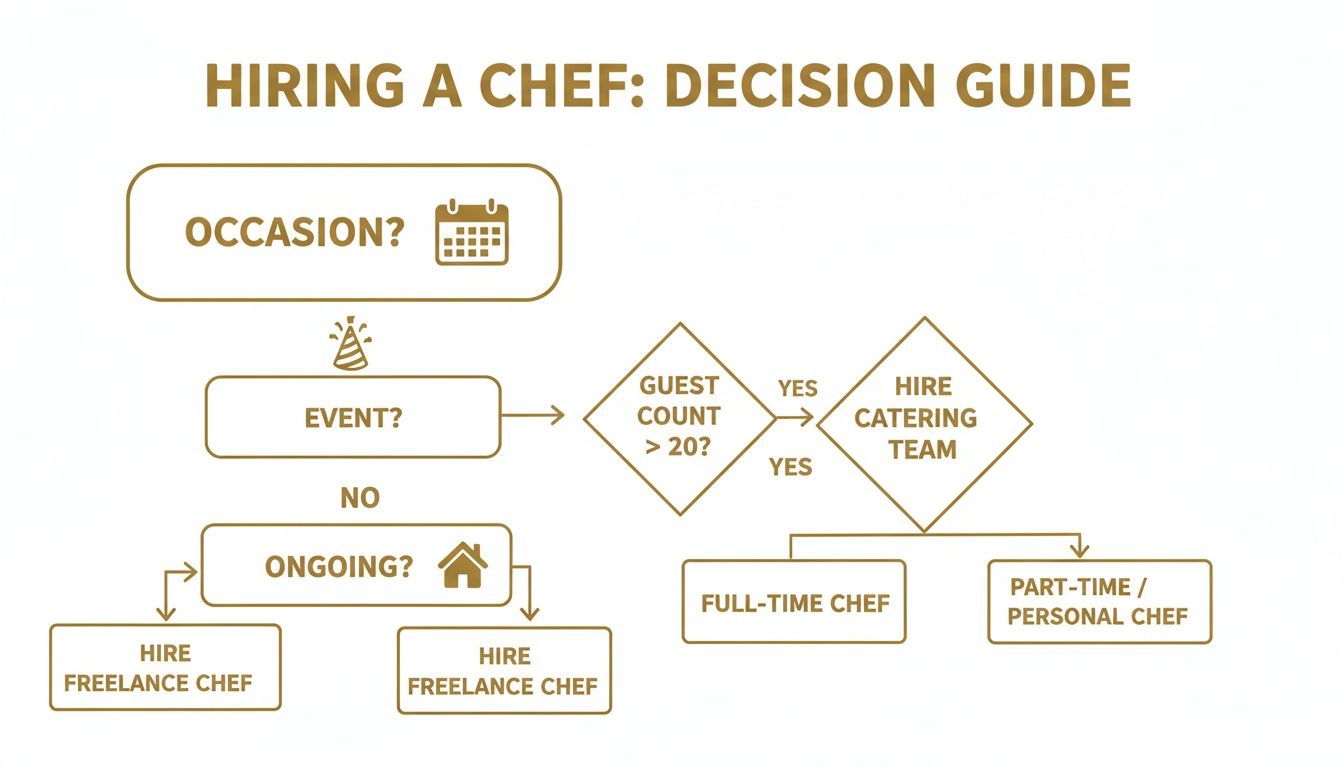
As you can see, the occasion—whether a one-off dinner or a full-time position—often guides you toward the best hiring approach for your household.
Agency Hire vs. Direct Hire: A Comparison
Choosing between an agency and a direct hire is a significant decision. Let’s break down what each path offers.
| Feature | Specialised Agency (e.g., Superstar Nannies) | Direct Hire |
|---|---|---|
| Candidate Pool | Access to a curated, pre-vetted network of elite chefs. | Sourced from job boards, referrals, or social media; quality can vary widely. |
| Vetting Process | Comprehensive checks (DBS, references, qualifications) are handled by experts. | You are solely responsible for all background checks and reference verification. |
| Time Investment | Minimal. The agency does all the legwork, presenting only top-tier candidates. | Significant. Requires hours of searching, screening, and interviewing. |
| Expertise & Support | You benefit from industry knowledge, contract guidance, and ongoing support. | You navigate contracts, negotiations, and any potential issues on your own. |
| Cost | An upfront placement fee for a professional, secure service. | No placement fee, but potential hidden costs if a bad hire is made. |
| Peace of Mind | High. You have a safety net and assurance of quality and discretion. | Variable. Depends entirely on the thoroughness of your own vetting process. |
An agency acts as your expert partner, leveraging industry experience to find a perfect match. A direct hire, while potentially rewarding, places the full weight of the complex vetting process on your shoulders.
Your Step-by-Step Vetting Checklist
Whether you use an agency or go direct, a rigorous vetting process is non-negotiable. You are inviting someone into your home, which requires absolute trust. While an agency’s expertise is invaluable, this checklist is essential if you manage the search yourself.
At Superstar Nannies, our team follows a meticulous process for hiring a private chef, ensuring every placement meets the highest standards.
Here are the key steps for thorough vetting:
- Analyse Their Portfolio: A portfolio is a chef’s story. Look for diversity in cuisines, technical skill, and experience that matches your needs, whether that’s fine dining or wholesome family meals.
- Conduct In-Depth Reference Checks: Speak to previous employers and ask probing questions about reliability, cleanliness, adaptability, and how they handle feedback.
- Arrange a Tasting Trial: This is the ultimate interview. A paid trial allows you to taste their food, observe them in your kitchen, and assess their personality and professionalism.
- Verify Certifications: Always ask for proof of qualifications. In the UK, a Level 2 Food Safety and Hygiene for Catering certificate is the minimum. Further culinary diplomas are a major plus.
The demand for talented private chefs is rising, with the UK market set to grow, mirroring Europe’s projected 5.54% expansion between 2025 and 2030. This growth is driven by busy households seeking wellness-focused meals and the rise in specialised diets, with up to 40% of bookings now for requests like gluten-free cuisine. This highlights the importance of finding a chef with verified skills.
By taking a diligent approach, you can move forward with confidence, knowing you will find a culinary professional who elevates your dining experience and brings peace of mind into your home.
Handling Complex Dietary and Travel Needs

The true luxury of a private chef lies in having your exact needs met with precision and creativity, no matter how complex. This level of personalised service is what sets elite culinary professionals apart, especially when managing strict dietary requirements or the demands of international travel.
An exceptional chef doesn’t just accommodate your lifestyle; they seamlessly adapt to it. This means expertly navigating severe allergies, medical diets like coeliac or low-FODMAP, and lifestyle choices such as kosher, halal, or plant-based cuisine. They understand the critical importance of avoiding cross-contamination and, more importantly, know how to turn dietary limitations into culinary opportunities.
Mastering Specialised Diets
When discussing dietary needs with potential private chefs for hire, clarity is essential. It’s not enough to mention an allergy; you must communicate its severity and the protocols required for safety. A skilled chef will ask detailed questions to fully grasp your family’s health requirements.
During the vetting process, look for chefs who can provide concrete examples of their experience with your specific needs. They should speak confidently about ingredient substitutions. For instance, a chef well-versed in gluten-free diets will have a deep knowledge of resources like a gluten-free flour substitution chart and a repertoire of tested alternatives.
The best private chefs view dietary constraints not as limitations, but as a creative challenge. Their expertise lies in crafting dishes so delicious and innovative that you forget any ingredient was ever omitted or replaced.
This expertise is also evident in how they source ingredients. A remarkable 65% of private chefs in the UK now prioritise locally sourced ingredients, driven by client demand for fresher, higher-quality food. This farm-to-table approach is particularly vital when managing specific diets.
The Logistics of the Travelling Chef
For many families, life isn’t lived in one place. Whether moving between residences or enjoying a holiday abroad, the need for exceptional culinary support remains. This is where a travelling chef becomes an indispensable part of your household team.
Hiring a chef for travel involves a unique set of logistics. The ideal candidate is more than a talented cook; they are a resourceful and adaptable professional who thrives in new environments. They must excel at setting up in unfamiliar kitchens, sourcing premium ingredients in different countries, and navigating local markets.
Key considerations for a travelling chef include:
- Adaptability: Can they create stunning meals with available equipment and limited pantry access?
- Resourcefulness: Do they have experience building a network of suppliers in new locations?
- Logistical Planning: Are they organised enough to manage provisioning, pack essential equipment, and handle customs for specialty items?
- Cultural Awareness: Can they respect local customs while maintaining your preferred cuisine?
The contract for a travelling chef must be meticulous, covering travel expenses, accommodation, per diems, and clear expectations for working hours.
At Superstar Nannies, we specialise in placing elite travel chefs who possess the discretion, flexibility, and global expertise that discerning families require. Getting these details sorted ensures a seamless culinary experience, no matter where your journey takes you.
Ensuring a Smooth Onboarding Process
You’ve found your ideal chef—now the real work of building a great culinary partnership begins. The first few weeks are critical; they set the tone for the entire relationship and can make the difference between a good hire and a truly exceptional one.
Onboarding is your chance to welcome a key professional into your home, align expectations, and build rapport. A structured, thoughtful introduction is the secret to a harmonious and long-lasting working relationship.
Setting the Stage for Success
The initial days are all about clear communication. A little time spent upfront clarifying how your home operates will prevent misunderstandings and empower your chef to deliver exactly what you’re looking for.
Your onboarding checklist should cover these key bases:
- A Proper Kitchen Tour: Walk them through everything, from how appliances work to where specific tools are kept. Share any quirks, such as a hob that runs hot.
- Household Etiquette and Protocols: Be upfront about expectations regarding working hours, interactions with other staff, family privacy, and security measures.
- Communication Preferences: Decide what works best for both of you. A quick morning chat? A formal weekly menu meeting? Or a shared digital note for requests and feedback?
The goal of onboarding isn’t just to instruct, it’s to welcome. A chef who feels respected and informed from the start is motivated to perform at their best, creating a wonderful atmosphere for the entire household.
Financial and Logistical Clarity
Once you’ve covered household dynamics, it’s vital to iron out financial and logistical details. Addressing these points directly builds a foundation of trust and professionalism.
Discuss these topics openly:
- Grocery Budgeting and Shopping: How will this work? Will the chef have a household card? Is there a set weekly budget? What is the process for reporting expenses?
- Your Favourite Suppliers: If you have a trusted butcher, farm shop, or fishmonger, make those introductions. This helps your chef maintain the quality you expect.
- The Feedback Loop: Establish a comfortable way to share feedback. Constructive, regular dialogue is how a chef truly learns your family’s palate and refines their cooking to perfection.
By investing in a proper onboarding process, you are doing much more than just hiring a private chef. You are carefully integrating a trusted professional into your home.
FAQs: Your Questions About Private Chefs Answered
Hiring a private chef can bring up a few questions. Here are clear, straightforward answers to some of the most common queries to help you move forward with confidence.
What sort of budget should I expect for a private chef in the UK?
The cost of hiring a private chef in the UK varies based on your needs. For a one-off event like a dinner party, expect to pay between £60 to over £150 per person. This typically covers menu planning, ingredients, cooking, and cleanup. For a full-time chef, an annual salary can range from £45,000 to well over £90,000, depending on their experience, your location, and the scope of their duties. Always clarify whether grocery costs are included or billed separately.
Is a ‘private chef’ the same as a ‘personal chef’?
While the terms are often used interchangeably, there is a subtle difference. A private chef typically works exclusively for one household, often as a full-time member of staff managing all daily culinary needs. A personal chef, on the other hand, usually serves multiple clients, perhaps visiting your home once or twice a week to prepare meals for the days ahead. The key distinction is the level of exclusivity and daily involvement.
Do I need a commercial-grade kitchen?
No, you do not. A great private chef is highly adaptable and can create exceptional meals in a standard home kitchen. During the interview process, it’s helpful to show them your kitchen and discuss the available equipment, such as the type of oven and hob space. While they are resourceful, many chefs will also bring a kit of their own specialised tools to ensure every dish is executed perfectly.
How far ahead do I need to book a chef for an event?
It’s always wise to plan ahead. For a special event like a birthday or anniversary dinner, booking 4-6 weeks in advance is recommended to allow ample time for menu collaboration. For major holidays like Christmas or New Year’s Eve, demand is extremely high, so you should aim to book 3-6 months in advance to secure your preferred chef. For a permanent placement, the search process itself takes time, so starting early is key.
Conclusion
Hiring a private chef is about more than just what’s on the plate; it’s about elevating your lifestyle, reclaiming precious time, and bringing a sense of ease and delight into your daily life. The right culinary professional becomes an invaluable part of your household.
At Superstar Nannies, we excel at finding and placing elite private chefs in discerning homes worldwide. We take a bespoke approach, ensuring we find a culinary expert who perfectly matches your family’s tastes and lifestyle.
Ready to find your perfect culinary partner? Contact Superstar Nannies today for a confidential consultation and let us find the perfect culinary expert for your home.