

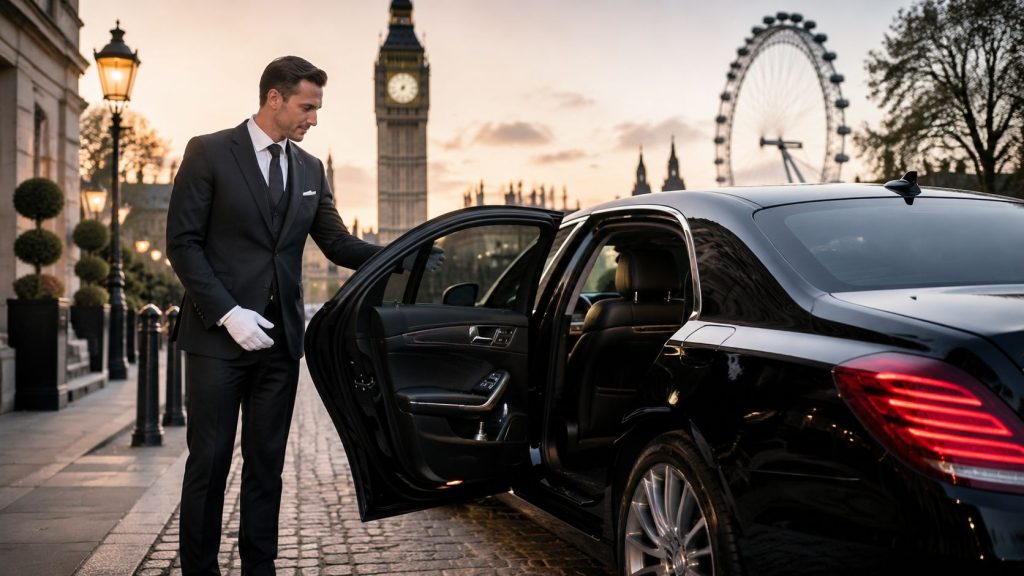
You've probably looked at polished job adverts, seen discreet references to Belgravia, Mayfair, or a family office, and thought: I can do the driving, but how do I get into that world?
That's the right question. Private chauffeur jobs in London aren't merely better-paid driving roles. They're a move into private service, where trust, presentation, timing, and discretion matter as much as vehicle control. Many capable drivers never make that transition because they apply as if they're pursuing a transport job, when in reality they're being assessed as a household professional.
In high-trust homes, families aren't only hiring someone to take them from A to B. They're hiring someone who protects routine, absorbs pressure, handles changing plans calmly, and never becomes the problem in a busy day. That's why candidates with solid road experience can still be overlooked, while a more polished applicant with the right mindset moves forward.
The good news is that this market is accessible if you approach it properly. The route in is usually clear. Your documents need to be right, your CV needs to speak the language of private service, and your interview presence must show judgement as well as competence.
Introduction
A lot of applicants come to this market with useful experience already. Some have worked in executive transport. Others have driven senior figures, supported busy families, or handled high-pressure schedules where punctuality wasn't negotiable. That background can transfer well, but only if you frame it correctly.
What separates successful candidates in private chauffeur jobs in London is rarely just mileage or confidence behind the wheel. Private households are looking for calm professionals who understand boundaries, appearance, confidentiality, and the rhythm of service. If you arrive with a commercial mindset only, you'll often miss what the role really requires.
Practical rule: A private chauffeur is hired for reassurance, not just transport.
That means your route planning, your timing, your communication style, your wardrobe, and even how you wait outside a property all become part of the service. Families notice the small details. Agencies notice them too.
If you're serious about working with UHNW principals, the standard is high, but it isn't mysterious. Strong candidates usually win because they prepare better, present better, and understand what trust looks like in a private home.
The Modern Private Chauffeur Role Beyond the Wheel
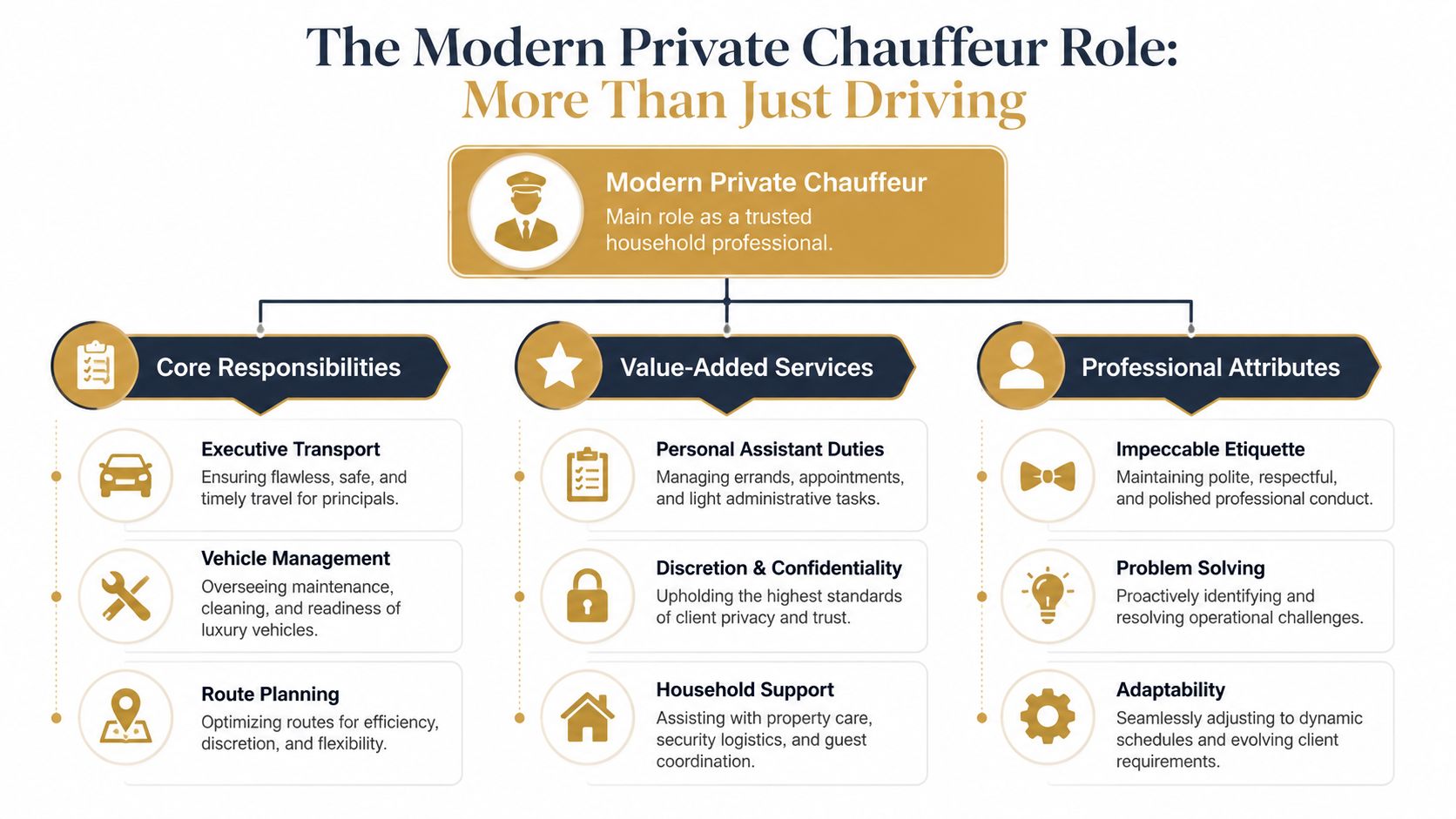
The title says chauffeur, but its scope is broader. In London's upper end of the market, the role often sits somewhere between driver, operations support, and trusted household presence. A candidate who only wants to “just drive” usually struggles in this space.
What families actually expect
Recent London listings increasingly combine driving with broader support duties, such as vehicle management and varied household assistance, and some specify long on-site hours like 07:30–19:00 with a substantial break and occasional weekends, as shown in an Oplu London private chauffeur listing.
That tells you a lot. The market is moving towards hybrid roles where the driver may also be expected to:
- Oversee vehicle readiness with attention to presentation, fuel, charging, servicing, and cleanliness
- Support household logistics by coordinating timings, guest movements, deliveries, or light errands
- Stay flexible with schedule changes when school runs, airport transfers, dinners, or security considerations shift at short notice
- Work comfortably around other staff including PAs, house managers, nannies, butlers, and security personnel
In practice, the most valued chauffeurs become easy to work with. They don't create friction. They understand hierarchy without ego, and they know when to speak and when silence is the more professional choice.
A detail many candidates overlook is vehicle presentation. If you're responsible for premium cars, even basic knowledge of finish care helps. This is why some drivers benefit from understanding the benefits of detailing certification, especially when they're expected to maintain luxury vehicles to household standards.
Trusted professional, not visible personality
UHNW families don't want performance. They want consistency. The role rewards a controlled, discreet style.
A strong chauffeur usually does these things well:
- Reads the principal's pace without needing constant instruction.
- Handles last-minute change without visible annoyance.
- Protects privacy in conversation, on the phone, and around staff.
- Keeps the vehicle and journey smooth enough that the client barely notices the work.
In private service, being memorable for the right reasons often means being almost invisible.
If you want a fuller view of how families assess the role, this guide on how to hire a chauffeur is useful because it shows the expectations from the employer's side, not just the candidate's.
Your Essential Eligibility and Licence Checklist
Many rejected applicants fail before interview because they apply too early or submit a weak file. In this market, paperwork isn't admin. It's proof that you understand standards.

The baseline requirements
A practical UK hiring pathway is to hold a valid category B driving licence, have at least three years of driving experience, be over 21, and then complete an optional but commonly preferred PCO Private Hire Licence process. One UK guide says the PCO licence typically takes 12–16 weeks to process and is valid for three years, according to Crownwood Charters' guide to becoming a chauffeur in the UK.
That doesn't mean every private household will insist on the same route in exactly the same way. It does mean serious candidates should treat those points as the professional benchmark.
Your basic checklist should include:
- Valid UK driving entitlement with the correct category and no ambiguity around status
- Sufficient road experience that shows maturity, not just licence possession
- A clean and presentable record because households and agencies will examine reliability closely
- Medical fitness and background readiness since trust-based roles are screened more carefully than standard driving jobs
If you're coming from overseas or you've recently relocated, don't leave licence admin until the last minute. A practical resource on how to exchange EU driving licences can help you understand the transition before you start applying.
Why the PCO often matters even in private roles
Some applicants assume the PCO is only relevant for app-based or commercial private hire work. That's too narrow. In London, employers often prefer candidates who already understand regulated passenger transport standards and have taken the licensing process seriously.
Indeed's UK listing guidance specifies a TFL PCO Private Hire Licence as preferred, reflecting London's regulated environment, and notes requirements such as 4 years' executive or chauffeur-driving experience and fluent English, as reflected in Indeed private chauffeur job listings in the UK.
That preference sends a message. Families and recruiters are often more comfortable with drivers who've already met a formal standard. It suggests professionalism before you even enter the room.
A weak candidate asks whether a licence requirement can be overlooked. A strong candidate completes it before anyone has to ask.
What doesn't work
The most common mistakes are predictable:
- Applying mid-process before your licensing window is complete
- Sending a vague CV that doesn't show luxury, executive, or service-facing experience
- Ignoring references or assuming verbal endorsements are enough
- Underselling communication when fluent, polished English is part of the role in many homes
Private households don't want to gamble on missing paperwork. They want evidence that you're ready now.
Crafting a CV That Opens Doors to Private Households
A chauffeur CV for private homes should read differently from a standard driving CV. Too many applicants list duties when they should be demonstrating trust.
Translate driving experience into service language
This is the shift that matters most.
Weak version:
- Drove company director to meetings across London
- Responsible for vehicle maintenance
- Worked flexible hours
Stronger version:
- Provided discreet, punctual transport for a senior executive across London, adjusting routes around changing schedules and traffic pressure
- Maintained a luxury vehicle to presentation standard, ensuring readiness for daily business and evening commitments
- Supported a flexible diary with early starts, late finishes, and short-notice itinerary changes
The second version tells a recruiter how you work. That's what gets attention.
What recruiters look for quickly
When I review chauffeur applications, I'm scanning for signs that the candidate understands private service. The most convincing CVs usually show:
- Discretion in wording with no unnecessary client detail or showy name-dropping
- Operational reliability such as diary support, airport work, school runs, or event timing
- Presentation standards including premium vehicle care and personal polish
- Stability and references because households worry about judgement and consistency
A professional headshot can help if it's understated. A loud, overly styled photo won't. Clean layout matters. Spelling matters. Grammar matters more than many candidates realise, because written care suggests wider discipline.
Direct application, agency, or larger operator
There are several ways to position your experience, and each affects how your CV should read.
| Route | What your CV should emphasise | Main drawback |
|---|---|---|
| Direct to household | Trust, discretion, household awareness | Harder access to unadvertised roles |
| Specialist agency | Presentation, references, role fit | Screening is stricter |
| Larger chauffeur company | Operational scale, flexibility, client service | Can be less tailored to private family work |
If you're aiming for private chauffeur jobs in London, write for the role you want next, not just the role you had last.
How to Find and Secure an Elite Chauffeur Position
Finding high-quality roles isn't only about where you search. It's about choosing the channel that matches your background and how much support you need in the hiring process.

The three main routes
Direct household or family office applications can be attractive because the line between candidate and employer is shorter. If you already have excellent references and private-world experience, this can work well. The downside is that access is limited, and many of the strongest roles never appear publicly.
Specialist household staffing agencies are often the more realistic route for drivers moving into elite homes. Agencies vet presentation, documents, references, and fit before introducing a candidate. That can feel demanding, but it usually saves time because unsuitable matches are filtered earlier. Firms such as Superstar Nannies' personal driver job page show the kind of household staffing route candidates can use when they want private-service placements rather than broad transport work.
Established chauffeur companies can also be useful. They offer structured operations and exposure to premium clients. For some drivers, that's an effective stepping stone into private household work later.
How to improve your odds
The strongest candidates usually do three things well:
- Target properly. They don't apply to every driver role. They focus on private household, executive, or UHNW-adjacent positions.
- Prepare a complete file. CV, references, licence details, and proof of eligibility are ready before application.
- Follow up professionally. Brief, polite contact works. Chasing repeatedly doesn't.
Households often judge how you'll behave on the job by how you behave during the hiring process.
If you're trying to break in, a blended approach is often sensible. Register with specialist recruiters, watch select direct listings, and keep one foot in premium commercial work if it strengthens your profile without locking you into the wrong market.
Mastering the Interview and Passing the Trial Drive
Interview performance in this market is usually quieter than candidates expect. You won't impress a private household by sounding slick. You'll impress them by sounding dependable.
What to wear and how to carry yourself
Dress should be formal, neutral, and restrained. Dark suit, polished shoes, clean shirt, conservative tie if appropriate. Nothing loud. If you want a simple refresher on interview presentation, this guide on Dandylion Style advice for male interviews is a sensible reference point.
Your communication should feel clear and measured. Good answers tend to be short, specific, and calm. Don't overtalk. Don't try to entertain. Don't tell stories that reveal too much about past employers.
A family or recruiter may ask how you handle:
- late changes
- waiting time
- school collections
- confidential information
- stressful traffic conditions
- interaction with children or household staff
The wrong answer is usually rigid. The right answer shows boundaries, flexibility, and judgement.
The trial drive is about more than driving
A trial drive tests your roadcraft, but it also tests the whole experience around the journey. They're watching how you arrive, how you greet, how you check the vehicle, how you set off, and whether the cabin feels calm.
Focus on these points:
- Smoothness first because harsh braking and abrupt steering create doubt immediately
- Route judgement that balances efficiency with comfort and discretion
- Client awareness including door etiquette, luggage handling, and temperature awareness
- Professional composure if instructions change mid-journey
A trial drive is often a test of whether the client would feel comfortable handing you their routine, not just their keys.
If you want to understand what employers screen for before shortlisting, the employer-side perspective in hiring personal drivers is useful. It shows why polished candidates often progress faster even when several applicants can drive well.
Understanding Salaries Benefits and Contracts
Pay in this market is shaped by more than driving ability. Hours, discretion, schedule volatility, vehicle responsibility, and the overall trust level of the post all affect earnings.
London private chauffeur compensation is commonly advertised in the £35,000–£60,000 gross annual range for live-out roles, with some agencies noting that the upper end of the market can reach £70,000 a year for the most experienced chauffeurs in demanding roles, according to Eden Private Staff's chauffeur salary guidance.
What the salary range is really telling you
That range reflects a wide spread of expectations. A straightforward live-out role with a cleaner brief will sit differently from a demanding household position that expects flexibility, long days, and polished support beyond the car.
In practical terms, higher-paid roles often involve:
- broader household trust
- more irregular hours
- stronger references
- better judgement under pressure
- greater willingness to support logistics beyond transport
Compensation should never be assessed in isolation. Contract structure matters just as much.
Contract vs freelance chauffeur roles in London
| Consideration | Permanent Employee | Freelance / Self-Employed |
|---|---|---|
| Income style | Fixed salary with agreed structure | Variable earnings depending on booked work |
| Stability | Greater predictability and routine | More flexibility but less certainty |
| Tax handling | Usually managed through employment systems | Usually handled by the driver |
| Benefits | More likely to include employment benefits | Often fewer built-in protections |
| Client relationship | Deeper long-term trust with one household or employer | Broader mix of clients, less continuity |
| Schedule control | Often less personal control over hours | More scope to accept or decline work |
Some candidates chase freelance work for flexibility, then realise they prefer the consistency of a permanent household post. Others dislike being tied to one principal and value variety more. Neither route is automatically better. It depends on temperament.
If you're comparing packages from the household side as well, this breakdown of how much a personal chauffeur costs can help you see how employers often think about value, scope, and commitment.
Conclusion Your Next Steps to a Premier Career
Private chauffeur jobs in London reward a specific kind of professional. You need solid driving standards, but that's only the entry point. The roles that stand out are built on discretion, routine management, presentation, and the ability to make a family's day run more smoothly without drawing attention to yourself.
If your documents are in order, your CV reflects private service properly, and your interview manner shows calm judgement, you're already ahead of many applicants. If you're ready to pursue serious private chauffeur jobs in London, the next step is to put your profile in front of recruiters and households that understand this market.
Frequently Asked Questions
Do I need private household experience before applying for chauffeur roles in London
Not always. Executive transport, corporate driving, premium client service, and similar backgrounds can transfer well. The key is how you present that experience. Employers want evidence that you understand discretion, time sensitivity, and professional boundaries. If you haven't worked inside a private home before, your application has to show that you can adapt to that environment confidently.
Are the best chauffeur roles advertised publicly
Some are, but many aren't. Private families often prefer a more discreet search through referrals, trusted recruiters, or specialist household staffing agencies. Public listings can still be useful, especially for building momentum, but many high-trust positions are filled through narrower channels after a stronger screening process.
What kind of references matter most
References that speak to judgement, punctuality, confidentiality, and consistency carry the most weight. A glowing reference that only says you're a good driver is less persuasive than one that shows you handled pressure well, maintained standards, and worked professionally around demanding schedules or senior individuals.
Is the role suitable for someone who wants fixed hours
It depends on the household. Some roles are structured. Others require a high level of flexibility. If you need a tightly fixed timetable, you should screen opportunities carefully at application stage. Many private homes value adaptability, especially where children, events, travel, or changing diaries are involved.
What usually makes a candidate fail at final stage
The final-stage failures are often about polish rather than basic ability. Poor presentation, careless communication, oversharing about former employers, visible irritation during changes, and a rough or rushed trial drive can all undermine an otherwise capable candidate. Families hire for confidence and calm, not just mechanics.
If you're pursuing discreet, well-matched roles in private service, Superstar Nannies recruits private household staff for UHNW and VIP homes, including chauffeurs. Qualified candidates can reach out to discuss current opportunities and whether their profile fits the level expected for premium private chauffeur jobs in London.