

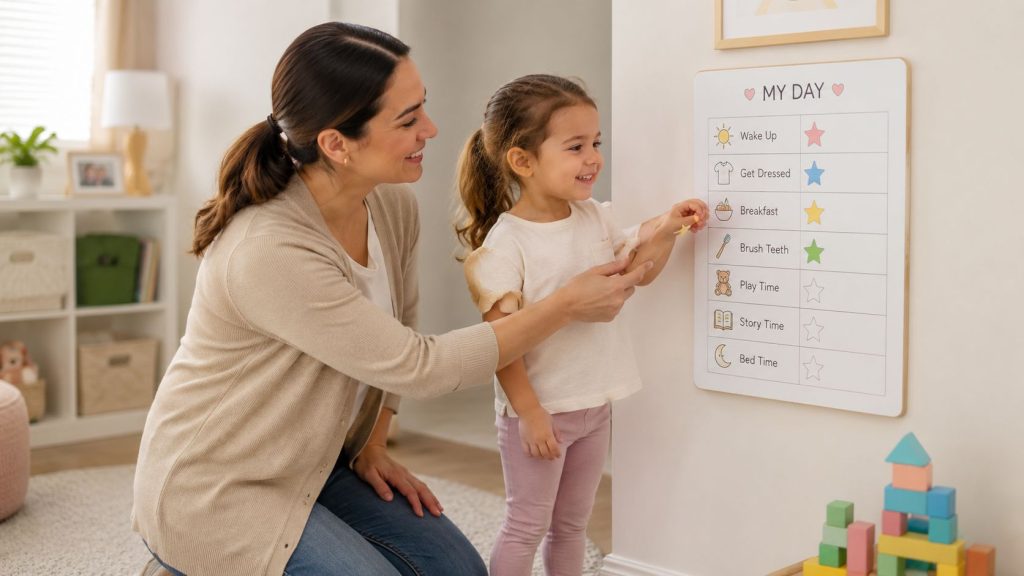
A child is shouting because the wrong cup appeared at breakfast. The parent is on a call. The driver is waiting. Another member of staff has already tried to step in, and now the room is thick with pressure. In private childcare, that sort of moment matters because your response shapes the next hour, not just the next minute.
Strong behavior management techniques aren't about being stricter or louder. They're about reading what sits underneath the behaviour, holding a boundary without losing the relationship, and creating a home environment that stays calm, predictable, and discreet even when a child does not.
Why Proactive Behaviour Management Matters
Most difficult behaviour starts long before the obvious incident. The toy snatching at teatime often began with a rushed school pickup, a missed snack, too much stimulation, or a transition that wasn't handled well. Skilled nannies learn to work upstream.
That matters because harsh, aggressive discipline can backfire. A review of 14 UK studies found a significant positive relationship between aggressive classroom management and pupil misbehaviour (r=0.48, p≤0.05), distraction from work (r=0.72, p≤0.05), and a strong negative relationship with pupil interest in the subject (r=-0.58, p≤0.05). The same review also linked disciplinary strategies with poor mental wellbeing, including depression, anxiety, and psychiatric disorder diagnoses, although the authors noted major limitations because all except one study were rated at high risk of bias after 5375 citations were initially assessed and only 14 studies were included (NIHR Open Research review).
In practice, that means punishment-first approaches may stop a moment temporarily while making the broader pattern worse.
What proactive work looks like
Proactive behaviour management is quieter and more deliberate:
- Prepare transitions so children know what comes next.
- Spot triggers such as hunger, fatigue, overstimulation, and sibling friction.
- Teach replacement skills like waiting, asking, calming down, and repairing.
- Keep responses steady so children aren't guessing where the line is.
Good behaviour support isn't about controlling a child. It's about building the conditions in which they can succeed more often.
For parents and nannies alike, the goal is the same. Fewer battles. More regulation. Better habits over time.
The Foundations of Positive Behaviour
Children rarely misbehave “for no reason”. Behaviour is communication. The hitting, refusal, silliness, clinginess, backchat, or running away from a task is the visible tip of the iceberg. Underneath it, there's usually a need, lagging skill, or stress response.
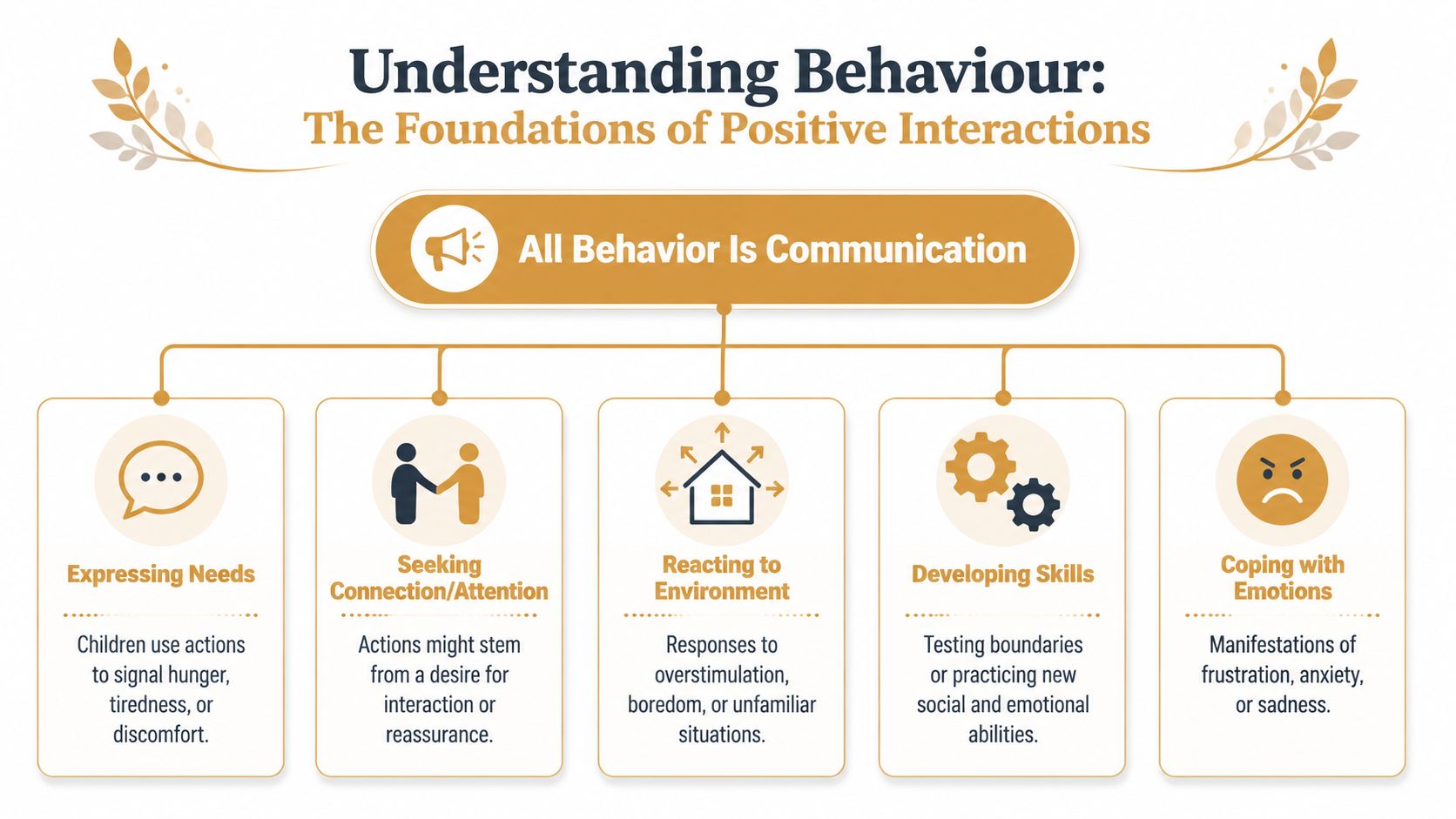
Connection before correction
For children aged 0 to 10, behaviour management is most effective when it comes from a warm, affectionate relationship and discipline is delivered without anger. The evidence summary also notes that warmth combined with consistency leads to better long-term behavioural outcomes than punitive approaches alone (Australian Institute of Family Studies guidance).
That fits what experienced carers see every day. A child is far more likely to accept correction from an adult who feels safe, calm, and predictable.
A secure relationship doesn't mean permissiveness. It means the child trusts that the adult is in charge without being frightening. That trust gives your boundary weight.
The behavioural iceberg in a private home
In UHNW households, the iceberg can be easy to miss because the setting is polished. Beautiful nursery, full rota, perfect travel planning, endless activities. Yet children still become dysregulated when their world feels uncertain.
Common hidden drivers include:
- Too many transitions between homes, countries, or caregivers
- Inconsistent adult responses across nanny, parent, tutor, or house staff
- Performance pressure in highly structured households
- Reduced autonomy when every part of a child's day is managed for them
If you're supporting a younger child, practical work on choice-making and competence often helps behaviour indirectly. Thoughtful routines that build capability, such as these strategies for toddler independence, can reduce power struggles because the child feels more able and less managed.
What this changes in daily practice
When you treat behaviour as communication, your first questions change:
- What is this child telling me?
- What skill is missing here?
- What in the environment needs adjusting?
- How do I keep the boundary and protect the relationship?
That mindset sits at the heart of strong early practice and long-term child development. It's also closely tied to the wider value of early childhood education and development, because behaviour, learning, regulation, and attachment are never separate for very long.
Core Evidence-Based Behaviour Management Techniques
Theory is useful. What changes a day in the nursery, school run, or playroom is technique. The most effective methods are usually simple, but they only work when applied consistently.
Positive reinforcement that children can feel
Children repeat what reliably gets noticed. That's why specific praise works better than vague approval.
Practical rule: The 5:1 ratio means aiming for five positive interactions for every one corrective or negative interaction with a child, creating a more positive learning environment (guidance on the 5:1 ratio).
In a home, that might sound like this:
- Specific praise: “You put your shoes by the door without being asked.”
- Noticing effort: “You were cross, but you used words instead of throwing.”
- Warm attention: A smile, touch on the shoulder, or shared moment of approval.
A child who only hears correction starts to brace for the adult. A child who is regularly seen doing well stays more open to guidance.
Clear boundaries and fewer empty warnings
Children cope better when expectations are simple and repeatable. The line should be clear before the problem, not invented during it.
A weak boundary sounds like this: “How many times have I told you? Stop it. Really, stop.”
A strong boundary sounds like this: “I won't let you hit. If you're angry, I'll help you move back.”
Use rules that are easy to picture and enforce. In most homes, three or four household rules are enough.
| Situation | Less effective response | Stronger response |
|---|---|---|
| Toy grabbing | “Be nice.” | “Hands off. Ask for a turn.” |
| Running indoors | “Stop that now.” | “Walking feet inside.” |
| Shouting at staff | “Don't speak like that.” | “Try that again respectfully.” |
Natural and logical consequences
A consequence works when it is linked to the behaviour, immediate enough to make sense, and calm in delivery.
If a child throws a toy, the toy is put away for now. If they refuse to wear a coat after a clear warning and it's appropriate to let reality teach, they may feel cold and then reconsider. What doesn't help is a consequence that is unrelated, delayed, or designed to humiliate.
Use consequences to teach, not to score a point.
Routines that reduce friction
Many behaviour issues are really transition issues. Morning prep, leaving the park, homework start-up, bath time, and handover between adults are common pinch points.
A solid routine includes:
- A visual order for younger children
- A warning before transition
- One adult leading
- A predictable follow-through
If you work with school-aged children, some classroom ideas adapt well to the home. This round-up of strategies for elementary teachers is useful because it shows how structure and praise can reduce avoidable conflict.
Self-management for older children
Some children need more than reminders. They need a way to notice and manage their own behaviour. Self-Management interventions train children to identify target behaviours, monitor themselves, and use chosen reinforcers. A UK-based review describes this as a teachable skill that improves attention and compliance while reducing impulsivity and externalising behaviours such as talking out or leaving the seat (Self-Management intervention review).
For an eight-year-old, that might mean:
- choosing one target such as “start homework within five minutes”
- tracking it on a simple card
- reviewing progress with the nanny at the end of the session
- earning a privilege linked to effort and consistency
This works especially well for children who resist constant adult prompting.
Advanced Strategies for Challenging Moments
A true test of a nanny isn't how she handles a calm child. It's how she responds when a child is fully dysregulated and every adult in the room feels watched.
A four-year-old has been told the iPad is finished. He drops to the floor, kicks a chair, and screams that he hates everyone. The parent is due downstairs in ten minutes.
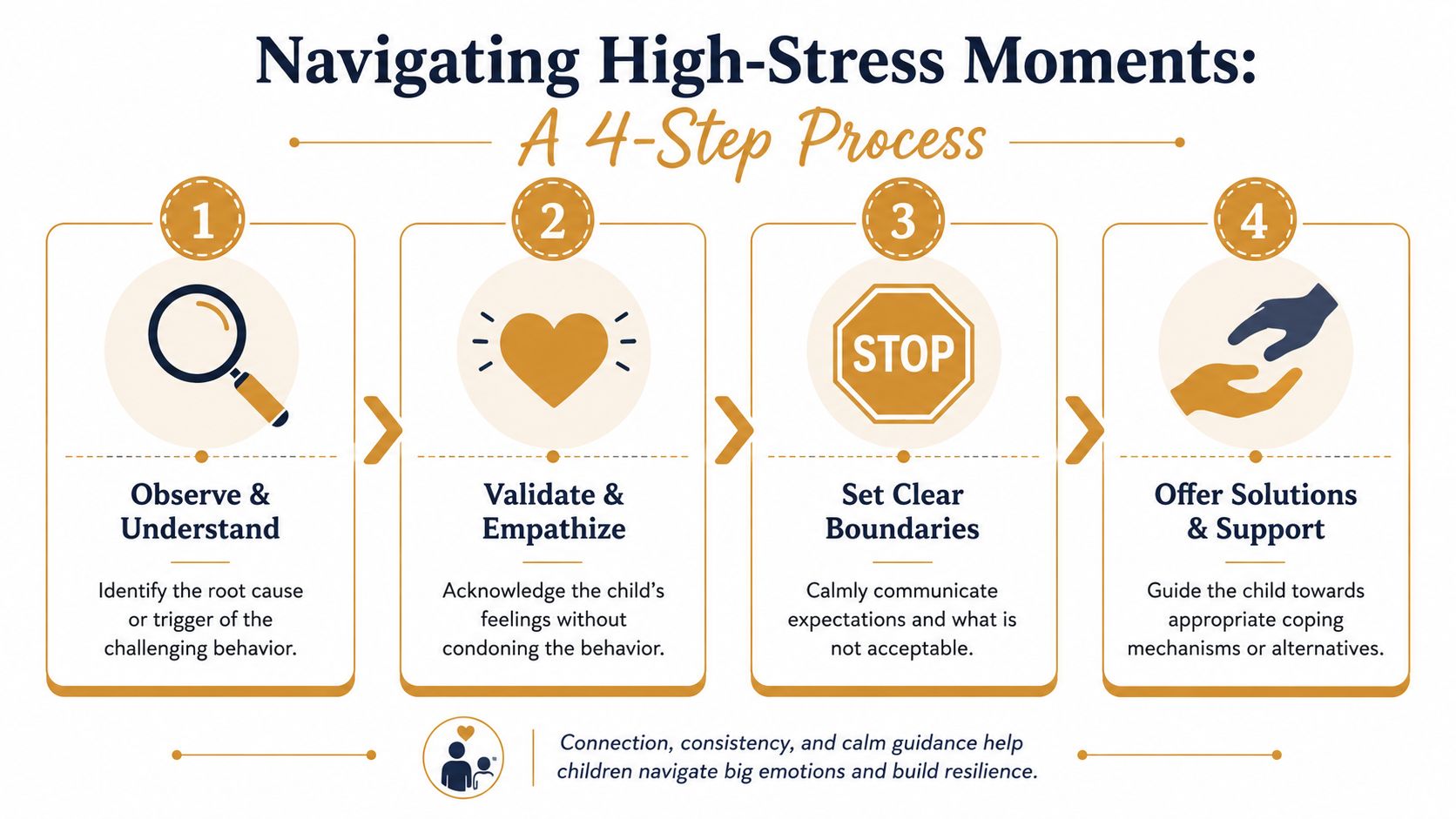
Step one stays with you, not the child
Your first task is to regulate yourself. Lower your voice. Slow your body. Remove any audience if possible. Don't crowd the child. Don't debate. Don't match intensity with intensity.
UK-based practice guidance notes that reactive confrontation during dysregulation is less effective than de-escalation techniques, including speaking softly, creating physical distance, and offering a face-saving exit (de-escalation guidance).
During a meltdown, your job isn't to win the argument. Your job is to bring the nervous system down.
Step two names the feeling and holds the line
Emotion coaching sounds soft, but it isn't permissive. You validate the feeling while stopping the unsafe behaviour.
Try:
- “You're furious that screen time is over.”
- “I won't let you kick the chair.”
- “I'm moving it away to keep everyone safe.”
That sequence matters. Feeling first. Boundary second. Safety throughout.
Step three gives a way back
Children in shame often escalate because they can't see how to recover. Give them a dignified route out.
You might say:
- “You can sit beside me or on the beanbag.”
- “When your body is calm, we'll choose the next activity.”
- “You don't have to talk yet. I'm here.”
For children with additional needs, this approach becomes even more important. If a family needs specialist support, a special needs nanny can often build calmer, more customized plans around sensory triggers, communication differences, and regulation patterns.
Step four repairs after the storm
The teaching happens later, not at peak distress. Once calm returns, keep it brief:
- Name what happened
- State the limit
- Practise what to do next time
- Repair if needed
For recurring flashpoints, write a one-page behaviour plan. Include the trigger, early signs, your agreed response, and the recovery script. In high-pressure homes, that kind of preparation prevents improvisation by multiple adults.
Adapting Techniques for Your Role and Household
A method that works beautifully with one child can fail in another home because the context is different. Private childcare has its own complications. Travel. Handovers. Two homes. Tutors. Security staff. Grandparents visiting. Parents with demanding schedules. Sometimes the issue isn't the child's behaviour at all. It's adult inconsistency around the child.
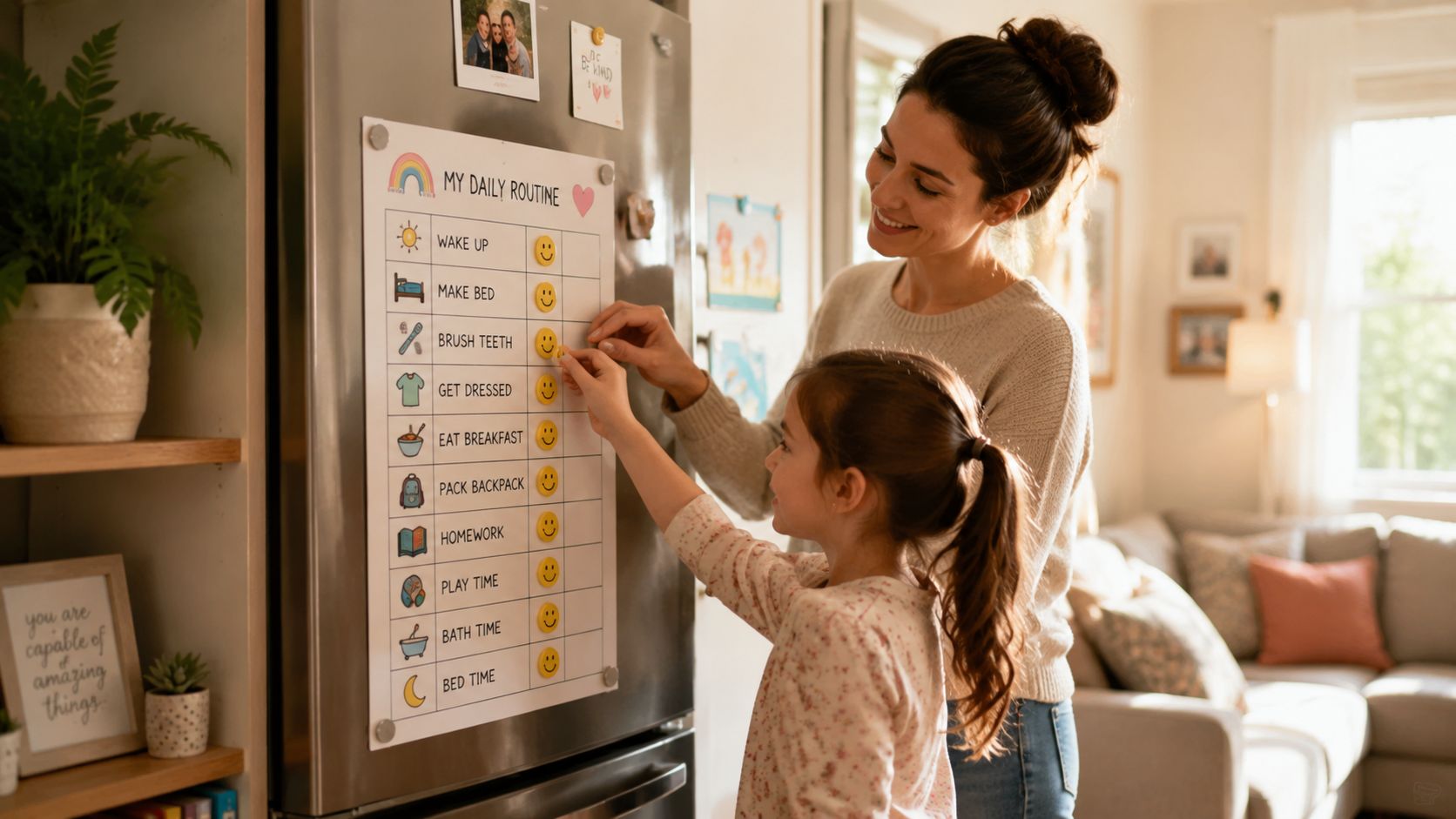
The same principle looks different by age
A three-year-old needs short language, physical proximity, and visual routine. An eight-year-old needs collaboration, ownership, and a chance to repair.
Consider the difference:
- For a toddler: “First shoes, then garden.” Show the shoes. Offer two choices.
- For a school-aged child: “You need to be ready by eight. Do you want to pack your bag before or after breakfast?”
The principle is still structure plus warmth. The delivery changes because the child's developmental capacity changes.
The nanny role and the parent role
Nannies are often the steady daily regulators. Parents remain the emotional anchor and ultimate authority. Problems arise when those roles blur or compete.
A practical division works well:
- Parents set the family values and non-negotiables.
- Nannies translate them into daily routines, scripts, and follow-through.
- Both adults use the same language for key boundaries.
That level of clarity supports children and protects staff. It also reduces the temptation for a child to split adults against one another.
The Household Behaviour Charter
A 2025 Branching Minds analysis reports that 73% of UK multi-caregiver homes experience inconsistent behavioural outcomes due to unstandardized approaches, which is exactly why many complex households need a written alignment system (Branching Minds analysis).
Use a simple household charter with five points:
Core rules
Keep them short. Safe hands. Respectful words. Follow first instruction.Standard scripts
Agree the exact language for common moments such as transitions, refusal, and sibling conflict.Approved consequences
Decide what adults may and may not use. No improvising in frustration.Trigger notes
Record what tends to precede incidents, especially around travel, guests, schedule shifts, or fatigue.Handover protocol
Every caregiver should know what happened, what was said, and what comes next.
Professional households benefit from regular training and alignment. Ongoing professional development for household staff helps keep standards consistent when multiple adults support the same child.
Putting It Into Practice With Scripts and Routines
Words matter, but tone matters just as much. Calm, low, and matter-of-fact will carry a boundary far further than a sharp lecture. Children listen best when they don't feel cornered.
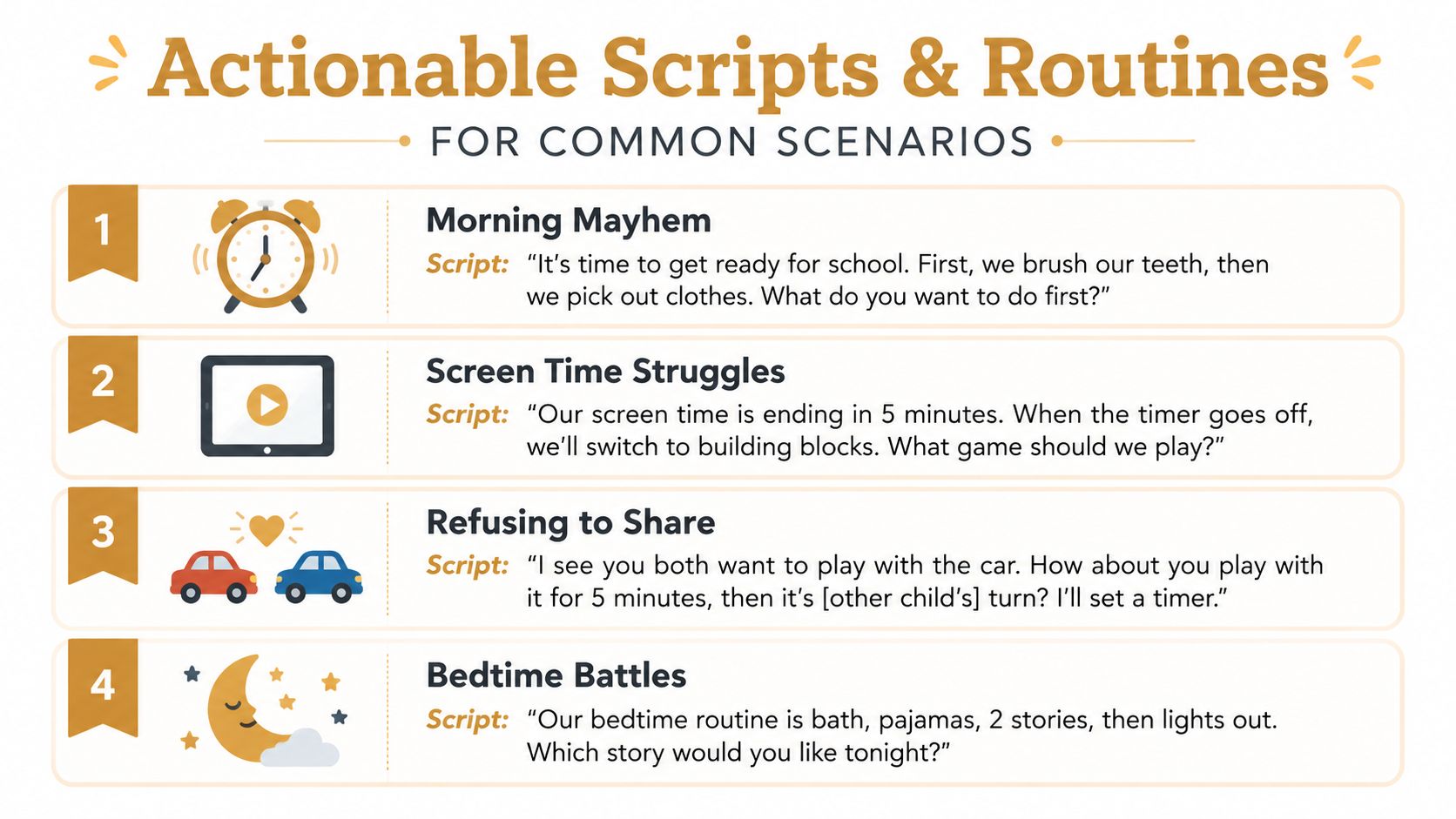
Refusing to share
When two children want the same item, avoid long moral speeches. Move quickly to structure.
What to say
“I can see you both want the car. It's hard to wait. Tom has it first, then it's your turn when the timer goes.”
The key is that you acknowledge the feeling, state the plan, and make the turn-taking visible. Specific praise afterwards helps reinforce the success. Practical guidance on proactive management highlights how feedback such as “You did a great job sharing!” supports the behaviour you want to see (Routledge behaviour strategies).
Bedtime resistance
Bedtime battles often worsen when adults start negotiating after the routine has begun. Keep the order fixed and offer choice within it.
What to say
“It's bath, pyjamas, two stories, then lights out. You may choose the red pyjamas or the blue.”
A routine chart near the bedroom is often enough to remove repeated verbal prompting.
Screen time ending
This is easier when the limit is known in advance and the next activity is already chosen.
“You have five minutes left. When the timer rings, the tablet goes on charge and we'll do Lego or drawing. Which are you choosing?”
If the child protests, repeat the limit once. Don't add fresh explanations each time. Repetition from the adult often turns into negotiation from the child.
Morning routine drift
When a child wanders, narrate the next concrete step instead of criticising the delay.
- Start with order by using “first, then” language.
- Reduce clutter so the child sees only the items needed.
- Praise movement the moment it starts.
- Keep one lead adult during the busiest quarter hour.
“First teeth, then uniform. You've already started. Good, keep going.”
Good scripts are plain. They don't sound clever. They sound usable on a rushed Tuesday.
Safeguarding and Professionalism in UHNW Homes
In a high-profile home, behaviour support is never just about technique. It's also about judgement. Children must be protected from gossip, overexposure, and casual discussion of private family moments.
Confidentiality is paramount. If a child has a violent outburst in public, you don't discuss it with other staff who don't need to know. If there is a recurring concern, you document it factually and raise it through the agreed channel. You don't editorialise, diagnose, or vent.
Professionalism also means recognising the line between a behaviour issue and a safeguarding issue. Sudden changes, persistent distress, fear-based reactions, or signs that something is seriously wrong require calm escalation and proper record-keeping. Every nanny working to elite standards should understand the required checks for working with children and the reporting duties that sit behind them.
Your Path to Becoming a Behaviour Expert
Effective behavior management techniques aren't a personality trait. They're a professional skill. You learn to spot patterns earlier, speak more clearly, stay calmer under pressure, and build routines that prevent half the problems before they begin.
The best practitioners do three things well. They read behaviour as communication, they use proactive structure more than reactive punishment, and they stay consistent even when the household is busy, tired, travelling, or under scrutiny.
That level of care changes a home. Children feel safer. Parents feel supported. Staff work with more confidence.
Frequently Asked Questions
How do I respond to open defiance without creating a power struggle?
Keep your language brief and avoid public battles. State the instruction once, give a limited choice if appropriate, and follow through calmly. If the child is trying to draw you into a debate, don't over-explain. Save discussion for later when the child is regulated and able to think.
What should I do when difficult behaviour happens in public?
Prioritise safety, privacy, and speed. Move to a quieter space if possible. Lower stimulation, lower your voice, and reduce the audience. In UHNW settings, discretion matters, but that must never come at the cost of safety. Address the child first. Discuss the incident with the parents later in a factual handover.
Do trauma-informed approaches matter in private childcare?
Yes. They matter because some behaviour is rooted in stress, fear, or a child's sense that things feel unsafe or out of control. A trauma-informed stance doesn't remove boundaries. It changes the question from “What's wrong with this child?” to “What is this behaviour telling us?”
How long does it take for behaviour strategies to work?
Some changes are immediate. Clearer routines often reduce friction within days. Deeper patterns take longer because children need repeated experiences of the same response before they trust it will hold. If a strategy is sound but results are poor, review adult consistency before assuming the method has failed.
When should a nanny ask for extra support?
Ask early if there is frequent aggression, extreme distress, major family inconsistency, or a pattern that isn't improving with calm, structured support. Complex cases benefit from aligned adults and, when appropriate, specialist input. Waiting too long usually makes the work harder for everyone.
If your family needs a highly skilled nanny who can manage behaviour with calm authority, warmth, and absolute discretion, speak with Superstar Nannies. Their team places exceptional childcare professionals for UHNW and VIP households worldwide, with the judgement and professionalism complex homes require.