

Finding the right private tutor can feel overwhelming, but understanding what to look for transforms a daunting task into a confident decision. The best private tutor qualifications are a blend of three critical elements: mandatory safety checks, proven teaching credentials, and relevant, real-world experience. This guide will help you hire a professional who is not only a subject expert but also thoroughly vetted, reliable, and the right fit for your child.
Understanding Private Tutor Qualifications in the UK
As the demand for high-quality tutoring soars across the UK, parents need a clear framework to identify the best educators. Evaluating a tutor goes far beyond a university degree; it requires a comprehensive look at their safety record, subject expertise, professional standing, and ability to connect with your child. This ensures you're investing in a partnership that will truly foster academic growth and confidence.
This guide will walk you through what really matters when you're reviewing a tutor's profile. We’ll cover everything from non-negotiable safety checks like an Enhanced DBS, to the specific academic qualifications that signal a true professional. If you're curious about what it takes to get into the profession in the first place, The Kingdom of English's guide provides some great context on an educator's journey.
The Pillars of a Qualified Tutor
A genuinely qualified and effective tutor is built upon three core pillars. Think of them as layers of trust and assurance, each one helping you make a better-informed choice for your family.
This infographic neatly breaks down what you should be looking for.
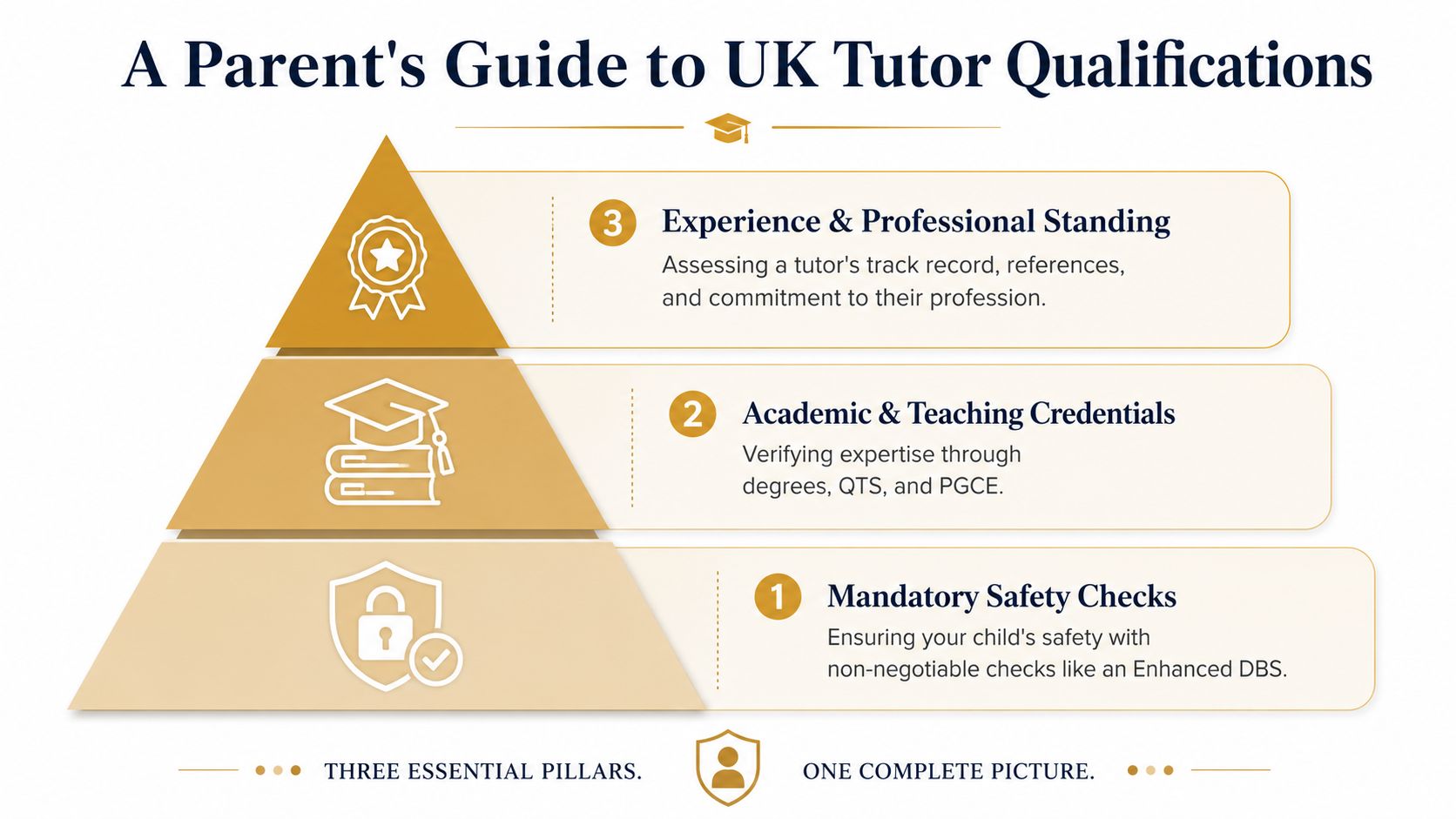
As you can see, safety checks form the absolute foundation. On top of that, you have the academic and teaching credentials that prove their knowledge, and finally, the practical experience that shows they can actually deliver results.
When you understand how these components fit together, you can look past a simple CV and see the full picture. It gives you the confidence that you're not just choosing a subject expert, but a true professional committed to your child's success.
The Mandatory Checks for Every UK Tutor
Before you even start looking at a tutor’s CV or academic achievements, there are a few fundamental checks that are absolutely non-negotiable. Think of these as the essential foundations for a safe and successful hire. They are the first and most critical step in ensuring your child's wellbeing is protected from the very beginning.
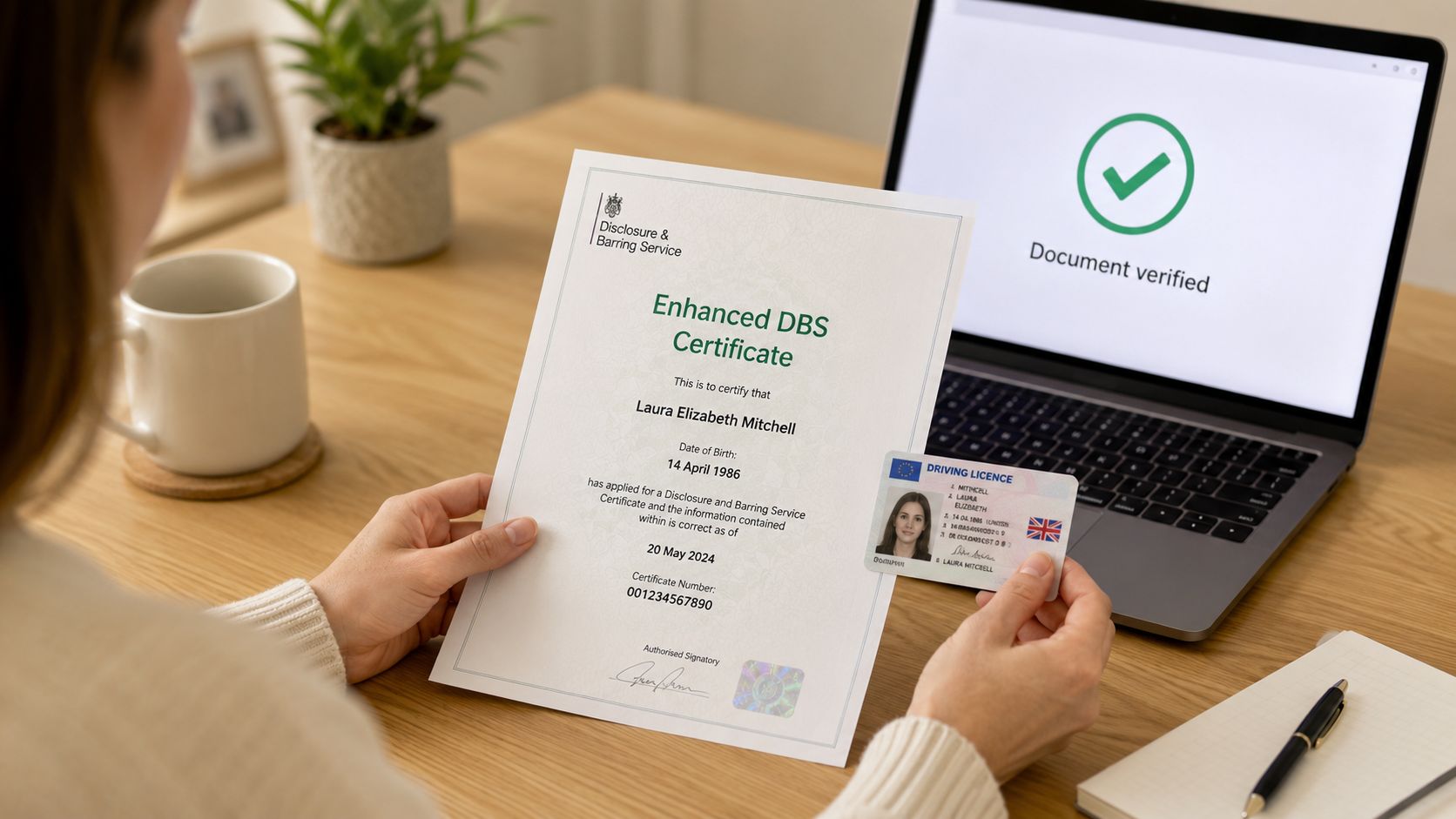
At the top of that list is the Disclosure and Barring Service (DBS) check. This is the UK's official background screening process, providing a detailed look at a person's criminal record to help families make safer recruitment decisions. For any role involving close, unsupervised contact with children, it’s an absolute must.
Why an Enhanced DBS Is the Gold Standard
It's important to realise that not all DBS checks offer the same level of scrutiny. While you might hear about Basic or Standard checks, these simply aren't rigorous enough for a private tutoring role.
The only acceptable level is an Enhanced DBS check with a Children's Barred List check.
This top-tier check is the most comprehensive available. It reveals not only spent and unspent convictions, cautions, and warnings but also, crucially, confirms whether the individual is on the government's official list of people barred from working with children.
An up-to-date certificate is essential. Ideally, the tutor will be subscribed to the DBS Update Service, which allows for real-time status checks. Without this level of verification, you can’t be fully confident in a candidate's suitability. To understand these checks in greater detail, you can review our guide on essential checks for working with children.
Verifying Identity and Right to Work
Alongside the DBS, two other simple but vital checks complete the safety puzzle. These confirm that the tutor is who they claim to be and that they are legally allowed to work in the UK.
The table below provides a quick overview of these foundational legal and safety checks.
Essential Safety and Legal Checks for UK Tutors
| Check | What It Verifies | Why It's Non-Negotiable |
|---|---|---|
| Enhanced DBS Check | Criminal record and checks against the Children's Barred List. | This is the highest level of safeguarding, ensuring the individual has not been deemed unsuitable for working with children. |
| Photo Identification | The tutor's identity matches their official documents. | A basic but critical step to prevent identity fraud and confirm the person you're interviewing is the same person on the DBS certificate. |
| Right to Work | The candidate's legal eligibility to be employed in the UK. | This is a legal obligation for you as an employer. Failure to comply can result in significant penalties from the Home Office. |
To perform these checks, you should always ask to see an original, valid form of photo ID, like a passport or UK driving licence. For the Right to Work, you can check their passport or use the Home Office's online service via a "share code" the candidate provides.
Getting these foundational checks right is the first and most important step in evaluating a private tutor's qualifications, giving you the peace of mind that comes from proper due diligence.
Decoding Academic and Teaching Credentials
With the essential safety checks out of the way, our focus shifts to a tutor’s actual expertise. A CV can often look like a jumble of acronyms, but knowing what they mean is crucial for telling the difference between a subject enthusiast and a genuinely skilled educator. These formal private tutor qualifications are the best evidence of a candidate’s subject mastery and, just as importantly, their ability to teach.
This has become more critical than ever. Private tuition is no longer just for occasional homework help; for many families, it's a core part of their child's educational strategy. Naturally, as the industry has matured, the expectations for academic and professional standards have risen right along with it.
Core UK Teaching Credentials
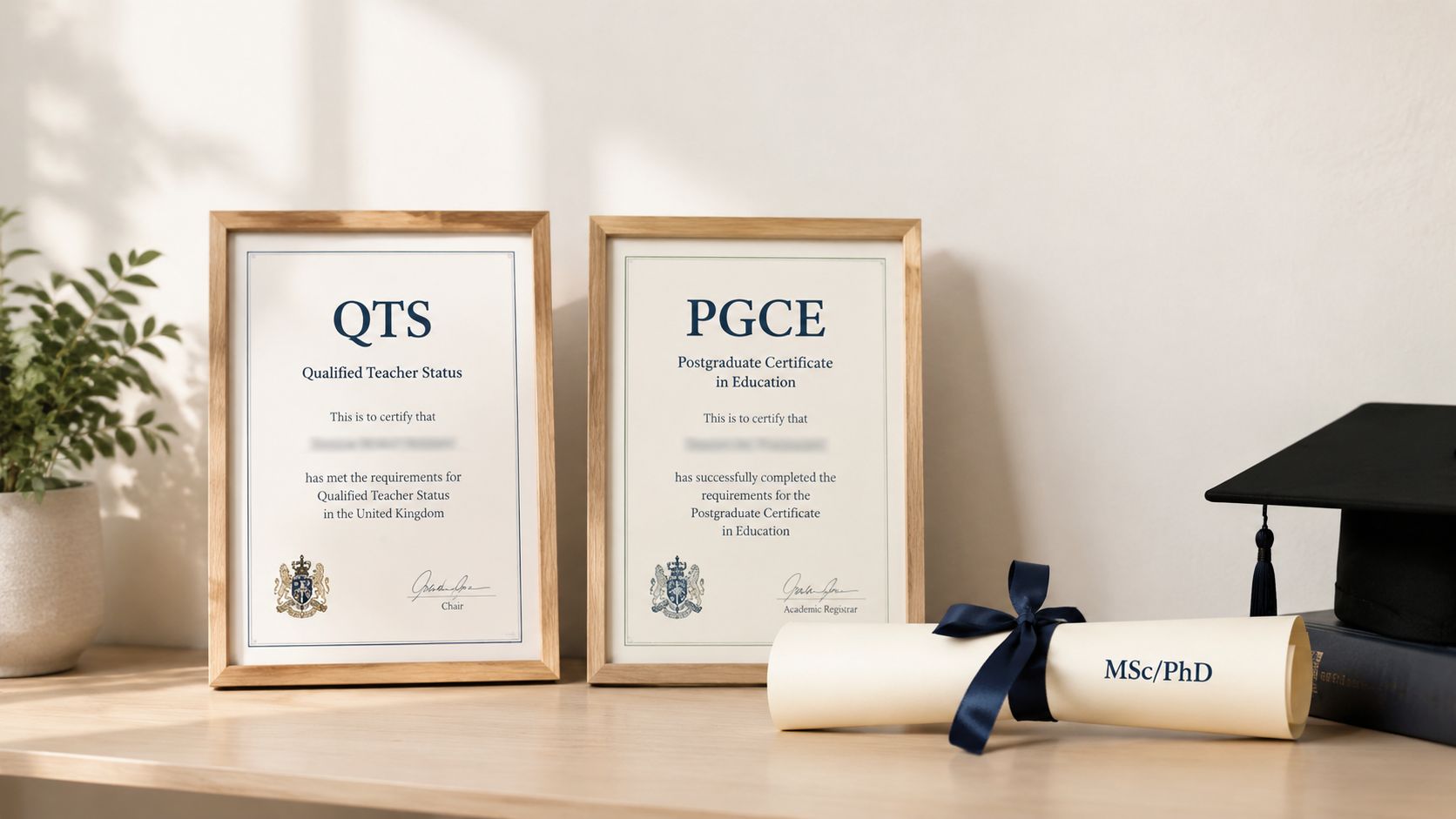
In the UK, if you’re looking for a tutor with formal pedagogical training, two key qualifications should be on your radar. Spotting these on a CV is a very strong sign you’re dealing with a professional.
Qualified Teacher Status (QTS): This is the official professional benchmark needed to teach in any state-maintained school in England. To earn QTS, a teacher has to meet the government’s strict professional standards, which cover everything from curriculum planning and subject knowledge to classroom management and assessing pupils' progress.
Postgraduate Certificate in Education (PGCE): The PGCE is an academic qualification, often earned at the same time as QTS. It digs deep into the theory and practice of education, giving tutors a solid grounding in child development and different teaching methods. A tutor with a PGCE has formally studied how to teach, not just what to teach.
When a tutor holds both QTS and a PGCE, they bring a formidable mix of practical, government-assessed skills and a deep academic understanding of education. For families focused on the UK curriculum, this is widely considered the gold standard.
Evaluating University Degrees and Other Awards
Beyond specific teaching awards, a tutor’s university degree is the bedrock of their subject knowledge. You’ll want to see degrees that line up directly with the subjects they are tutoring.
For instance, a PhD in Physics is a clear indicator of exceptional expertise for an A-level student, just as a First-Class Honours degree in English Literature from a leading university is a perfect fit for GCSE support. The calibre of the degree often speaks to the depth of their knowledge. When hiring for more specialised roles, like a modern governess who blends educational and pastoral care, it’s worth reading our guide on exploring the role of a modern governess.
These days, holding a degree is a basic expectation in the UK tutoring market. As the sector has become more professional, families rightly expect to see proof of a solid academic history. You may also find a variety of vocational teaching qualifications on a CV, such as those detailed in MasteryMind vocational studies, which can add another layer to a candidate's profile.
Matching Tutor Expertise to Your Child's Curriculum
While a tutor's general qualifications provide a solid foundation, they're only half the picture. The real magic happens when their specific, hands-on experience aligns perfectly with your child's curriculum. After all, even the most brilliant A-level Physics tutor can be a fish out of water when faced with preparing a child for the 7+ entrance exams.
The key is recognising that private tutor qualifications must include direct, recent familiarity with the exact material your child is studying. Think of it like this: a Formula 1 engineer is undoubtedly a mechanical genius, but you wouldn't hire them to restore a classic Mini. Both are cars, but the skill sets, tools, and specific knowledge required are worlds apart. The same principle holds true in education, as these GCA Hong Kong German education insights also point out.
Specialised Knowledge for UK and International Curricula
For families navigating the UK system, this alignment is absolutely crucial. It’s not enough for a tutor to just know their subject; they need to intimately understand the structure, marking schemes, and unique question styles of specific exam boards.
- GCSEs & A-levels: Does the tutor have recent experience with the right exam board, be it AQA, Edexcel, or OCR? A tutor who has actually marked papers for that board brings an invaluable insider's perspective on exactly what examiners reward.
- Entrance Exams (7+, 11+, 13+): This is a highly specialised field. A top-tier entrance exam tutor knows the specific formats, the heavy emphasis on verbal and non-verbal reasoning, and the interview techniques that leading independent schools look for.
- International Baccalaureate (IB): The IB programme is built on a unique philosophy of critical thinking, with distinct elements like the Extended Essay (EE) and Theory of Knowledge (TOK). A truly qualified IB tutor lives and breathes this holistic approach.
A tutor’s recent, direct experience with your child’s specific curriculum and exam board can be the single biggest factor in their success. It transforms general subject knowledge into targeted, effective preparation.
If your family has international connections or is planning a move, you might also need a tutor experienced with American systems like AP exams or the SAT. Similarly, finding an expert who specialises in homeschooling can be a game-changer. For a much deeper look into this, we have a comprehensive guide on hiring a private tutor for homeschooling.
Always press potential candidates to detail their precise experience with the curriculum your child is following. Their answer will tell you everything you need to know.
Evaluating a Tutor's Experience and Professional Standing
A strong CV is a start, but it's only half the story. While academic credentials show what a tutor knows on paper, their professional history reveals how effectively they can apply that knowledge in the real world. To find an educator who can genuinely deliver results, you have to look beyond their list of private tutor qualifications.
This means digging into their work history, speaking with references, and getting a real sense of their dedication. A detailed CV should paint a picture of clear, progressive experience that’s directly relevant to your child's age group and academic needs. It’s not about how long they’ve been a tutor, but about the quality and focus of the roles they’ve held.
Assessing a Tutor's Professional Commitment
The very best educators are lifelong learners, and a tutor's commitment to their own growth is a huge green flag. It tells you they are passionate about their craft and actively working to stay at the top of their field.
One of the clearest signals is their engagement with Continuous Professional Development (CPD). Don't hesitate to ask candidates what courses, workshops, or training they've recently taken. This shows they’re serious about keeping up with modern teaching methods, curriculum updates, and new educational technologies. Another powerful indicator is their affiliation with a professional body.
Membership in an organisation like The Tutors' Association (TTA) is a significant marker of professionalism. Members must adhere to a strict Code of Ethics, possess clear credentials, and hold a valid DBS certificate, providing families with an extra layer of assurance.
The Growing Importance of Proven Experience
The demand for high-calibre tutoring has exploded in recent years, making a proven track record more important than ever. Research from the Sutton Trust found that 30% of young people aged 11–16 in the UK have now received private tutoring, a significant jump from pre-pandemic levels. For families, this means the market is crowded, and thoroughly vetting a tutor’s background is non-negotiable.
The same study shows a stark regional difference, with tutoring being far more common in London (46% of pupils) than elsewhere. This has driven standards up in these competitive hubs. You can explore the full findings in the Sutton Trust's report on the tutoring landscape.
This trend has cemented the tutor’s role as a key part of a child's educational team, not just a temporary fix. As a result, demonstrable experience is no longer a "nice-to-have"—it's a fundamental requirement. To learn more about the difference the right educator can make, read our article on maximising academic potential with a private tutor. A truly great tutor doesn't just teach a subject; they build confidence, inspire curiosity, and foster a genuine love of learning.
Finding the Right Fit Beyond the Resume
It’s easy to get caught up in ticking boxes for private tutor qualifications. A top-tier degree, impressive teaching credentials, glowing references—they all matter. But the truth is, the most qualified tutor on paper isn’t always the best person to inspire your child.
The real magic happens when you find someone who connects with your child on a personal level. This rapport is what turns tutoring from a chore into a genuinely exciting part of their week. It creates a space where a student feels safe enough to be vulnerable, ask "silly" questions, and, most importantly, build the confidence to try and fail without fear.

Uncovering the Essential Soft Skills
So, what should you look for beyond the CV? These are the intangible qualities that distinguish a good tutor from a truly exceptional one, and they often reveal themselves in conversation, not on a certificate.
- Patience and Empathy: Can they explain a difficult concept for the fifth time, but find a fresh way to frame it? A great tutor doesn't just repeat information; they try to understand precisely why a student is stuck and meet them there.
- Adaptability and Creativity: The best educators don’t rigidly stick to a lesson plan. They think on their feet, weaving a child’s interests—be it video games, sport, or music—into the material to make complex subjects feel relevant and engaging.
- Communication and Encouragement: Constructive feedback is a delicate art. Look for someone who can correct a mistake while simultaneously boosting a student's self-belief. They celebrate the small wins and nurture resilience.
Ultimately, you're searching for an educator who sees your child as an individual, not just another student. A tutor who can tap into their unique personality and learning style will achieve far more than someone who simply has a string of impressive credentials.
This is why a trial session—an informal "chemistry check"—can be so revealing. Watch how they interact. Does your child seem comfortable and engaged? Does the tutor listen more than they talk?
Finding that positive relationship is every bit as critical as verifying their qualifications. It's the key to unlocking your child's true potential.
Your Partner in Finding an Exceptional Tutor
Navigating the world of private tutor qualifications is a detailed and demanding process, but it's one we know inside and out. From verifying every credential to conducting in-depth interviews, Superstar Nannies manages the entire search process so you can focus on finding the perfect personal fit for your child.
We believe that every child deserves an educator who doesn't just teach, but inspires. Our rigorous vetting ensures every tutor we represent meets the highest standards of safety, expertise, and professionalism. Let us handle the complexities of the search, giving you the peace of mind to choose a world-class tutor who will help your child thrive.
FAQs: Your Questions About Tutor Qualifications
What are the minimum qualifications for a private tutor?
While the UK has no single legal minimum, a professional tutor should always have an Enhanced DBS check with a children's barred list check. Academically, a relevant university degree is standard. For core subjects, look for teaching credentials like QTS or a PGCE. Most importantly, seek proven experience with your child's specific age group and curriculum.
How do I know if a tutor is qualified for my child’s specific needs (e.g., SEN)?
When looking for a tutor for a child with Special Educational Needs (SEN), direct experience is paramount. Ask candidates about their specific training in SEN, such as qualifications in dyslexia support or autism awareness. They should be able to discuss tailored strategies they've used and demonstrate a deep, empathetic understanding of how to adapt their teaching to your child's unique learning style.
Is it better to hire a tutor from an agency or find one independently?
Hiring through a reputable agency like Superstar Nannies offers a significant layer of security and quality control. Agencies perform rigorous background checks, verify all private tutor qualifications, and interview candidates to assess their professionalism and suitability. This saves you considerable time and provides peace of mind that you are choosing from a pool of highly-vetted, elite professionals.
How important is a tutor's own school or university background?
A tutor’s academic background provides a strong indicator of their subject mastery. A degree from a top university in their chosen subject (e.g., Mathematics from Cambridge) shows a high level of expertise. However, this should be balanced with their teaching ability and experience. The best tutors combine deep subject knowledge with the skill to make complex topics accessible and engaging for their students.
Ready to find an educator who meets the highest standards? Contact us today to find the perfect tutor for your family.