

The final weeks before a baby arrives often look calm from the outside. Inside the home, they rarely feel calm. Parents are reviewing feeding plans, preparing rooms, coordinating travel, fielding family expectations, and trying to protect rest before life changes overnight.
That's why private nanny services Palm Beach for newborn care specialists matter so much in this market. For many families, the search isn't about finding general childcare. It's about securing a highly trained professional who can step into an intimate household environment, support recovery, protect routines, and handle the newborn period with skill, discretion, and steadiness.
Your Guide to Securing Elite Newborn Care in Palm Beach
Palm Beach families usually need more than a pleasant bedside manner. They need someone who can manage nights well, communicate clearly with exhausted parents, respect household boundaries, and adapt to a private, often fast-moving lifestyle. In practice, that means thinking about the hire as an operational decision as much as an emotional one.
Some parents begin by reading practical newborn resources so they can separate normal adjustment from true red flags. A straightforward primer on caring for a newborn baby can help frame the basics, but private staffing decisions require a different level of planning.
In Palm Beach, standards are high because the consequences of a weak match are high. A poorly chosen Newborn Care Specialist can create friction around sleep, feeding, privacy, staff hierarchy, or family culture. A strong one brings order very quickly.
What families are really hiring for
A serious NCS placement usually involves more than night feeds and swaddling. Families are often hiring for:
- Clinical calm: someone who stays composed when parents are tired, anxious, or receiving conflicting advice
- Structured observation: a professional who notices patterns in feeding, soothing, reflux, overstimulation, and parental fatigue
- Household judgement: someone who understands when to take initiative and when to defer
- Discretion: a paramount standard in high-profile homes
Parents who want a clearer view of local staffing options can review Palm Beach nanny services for private households.
The right newborn specialist doesn't just help with the baby. They lower stress inside the whole household.
Defining Your Family's Unique Newborn Care Needs
The strongest placements start before a single candidate is presented. Families need a brief that reflects how they live, not how they imagine life will look after the baby arrives. Vague instructions such as “we need newborn help” often produce vague matches.
Start with lifestyle, not job titles
A family returning from the hospital into a quiet home has one set of needs. A family with security protocols, multiple residences, frequent guests, older siblings, and travel plans has another. The title may be the same, but the role isn't.
Ask yourselves:
- Will this person work live-in, live-out, or primarily night shifts?
- Do you need support only in the immediate newborn stage, or will you want a smooth handover into a longer-term nanny arrangement?
- Will the specialist work in one residence, or move between homes?
- Will the role include travel, yacht stays, hotel support, or temporary relocation?
- Does the home already have household staff, and if so, where does this role sit operationally?
Parents often underestimate how much feeding rhythm shapes the entire early schedule. If cluster feeding is becoming part of your planning, it helps to read practical guidance such as these Milk&Lace insights on cluster feeding, then discuss how your NCS would document and respond to those patterns rather than react to them emotionally.
Define the care complexity clearly
Some placements require broad newborn competence. Others require a narrower specialist profile. Be specific about whether you need proven experience with:
- Premature babies
- Multiples
- Reflux or colic
- Bottle refusal
- Breastfeeding support alongside lactation guidance
- Sleep shaping within your preferred parenting style
- Post-caesarean household recovery support around the infant routine
If you want your specialist to guide sleep gently, say so. If you prefer a more structured approach, say that too. Many mismatches happen because families and candidates use the same words but mean different things.
Practical rule: If your family hasn't agreed on feeding philosophy, sleep expectations, visitor boundaries, and overnight responsibilities, don't start interviews yet.
Don't overlook cultural fit
In Palm Beach, many high-net-worth households are international, multilingual, or split between residences. Cultural fluency can matter as much as childcare technique. Consider whether your specialist should be comfortable with:
- bilingual communication in the nursery
- grandparents or extended family being closely involved
- religious or cultural postpartum traditions
- changing time zones after birth travel
- formal service structures inside the home
A useful preparation step is to write two documents. One is the formal job description. The second is a household memo covering routines, sensitivities, privacy expectations, and firm requirements. Families preparing for this stage often benefit from a broader checklist such as this guide on how to prepare for a newborn, then refining it into staffing terms.
Sourcing and Vetting World-Class Newborn Specialists
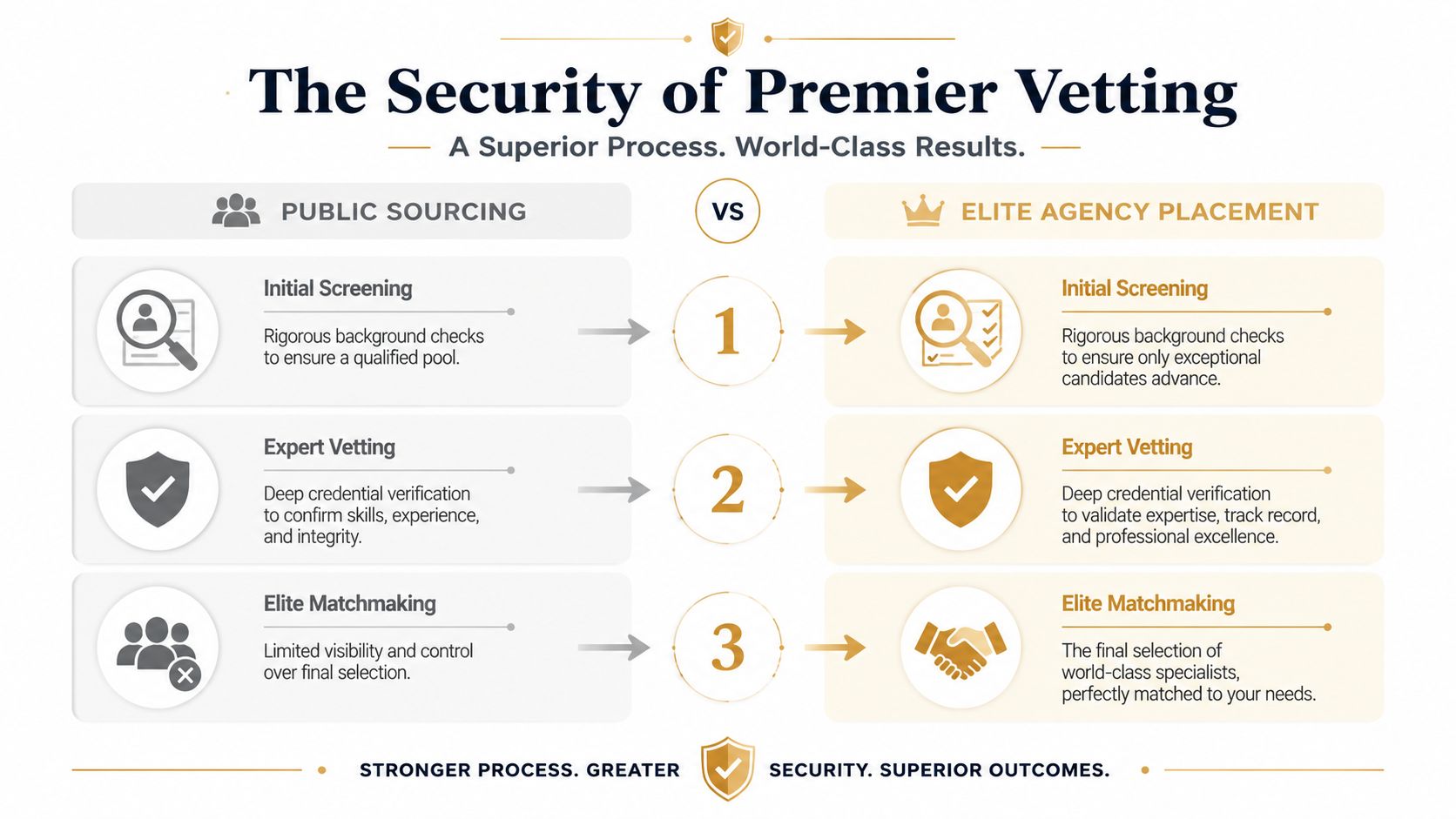
The market divides quickly into two lanes. One is public sourcing through broad platforms, referrals, and open listings. The other is specialist agency placement. For a routine childcare role, some families accept the gamble of the first lane. For newborn care in a private household, that gamble is expensive.
What proper vetting looks like
According to the Professional Nanny Association resources, elite agencies follow a rigorous 5-step vetting process, filtering out 90% of applicants at the initial screening. That process includes in-depth interviews on sleep training methodologies, enhanced background and international reference checks, and practical assessments, and it reduces the risk of a placement mismatch by an estimated 85%.
Those figures matter because a polished CV proves very little on its own. In newborn placements, agencies should be checking whether a candidate can effectively think and work at the level your household requires.
The difference between a profile and a professional
A candidate may say she has “newborn experience”. That could mean she has cared for infants generally. It doesn't necessarily mean she has worked as a true NCS in private homes, handled round-the-clock parental support, documented feeding and sleep patterns properly, or dealt with postnatal stress skillfully.
A serious review process should test:
- Credentials: Newborn care training, infant CPR, and First Aid
- Judgement: How the candidate handles parental disagreement, medical escalation, and changing routines
- References: Not just whether former employers liked her, but whether she worked with consistency, discretion, and clean boundaries
- Practical skill: swaddling, bottle prep, sterilisation standards, nursery organisation, handover notes, and safe sleep practice
- Fit for private households: comfort with principals, staff structures, drivers, travel teams, and confidentiality obligations
Why agency placement is a risk-management decision
For UHNW and VIP families, the agency fee pays for filtration, verification, and controlled presentation. It also protects time. Parents shouldn't have to spend the newborn period investigating whether a candidate's references are real, whether dates line up, or whether “comfortable with travel” actually means “comfortable with one short domestic trip”.
Some specialist firms, including Superstar Nannies' vetting process for discerning families, outline this methodology in detail so clients understand what is being checked before an introduction is made.
A private placement is only as strong as the unseen checking behind it.
The Art of the Interview and Structuring a Trial
A strong shortlist doesn't end the process. It starts the part that reveals whether the person can live and work in your home without creating strain. Interviews for newborn specialists should test decision-making, restraint, communication style, and cultural adaptability. Warmth matters. So does discipline.

Ask questions that expose judgement
Most parents ask about experience, routines, and availability. Those questions are necessary, but they don't tell you how a specialist behaves when things become delicate.
Use scenarios such as:
- A parent changes the plan at 2am: How do you respond if the mother wants to alter a feeding routine you believe is making the baby less settled?
- Conflicting advice inside the home: How do you handle a grandmother giving instructions that differ from the parents' wishes?
- Privacy pressure: What would you do if a family friend asked about the baby, the household routine, or the mother's recovery?
- Travel disruption: How do you help protect sleep and feeding consistency during a hotel stay or after a long-haul flight?
- Role creep: How do you respond if the family begins asking for duties involving older siblings or broader household support beyond the newborn agreement?
Listen for restraint. Strong candidates don't sound rigid, but they also don't sound eager to please at any cost. They know when to advise, when to document, and when to step back.
Test cultural and international readiness
This point is no longer niche. According to UBS global wealth insights, there has been a 15% rise in foreign-born UHNW households in Palm Beach County, which makes questions about bilingual homes, jet-lagged newborns, and cultural childcare norms an essential part of interviews.
That means asking direct questions such as:
| Interview focus | What to ask |
|---|---|
| Bilingual households | How have you supported language consistency between parents, staff, and baby care routines? |
| International travel | How do you handle overnight rhythm changes when a newborn arrives after long-distance travel? |
| Cultural norms | Tell us about a time you adapted your care style to a family with different expectations around visitors, feeding, or postpartum customs. |
| Formal homes | How do you communicate within a household that has assistants, security, or other domestic staff? |
Parents should also assess how the candidate speaks about former employers. Respectful, discreet language is a very good sign. Casual storytelling is not.
Families often focus on whether they like the candidate. The more useful question is whether they'd trust her in a tired, emotional, highly private week.
Structure a paid trial properly
Trials are not symbolic. They're the closest thing you have to reality before commitment. Even an excellent interview can't show how someone moves through your space, hands over information, or responds to your baby.
A good trial should include:
- Clear hours: day, night, or a blended schedule that mirrors the actual role
- Defined tasks: feeding logs, settling, bottle preparation, nursery resets, parental updates
- Observation points: communication, punctuality, composure, hygiene standards, respect for boundaries
- Decision authority: who gives feedback and who makes the final call
Keep the scope tight. A trial is not the moment to improvise the role. If you need support on structuring those conversations in high-profile households, this guide on how to interview a nanny for a high-net-worth family is a helpful reference point.
Finalising the Hire Contracts Rates and Confidentiality
By the time a family reaches contract stage, the emotional pressure usually lifts. That's precisely when details need to become sharper. A warm verbal understanding is not enough for an NCS placement in Palm Beach, especially where privacy, travel, or multiple residences are involved.
Understand the local rate structure
The market is premium. In West Palm Beach, newborn care specialists command average rates from $23.35 to $35 per hour, reflecting local cost of living and demand for specialised care, and families should expect agency fees on top when using formal placement support, according to Care.com's West Palm Beach newborn nanny cost data.
Nannies Who Care also notes that in the Palm Beach region, night nannies range from $23 to $25 per hour, while full Newborn Care Specialists range from $25 to $35 per hour plus agency fees, with terms varying by live-in, live-out, or temporary arrangements in their overview of newborn care specialists and baby nurses.
Those figures don't tell the whole story, but they set realistic expectations. Fees move within that range based on the specialist's training, whether the role is overnight or full-spectrum, whether travel is involved, and how much operational complexity the family adds.
What must be in the contract
A proper agreement should spell out the working relationship in full. At minimum, cover:
- Schedule: nights, daytime overlap, live-in expectations, rest periods, travel days
- Duties: newborn-only care versus broader nursery support, bottle prep, logs, laundry, nursery organisation
- Compensation: hourly structure, overtime rules where applicable, travel terms, agency payment terms
- Duration: exact start, review point, and planned end or extension terms
- Exit process: notice, handover notes, and transition support if a long-term nanny will follow
- Privacy clauses: confidentiality obligations during and after the placement
Confidentiality is not a side letter
In Palm Beach, privacy terms should be written with the same seriousness as compensation. Families often focus on social media, but confidentiality is much broader. It includes guest names, travel plans, medical information, household routines, room layouts, security practices, and any details learned through proximity to the family.
The strongest NDA is useless if the family hires someone who doesn't understand discretion in practice.
Well-drafted contracts also define communication channels. In many homes, the NCS reports to one principal, a chief of staff, or a family assistant. If that isn't clear, avoidable confusion starts quickly.
Conclusion Your Partner in Parenthood
The search for private nanny services Palm Beach for newborn care specialists is never only about childcare. It's about trust, structure, fit, and privacy during one of the most vulnerable periods in family life.
Families who do this well don't rush to the first available candidate. They define the role properly, vet thoroughly, interview for judgement rather than charm, and document the relationship with precision. That's what protects the home and gives parents genuine support rather than added management.
A refined newborn placement should feel calm once it begins. Getting there usually requires discipline long before the first shift starts.
Frequently Asked Questions
| Question | Answer |
|---|---|
| How early should we start looking for a newborn care specialist in Palm Beach? | Start as early as you can once your family knows the likely level of support required. The strongest candidates are often booked in advance, and early planning gives time for vetting, interviews, contract review, and household alignment. |
| What's the difference between a night nanny and a Newborn Care Specialist? | A night nanny usually focuses on overnight support. A Newborn Care Specialist is often hired for a more specialised newborn brief, which may include feeding logs, sleep shaping, parent guidance, nursery systems, and support through the early transition period. |
| Can a newborn specialist travel with our family? | Yes, but travel should never be assumed. If you need domestic or international travel, overnight flights, multiple residences, or yacht support, those terms should be discussed at interview stage and written into the agreement clearly. |
| Do agencies help after the placement begins? | Yes. A common question is what happens once the NCS is in the home. Unlike online platforms, premier agencies often provide mediation, performance reviews, and support as the contract nears completion. Some UK benchmarks indicate this structured approach contributes to 85% one-year retention rates for follow-on nanny roles, according to Eden Private Staff's childcare guidance. |
| What if we need a bilingual or culturally adaptable NCS? | Raise that requirement at the start. For many Palm Beach families, bilingual ability and cultural adaptability are operational needs, not preferences. The interview should test real experience in multilingual homes, not just conversational language ability. |
If you're preparing for a newborn and need discreet guidance on a specialist placement, Superstar Nannies can arrange a confidential consultation to help define the role, assess the practical requirements, and support a carefully managed search.