

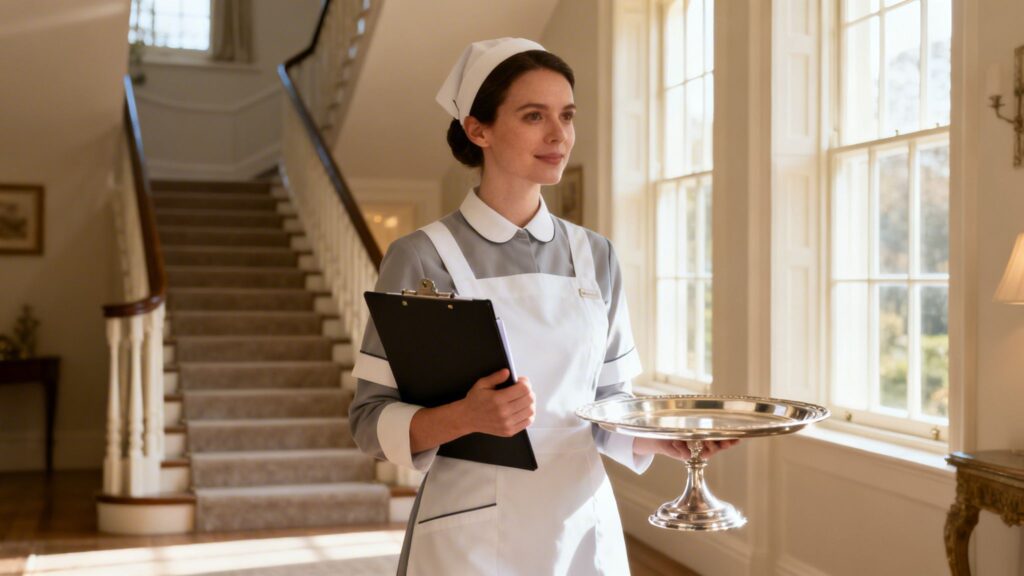
Finding the right person to manage your home is about more than just cleaning; it's about ensuring your household runs with effortless grace. For many families, hiring professional live in housekeepers is the key to achieving this. They are the guardians of standards, the protectors of valuable assets, and the secret to a home that is always ready, whether for quiet family evenings or high-profile entertaining. This guide will walk you through everything you need to know to find the perfect professional for your home.
Understanding the Modern Live-In Housekeeper
Forget any outdated notions of what a housekeeper is. Today’s professional is a highly skilled individual, integral to the complex machinery of a modern, sophisticated household. Having someone living on-site provides a level of care, flexibility, and minute attention to detail that a daily or even a team of weekly cleaners could never hope to match. This isn't just about surface-level tidying; it’s about consistently upholding an exacting standard of living.
This continuous, dedicated support is more sought-after than ever. In the UK alone, there were 43,000 housekeepers employed in 2024, a testament to the role's enduring importance. This is just one segment of a much larger professional cleaning and hygiene industry, which employs over 491,000 people and is a vital part of the national workforce. For UHNW families, the bespoke, around-the-clock support of live-in staff remains the gold standard.
Core Responsibilities and Daily Impact
While every live-in housekeeper's duties are tailored to the specific principal or family, the role is always centred on maintaining a pristine, organised, and welcoming environment. Their core responsibilities almost always include:
- Comprehensive Cleaning: Executing daily, weekly, and seasonal deep-cleaning tasks to an impeccable standard across every part of the residence.
- Laundry and Wardrobe Management: Overseeing all aspects of laundry, from everyday clothing to delicate fabrics and fine linens, including washing, pressing, and expert wardrobe organisation.
- Household Organisation: Keeping all rooms, from the kitchen and pantry to living areas and studies, perfectly tidy, well-stocked, and presentable at a moment's notice.
- Specialised Care: Expertly managing delicate surfaces, fine art, antiques, and silver, using the correct conservation-grade techniques and products to preserve their condition and value.
Beyond the daily rhythm of tidying and cleaning, a live-in housekeeper often tackles more involved maintenance tasks. For a more comprehensive look at the full scope of responsibilities, our detailed guide on what a housekeeper does offers a much deeper dive.
The real value of a great live-in housekeeper isn't just in their reaction to a mess. It's in their ability to anticipate needs, pre-empt problems, and consistently create an atmosphere that feels effortless. They elevate a family's entire quality of life.
This position demands a rare combination of technical skill, personal efficiency, and absolute discretion. A housekeeper might be tasked with preparing multiple guest suites on very short notice, managing complex household inventories, or coordinating with the wider staff to ensure the home runs like clockwork. They also handle seasonal duties, often using practical guides like these 5 Top Tips For Spring Cleaning Your Home Appliances to keep every asset in perfect working order.
Ultimately, a world-class live-in housekeeper provides a deeply personalised level of care that truly makes a house feel like a perfectly managed, welcoming home.
Defining Your Household's Specific Needs
Finding the right professional starts with a simple but crucial step: clearly defining what your family actually needs. Before you can write a compelling job description, you must first look past the general idea of ‘housekeeping’ and pinpoint the specific duties that are truly essential to the smooth running of your home. Get this right, and you're building the foundation for a successful and long-lasting placement.
Think of it like commissioning a bespoke piece of furniture. You wouldn't just ask for 'a table'; you'd specify the wood, the dimensions, the finish, and its purpose. The same applies here. What does "a high standard of cleanliness" look like in your home? Does it mean daily polishing of silver? Ensuring guest suites are perpetually ready for unexpected arrivals? Or perhaps it involves managing a complex smart-home system? Getting granular is key.
From Core Duties to Specialised Skills
Every elite home has its own unique rhythm and a distinct set of demands. While meticulous cleaning and laundry management are the bedrock of the role, the needs of a UHNW residence almost always call for a higher level of expertise. It’s vital to map out these expectations right from the start.
Consider the sort of specialist skills your property requires:
- Care of Fine Furnishings: Does your home feature antiques, fine art, or delicate materials like silk, marble, or exotic woods that demand specialist cleaning techniques?
- Wardrobe Management: Is expert care for haute couture, designer handbags, or fine jewellery required, including cataloguing, careful storage, and preparation for travel?
- Technical Aptitude: Will your housekeeper be expected to operate and perhaps troubleshoot smart-home systems, advanced security, or sophisticated kitchen appliances?
- Liaison and Coordination: Does the role involve communicating with other staff, managing appointments with vendors, or overseeing contractors for minor repairs?
Thinking through these points helps you move beyond the idea of a generic ‘cleaner’ and towards defining a role for a skilled live-in housekeeper—a professional capable of protecting and maintaining your most valuable assets. This detailed approach not only attracts candidates with the right background but also prevents mismatched expectations down the line.
The diagram below shows how the housekeeper's role evolves, with core tasks forming the foundation for the elevated responsibilities found in an elite home.
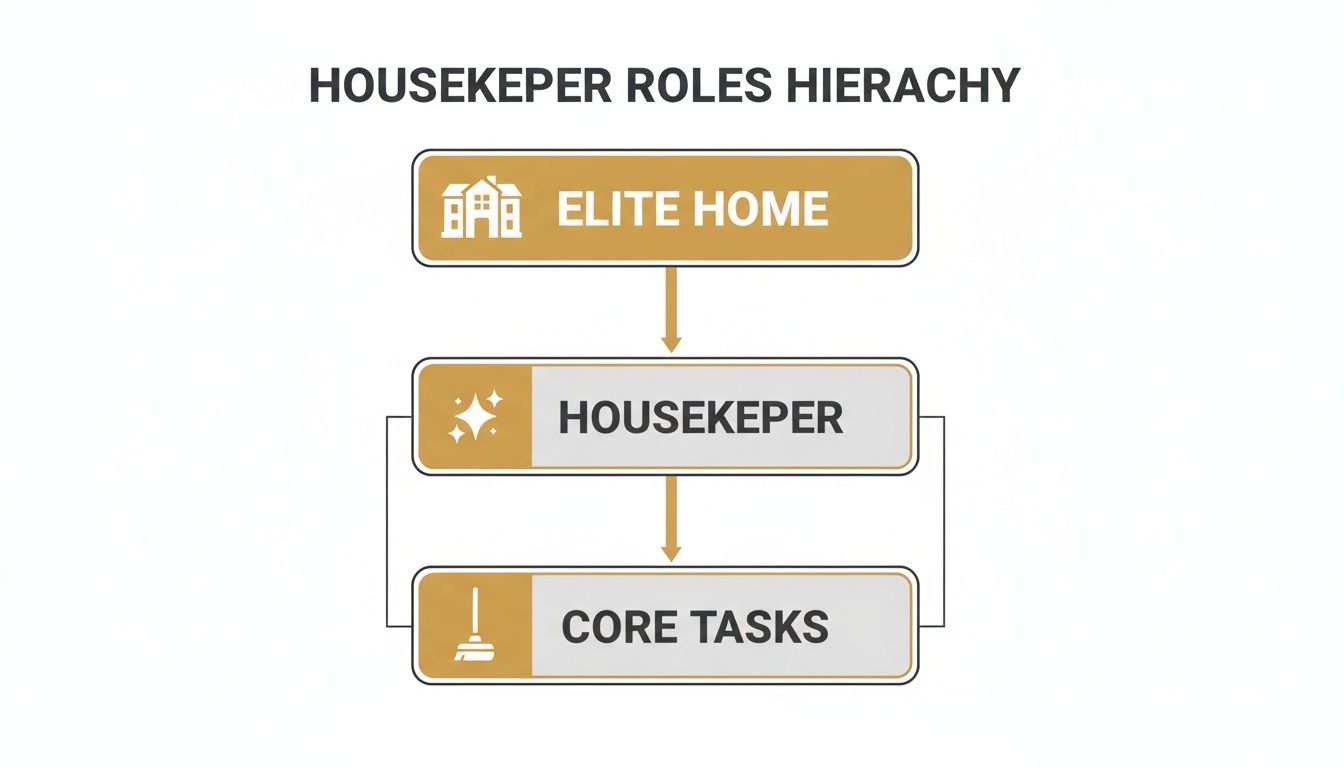
As this shows, while the position is built on fundamental cleaning skills, the context of a private residence elevates the role to a much higher standard of care and responsibility.
Understanding the Household Hierarchy
A common source of confusion—and costly hiring mistakes—is the difference between senior household roles. It's essential to understand the distinctions because they directly impact the scope of responsibility, lines of authority, and the salary you should expect to offer. A housekeeper’s role, for instance, is fundamentally different from that of a Head Housekeeper or a House Manager.
Hiring for the wrong role is one of the most frequent and expensive errors a family can make. Taking the time to understand the differences between a Housekeeper, Head Housekeeper, and a House Manager ensures you target the right talent for your actual needs.
To help you identify which position best fits your household, we've broken down the key differences in the table below.
Comparing Household Roles: Housekeeper vs. Head Housekeeper vs. House Manager
| Responsibility | Live-In Housekeeper | Head Housekeeper | House Manager |
|---|---|---|---|
| Primary Focus | Hands-on execution of all cleaning, laundry, and organisational tasks. | Managing the housekeeping team, quality control, creating staff rotas, and inventory management. | Overseeing all household operations, including budgets, high-level vendors, and total staff management. |
| Management Scope | Manages their own tasks and responsibilities directly. | Directly supervises junior housekeepers and other domestic cleaning staff. | Manages the entire domestic team, which can include chefs, nannies, butlers, and grounds staff. |
| Strategic Input | Reports issues; may be tasked with managing household supply inventories. | Implements cleaning protocols, trains new staff, and often manages the housekeeping department budget. | Responsible for long-term household planning, principal support, project and event management, and property maintenance strategy. |
| Best Suited For | Homes needing a single, dedicated professional for impeccable daily upkeep. | Larger estates or staffed homes with multiple housekeepers that require leadership and coordination. | Complex properties or multiple residences demanding complete operational and administrative oversight. |
Using this framework will give you the clarity needed to build a job description that attracts candidates with the exact level of experience and leadership your home requires.
Understanding Salaries and Compensation Packages
When you’re looking to attract and retain the very best talent for your home, putting together a competitive and thoughtful compensation package is paramount. For a high-calibre live-in housekeeper, the salary is obviously a major factor, but it’s really just the starting point. A truly compelling offer acknowledges their specific expertise, years of experience, and the unique demands of your household.

Getting this structure right from the beginning does more than just secure a candidate; it prevents future misunderstandings and shows the professional you're hiring that they are genuinely valued. It’s the foundation for a respectful and long-lasting working relationship.
UK Salary Benchmarks for Live-In Housekeepers
In the UK, salaries for live-in housekeepers are shaped by a few key variables: their depth of experience, the complexity of the duties involved, and, of course, location. As you'd expect, roles in London typically command higher salaries to reflect the city's cost of living and the high concentration of UHNW families.
Looking at the current data, we can see a clear picture. While the average salary for a general housekeeper in the UK is around £33,224 a year, the private service world operates on a different scale.
- An entry-level private housekeeper might start in the £28,000–£35,000 range.
- More experienced professionals with a proven track record can expect £35,000–£45,000.
- Senior or highly specialised housekeepers often command salaries from £45,000 to £60,000.
- For those managing large teams in significant estates, a Head Housekeeper can earn upwards of £85,000.
Think of a competitive salary as more than just a number—it's a clear signal to a candidate that their skills and dedication are recognised and valued. Benchmarking your offer against the current market is the first step in attracting the very best.
For a deeper dive into how specific duties and location affect pay, take a look at our complete guide to understanding a live-in housekeeper salary. It will help you ensure your offer is both fair and genuinely attractive.
Beyond the Basic Salary
While salary lays the groundwork, it’s the non-monetary benefits—what we call the ‘package’—that truly make an opportunity stand out. For a live-in role, these elements are absolutely critical because they have a direct impact on your housekeeper’s quality of life and sense of wellbeing.
Here are the key components of a package that will turn heads:
- Quality of Accommodation: This is non-negotiable. The living quarters you provide must be private, comfortable, and well-kept. A separate flat, annexe, or a dedicated suite of rooms is the gold standard. Small details like a private entrance, a small kitchen, and reliable Wi-Fi can make a world of difference.
- Use of a Vehicle: If the role involves running errands or driving, providing a dedicated household vehicle is standard practice. Offering personal use of a car can be a highly attractive additional perk.
- Pension Contributions: As a UK employer, you’re legally required to enrol eligible staff in a workplace pension. Offering enhanced contributions above the statutory minimum is a powerful way to show you’re invested in their long-term security.
- Private Health Insurance: This is a premium benefit that signals a genuine commitment to your employee’s health. It’s particularly appealing to top-tier candidates who see it as a sign of a truly professional employer.
- Generous Holiday Allowance: The legal minimum holiday is 28 days (including bank holidays), but offering additional paid time off is a simple yet effective way to make your position more competitive.
In the end, the most compelling offers are those that consider the whole person, not just the employee. A thoughtfully built package that pairs a strong salary with excellent benefits will always attract and, just as importantly, retain the most dedicated and professional live-in housekeepers.
Navigating UK Employment Law for Household Staff
When you hire someone to live and work in your home, your relationship shifts from a private arrangement to a formal one. You become an employer, and with that title comes a host of legal responsibilities under UK law. Taking on live-in housekeepers is about more than a handshake agreement; it requires a formalised structure that protects both your family and your new employee.
Getting this right from the very beginning is not just good practice—it's a legal necessity. It lays the groundwork for a professional, respectful relationship built on clarity and trust, which is the secret to a happy and well-run household.
The Employment Contract Essentials
The foundation of this entire professional relationship is a well-drafted employment contract. This is a legally binding document that spells out the terms of employment in plain English, leaving no grey areas or room for misinterpretation. Think of it as the clear, agreed-upon rulebook for the role.
While we always recommend seeking legal advice or working with a specialist agency like ours to create this document, there are several non-negotiable components it must contain.
A robust UK employment contract for household staff should always cover:
- Job Description: A detailed outline of all duties and expectations.
- Hours of Work: Clearly stated working hours, days off, and break policies, all in line with the Working Time Regulations.
- Salary and Payment: The gross salary, how often it will be paid, and the procedure for handling any overtime.
- Holiday Entitlement: The paid holiday allowance, which must meet the UK statutory minimum of 5.6 weeks per year.
- Notice Periods: The length of notice either party must give to end the employment.
Understanding Tax and Pensions
As a UK employer, you are legally required to manage your employee’s income tax and National Insurance contributions through the Pay As You Earn (PAYE) system. This involves registering as an employer with HMRC, calculating the correct deductions from your housekeeper's gross salary, and paying these sums directly to HMRC on their behalf.
Handling PAYE, National Insurance, and pension auto-enrolment correctly is a non-negotiable legal requirement for any UK household employer. Failure to comply can lead to significant penalties and legal complications.
On top of this, you will almost certainly need to enrol your housekeeper into a workplace pension scheme under the government's auto-enrolment rules. This means setting up a pension and making employer contributions alongside those made by your employee. These financial duties are a fundamental part of being a fair and lawful employer.
The Staff Accommodation Offset
One of the unique financial aspects of hiring live-in housekeepers is the accommodation you provide. Under UK law, this has a specific impact on how the National Minimum Wage (NMW) is calculated. As an employer, you can count the value of this accommodation towards their total pay, but only up to a specific weekly limit.
This is called the Staff Accommodation Offset. The government sets a specific daily rate for this, and it’s the only benefit-in-kind that can legally be factored into an employee's wage for NMW purposes. It is absolutely crucial to apply this rule correctly to remain compliant with wage laws. Getting it wrong can easily lead to underpayment claims, so getting professional advice here is a very wise move.
The complexities of employment contracts often extend to confidentiality, which is paramount in a private home. To better understand this, check out our guide on private staff non-disclosure agreements for UHNW families for more detailed insights.
Trying to manage this legal landscape on your own can feel overwhelming. This is precisely why so many families opt to work with a specialist agency. An agency ensures every contract is legally sound, all tax and pension obligations are handled correctly, and every detail is managed with precision from day one. This expert oversight provides invaluable peace of mind, protecting your interests while ensuring your housekeeper is treated fairly and lawfully.
Integrating Your New Housekeeper into Your Home
The first few weeks with a new live-in housekeeper are absolutely pivotal. Think of this period not just as an introduction, but as laying the groundwork for a long-term, professional relationship. Get it right, and you're not just filling a role; you're welcoming a trusted, invaluable member into your household team.

It all starts with a proper orientation. Don't fall into the trap of assuming they'll just figure out the unique rhythm of your home on their own. A detailed walkthrough and a clear plan for their first month are non-negotiable.
Establishing Clear Communication and Boundaries
In a well-run private home, clear communication is everything. From day one, make the reporting structure crystal clear. If a House Manager or Head Housekeeper is their point person, ensure the new housekeeper knows this is who they go to for their daily brief, questions, and any issues that crop up. This single step prevents crossed wires and keeps things running smoothly.
It's just as important to set boundaries around how and when to communicate. Perhaps a shared digital calendar is for appointments, a WhatsApp message is for urgent matters during work hours, and email is for everything else. Agreeing on these channels and respecting them shows professionalism and protects everyone's personal time—yours and theirs.
A successful live-in arrangement is a two-way street built on mutual respect for privacy. Clearly defining personal space and 'off-duty' hours from the start prevents misunderstandings and fosters a healthy, sustainable working environment.
Physical boundaries are just as crucial. Take the time to show them their private quarters and make it clear that this space is theirs alone. At the same time, communicate your family’s own need for privacy, pointing out any specific areas or times of day that are considered strictly private. This mutual understanding is the key to making the live-in arrangement comfortable for years to come.
The First Few Weeks: Onboarding and Reviews
Treat the first month as a structured adaptation period. Nobody gets everything perfect on the first try. Your goal should be to create a supportive environment where your new hire can learn your home’s specific standards and your family's personal preferences.
An onboarding checklist is your best friend here. It makes the process practical and less overwhelming.
- Household Manual Review: Sit down together and walk through the household manual. Cover everything from security protocols and emergency contacts to the specific way you like laundry folded or tables set.
- Vendor and System Introductions: Make introductions to the gardener, pool service, or other key contacts. If you have complex home automation or security systems, provide hands-on training. Don't just hand them an iPad and hope for the best.
- Organisational Preferences: Show, don't just tell. Open the cupboards and demonstrate precisely how you want the kitchen organised or the linen closet arranged. This eliminates guesswork and ensures things are done to your standard.
Plan for a quick, informal check-in after the first week to see how they're settling in and answer any initial questions. Then, schedule a more formal review at the one-month mark. This meeting isn't for finding fault; it's a collaborative chat to discuss what’s going well, pinpoint any challenges, and fine-tune expectations. Using this time to reinforce good work and solve problems together shows you’re invested in their success, building the trust needed for a fantastic working relationship.
Why a Specialist Agency Is Your Best Investment
In the world of elite household staffing, trying to find and hire top-tier live-in housekeepers on your own is a huge gamble. It’s an approach that not only eats up your valuable time but also exposes your home to unnecessary risks, and frankly, rarely produces the same calibre of candidate a professional search would.
Working with a specialist agency like Superstar Nannies isn’t just another expense. Think of it as a strategic investment in the security, harmony, and smooth running of your private residence.
The first thing an agency does is lift the enormous weight of the search from your shoulders. Forget sifting through dozens, or even hundreds, of varied applications. Instead, you receive a thoughtfully curated shortlist of world-class professionals, each one already vetted and pre-qualified to match your specific needs. This means you only ever meet individuals who are a genuine potential fit for your home and lifestyle.
The Value of Rigorous Vetting
The real peace of mind comes from a level of due diligence that a private individual simply can't replicate. This goes so much further than a quick look at a CV. It’s a multi-layered process designed to verify every claim, assess professional skills, and truly understand a person’s character.
Our vetting is exhaustive and includes:
- In-Depth Interviews: We hold several interviews to explore a candidate's experience, probe their technical knowledge, and really test their understanding of discretion and professional boundaries.
- Enhanced DBS Checks: We manage enhanced criminal background checks, which offer the highest level of assurance for any role within a private home.
- Comprehensive Reference Verification: We personally phone previous employers for candid, detailed conversations about a candidate’s performance, reliability, and temperament. This is where you uncover the insights you’ll never find in a standard recommendation letter.
This meticulous screening is absolutely essential. The UK housekeeping sector is a huge part of the economy, with a workforce 1.47 million strong. As of early 2026, the market is incredibly active, with over 51,000 live-in housekeeper roles advertised. Finding true gems with the discretion and expertise for a luxury residence in such a crowded field is a specialist skill. You can get a feel for the current market for housekeepers on Jooble.org.
A Partner for Long-Term Success
A top agency’s job isn’t done once you’ve made a hire. We become a long-term partner, committed to making sure the placement is a success by providing the support that makes the entire relationship seamless and professional.
An agency is more than a recruiter; it’s a long-term partner in your household's success. We manage the complexities—from contracts to payroll—so you can enjoy the benefits.
This ongoing support is what truly sets an agency partnership apart. We help you draft legally sound employment contracts, making sure every detail aligns with UK employment law. We can also handle payroll, taking care of PAYE tax, National Insurance, and pension contributions, which frees you from a major administrative headache.
This complete support structure makes the agency an indispensable part of your household management team. For a closer look at how this works, you might find our definitive guide to household staffing agencies for elite residences helpful. By managing every detail with precision, we ensure your household runs beautifully from day one and for years to come.
Conclusion: Finding Your Perfect Household Partner
Hiring live in housekeepers is a significant step towards creating a seamlessly managed and truly welcoming home. It's about investing in a professional who not only maintains impeccable standards but also anticipates needs and enhances your family's quality of life. From defining your specific requirements and crafting a competitive compensation package to navigating UK employment law, a successful hire depends on a thoughtful and well-structured process. Partnering with a specialist agency removes the guesswork and risk, ensuring you connect with fully-vetted, high-calibre professionals who are the perfect fit for your home.
Ready to find the perfect professional to manage your home with grace and expertise? Superstar Nannies specialises in placing world-class, fully vetted household staff for elite residences. Contact us today to begin your confidential search.
FAQs About Live-In Housekeepers
How do live-in housekeepers differ from live-out housekeepers?
The main difference is flexibility and integration. A live-in housekeeper resides on your property, offering greater availability for households with fluid schedules. This ensures your home is always impeccably maintained. In contrast, a live-out housekeeper works set hours and leaves at the end of the day, creating a clearer boundary between work and personal time. The right choice depends on your family's lifestyle, privacy preferences, and the specific demands of your home.
What accommodation should we provide for a live-in housekeeper?
Providing high-quality, private accommodation is essential for attracting top talent. This space is their personal home and should be comfortable and separate from the family's main living areas. The standard expectation is a self-contained flat or annexe with its own entrance, or at a minimum, a private bedroom and bathroom. Including a kitchenette and reliable Wi-Fi is also highly recommended and shows you are a professional and respectful employer.
Are we responsible for a live-in housekeeper's food and bills?
Yes, it is standard practice for the employer to cover the running costs of the provided accommodation. This includes council tax, utilities like gas, electricity, and water, as well as basic food. Some families provide a weekly food allowance, while others prefer the housekeeper to add their essentials to the main household grocery order. It's crucial to discuss and agree on this arrangement upfront and include it in the employment contract.
What is the typical salary for live-in housekeepers in the UK?
Salaries for live in housekeepers in the UK vary based on experience, duties, and location, with London roles typically commanding higher rates. An entry-level private housekeeper might earn £28,000–£35,000, while experienced professionals can expect £35,000–£45,000. Highly specialised housekeepers or those in senior roles can command salaries from £45,000 to over £60,000. A comprehensive package including quality accommodation and benefits is key to attracting the best candidates.
What are the legal requirements when hiring a live-in housekeeper?
When you hire a live-in housekeeper, you become a UK employer with legal duties. This includes providing a detailed employment contract that outlines job responsibilities, working hours, and salary. You must also register with HMRC to manage their income tax and National Insurance through the PAYE system and enrol them in a workplace pension scheme. Properly handling the accommodation offset for minimum wage calculations is also a critical legal requirement.