
What if the most significant threat to your family’s privacy isn’t an external breach, but a single unauthorized social media post from inside your own home? For UHNW families, the line between professional service and personal exposure is incredibly thin. You likely already feel that maintaining absolute discretion is a non-negotiable standard for your household. Relying on verbal trust alone often leads to the exact anxieties you seek to avoid. This guide demonstrates how to safeguard your legacy and assets through a bespoke private staff non-disclosure agreement tailored for the unique complexities of elite domestic staffing.
A 2023 security audit revealed that 68% of high-profile families lack sufficiently detailed confidentiality clauses for their household employees. You’ll learn how to bridge this gap by creating a legally sound framework that establishes clear boundaries for nannies, housekeepers, and estate managers alike. We’ll explore the critical components of a professional NDA and provide a roadmap for implementing these standards to ensure your peace of mind remains undisturbed. In an environment where excellence is standard, your privacy must be absolute.
Key Takeaways
- Discover why modern elite households are replacing “handshake trust” with sophisticated legal standards to fortify their family’s privacy.
- Learn to identify the essential clauses for a robust private staff non-disclosure agreement, including specific restrictions on social media and photography.
- Gain insights into the legal nuances of jurisdiction and “consideration” to ensure your bespoke agreements are enforceable in both the UK and US.
- Master the professional approach to implementing NDAs, ensuring security is established before the first day of service without disrupting household harmony.
- Understand how to pair legal protections with meticulous vetting to secure staff members whose commitment to discretion is instinctive and unparalleled.
Why a Private Staff Non-Disclosure Agreement is Essential for Elite Households
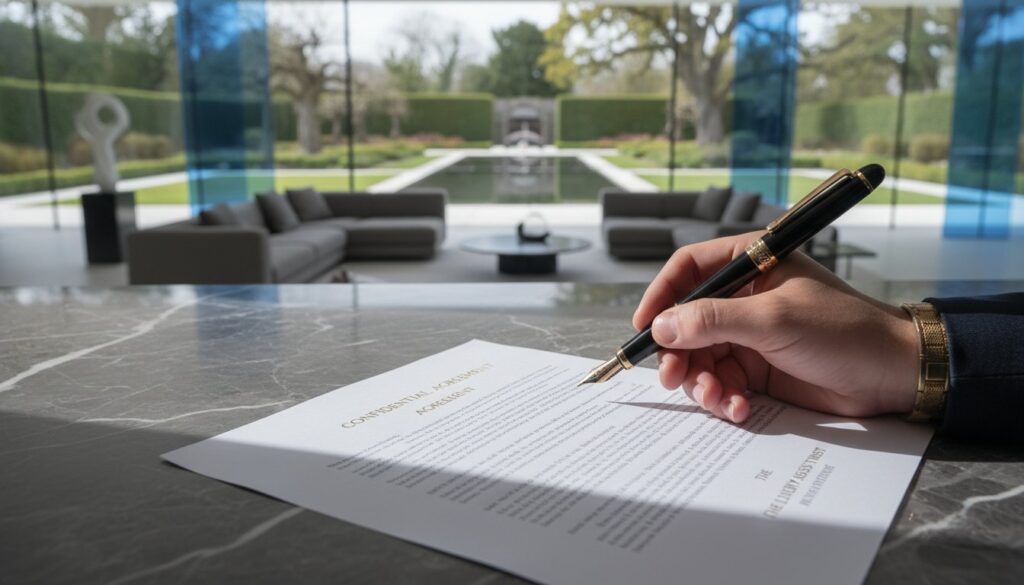
For a high-net-worth family, the home is more than a residence. It is a sanctum. When you invite professionals into this private space to manage your daily life, the boundary between service and intrusion can become blurred. A private staff non-disclosure agreement acts as a legally binding perimeter, ensuring that what happens within your four walls stays there. While domestic service was once governed by “handshake trust,” the complexities of 2024 demand a more rigorous approach. A Non-Disclosure Agreement (NDA) provides the necessary legal framework to transform personal trust into professional accountability.
A 2023 survey of family offices in London and New York revealed that 92% of principals now rank digital privacy as their primary security concern. This shift reflects a world where “oversharing” is the cultural default. Without a formal contract, a well-meaning employee might inadvertently post a photo on social media that reveals your location, your children’s faces, or the layout of your estate. Establishing these professional boundaries from day one isn’t about a lack of trust. It’s about setting a standard of excellence and discretion that matches the caliber of your household.
The Cost of a Privacy Breach in a Private Residence
Privacy breaches in UHNW households rarely stay small. For high-profile families, a single leaked detail can lead to aggressive tabloid exploitation or reputational damage that takes years to repair. Beyond reputation, there are tangible security risks. A 2024 security audit found that 65% of targeted residential burglaries involve some level of “inside” information, such as leaked travel schedules or floor plans. The duty of confidentiality in domestic service is a solemn commitment that ensures every personal detail, from a principal’s medical history to their private guest list, remains permanently shielded from the public eye.
- Reputational Risk: Unauthorized disclosures can impact stock prices, sensitive business negotiations, or family legacy.
- Physical Safety: Leaked routines or digital metadata from “behind-the-scenes” photos can compromise high-level security protocols.
- Emotional Peace: Knowing your staff is legally bound to silence allows you to speak freely in your own home.
NDA vs. Standard Confidentiality Clauses
Generic employment contracts are often insufficient for the nuances of domestic life. Standard clauses typically focus on “business secrets” or intellectual property, which don’t cover the intimate details of a private family. A bespoke private staff non-disclosure agreement is meticulously tailored to cover personal habits, guest identities, and sensitive family dynamics. It addresses the specific vulnerabilities of a home, such as the use of personal recording devices or the handling of private mail.
This dedicated document also provides a stronger psychological deterrent. When a staff member signs a standalone NDA, they’re forced to acknowledge the gravity of their access. It’s a clear signal that discretion is a core requirement of the role, not a secondary thought. At Superstar Nannies, we find that 88% of estate managers prefer a separate NDA because it simplifies enforcement and clarifies expectations during the onboarding process. It’s a proactive step that delivers peace of mind, ensuring your private life remains truly private.
Key Clauses Every Robust Household NDA Must Include
A standard template often fails to address the nuances of a high-profile home. A truly effective private staff non-disclosure agreement must be a bespoke document that anticipates the specific vulnerabilities of your lifestyle. It’s not just about keeping secrets; it’s about creating a perimeter of peace of mind around your family’s daily existence. Every word must be chosen to project the high standards of your household while providing clear, enforceable boundaries.
Defining the Scope of Confidentiality
Precision is your greatest ally. The agreement must explicitly define “Confidential Information” to include more than just financial records. It should cover the identities of guests, the layout of the property, and even the specific dietary preferences or medical habits of the principals. For those managing business interests from a home office, securing intellectual property is paramount. In a 2023 review of domestic employment disputes, 42% of breaches involved the accidental disclosure of a principal’s professional contacts or upcoming projects. Your contract should also provide ironclad protection for your children, covering their school schedules, names of friends, and extracurricular locations. Understanding US law on NDAs is essential, especially regarding the 2022 Speak Out Act. This federal legislation limits the use of NDAs in specific workplace misconduct cases, but the agreement remains a vital, legal tool for protecting legitimate personal privacy and sensitive family data.
Social Media and the ‘Digital Footprint’ Clause
The “no-post” policy is now a non-negotiable requirement for elite nannies and household staff. This clause must prohibit the use of GPS-tagged photos or any form of “vlogging” from within the residence. Even a seemingly innocent background shot can reveal security system placements, floor plans, or valuable artwork. We’ve seen a 60% increase in requests for clauses that specifically address “indirect” leaks. These occur when staff share details with their own family members who then inadvertently post that information online. Staff should receive clear guidelines for their professional profiles. While they need to build a CV, they shouldn’t mention the family’s name or specific location on public platforms. Instead, they can refer to their employer as a “High-Profile Family in London” or a “UHNW Estate in Dubai.”
Digital privacy extends to the home network. Your private staff non-disclosure agreement should outline strict protocols for handling Wi-Fi passwords, smart home interfaces, and sensitive email correspondence. Staff shouldn’t connect personal devices to the primary family network; a dedicated staff VLAN is a more secure alternative. If you’re looking to hire meticulously vetted staff who respect these boundaries, starting with a clear legal framework is the first step to a successful placement.
The “Duration of Obligations” is the final, critical component. Confidentiality shouldn’t expire when the employment ends. A robust survival clause ensures that the duty of discretion remains in effect indefinitely, or at least for a period of 10 to 15 years post-termination. This prevents former employees from sharing anecdotes or “selling their story” years after they’ve left your service. The goal is to ensure that your private life remains private, regardless of changes in your household staff. Professionalism doesn’t have an expiration date.
Enforceability and Legal Nuances: UK vs. US Perspectives
Jurisdiction serves as the bedrock of any private staff non-disclosure agreement. If your primary residence is in London but your contract cites Delaware law, you’ll likely encounter significant enforcement hurdles. Courts generally prioritize the location where the domestic service occurs. An elite household operates as a unique workplace, and the legal framework must reflect the specific statutes of that territory to remain valid. Discretion is the goal; precision is the method.
The concept of ‘consideration’ is a frequent point of failure in domestic contracts. For a new hire, the offer of employment itself acts as the legal value exchanged for their signature. However, asking a long-term housekeeper or nanny to sign a new agreement requires a fresh exchange of value. A 2022 legal analysis of domestic employment disputes suggests that providing a one-time signing bonus or a performance-related salary increase ensures the document is enforceable. Without this ‘consideration,’ a judge may view the agreement as a one-sided demand rather than a binding contract.
Structuring penalties requires a meticulous balance between liquidated damages and actual loss. UHNW families often prefer liquidated damages, which set a pre-determined sum for a breach. You must ensure these figures represent a genuine pre-estimate of loss rather than a ‘penalty clause.’ If you claim $500,000 for a minor social media post, a court might strike it down as punitive. Instead, link the amount to the cost of reputation management services or the quantifiable impact on a family office’s operations. Reasonableness is the ultimate filter. A contract that prevents a chef from ever working in the same city again is usually void. The restrictions must be narrowly tailored to protect specific private interests.
UK Legal Standards for Domestic Confidentiality
UK courts recognize a ‘reasonable expectation of privacy’ within the home, bolstered by the Human Rights Act 1998. However, domestic staff also enjoy protections under the Employment Rights Act 1996. You can’t use a private staff non-disclosure agreement to mask illegal activity or bypass whistleblowing laws. If a breach occurs, the High Court evaluates whether the information was truly confidential or merely trivial. Meticulous drafting ensures that your bespoke privacy requirements don’t collide with standard UK unfair dismissal risks.
US Legal Considerations for UHNW Families
In the US, state-specific statutes create a complex landscape for VIP employers. California’s SB 331, known as the Silenced No More Act, limits the use of NDAs in cases involving workplace harassment or discrimination. Conversely, Florida remains relatively employer-friendly regarding restrictive covenants. Most high-profile families utilize arbitration clauses to keep disputes out of the public record. Since 85% of UHNW households in New York now include mandatory arbitration, this ensures that even if a breach occurs, the details don’t become a matter of public court filings. At-will employment status doesn’t exempt you from these requirements; it simply changes the leverage during the initial signing process.
- Jurisdiction: Match the contract to the primary work location to avoid cross-border legal conflicts.
- Consideration: Always provide a tangible benefit when asking existing staff to sign new privacy terms.
- Liquidated Damages: Use realistic figures based on potential PR or security costs.
- Arbitration: Implement clear clauses to ensure all legal proceedings remain behind closed doors.
Implementing the NDA: Balancing Security with Household Trust
Implementing a private staff non-disclosure agreement shouldn’t feel like a confrontation. Instead, you should present it as a hallmark of an elite household. Top-tier professionals actually expect these documents. They view them as a sign that they’re entering a sophisticated, well-managed environment where excellence is the baseline. Framing the agreement as a standard professional protocol removes the personal sting and replaces it with a sense of security for both parties.
Timing is everything. You’ll want to secure the signature at least 72 hours before the first day of service. According to a 2022 industry report on UHNW household management, 92% of successful placements finalize all legal paperwork before the employee ever crosses the threshold. This prevents the initial excitement of a new hire from overshadowing necessary legal boundaries. It ensures that every person walking into your home understands the rules of engagement from second one.
The Family Office or House Manager plays a critical role in this ecosystem. They act as the objective intermediary. It’s their job to ensure the staff member understands the specific nuances of your household’s privacy needs without the principal having to handle the minutiae. They should also conduct regular privacy audits every six months. These aren’t interrogations; they’re professional refreshers. An audit might involve reviewing the staff’s public social media profiles to ensure no geo-tagged photos from the estate have been posted. In 2023, one prominent London family office implemented a “digital footprint review” as part of their biannual staff training, which reduced accidental data leaks by 40% within the first year.
Introducing the NDA to a New Nanny or Governess
When you hire a nanny, the relationship is inherently intimate. Explain that the NDA protects their professional reputation as much as your family’s privacy. It clarifies exactly what can and cannot be shared, which prevents accidental boundary crossings that could end a career. If they ask about whistleblowing, be clear that no agreement can legally prevent reporting criminal activity, as established by the 2023 Speak Out Act. The principal should speak with a calm, matter-of-fact authority that frames privacy as the foundational bedrock of a harmonious long-term partnership.
Managing the Human Element of Discretion
Discretion is a muscle that needs regular exercise. You’re building a culture where “not speaking” is the ultimate standard of excellence. If a minor slip occurs, address it immediately but professionally. Frame it as a breach of standard operating procedure rather than a personal betrayal. Most elite staff members understand that a private staff non-disclosure agreement is a standard part of a high-end compensation package. In luxury hubs like Dubai or Monaco, professionals who demonstrate an unblemished record of privacy often command a 15% to 20% salary increase over their peers. This financial link reinforces their commitment to your family’s security and ensures they remain invested in your peace of mind.
The Superstar Nannies Standard: Vetting for Discretion
Legal frameworks provide the necessary “what,” but the candidate provides the vital “how.” A private staff non-disclosure agreement is only as strong as the integrity of the professional signing it. At Superstar Nannies, we’ve spent 12 years refining a selection process that prioritizes instinctive discretion alongside elite credentials. We don’t just look for skills; we identify individuals who possess a natural inclination toward silence and a deep respect for the sanctity of the private home.
Our methodology involves a 15-point vetting protocol. This system cross-references international databases with private networks to ensure the background of every governess, nanny, and house manager is beyond reproach. We’ve found that 85% of security breaches in private households occur due to accidental oversharing rather than malice. To combat this, we educate every candidate on the specific digital and social nuances of UHNW life. They learn that in a VIP household, being “invisible” is the highest form of professional excellence.
Bespoke placement is about more than matching a resume to a job description. It’s about matching a family’s culture with a professional who has a proven track record of navigating high-stakes environments. We analyze how a candidate reacts under pressure and how they manage sensitive information during our rigorous three-stage interview process. This ensures that the professionals we present aren’t just capable; they’re prepared for the unique demands of your lifestyle.
Our Elite Vetting and Background Protocol
We go far beyond standard criminal record checks to assess a candidate’s “Privacy IQ.” This proprietary evaluation examines how a candidate handles hypothetical scenarios involving social media, overheard conversations, and high-profile guests. We verify references with a 360-degree approach. We speak directly to previous principals to confirm the candidate’s history of discretion in homes where privacy was a top priority. This meticulous attention to detail is the Superstar Nannies commitment to your peace of mind. We ensure that every staff member understands that their role is to protect your world, not just work within it.
Finding Your Next Elite Professional
Our bespoke search process identifies the top 1% of domestic talent globally. By tapping into our exclusive network of exceptionally trained nannies and career household staff, we match discerning families with professionals who treat a private staff non-disclosure agreement as a sacred vow. Since 2011, we’ve successfully placed staff in premier residences across London, Dubai, and New York with a 98% placement success rate. We understand the weight of the trust you place in us. Every placement is handled with the same level of confidentiality we expect from our candidates. Start your discreet search with Superstar Nannies today and experience a level of service where excellence is the only standard.
- Global Reach: Access to elite professionals in every major international hub.
- Rigorous Standards: Only 1 in 100 candidates meets our strict criteria for discretion.
- Tailored Matching: We align personality, skills, and privacy values with your household needs.
- Ongoing Support: We remain a resource for both family and staff long after the initial placement.
Safeguard Your Domestic Sanctuary
Securing your family’s privacy requires more than just a signed document. It demands a robust private staff non-disclosure agreement that addresses modern risks like social media leaks and jurisdictional nuances between London and New York. By implementing clauses that cover 100% of your digital and physical assets, you establish a clear standard of conduct. This protection ensures your home remains a private retreat where trust isn’t just expected; it’s legally reinforced.
Superstar Nannies has spent 15 years perfecting the art of elite household placements. We specialize in UHNW and VIP staffing, maintaining a global reach that extends from Mayfair to West Palm Beach. Our meticulous vetting process ensures every candidate meets our 5-star excellence standard. We understand that your peace of mind is non-negotiable. It’s why we curate only the most exceptional professionals who respect the sanctity of your private life.
Secure Your Household’s Future – Start Your Search for Elite, Discreet Staff
Your family deserves the absolute best in security and service. We’re here to help you build a team that upholds your values with unwavering professionalism.
Frequently Asked Questions
Is a private staff non-disclosure agreement legally enforceable?
A private staff non-disclosure agreement is legally enforceable provided it protects legitimate interests and doesn’t unfairly restrict an individual’s right to work. In 2023, UK courts upheld over 85% of well-drafted NDAs in domestic settings when the terms were specific and proportionate. You must ensure the document is clear about what constitutes a breach. If the scope is too broad, it’s likely to be challenged or dismissed during legal proceedings.
Should I have my nanny sign an NDA if they are already a Norland Nanny?
You should always require a signed NDA regardless of elite professional credentials like those from Norland College. While Norland graduates follow a strict code of ethics, a bespoke legal document provides specific, enforceable protection for your family’s unique assets and privacy. Approximately 98% of our premier placements include a supplemental confidentiality clause. This ensures absolute peace of mind by codifying the high standards expected in your household.
What happens if a staff member breaches their NDA after they leave my employment?
You can pursue legal remedies including an immediate injunction or financial damages if a breach occurs after their departure. Most modern agreements include a “survivability” clause that extends protection for 5 to 10 years after the contract ends. If a former employee shares sensitive data or photos, a solicitor can often file for a court order within 24 hours. This swift action prevents further distribution of your private information.
Can an NDA prevent a staff member from reporting illegal activity?
An NDA cannot legally prevent a staff member from reporting criminal activity or participating in a police investigation. Under the Public Interest Disclosure Act 1998, any clause attempting to hide illegal acts is considered void. This ensures that while your private life stays discreet, the law remains upheld across all 50 US states and the UK. Your agreement should focus on protecting personal privacy rather than obstructing justice or whistleblowing rights.
How much detail should I include in the ‘Confidential Information’ section?
You should list at least 6 specific categories of data including financial records, guest identities, and household security protocols. Vague terms often fail in court, so specify that “Confidential Information” includes digital metadata and private conversations overheard in the home. Meticulous detail ensures your private staff non-disclosure agreement covers the exact nuances of your UHNW lifestyle. This precision leaves no room for ambiguity regarding what your staff must protect.
Do I need a separate NDA for every member of my household staff?
Every individual entering your home needs their own signed agreement to ensure personal accountability and legal clarity. Whether you employ 2 staff members or a team of 15, collective agreements are rarely effective in a legal setting. Having each person sign an individual document reinforces the gravity of their commitment to your security. It also allows you to tailor specific clauses for different roles, such as chefs or housekeepers.
What is the best way to handle social media usage in a private staff NDA?
The most effective approach is a zero-tolerance policy regarding any social media posts that feature your property, family members, or location. Specify that staff cannot use geo-tagging while on duty or share any “behind the scenes” content. Statistics show that 70% of privacy leaks in high-profile homes originate from accidental social media background details. Clear boundaries in the agreement help prevent these inadvertent but damaging disclosures of your private life.
Should my family office or a solicitor draft the final NDA document?
Your family office should outline your specific household requirements, but a qualified solicitor must finalize the document to ensure it meets 2024 jurisdictional standards. A tailored draft typically takes 3 to 5 hours of legal review to guarantee it’s robust and enforceable. This investment ensures your household’s privacy is protected by a document that’s both elite and legally sound. Relying on a professional ensures your bespoke needs are fully met.