


Being a travel nanny isn’t just a job; it’s a complete lifestyle. I’ve been in this industry for years, and I can tell you it’s for the childcare professional who craves adventure and thrives on change. You’re swapping the predictable rhythm of a 9-to-5 for a life where your office could be anywhere from a ski chalet in the Alps to a superyacht in the Mediterranean.
But let me be clear: this career is about so much more than just looking after children. It’s about being their rock of stability, their sense of home, no matter which city you wake up in.
So, You Want to Be a Travel Nanny?
Imagine this for a moment. Instead of the usual morning routine, you’re waking up in a sun-drenched villa on the Italian coast. Your main task for the day isn’t just supervising playtime; it’s helping a five-year-old get excited about ancient Roman ruins or practising French phrases with a seven-year-old at a bustling local market.
That’s the reality of a travel nanny. I’ve seen it time and again; the role calls for a unique mix of high-level childcare skills, an adventurous spirit, and the ability to stay cool and calm when travel plans inevitably go sideways. You’re the constant, reassuring presence in a child’s life when everything else around them is new and unfamiliar.
Why Are Travel Nannies in Such High Demand?
More and more families are looking for nannies who can pack a bag at a moment’s notice. From my perspective, this isn’t just a fleeting trend; it’s a reflection of how modern family life is changing.
- Global Careers: Many parents I work with are in fields like international business, professional sports, or entertainment, which means frequent and often lengthy trips abroad. They need their trusted childcare to come with them.
- The Rise of Remote Work: Families are no longer tied to a single location. With the freedom to work from anywhere, many are choosing to spend months at a time in different countries.
- A Need for Consistency: Even on a two-week family holiday, parents want their children’s routines to remain as stable as possible. A travel nanny makes that happen, ensuring naps, meals, and bedtime feel familiar, even in a foreign country.
This shift has a direct impact on employment contracts. Here in the UK, it’s now standard for agencies like mine to include travel clauses in nanny contracts right from the start. These aren’t just an afterthought; they’re detailed agreements covering everything from travel allowances and insurance to how working hours are managed across different time zones, all while complying with UK employment law.
Specialist insurance is a must, and you can learn more about the specifics of taking a nanny on holiday to see how contracts are built to protect everyone involved.
A travel nanny is part caregiver, part travel agent, and part cultural interpreter. Their real job is to make the world feel safe and exciting for children, creating a sense of home wherever they land.
Ultimately, choosing this career path means you’re signing up for a role that will challenge you in new ways every day. But trust me, the rewards—both personal and professional—are truly like no other.
What Does a Travel Nanny Actually Do?
Think of a travel nanny role as being a childcare expert, a logistics wizard, and a calming presence all rolled into one. It’s a world away from a standard 9-to-5 nanny job. Your backdrop isn’t a single family home; it’s a constantly changing scene of airports, hotels, and new cities.
One day you might be creating a fun, educational game to keep children occupied on a 10-hour flight. The next, you’re helping them adjust to a new time zone or making a temporary hotel room feel like a safe, familiar haven. You’re not just watching the children; you’re managing their entire world while on the move.
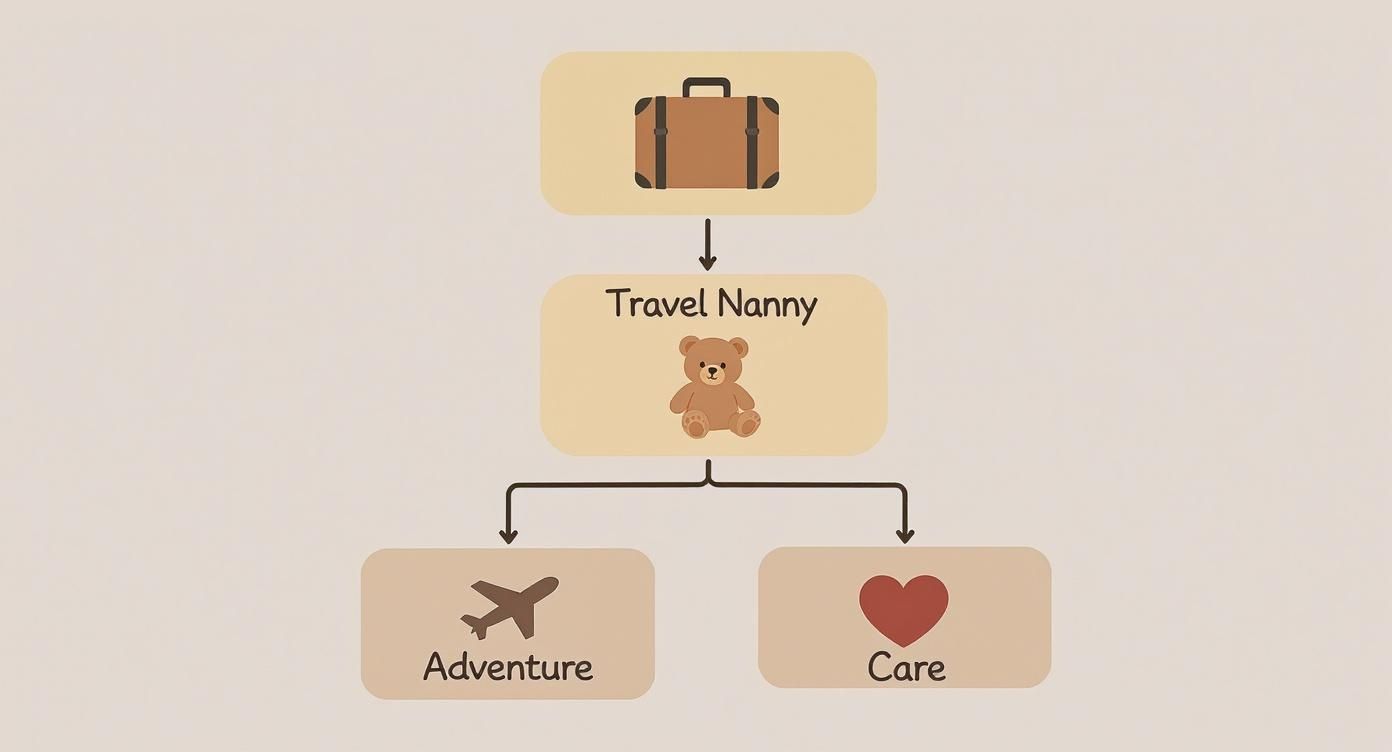
It’s this unique blend of professional care, adventurous spirit, and practical skill that truly defines the role.
Short-Term Gigs vs. Long-Term Placements
The contracts themselves vary wildly, and it’s crucial to know what you’re signing up for. They generally fall into a few key categories, each with a completely different feel.
Short-term contracts are brilliant for nannies who thrive on variety. These are often tied to a specific trip, like joining a family for their three-week summer holiday in the Maldives or a month-long ski season in the Alps. You get a taste of the travel lifestyle without the year-round commitment.
Then you have long-term international placements. This is a much bigger step. You might relocate with a family for a year or more, providing a stable, reassuring presence as they navigate a new life abroad. We see this a lot with families moving for business to places like the Middle East, where there’s a high demand for experienced nannies for positions in Dubai. It’s less about the holiday and more about becoming an integral part of the children’s lives during a huge transition.
“A great travel nanny doesn’t just supervise children on holiday; they curate experiences. They are the calm in the travel chaos, the familiar face in a foreign place, and the architect of happy childhood memories made across the globe.”
Live-In Life or a Rota Routine?
The day-to-day structure of the job is just as important as the contract length. The two most common setups you’ll come across are live-in and rota schedules.
With a live-in role, you live with the family, either in their home or in accommodation they provide nearby. This is an immersive experience. You become deeply integrated into the family’s life, which can be incredibly rewarding. Of course, it also means that professional boundaries and clear communication are absolutely essential, as your work and personal life are closely connected.
A rota (or rotational) schedule is the standard in many high-net-worth households that need round-the-clock childcare. You’ll typically work in a team of two or more nannies on a set shift pattern, like two weeks on, two weeks off. During your “on” weeks, the job is intense and all-consuming. But then you get a solid block of time completely to yourself to go home, travel, or just recharge.
To make sense of these options, the table below breaks down the key differences between the contract types you’ll encounter.
Comparing Travel Nanny Contract Types
| Contract Type | Typical Duration | Living Arrangement | Common Scenarios |
|---|---|---|---|
| Short-Term | 2 weeks to 3 months | Live-in with the family during travel | Family holidays, summer breaks, special events, or covering for a permanent nanny. |
| Long-Term | 6 months to 2+ years | Typically live-in, either in the home or separate provided accommodation | Families relocating internationally for work, or those with multiple homes who travel frequently. |
| Live-In | Varies (short or long-term) | Resides with the family | Provides consistent, daily care and becomes a core part of the household. Requires strong boundaries. |
| Rota (Rotation) | Usually long-term (1+ year) | Live-in during “on” shifts; live-out during “off” time | UHNW/VIP households needing 24/7 coverage. Nannies work intense shifts (e.g., 2 weeks on/2 weeks off). |
Ultimately, there’s no single “best” option. The right fit comes down to your personality, your lifestyle, and what you want to achieve in your career. Are you looking for a short-term adventure or to build a deep, lasting bond with a family over several years? Answering that question is the first step to finding your place in the exciting world of travel nannying.
Building the Skills for a Successful Nanny Career
Landing a top-tier travel nanny position takes more than just a love for children and a well-used passport. The elite agencies and high-profile families I work with are looking for a very specific blend of formal qualifications and deeply ingrained personal qualities. It’s all about building a foundation of trust that proves you’re not just capable, but truly exceptional.
Think of it like building a house. Your formal certificates are the concrete foundation—they’re non-negotiable, and they’re the first thing anyone checks for safety and stability. Without them, nothing else you build on top will be secure.

Laying the Groundwork with Essential Qualifications
Before you even dream of packing your suitcase, there are a few key credentials every professional nanny must have. These are the absolute basics, the bedrock of your career that demonstrates a serious commitment to child safety. Frankly, an agency won’t even look at a CV without them.
First and foremost is a valid paediatric first aid and CPR certification. This training gives you the confidence to respond calmly and correctly in an emergency, whether it’s a minor scrape on a playground in Paris or a more serious situation. It’s non-negotiable.
Equally important, especially in the UK, is an Enhanced DBS (Disclosure and Barring Service) check. This is a comprehensive background check that gives families peace of mind. For anyone just starting out, our guide on how to become a nanny walks you through securing these initial qualifications step-by-step.
While certificates get your foot in the door, it’s your character and soft skills that will truly open up the world. These are the qualities that allow you to thrive, not just survive, in the dynamic environment of a travelling family.
Developing the Soft Skills That Define an Elite Nanny
Once your foundational qualifications are in place, the real work begins. The ‘soft skills’ are what separate a good nanny from a truly great one. These aren’t things you can learn in a weekend course; they’re developed over time, through real-world experience and a genuine passion for the role.
I once placed a nanny named Sarah who had all the right paperwork. She quickly realised her real value was in her ability to adapt on the fly. On a trip to Tokyo, the family’s luggage was delayed, which meant no favourite toys or comfort items for the children.
Instead of letting stress take over, Sarah turned it into an adventure. She invented games using items from the hotel room and taught the children simple Japanese greetings she’d picked up, transforming a difficult situation into a memorable cultural experience. That’s adaptability in action.
Core Attributes of a Top-Tier Travel Nanny
Sarah’s story perfectly illustrates the intangible skills that make a candidate stand out. Here are the three most important ones I tell every nanny to cultivate:
- Cultural Sensitivity: This is more than just knowing basic etiquette. It means having a genuine curiosity and respect for different cultures and being able to model that open-mindedness for the children in your care.
- Unwavering Discretion: High-profile families value their privacy above almost anything else. Understanding the importance of confidentiality isn’t just expected—it’s paramount. You are a trusted professional, not a family friend who can share stories.
- Proactive Problem-Solving: A world-class travel nanny anticipates needs before they even arise. This is the person who packs a “just-in-case” bag for flight delays, researches child-friendly activities at the destination weeks in advance, and already has a plan for managing jet lag.
Building these skills takes time and conscious effort. Actively seek out experiences that push you out of your comfort zone, like working with families from different backgrounds or taking on jobs with complex logistics. Every challenge is a stepping stone, strategically building a portfolio that proves you have the resilience, intelligence, and grace required for the world’s most demanding travel nanny positions.
Getting to Grips with Salaries and Benefits
Let’s talk about money. It can be a tricky subject, but for a professional role like a travel nanny, getting it right from the start is crucial for a happy, long-lasting working relationship. The pay for a travel nanny isn’t just a number; it reflects the huge responsibility, round-the-clock flexibility, and unique skills you bring to the table. Think of it less as a simple salary and more as a complete package that supports you while you’re busy supporting a family on their travels.
Knowing what you’re worth helps you negotiate confidently, and it allows families to budget properly. It’s no secret that travel nannies earn significantly more than their standard counterparts, and for very good reason. You’re often on call 24/7, need to adapt to new environments at a moment’s notice, and handle tricky travel logistics, all while providing exceptional childcare.
Benchmarking Your Salary Expectations
So, what can you actually expect to make? Several things influence the final figure. Your experience is a big one, as are special qualifications like a teaching degree, fluency in another language, or experience with special needs. The number of children and the complexity of the trip also play a huge part. A multi-stop international tour is a very different beast to a two-week beach holiday and will be paid accordingly.
In the UK, the demand for this specialised skill set is reflected in the pay scales. We see a high average salary for travel nannies compared to more conventional roles.
A breakdown of typical net salary expectations for travel nanny positions in the UK, based on experience level and contract type.
UK Travel Nanny Salary Benchmarks
| Experience Level | Live-Out Hourly Net (London) | Live-In Weekly Net | Average Annual Gross (UK) |
|---|---|---|---|
| Entry-Level | £16 – £18 | £700 – £850 | £50,000 – £60,000 |
| Mid-Level | £18 – £22 | £850 – £1,100 | £60,000 – £75,000 |
| Highly Experienced | £22+ | £1,100+ | £75,000+ |
These figures show that while the pay is competitive, there’s a clear market rate for top-tier professionals. It’s about matching world-class skills with a world-class salary.
A fair compensation package isn’t just about the salary. It’s a mutual agreement that acknowledges the nanny’s professional expertise and the family’s need for reliable, world-class care, no matter the time zone.
What’s in the Full Benefits Package?
Beyond your payslip, a solid benefits package is standard for any travel nanny position. This is where the true value of the role really shines, as it covers most of your major living and travel costs. Your salary is what you earn, but the benefits are what make the whole lifestyle work.
A typical package will almost always include:
- Accommodation: When you’re on the road, you’ll get your own private, comfortable space. This usually means a separate hotel room or your own room in a villa or residence.
- All Travel Expenses: This covers everything from flights and train tickets to taxis. You should never be out of pocket for any job-related travel, including visas or work permits.
- Daily Per Diem or Meals: Families will either cover all your meals or provide a daily allowance (a per diem) for your food costs while you’re away.
- Paid Time Off: Even when you’re travelling, you’re entitled to your agreed-upon days off to rest and see the sights for yourself. This should always be clearly set out in your contract.
Don’t Forget Comprehensive Health Insurance
One of the most critical parts of any benefits package, especially for international work, is health insurance. Your standard NHS cover won’t help you abroad, so a robust private health plan is non-negotiable. It’s the family’s responsibility to arrange and pay for a policy that covers you everywhere you go.
When you’re looking at international roles, it’s worth getting familiar with the different types of cover available; there are specific guides on health insurance for expats that can be really helpful. Having the right protection in place for any medical emergencies gives both you and the family total peace of mind.
Mastering the Application and Interview Process
Landing a top-tier travel nanny role is a process that starts long before your first conversation with a family. It all begins with your CV. This document needs to do more than just list your qualifications; it has to tell a compelling story about your adaptability, professionalism, and unshakeable competence. For both the elite agencies and the families they work with, this is your first—and most critical—chance to make a real impression.
Think of your CV as your professional passport. When it comes to travel nanny positions, a standard, one-size-fits-all template just won’t cut it. You have to shine a spotlight on the experiences that prove you can thrive under the unique pressures of working on the move, often across different cultures and time zones. Before you even think about applying, it’s worth taking the time to craft a professional resume that gets you hired, making sure to angle it specifically for this specialised role.

Crafting a Standout Travel Nanny CV
Your CV needs to scream “travel-ready” from the very first line. While general childcare experience is the foundation, it’s the travel-specific skills that will make you stand out.
- Highlight Adaptability: Go beyond just saying you’re adaptable. Give concrete examples. Did you manage a child’s jet lag during a long-haul move? Plan engaging activities in a city you’d never visited before? Those are the details that matter.
- Emphasise Language Skills: If you speak another language, even conversationally, make sure it’s front and centre. This is a massive plus for international families.
- Showcase Logistical Prowess: Have you ever handled travel planning, packed perfectly for a week-long trip with a toddler, or navigated a chaotic airport with ease? This shows you’re not just a carer, but a practical, organised travel partner.
Your CV should paint a picture of a calm, capable professional who can create a stable, nurturing environment for a child, no matter where in the world they are. That’s the candidate who gets the interview.
Navigating the Multi-Stage Interview Process
Once your CV piques an agency’s interest, you’ll move into an interview process that’s more of a marathon than a sprint. It’s carefully designed to assess not just your childcare skills but your personality, professionalism, and overall fit. It usually unfolds in a few distinct stages.
- Initial Agency Screening: This is typically a video call with a placement consultant. They’re checking off the basics—your qualifications, how you present yourself, and your communication style. Be ready to talk through your CV and articulate exactly why you want a travel-focused role.
- Family Introduction (Video Call): If the agency gives you the green light, you’ll be introduced to the family, usually over Zoom. This stage is all about chemistry. They want to get a feel for your personality and see if you click.
- The In-Person Trial: For high-calibre roles, a final in-person meeting or even a short, paid trial period is standard. This is the real test—a chance for everyone to see how you connect with the children and integrate into the household dynamic.
Succeeding in UHNW Household Interviews
Interviewing with Ultra-High-Net-Worth (UHNW) families comes with its own set of unwritten rules. Your ability to demonstrate absolute discretion and understand professional boundaries is every bit as important as your childcare experience.
Confidentiality is everything. Don’t be surprised if you’re asked to sign a Non-Disclosure Agreement (NDA) before you even meet the family. This is standard procedure and shows you respect their need for privacy. When you speak, never, ever share personal details about previous employers.
When asked about challenging situations from past roles, always frame your answers positively. Focus on what you did to solve the problem, not on the drama itself. Families are looking for a resilient, positive person to bring into their home. At the end of the day, they are hiring for trust, and every single answer you give should be building that foundation.
Crafting a Secure and Successful Nanny Placement
A great interview is just the starting point. The real foundation of a successful travel nanny placement is built on crystal-clear expectations and mutual respect, and that’s where a detailed employment contract comes in. Honestly, it’s the single most important travel document you’ll have. It’s the roadmap that makes sure you and the family are on the same page, protecting everyone involved.
Don’t think of the contract as just a list of restrictive rules. See it as a framework for a healthy, professional relationship. It’s designed to tackle potential grey areas head-on, providing clear answers before they can snowball into bigger problems. This is absolutely crucial when you’re living and working in such close quarters, where the lines between personal and professional life can get blurry fast. A solid contract keeps those boundaries clear.
Key Clauses Your Contract Must Include
A travel nanny’s contract is a different beast to a standard one. It has to anticipate the unique challenges that come with working across different countries, cultures, and time zones.
Here are the absolute must-haves:
- Travel Logistics: This needs to be spelled out. Who books the flights? What’s the standard for accommodation (hint: it should always be a private bedroom and bathroom)? The contract should also state clearly how costs for visas and work permits will be handled.
- Emergency Protocols: What’s the plan if you or one of the children gets sick while you’re away? Your contract must detail the exact procedure, including information on the comprehensive health and travel insurance the family is providing. Our guide to essential insurance for nannies is a great resource for understanding the level of cover needed.
- Working Hours Abroad: Be precise about what counts as a ‘working day’ versus a ‘day off’ when travelling. For instance, a long-haul flight is work and should be paid as such. The agreement must also clearly state the overtime rate for any hours worked beyond your normal schedule.
Fostering Communication and Professional Boundaries
Beyond what’s written down, open and honest communication is the glue that holds everything together. Something as simple as scheduling a weekly check-in can make a world of difference. It creates a dedicated time to run through the schedule, raise any small concerns, and just make sure everyone feels heard and respected.
It’s also helpful to appreciate the family’s side of the equation. Hiring top-tier support, especially in a city like London, is a significant financial commitment. For 2025, we’re seeing average net hourly rates for live-out nannies hover between £16 and £20. When you add the family’s costs for National Insurance and pension contributions, the total monthly figure grows substantially. Understanding the complete financial picture helps set the stage for a professional and appreciative working relationship.
FAQs: Your Travel Nanny Questions Answered
Stepping into the world of travel nannying, whether as a family or a nanny, brings up a lot of practical questions. It’s only natural. Getting these sorted out before you even think about packing isn’t just a good idea—it’s the key to making sure the whole experience is a success for everyone.
Think of it this way: the more you clarify upfront, the less you have to worry about on the road. From what happens if someone gets ill to how you count working hours on a 12-hour flight, these conversations build the trust you’ll need when you’re miles from home.
What Happens If I Get Sick Abroad?
This is one of the most important things to iron out, and it absolutely must be in your contract. The family is responsible for arranging and paying for comprehensive travel health insurance that covers you everywhere you go. A solid contract will also lay out a clear emergency plan, so you know exactly which doctor to call and who to notify.
Having this conversation before you leave gives everyone peace of mind. When you’re feeling unwell in a new country, the last thing you want is to be figuring out logistics. A pre-agreed plan means you can just focus on getting better.
The sign of a truly professional arrangement isn’t that problems never arise—it’s that there’s a clear, agreed-upon plan for when they do. Emergency protocols are non-negotiable.
How Are Working Hours Handled on Long-Haul Flights?
Let’s be clear: travel days are work days. Your time is ‘on the clock’ from the moment you head to the airport until you arrive at your accommodation. Your contract should spell this out, and these hours are typically paid at your standard rate.
If the travel pushes you beyond your normal daily hours, that’s overtime. This is usually paid at 1.5 times your regular rate. For overnight flights, you need to agree on the specifics in writing beforehand. Will it be a flat fee for the journey, or will you be paid for every hour you’re on duty? Get it on paper.
Who Is Responsible for My Visas and Work Permits?
You need to have a valid passport, but beyond that, it’s all on the employer. The family is responsible for researching, arranging, and paying for any visas or work permits you need for the trip. This is a major legal and financial responsibility that sits firmly with them.
This process needs to start long before your departure date to sidestep any stressful, last-minute hiccups. Working on a tourist visa is illegal and puts both you and the family at serious risk. Getting the right paperwork is about protecting everyone.
A few other common questions we see pop up are:
- Days Off: How will your days off be scheduled during the trip? And are you free to go off and explore on your own?
- Privacy: When you’re living in each other’s pockets, what are the boundaries for personal time and space?
- Expenses: How will you handle costs? Will you be given a daily allowance (a per diem) or a credit card for the children’s expenses?
Working through these questions together is the final piece of the puzzle. It ensures the placement is built on a foundation of respect and that you’re both ready for a fantastic trip.
Finding the right match for your family’s unique travel needs requires expertise and a trusted network. At Superstar Nannies, we specialise in placing elite, vetted travel nannies with discerning families worldwide, ensuring every detail is managed with professionalism and care. Discover how we can support your next journey at https://superstarnannies.com.