


When I first started as a nanny, the world of insurance felt like a completely different language. Public liability, employer’s liability… it all sounded so corporate and complicated. But over the years, I’ve come to see it for what it really is: a professional safety net. It’s the one thing you hope you’ll never need, but the one thing that lets you do your job with complete confidence. It’s there to protect you professionally if a claim is made against you for an accidental injury or damage to property while you’re on the job. Think of it as a crucial hug for your career, giving both you and the families you work with total peace of mind.
Why Nanny Insurance Is Your Professional Safety Net
Picture this, because I’ve seen versions of it happen: you’re at the park with the children, and in a split second, one of them accidentally breaks an expensive piece of play equipment. It’s a genuine accident, but it’s a stark reminder of how unpredictable our work can be. As a nanny, families place an incredible amount of trust in you, and building a secure, professional relationship is the cornerstone of a successful career. This is precisely where having the right insurance becomes your best friend.
Nanny insurance isn’t just another box to tick or an annoying expense. It’s a fundamental investment in your professional reputation, your financial stability, and your own well-being. It really is your professional safety net—you hope you’ll never need it, but you’d be taking a huge risk working without it.
The Foundation of Professional Care
Walking into a new role with the right insurance policy instantly signals to families that you are a serious, responsible professional. It shows them you’ve thought about the “what ifs” that come with the job and have already put measures in place to handle them. I’ve found this simple step helps build trust and sets a high standard right from day one.
A robust insurance policy is the hallmark of a professional nanny. It reassures families that you are prepared for unforeseen events, protecting both their interests and your livelihood against the financial fallout of an accident.
This kind of preparation goes hand-in-hand with other vital qualifications. For example, you wouldn’t dream of working without an up-to-date first aid certificate, and insurance acts in much the same way—it’s your financial first response. You can learn more about these critical skills in our guide to paediatric first aid training, which perfectly complements the security that insurance brings.
Protecting Yourself From the Unexpected
Accidents happen. That’s why they’re called accidents. A child could knock over a priceless family heirloom, or a simple game could accidentally lead to an injury. If you don’t have insurance, the financial burden for these incidents could land squarely on your shoulders, potentially leading to crippling debt or even legal battles. I’ve heard stories, and they’re heartbreaking.
The right policy shields you from these worst-case scenarios. It’s specifically designed to cover legal fees and compensation payouts, making sure one unfortunate moment doesn’t derail your career or your personal finances. This protection lets you get on with what you do best: providing outstanding care for the children you look after.
Understanding the Different Types of Nanny Insurance
Trying to get your head around insurance can feel like wading through treacle. It’s full of jargon and confusing small print, but for us, it’s not just a ‘nice-to-have’—it’s an absolute must. The right insurance for nannies is built around a few key types of cover, each one designed to shield you from different kinds of trouble.
Let’s break them down. I like to think of these policies as a team of bodyguards, each one watching your back in a different way to keep your career safe and sound.
This concept map shows how having the right insurance acts as a central hub, protecting you, your career, and the family you work with, giving everyone that all-important peace of mind.
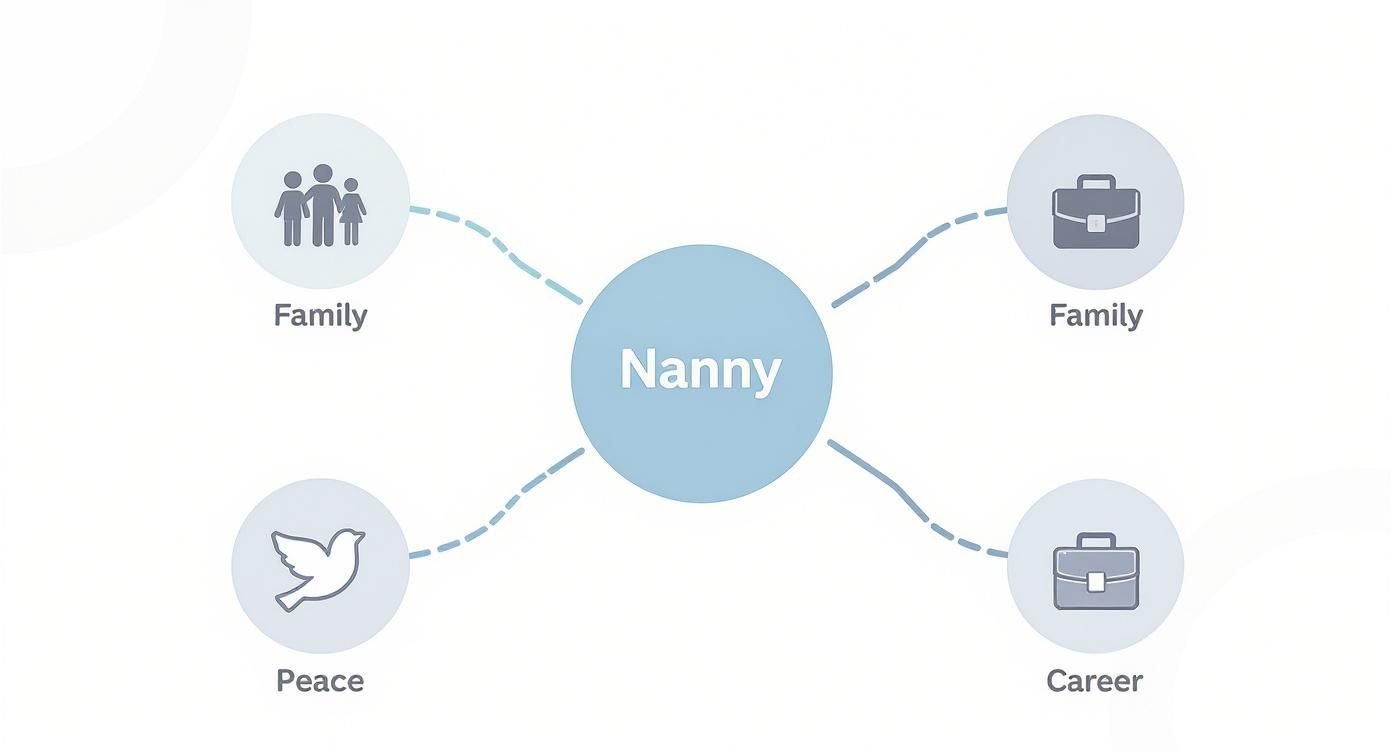
As you can see, insurance is the glue that holds everything together, connecting you to all the other vital parts of your professional life.
To make things even clearer, here’s a quick rundown of the main policies you’ll come across.
Quick Guide to Nanny Insurance Policies
This table gives you a simple, at-a-glance comparison of the key insurance types, showing who they’re for and what they cover.
| Insurance Type | Who It Protects | Common Scenario Covered | Usually Purchased By |
|---|---|---|---|
| Public Liability | The Nanny | A child in your care accidentally damages property or injures a third party. | The Nanny (if self-employed) |
| Employer’s Liability | The Family (Employer) | The nanny is injured or becomes ill due to their work and makes a claim. | The Family |
| Personal Accident | The Nanny | The nanny has an accident (on or off the job) and can’t work, providing income support. | The Nanny |
This little guide should help you tell one policy from another and understand who is responsible for what.
H3: Public Liability: Your Everyday Shield
First on the list is Public Liability Insurance. This is the bread and butter of nanny insurance and, frankly, the one you can’t do without. Think of it as your ‘oops’ cover for when accidents happen. It’s there to protect you if something you do (or a child in your care does) accidentally causes an injury to someone else or damages their property.
Picture this: you’re at a café with the kids, and one of them sends a hot chocolate flying, burning another customer. Or maybe a garden football game goes wrong, and the ball shatters a neighbour’s conservatory window. They’re honest mistakes, but the compensation claims or repair bills that follow can be huge.
Public Liability insurance is what steps in to cover those costs, including any legal fees. Without it, you’d be on the hook personally, putting your savings and career in serious jeopardy. In fact, Ofsted guidance states that registered nannies must have appropriate insurance in place at all times.
It’s a good idea to get familiar with what liability insurance for contractors entails, as this is the core of your protection.
H3: Employer’s Liability: Protecting the Family
Next up is Employer’s Liability Insurance. Now, this one is a bit different because it’s the family’s responsibility to arrange it, not yours. If you are directly employed by a family—meaning you’re on their payroll, not a self-employed contractor—then UK law says they must have this cover.
It’s essentially a legal shield for them. It protects the family if you get hurt or fall ill as a direct result of your job. For instance, if you slipped on a freshly mopped floor in their kitchen that had no warning sign and you broke your arm, this policy would cover the compensation claim you could make against them.
So, here’s the key difference: Public Liability protects you from claims made by other people. Employer’s Liability protects your employer from claims made by you.
H3: Personal Accident Cover: Your Safety Net
Lastly, let’s talk about Personal Accident Insurance. This one is all about you and your income. Unlike the other policies, this one pays out directly to you if you’re injured in an accident and can’t work because of it.
Imagine tripping on a kerb while out for a walk with the buggy and breaking your leg. I’ve had friends this has happened to, and it’s terrifying. You might be out of action for weeks. Your income would stop, but the bills certainly wouldn’t. Personal Accident cover acts as a financial cushion, helping you pay for rent, food, and other expenses while you get back on your feet.
This policy is your personal back-up plan. It ensures that an unexpected injury doesn’t turn into a financial crisis, giving you the security to focus on getting better without worrying about lost earnings.
While it isn’t always a legal requirement, it’s a smart addition to any nanny’s insurance toolkit. It provides a vital layer of personal financial security, letting you do your job with confidence.
How Much Nanny Insurance Really Costs
Let’s get straight to it: the cost. When you’re looking into insurance for nannies, the price is often the first thing that comes to mind. It’s natural to assume that proper professional cover comes with a hefty price tag, but you might be pleasantly surprised. Comprehensive protection is far more affordable than most people realise.
This small monthly outlay isn’t just another bill to pay; it’s an investment in your professional security and peace of mind. When I weigh that small cost against the potentially catastrophic financial fallout from an accident—think legal fees and compensation claims—the value becomes crystal clear. Of course, the exact cost will depend on a few things.

What Shapes Your Premium
The price you’ll pay for nanny insurance isn’t a one-size-fits-all figure. A few key elements will shape your final premium:
- Level of Cover: Policies usually come with different tiers of public liability protection, like £1 million or £2 million. As you’d expect, a higher level of cover will cost a little more.
- Additional Options: You might want to add things like personal accident cover to your policy. This would give you an income if an injury stopped you from working, and this extra security will nudge your premium up slightly.
- Your Specific Role: Sometimes, the exact nature of your duties can influence how insurers see the risk, which in turn affects the cost.
Thankfully, the UK market for nanny insurance is pretty competitive. Research from Simply Business showed that between February and April 2025, 10% of their customers paid £59.34 or less for a whole year of public liability cover. That’s just a few pounds a month!
Understanding the Excess
Another term you’ll bump into is the ‘excess’. This is simply the amount you agree to pay towards a claim before the insurance company steps in to cover the rest.
Think of the excess as your share of the risk. A higher excess can sometimes lower your monthly premium, but you need to be sure it’s an amount you could comfortably afford if you ever needed to make a claim.
For many nanny public liability policies, the excess is actually zero, meaning the insurer handles the entire cost of a valid claim from the first pound. Still, it pays to read the small print, as some policies might have an excess of up to £750. Even so, that upfront cost is a world away from facing an uninsured claim all on your own. When you consider the total price of a nanny and the incredible value we bring, the cost of insurance is a very small, but very wise, part of the picture.
Your Step-by-Step Guide to Getting Covered
Getting the right insurance for nannies can feel like a big job, but breaking it down makes it much more manageable. Think of it as a clear roadmap—follow these simple steps, and you’ll get covered with confidence, knowing you’ve made a solid choice for your career.
It’s a bit like preparing for a new role. You’d never walk in on day one without understanding the family’s needs or having your references sorted. Applying that same logic here will make all the difference.
Step 1: Figure Out What You Actually Need
Before you even start looking at policies, take a moment to think about your specific situation. Are you self-employed and mainly need public liability cover? Or do you also want the safety net of personal accident insurance to protect your income if you can’t work?
Think about your day-to-day. Do you regularly take children on outings using public transport or to bustling play centres? The kind of activities you do will help you decide what level of cover is right for you. This first step is all about building a foundation for a policy that truly fits.
Step 2: Get Your Information Ready
Once you know what you’re looking for, it’s time to get your details organised. Insurers will need some key bits of information to give you an accurate quote. This typically includes:
- Personal Details: Your name, address, and how to contact you.
- Work Information: Details about your nanny work, like whether you’re registered with Ofsted.
- Desired Cover Amount: How much public liability cover you need (e.g., £1 million or £2 million).
- Claims History: Any previous insurance claims you’ve made related to your work.
Having this information on hand will make getting quotes much faster and far less of a hassle.
“I remember feeling overwhelmed at first,” shares Sarah, a nanny with over a decade of experience. “My best advice is to treat it like a project. I made a simple list of what I needed and the information required. It turned a daunting task into a series of small, easy wins.”
Step 3: Shop Around and Compare Policies
Now for the interesting part—shopping around. Don’t just grab the first quote that comes your way. It’s worth checking out comparison websites and looking into specialist insurers who really understand the world of childcare. This is the best way to see what different providers are offering for a similar price.
When you’re comparing, look beyond the cost. Dig into the details of what each policy includes and, just as importantly, what it excludes. Does one have a lower excess? Does another offer better personal accident benefits? Sometimes, paying a slightly higher premium is absolutely worth it for significantly better cover.
Step 4: Read the Fine Print
So, you’ve found a policy that looks like a great fit. Before you sign on the dotted line, it’s time for a final check. I know it’s boring, but please, read the policy wording carefully, paying close attention to the summary of cover, any exclusions listed, and the process for making a claim. You need to be sure it matches up with what you’re expecting.
Here are a few key questions to ask yourself or the provider:
- Does this policy meet Ofsted’s requirements if I’m registered?
- What is the exact excess I would have to pay if I made a claim?
- Are there any specific activities that aren’t covered?
- How does the renewal process work, and will my premium go up?
This final review is crucial for avoiding any nasty surprises later on. It’s a key part of protecting your career, just like families do their due diligence when hiring a nanny to find the right person. Taking this extra time will give you complete peace of mind.
What Happens When You Need to Make a Claim
Nobody buys insurance hoping they’ll have to use it. It’s a bit like a first-aid kit; you have it for peace of mind, but the goal is for it to gather dust. But when an accident does happen, knowing what to do can make all the difference, turning a moment of sheer panic into a manageable, step-by-step process.
Your insurance provider is there to be your professional partner in these moments. They handle the heavy lifting so you can focus on what matters most—the children. The goal is to show you that your insurance for nannies isn’t just a piece of paper; it’s your active support system when you need it most.

Your Immediate Steps After an Incident
The first few minutes after something goes wrong are critical. Your absolute first priority is the wellbeing of the children in your care and anyone else involved. Only when you’re sure everyone is safe should you think about what comes next.
At this point, your job is to become a calm, factual reporter. It’s really important not to admit fault or say you’re liable—just stick to gathering the facts. Getting familiar with the general claims process for insurance ahead of time can be a huge help when you suddenly need to put your cover into action.
Here’s a simple checklist for the immediate aftermath:
- Safety First, Always: Tend to anyone who is hurt and make sure the area is safe.
- Gather Key Information: Get the names, contact numbers, and addresses of any witnesses or other people involved.
- Document Everything: Use your phone to take clear photos or videos of the scene or any damage. As soon as you can, write down a detailed account of exactly what happened—include the date, time, and location while it’s still fresh in your mind.
Who to Contact and What to Provide
Once you have your information, the next step is to call your insurance provider as soon as you reasonably can. Most insurers have a dedicated claims line, many of which are open 24/7.
When you ring, you’ll need to share the details you’ve collected. The claims handler will walk you through everything, asking specific questions to get your claim started. They’ll need the basics: who was involved, what went wrong, and what the immediate result was, like an injury or damaged property.
Think of the claims process as a partnership. The key is clear, honest communication. If you give your insurer all the details they ask for, you’re helping them build the strongest possible case to support you.
From this point on, your insurer takes the reins. They will get in touch with anyone else involved, deal with the legal paperwork, and work on getting things sorted. Your main job is just to cooperate and provide any extra information they might need down the line.
A Real-World Example in Action
Let’s see how this works in practice. Imagine you’re at a soft-play centre with a four-year-old. He’s having a brilliant time but gets a bit carried away and accidentally bumps into another child, who falls and chips their tooth. The parents are upset and mention they’ll be seeking money to cover the dental work.
Here’s how your insurance steps in:
- You: After making sure both children are okay and speaking to the parents, you calmly get their contact details and make a note of anyone who saw what happened. You don’t apologise or admit it was anyone’s fault.
- You: Later that day, you phone your insurer’s claims line and clearly explain the situation, giving them all the information you gathered.
- Your Insurer: They open a new claim and assign a handler to your case. That handler then contacts the other child’s family to manage the claim and asks for details of the dental bills.
- Resolution: Once the details are confirmed, your public liability insurance covers the cost of the dental treatment. The problem is solved professionally, and you haven’t had to pay out of your own pocket or deal with any stressful legal chats.
This is a perfect example of how your policy acts as a professional buffer, taking the stress out of a difficult situation and proving its worth as an essential tool for your career.
Your Top Nanny Insurance Questions, Answered
Getting into professional childcare kicks up a lot of questions. When it’s about something as critical as nanny insurance, you need clear, straightforward answers. This final section tackles the most common queries we hear from both nannies and families, cutting through the jargon to give you the practical info you need to feel confident.
Think of this as your go-to guide for tying up any loose ends. We’ll cover everything from the legal must-haves here in the UK to why a family’s home insurance just won’t cut it. Each answer is designed to be direct and genuinely useful, helping you make the right calls for your career.
Is Nanny Insurance a Legal Requirement in the UK?
This is usually the first question on everyone’s mind, and the answer comes down to your registration status. If you’re a nanny registered with Ofsted, then yes, having public liability insurance is a non-negotiable part of your registration. You must have it in place at all times, even if you’re between jobs.
For nannies who aren’t on the Ofsted register, public liability insurance isn’t a legal obligation. That said, it’s overwhelmingly seen as an industry best practice—a professional essential, really. Working without it leaves you personally on the hook for massive financial risk if an accident were to happen.
The professional standard is crystal clear: whether you’re registered or not, having public liability insurance is a fundamental part of being a responsible, modern nanny. It’s the hallmark of a professional who takes their career, and the safety of the children in their care, seriously.
Can a Family Just Add Me to Their Home Insurance Policy?
It’s a common mix-up, but a family’s standard home insurance policy won’t cover a nanny’s professional activities. While their policy is great for protecting their property and contents, it almost never extends to cover the professional liability of someone working in their home.
Think of it this way: home insurance is designed to protect the homeowner against things like theft, fire, or a guest slipping on a wet floor. It isn’t built to cover claims that come from professional childcare services. For instance, if a child in your care was injured during an outing, the family’s home insurance wouldn’t cover a claim made against you. This is precisely why having your own dedicated nanny insurance is so vital.
What Is the Difference Between a Nanny and a Childminder?
Getting this distinction right is crucial, as it directly impacts your insurance needs and legal registration. The main differences boil down to where you work and how many families you care for at once.
- A Nanny: Works with children from one or two families at any given time, usually in the children’s own home. Nannies can choose to register with Ofsted voluntarily.
- A Childminder: Looks after children from multiple families (more than two) at the same time, typically from their own home. A childminder must be registered with Ofsted.
If you care for children from more than two families at the same time, you are legally operating as a childminder and have to register accordingly. Trying to do this while calling yourself a nanny, without the proper registration, is an offence.
What Happens If I Need to Drive the Family’s Car?
Using the family’s car for work duties, like school runs or trips to the park, brings another layer of insurance into play. It is absolutely the family’s responsibility to make sure their car insurance policy covers you to drive their vehicle for business purposes.
Before you even think about getting behind the wheel, you need to confirm two things with the family:
- You are a named driver: They have to call their insurer and officially add you to their policy.
- The policy includes business use: Standard ‘social and domestic’ cover isn’t enough. The policy has to explicitly state it covers driving related to your employment.
Never just assume you’re covered. Always ask the family for written proof from their insurer confirming you are legally insured to drive their car for your job. Getting this wrong could lead to serious legal and financial trouble for everyone if there’s an accident.
Does My Insurance Cover Me If I Work for Multiple Families?
Yes, a good nanny insurance policy is built to be flexible and will cover you across different roles. As long as you are working within the legal definition of a nanny—caring for children from no more than two families at any one time—your public liability insurance will have your back.
For example, you might work for Family A on Mondays and Tuesdays and Family B on Wednesdays and Thursdays. Your policy would cover you in both homes. The key is that the insurance is attached to you as a professional, not to a specific household. This gives you the freedom to build a varied and dynamic career, all with the confidence that you’re properly protected.
At Superstar Nannies, we believe true professionalism is built on a foundation of safety, preparation, and peace of mind. Securing the right insurance is a critical step in upholding that standard, protecting not only your career but also the families who place their trust in you. For bespoke guidance on finding the perfect role or the ideal candidate, visit us at https://superstarnannies.com.