


You're likely dealing with the same problem I see in New York again and again. One parent is crossing time zones for board meetings, the other has a diary that changes by the hour, the children need steadiness, and the household can't tolerate chaos, gossip, or staffing gaps. A conventional nanny arrangement looks fine on paper until the third late return, the fourth last-minute trip, or the first week when everyone realises that “flexible” still doesn't mean continuous, polished coverage.
That's where a rota nanny New York arrangement stops being a luxury label and starts being a practical operating system for family life. For households moving between Manhattan, the Hamptons, Palm Beach, Aspen, or Europe, the issue isn't just about finding childcare. It's finding childcare that remains calm, discreet, and consistent under pressure. Families who travel privately often reach this point quickly because the pace of movement compresses everything. Air patterns, airport access, and schedule control shape family life more than commonly acknowledged, which is why Air Trek's private jet travel insights are worth reading if your childcare has to function dependably around aviation logistics.
Most first-time rota clients come to the market after a standard arrangement has already shown its limits. They don't need more applicants. They need a structure that works. If that's where you are, this guide will help you assess cost, compliance, handover quality, and whether this model fits your household at all. If you want wider context on sourcing senior staff in the city, this definitive guide to elite household staff in NYC is also useful.
An Introduction for New York's Busiest Families
New York households rarely struggle because they lack support. They struggle because the support isn't built for the life they live.
A family may begin with an excellent live-out nanny, add occasional night help, then layer in weekend cover, travel assistance, and ad hoc backup. Very quickly, the home starts running like a patchwork operation. The children adjust to too many adults. The principals become the communication hub. Privacy weakens because too many people know too much.
That's the moment serious families start asking about a rota nanny New York model.
Why high-pressure households move to rota
The attraction is simple. You want one caregiver on duty who is fully present, fully briefed, and not counting the hours until relief arrives. Then, at the scheduled handover, another equally qualified professional takes over with the same standards, the same discretion, and the same understanding of your children.
This model suits families who have:
- Frequent travel: domestic, transatlantic, or seasonal movement between residences
- Long and unpredictable days: finance, law, entertainment, diplomatic, or entrepreneurial schedules
- Strong privacy requirements: public profiles, security protocols, or a low tolerance for staff churn
- Children who need continuity: especially where sleep, schooling, behaviour, or medical routines matter
The wrong childcare structure creates friction every single day. The right one disappears into the background and lets family life run.
What first-time rota clients often misunderstand
Many assume rota means “two nannies instead of one”. It doesn't.
A proper rota system is a designed arrangement. It depends on scheduling discipline, employment-law compliance, clean communication, and handovers detailed enough that the children feel continuity rather than disruption. If any of those pieces are weak, the household pays for a premium setup and still gets avoidable instability.
What is a Rota Nanny The Gold Standard in Elite Childcare
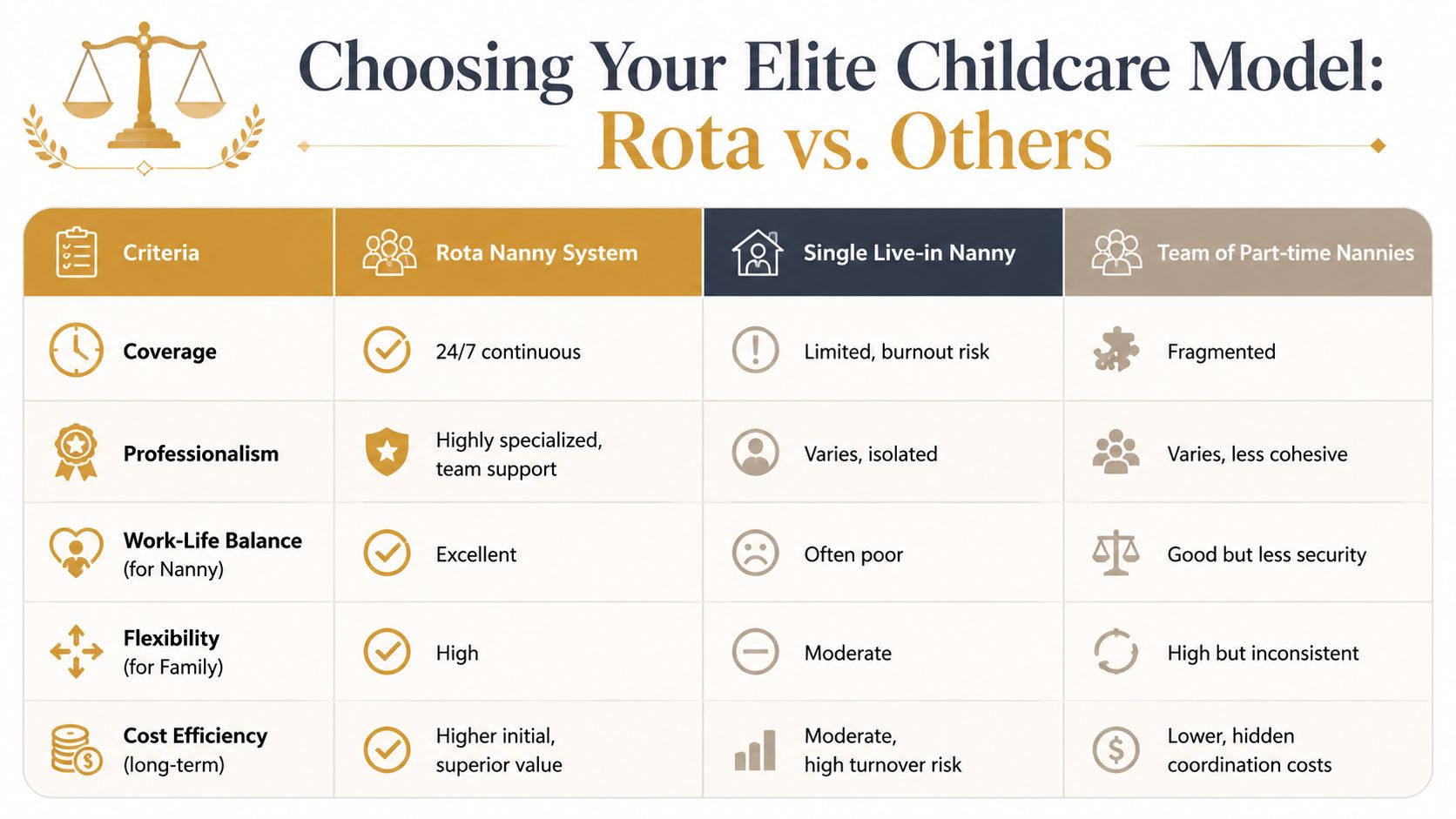
A rota nanny is part of a structured team, usually two nannies, who alternate responsibility for the children so the family has continuous cover without relying on one exhausted person to do an unsustainable job.
In the UK market, where rota staffing is well-established, the most common structures are 7/7 and 14/14, and a rota nanny typically provides 24/7 care for a predetermined period, usually between 1 and 3 weeks, before handing over to the next nanny, according to British American Household Staffing. That matters because it shows rota isn't an improvised workaround. It is a formal staffing model with clear rhythms, expectations, and handover discipline.
The always-covered and always-rested principle
The reason elite households use rota is not glamour. It's performance.
A single live-in nanny can be exceptional and still hit a wall if the role demands constant flexibility, travel, overnights, and early starts followed by late finishes. A rota arrangement is built to prevent that degradation. One nanny is on duty. The other is off duty and recovering, living her own life, and returning ready to work at full strength.
That has direct consequences for family life:
- Attention stays sharper
- Routines are easier to maintain
- Travel becomes more manageable
- Emergency coverage is less chaotic
- Children experience less emotional disruption than in a fragmented staffing setup
What rota is not
It is not a casual split schedule.
It is not a stack of babysitters.
It is not a way to squeeze unlimited hours from one employee under the appearance of a team structure.
A serious rota hire needs someone who understands handovers, can work collaboratively, and can operate at the level of a private household professional rather than a nursery-style caregiver. If you're weighing the structural differences carefully, this guide on live-in nanny, live-out nanny, or rota nanny choices for your household is a sensible next read.
Practical rule: If your family needs reliability that survives travel, late nights, multiple residences, and changing diaries, rota is usually the cleaner answer than stretching a standard nanny role past reason.
When to Choose Rota Staffing Over Other Childcare Models
Families often ask the wrong first question. They ask, “Can a rota nanny New York arrangement work for us?” The sharper question is, “What fails first if we don't use one?”
If the answer is coverage, continuity, privacy, or adult bandwidth, rota deserves serious attention.
The households that benefit most
Rota is usually the strongest fit when the children's lives are stable but the adults' lives are not. That sounds blunt, but it's accurate.
Choose rota when your home operates like this:
Travel is routine, not occasional
A rota system handles airport departures, changed return dates, jet lag, and location shifts more cleanly than a single nanny model.You need true operational coverage
If mornings, evenings, nights, and weekends all matter, piecing together care blocks creates mistakes.The children need one standard, not multiple styles
High-functioning rota pairs keep sleep expectations, food rules, school communication, and behavioural boundaries aligned.Discretion matters as much as warmth
Public families and security-conscious families usually prefer fewer, better staff rather than more casual helpers cycling through the home.
When another model may be better
Rota is not automatically the right answer.
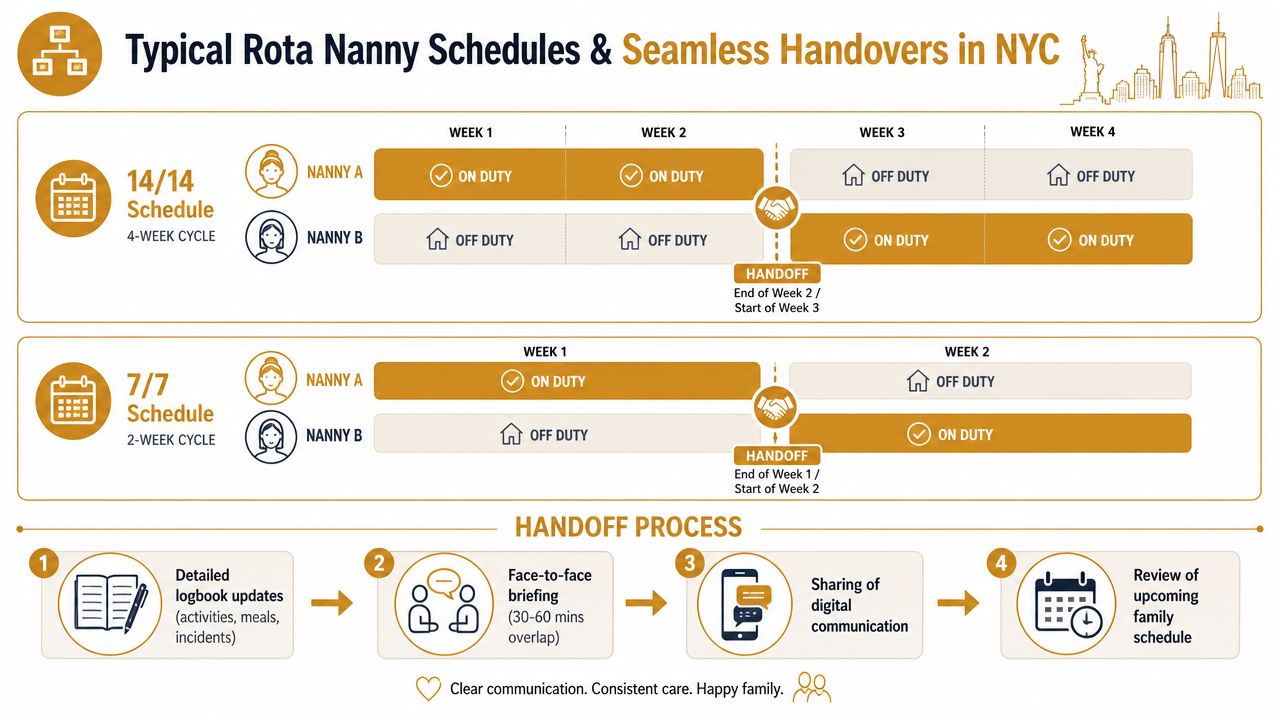
A single live-in nanny may be enough if your schedule is comparatively settled, overnights are occasional, and one residence handles most of family life. A live-out nanny may be ideal if you value clear separation, predictable hours, and no residential staff presence after shift end.
If your needs are substantial but not constant, forcing rota can create unnecessary complexity. I'd rather tell a client not to hire rota than place them into a structure they'll outgrow or resent.
Childcare Model Comparison Rota vs Live-In vs Live-Out
| Criteria | Rota Nanny System | Single Live-In Nanny | Live-Out Nanny |
|---|---|---|---|
| Coverage | Continuous and structured | Broad but vulnerable to fatigue | Limited to defined shifts |
| Continuity | High when handovers are well run | High with one strong nanny | Can weaken if multiple backups are used |
| Privacy | Strong with a small, senior team | Strong if the hire is stable | Good, but more daily transitions in and out |
| Travel suitability | Excellent | Good for moderate travel | Often harder to maintain |
| Burnout risk | Lower when schedule is correctly designed | Higher in demanding homes | Lower per individual, but coverage gaps increase |
| Coordination load for parents | Lower once systems are set | Moderate | Often highest |
| Cost profile | Premium and more complex | Moderate to premium | Variable, with hidden coordination costs |
A simple decision filter
If three or more of the points below describe your household, rota is usually the better route:
- You regularly need overnight judgement, not just presence
- Your staff must move confidently between residences or countries
- Your children don't cope well with inconsistent carers
- You don't want to manage a small roster of fragmented childcare
- You need the household to function even when your own schedule changes late
Families often focus on headline pay and ignore management load. That's a mistake. If parents are constantly plugging staffing holes themselves, the model is already too expensive in practical terms.
The New York Rota Nanny Schedule and Handover in Practice
A good rota arrangement feels boring in the best possible way. The children know what happens. The principals know who is responsible. The household team knows who to brief. Nothing depends on memory or improvisation.
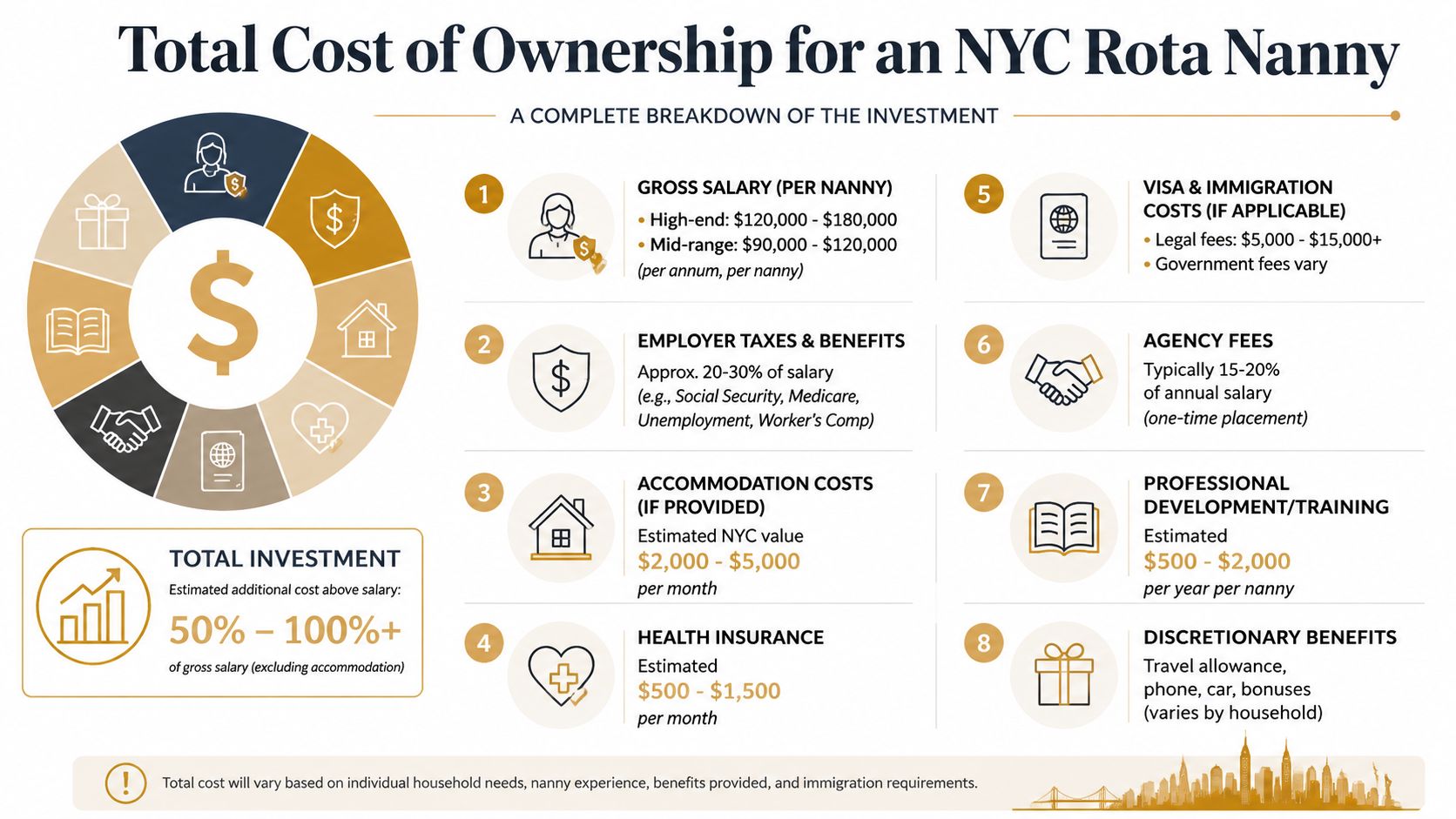
The two schedules most families discuss first are 7/7 and 14/14. In practical terms, one nanny is fully on duty for her block, usually living in during that working period, and the other is fully off. The right pattern depends on the age of the children, the family's travel rhythm, and how much transition frequency suits the home.
What the schedule looks like day to day
On-duty rota care is not a normal day-shift nanny role. It is closer to command responsibility for the children's world during that block.
That usually includes:
- Morning management: wake-up, dressing, breakfast, school readiness
- School and activity oversight: logistics, bags, communication, pickups
- Developmental continuity: routines, manners, reading, emotional support
- Evening structure: supper, bath, bedtime, overnight responsibility
- Travel adaptation: packing, transport, sleep protection, local routine maintenance
The family shouldn't need to restate standards every time the shift changes. If they do, the rota pair is weak or the handover process is poor.
Why handover quality decides the success of the hire
The handover is not administrative fluff. It is the hinge of the entire arrangement.
Seaside Staffing Company notes that handover quality directly affects child stability and household efficiency, which is exactly right. Prior rota experience matters because the incoming and outgoing nanny must communicate routines, sleep patterns, dietary rules, and developmental notes clearly enough that the children feel continuity rather than a reset.
A proper handover should cover, at minimum:
- Health and sleep
- Appetite and food preferences
- Behavioural patterns and triggers
- School updates and extracurriculars
- Upcoming travel or diary changes
- Any parental preferences that shifted during the block
If a nanny can care beautifully but hands over badly, she is not a strong rota nanny.
What I advise clients to insist on
For first-time New York rota employers, I recommend three essentials:
A written handover system
Digital notes, not memory.A paid overlap window
Enough time for direct briefing, not a rushed exchange at the front door.A matched pair, not two separate stars
Brilliance alone doesn't build a rota. Compatibility does.
Navigating NYC Employment Law Visas and Total Costs
A family approves a rota hire at $130,000 per nanny, assumes the budget is settled, and then gets hit with overtime exposure, payroll taxes, benefits, agency fees, and visa questions after the contract stage. That is how an expensive search becomes a badly planned one.
For a rota nanny New York placement, salary is only one line item. You need the full ownership cost before you interview seriously.
Salary is only the starting figure
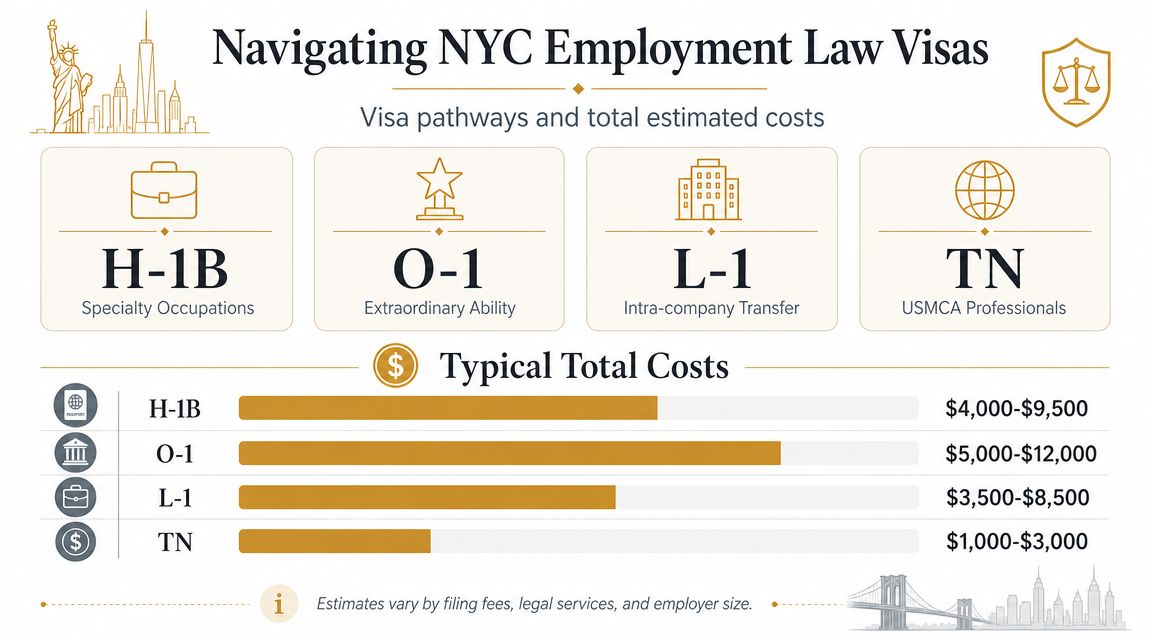
Current New York rota listings often land around $105,000 to $150,000 per nanny, but a listed package does not capture the full employer cost, especially where the schedule creates overtime exposure and the household wants a polished, legally compliant setup. Families who budget on salary alone usually underprice the role.
The better approach is simple. Cost the job as an employment structure, not as a headline number.
What should be in the budget
A serious rota budget in New York usually includes:
- Base compensation for each nanny
- Overtime and any sleep-time pay exposure
- Employer payroll taxes and household payroll administration
- Paid leave, health support, and other negotiated benefits
- Agency search and placement fees
- Travel costs, extra residences, and relocation logistics where relevant
Those lines add up quickly. In UHNW homes, they should be priced before the shortlist is built, not after an offer is accepted.
Cross-border families need to be even more disciplined. UK and US staffing economics do not map neatly onto each other. In the UK, employer National Insurance rose to 15% from April 2025 and the secondary threshold fell to £5,000, according to the UK government's policy paper on National Insurance changes. If you compare New York and London staffing on salary alone, you will misread the actual cost in both markets.
Schedule design drives legal exposure
The biggest compliance errors usually start with the rota pattern itself. A nanny who is on site for multi-day working blocks may trigger overtime issues, overnight pay questions, record-keeping obligations, and disputes about what counts as working time. Those are payroll matters first, legal matters second, and relationship problems soon after.
New York households should be especially careful with overnight arrangements. The New York State Department of Labor guidance on minimum wage and overtime for domestic workers makes clear that domestic workers are subject to wage and hour rules that families cannot improvise around. If your nanny is expected to remain responsible overnight, respond to wake-ups, or stay materially restricted during off-duty periods, the pay model needs to reflect that reality.
This is why I tell clients to stop asking, “What do rota nannies earn?” and start asking, “What does this exact rota schedule cost to run properly in New York?”
Visas should be addressed before the search starts
International profiles can be excellent. They can also be unusable if work authorization is weak, timing is unrealistic, or the family assumes a sponsorship path exists when it does not.
Handle immigration at the front end. Confirm whether the candidate already has independent US work authorization. Confirm whether your timetable can tolerate delays. Confirm whether your travel pattern creates additional complications. A brilliant candidate you cannot lawfully employ is not a candidate.
My advice on budgeting
Build the numbers in this order:
- Set the exact rota pattern
- Model wages based on hours, overnights, and any likely overtime exposure
- Add employer taxes, payroll service costs, and benefits
- Add agency fees and expected travel logistics
- Confirm whether visa review is needed before you launch the search
Families that want a sharper view of household employment costs should review this 2026 US household employee tax guide for elite families.
Clarity at the budget stage protects the search, the contract, and the household. In New York rota hiring, that discipline saves money.
How Superstar Nannies Delivers Bespoke Rota Placements
A rota search fails when the brief is shallow. “We need someone warm, flexible, and experienced” is not a usable mandate. It produces attractive interviews and disappointing placements.
A credible search starts with household mechanics. How many residences are in active use. Who has authority day to day. How protected is the family's profile. What are the children's rhythms, sensitivities, and educational demands. What does “travel-ready” mean in your home. If those questions aren't answered early, the shortlist will be wrong.
What a proper vetting process should test
For rota placements, I look beyond warmth and childcare skill. The decisive issues are often professional maturity and team behaviour.
The assessment should examine:
Rota-specific experience
Has the candidate handed over responsibility in a structured home before?Communication discipline
Can she brief another nanny cleanly, write usable notes, and keep parents informed without drama?Discretion and judgement
Public households need staff who understand boundaries instinctively.Travel reliability
Not just willingness to travel, but calm execution across changing environments.Temperament match
Some excellent nannies are too individualistic for a rota pair.
One option for families who need international search support is Superstar Nannies, which places childcare and household staff across the UK, US, and wider international market. In a rota context, that matters because the search often crosses borders and requires candidates who can operate inside highly private households rather than standard family settings.
Contracts matter more in rota than in standard placements
A weak contract creates conflict. A strong contract prevents it.
For rota hires, I advise families to spell out:
- Schedule blocks and location expectations
- Travel rules and notice requirements
- Overnight responsibilities
- Confidentiality and technology use
- Handover procedures
- Emergency cover expectations
- Interaction with other household staff
The highest-risk rota placements are not the difficult households. They are the informal households trying to run a demanding setup on loose verbal understandings.
Why the pair matters as much as the person
Some families try to hire one nanny first and “find the second later”. That can work, but it often weakens the final arrangement.
A rota system performs best when the pairing is intentional. One nanny may be stronger academically, the other better with travel rhythm. One may be especially calm under pressure, the other especially strong on developmental structure. The goal is not duplication. It is compatibility under a shared standard.
Conclusion Your Next Steps to Seamless Childcare
A rota nanny New York arrangement is not merely premium childcare. It is a deliberate staffing solution for families who need consistency, privacy, and reliable coverage without exhausting one person or managing a revolving door of support.
The families who benefit most are usually the ones with demanding diaries, frequent travel, multiple residences, and no appetite for preventable household friction. The families who struggle are the ones who budget off headline salary, overlook compliance, or underestimate how much the handover process matters.
If you're considering rota, prepare these details before you speak to an agency or adviser:
- Number and ages of the children
- Preferred start date
- Typical weekly schedule
- Travel requirements
- Primary residence and additional homes
- Any language, educational, or security requirements
- Whether you need domestic or international candidates
Move decisively, but don't move casually. In this market, the right hire protects family life. The wrong structure drains it.
Frequently Asked Questions about Rota Nannies
Does a rota nanny stay in the home during her working block
Usually, yes. In New York rota placements, the nanny commonly lives in while on duty and lives out while off duty. That structure gives the children one consistent adult for mornings, evenings, overnights, and last-minute schedule changes.
It also affects cost. If a nanny is sleeping in the residence, covering nights, and expected to be available early or late, the role must be priced and documented with precision. Families who treat that as an informal convenience usually end up with payroll mistakes, overtime exposure, or both.
What happens if one rota nanny is ill
You need a backup plan before day one.
A serious rota arrangement includes contingency cover, whether that means a pre-vetted reserve nanny, temporary agency support, or a contract that sets out exactly how emergency gaps are handled. Do not assume the off-duty nanny will step in. If you want that option, build it into the employment terms and budget for the extra cost.
Is rota only for babies and very young children
No. It often works just as well for school-age children in households with heavy travel, long parental hours, multiple properties, or security sensitivity.
The brief changes. With older children, you are hiring for judgement, discretion, scheduling discipline, school coordination, and social polish. Warmth still matters, but competence at that level matters more.
How important is sleep-time compliance in a 24-hour rota schedule
It matters because it changes the actual cost of the hire. If a nanny is regularly interrupted overnight or expected to remain meaningfully on call, you cannot treat the full night as free coverage.
This is one of the fastest ways New York families underbudget rota. The salary may look straightforward at offer stage. The actual cost rises once you account for paid hours, overtime exposure, payroll taxes, benefits, backup cover, and professional employer support. Handle the overnight structure correctly from the start.
Can a rota nanny New York arrangement work for one child
Yes. Child count is not the deciding factor. Household complexity is.
One child can fully justify rota if the family travels frequently, keeps irregular hours, requires high privacy, or wants uninterrupted standards of care across residences. In those homes, the question is not whether rota sounds luxurious. The question is whether round-the-clock consistency is worth the full employment cost. Often, it is.
If you're ready to discuss a discreet, fully considered rota search, contact Superstar Nannies for a confidential consultation. Bring your schedule, travel expectations, children's ages, and any firm requirements. A strong rota placement starts with a precise brief, not a rushed shortlist.