


When you first start thinking about the live in nanny costs, it’s easy to get fixated on the weekly salary. While that’s certainly the biggest part of the puzzle—typically ranging from £650 to £850+ per week in London, and a little less elsewhere—it’s really just the tip of the iceberg. Understanding the true cost means looking at the full picture: the salary, your legal duties as an employer, agency fees, and the significant value of the benefits you provide. This guide solves that problem by breaking down every component for you.
Decoding the Full Financial Picture
Hiring a live-in nanny is a significant investment, but it’s one that brings incredible stability and support to your family’s life. To budget accurately, however, you must look beyond the advertised salary. The total financial picture is made up of several crucial pieces, all of which are essential for attracting and retaining a top-tier childcare professional.
I often tell clients to think about it like building a bespoke home. The nanny’s gross salary is the foundation—it’s the biggest, most obvious part. But a house is just a foundation without the walls, the roof, and all the wiring. Things like taxes, insurance, and pension contributions are that essential framework. Skimping on them or forgetting them altogether leaves you vulnerable to unexpected costs and legal headaches down the road.
This visual helps to show how the total cost breaks down beyond just the core salary.
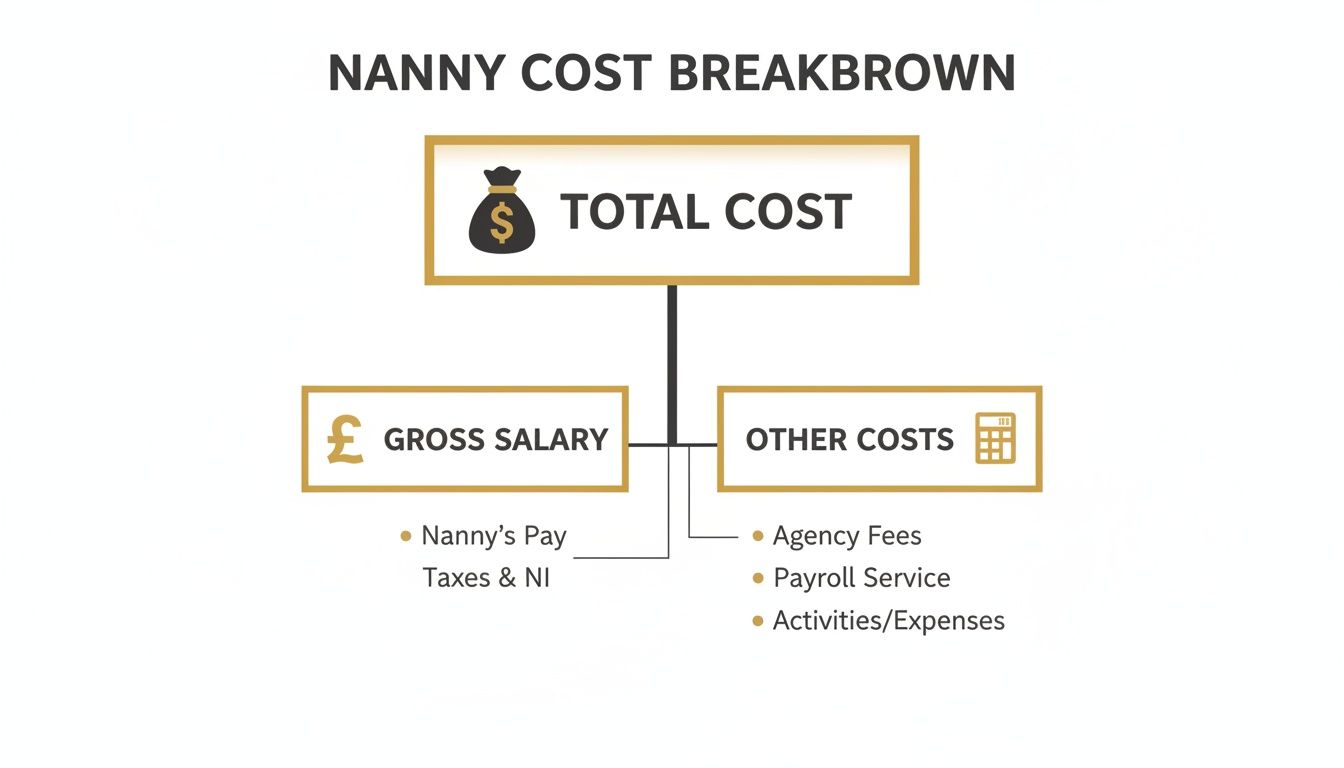
As you can see, the gross salary is just one part of the equation. Your budget needs to account for all these other critical expenses to be truly accurate and competitive.
Core Cost Components
To plan properly, it’s vital to understand every piece of this financial puzzle. A realistic budget for a live-in nanny will always include these key elements:
- Gross Salary: This is the figure you agree upon before any deductions. It’s the headline number and fluctuates massively depending on location, the nanny’s experience, and the scope of their duties.
- Employer’s National Insurance (NI) Contributions: As the employer, you’re legally required to pay NI contributions on your nanny’s earnings once they cross a certain threshold.
- Pension Auto-Enrolment: If your nanny meets the criteria (and most full-time nannies do), you must enrol them in a workplace pension scheme and contribute to it on their behalf.
- Employer’s Liability Insurance: This isn’t optional; it’s a legal requirement in the UK. It covers you in the unfortunate event your nanny is injured or falls ill as a result of their work in your home.
- In-Kind Benefits: Don’t forget the value of what you’re providing. Room, board, and sometimes the use of a car are all part of the compensation package and have a real monetary value.
Understanding these costs from the get-go allows you to build a budget that’s realistic and won’t throw you any curveballs. Being upfront about this doesn’t just keep you compliant with the law; it builds a foundation of trust and transparency with your nanny from day one.
Live In Nanny UK Cost Components at a Glance
To make this clearer, let’s break down the main financial obligations you’ll have when hiring a live-in nanny in the UK. The table below gives you a snapshot of what to expect, comparing London with other parts of the country.
| Cost Component | London Average (Weekly) | Rest of UK Average (Weekly) | Key Considerations |
|---|---|---|---|
| Gross Salary | £650–£850+ | £550–£750+ | Depends heavily on experience, qualifications (e.g., Norland), and specific duties. |
| Employer’s NI Contributions | £60–£100+ | £50–£90+ | Calculated as a percentage of earnings above the secondary threshold. |
| Pension Contributions | £20–£40+ | £15–£35+ | Based on a percentage of qualifying earnings; both you and your nanny contribute. |
| Employer’s Liability Insurance | £2–£4 | £2–£4 | Usually an annual policy costing around £100–£200, but breaks down to a small weekly cost. |
| In-Kind Benefits (Accommodation) | N/A (Included) | N/A (Included) | This is a non-cash cost, but it’s a significant part of the overall compensation package. |
This table illustrates that while the salary is the largest component, the add-on costs are significant and must be factored into your weekly or monthly budget. These figures are, of course, estimates and can vary, but they provide a solid starting point for your financial planning.
For a more granular look at rates and what you should expect to pay, you can dive deeper into the price for a nanny in our detailed guide. A little preparation now means no surprises later, so you can focus on what really matters: finding the perfect person to become part of your family.
Understanding Nanny Salary Benchmarks Across the UK

When you start to map out your live in nanny costs, the first and largest figure you’ll pencil in is their gross salary. It’s the cornerstone of the entire financial picture, and it’s influenced more than anything by two things: where you live and the nanny’s professional background.
Getting these benchmarks right isn’t just a budgeting exercise. It’s about making your family an attractive prospect for the very best childcare professionals. A competitive salary sends a clear message that you value their expertise and commitment, which is the best possible start to a long and happy working relationship.
The London Premium Explained
There’s no getting around it: in the world of private staffing in the UK, London is in a league of its own. The combination of a higher cost of living, intense demand for elite childcare, and the sheer number of UHNW families creates a fiercely competitive market. Unsurprisingly, the best nannies command significantly higher salaries here.
We’re not talking about a small difference, either. A nanny in Central London could easily earn 15-25% more than someone with the exact same experience working in Manchester, Edinburgh, or the Cotswolds.
Location really is the king of live-in nanny costs. London and the South East set a pace that far outstrips rates in Scotland or the North. To put numbers on it, a nanny’s average gross hourly rate in London is £19.51. This drops to £16.60 in the South East and £14.75 in Scotland. Over a 40-hour week, that regional gap can add up to more than £10,000 a year. For live-in roles, a weekly package in London often falls between £616 and £920+, reflecting not just the salary but the inherent value of having someone on hand.
How Experience and Qualifications Shape Salary
After location, a nanny’s training, qualifications, and real-world experience are the biggest factors driving salary. A candidate’s background effectively places them into different tiers within the market, each with its own salary expectations. It’s vital to know what level of expertise your family truly needs so you can budget realistically.
Let’s break down what those tiers look like:
- Early-Career Professional (1-3 years’ experience): These are nannies who are actively building their careers. They’ll have their core qualifications and some solid hands-on experience, making them a fantastic choice for families whose needs are relatively straightforward. Their salary expectations will sit at the more accessible end of the professional scale.
- Experienced Nanny (4-10+ years’ experience): With this much experience, a nanny brings a huge amount of practical wisdom to the role. They’ve navigated all sorts of family dynamics, managed countless developmental stages, and have a proven ability to handle whatever comes their way. Their salary reflects this proven reliability.
- Specialist Nanny (Norland or equivalent): Nannies who have trained at elite institutions like the prestigious Norland College are at the very top of their profession. Their training is incredibly comprehensive, covering everything from child psychology and advanced first aid to evasive driving and cybersecurity.
A specialist nanny is an investment in unparalleled expertise. Their salaries are at the very top of the market, reflecting years of dedicated, world-class training and an ability to provide an exceptional standard of care and education for your children.
Ultimately, the salary you offer is a direct reflection of the skills and peace of mind you hope to bring into your home. For a deeper dive into salary expectations across different roles and experience levels, take a look at our comprehensive guide on how much nannies make. It’s a great resource for aligning your budget with the calibre of professional you’re looking for.
Your Legal Duties as an Employer: What You Need to Know
Once you’ve agreed on a gross salary with your nanny, you’ve only really settled on the starting point. The moment you hire a nanny in the UK, you officially become an employer. This isn’t just a title—it comes with a raft of legal and financial duties that you simply can’t ignore.
Getting these right isn’t just about staying on the right side of the law. It’s about building a professional, respectful foundation with the person you’re trusting to care for your children. Think of your household as a small business; you have payroll obligations just like any company. These costs are a crucial part of the total picture, so let’s break down what you need to budget for.
Employer’s National Insurance Contributions
The biggest extra cost you’ll face is Employer’s National Insurance (NI). This is a tax you pay on your nanny’s earnings once they go over a certain threshold. It’s important to remember this isn’t taken from their pay packet—it’s an additional payment you make directly to HMRC.
The thresholds and rates change each tax year, so always check the latest government figures. For a full-time live-in nanny in London earning between £650 and £850+ gross per week, these contributions add up fast.
For instance, a nanny on a £46,436 annual salary could mean an extra £4,182 in National Insurance and pension costs for you. That bumps up your total outlay by around 9%. It’s a significant sum, so you need to factor it into your budget from the very beginning. Getting a handle on your payroll responsibilities is key, and this guide on setting up payroll for a household employee is a great place to start.
The Pension Auto-Enrolment Scheme
Next up is the workplace pension. If your nanny meets the age and earnings criteria—which most full-time nannies do—you are legally required to enrol them into a pension scheme. This is called ‘auto-enrolment’.
You’ll both pay into their pension pot. The government sets minimum contribution rates, which are a percentage of their “qualifying earnings.”
Here’s how it works:
- Your Contribution: You pay a minimum percentage as the employer.
- Your Nanny’s Contribution: They also contribute a percentage, which you deduct from their gross pay.
- Government Top-Up: The government then adds tax relief, giving their savings a welcome boost.
This isn’t optional. The Pensions Regulator can issue hefty fines for failing to comply, so it’s a duty to take seriously. A good payroll service will handle all the administration for you, making the process much more straightforward.
Why Employer’s Liability Insurance is Essential
Before your nanny even walks through the door for their first day, you must have Employer’s Liability Insurance. This is a legal requirement for almost every employer in the UK, and it’s there to protect you financially if your nanny gets sick or is injured because of their work for you.
Think of this insurance as your financial safety net. It covers compensation claims and legal fees, ensuring a workplace accident doesn’t become a financial disaster for your family.
By law, your policy must be with an authorised insurer and provide at least £5 million of cover. The good news is that it’s not hugely expensive, with annual premiums typically costing around £100-£200. Some home insurance policies include this as an add-on, but you must double-check that it specifically covers a domestic employee. Our guide on finding the right insurance for your nanny walks you through what to look for. Don’t be tempted to skip this—it’s illegal, and the fines for being uninsured are substantial.
Putting a Price on In-Kind Benefits

When budgeting for your live-in nanny costs, it’s easy to get tunnel vision and focus only on the salary and taxes. But that’s a common mistake. A huge slice of the real compensation package comes from the “in-kind” benefits—all the non-cash perks that make a live-in role so attractive to top-tier talent.
Thinking about the monetary value of these benefits isn’t just an accounting exercise. It helps you build a much more competitive and realistic offer. You get a clearer picture of your total investment, and you can communicate the full value of the role to potential candidates. It’s a complete financial ecosystem where every element, cash or not, adds to the appeal of the position.
The Value of Accommodation and Utilities
The most significant perk, by a long shot, is the accommodation you provide. We’re not just talking about a spare room; for a professional nanny, this represents a massive saving on what would otherwise be their biggest monthly outgoing, especially in a city with notoriously high rent like London.
To get a sense of the numbers, look up the going market rate for a private room or a studio flat in your neighbourhood. Add the cost of council tax, electricity, gas, water, and fast internet, and you could easily be looking at £1,000–£2,000+ per month in London. That’s a direct saving for your nanny and a very real part of their compensation.
- Private Quarters: A separate annexe or floor with its own bathroom and kitchenette will naturally hold a higher value.
- Utility Bills: Covering all bills removes a major financial headache and administrative chore for your employee.
- Household Amenities: Free access to home facilities like a high-end kitchen, a gym, or a garden adds another layer of value.
Live-in nannies are a specialist group, making up just 2% of the UK nanny market. For families who need that seamless, round-the-clock support, their value is immense. In London, weekly rates often hit £650–£850+, a figure directly propped up by these embedded benefits. As recent analyses show, while a live-out nanny in London might cost around £50,180 including employer contributions, the in-kind benefits for a live-in role push the total package value far higher.
Board and Other Lifestyle Perks
After accommodation, providing meals—or ‘board’—is another key benefit. Whether your nanny dines with the family or you provide a generous weekly food allowance, this saves them a considerable amount on groceries. You can value this at around £150–£250 per month, depending on your household’s lifestyle.
For the most sought-after roles, other perks often seal the deal and make the position truly stand out.
Offering a comprehensive benefits package is a strategic move. It demonstrates that you are a thoughtful and generous employer, which is crucial for attracting and retaining the best professionals in a competitive market.
When you’re piecing together the total compensation, it can be useful to look at how businesses design comprehensive employee benefits packages for inspiration.
Other common lifestyle perks often include:
- Use of a Vehicle: Providing a car for work, and sometimes personal use, eliminates a major transport expense.
- Gym Membership: A subscription to a local health club or premium gym.
- Travel Opportunities: Accompanying the family on holidays, with all expenses covered, is a huge drawcard.
When you start to tally up all these non-cash benefits, you quickly see how the total value of your offer goes far beyond the gross salary, creating a highly compelling proposition for the right candidate.
Factoring in Agency Fees and Placement Costs

When you partner with a premier nanny agency to find the perfect candidate, you’re not just paying for a CV. You’re investing in expertise, security, and frankly, your own time. The one-off placement fee might seem like a significant expense at first glance, but it’s what separates a stressful, hit-and-miss search from a smooth, professional hiring process.
Think of it like using a specialist headhunter for the most critical role in your household. These agencies handle all the heavy lifting. They manage everything from discreetly sourcing top-tier candidates and conducting rigorous interviews to running comprehensive background checks and helping you navigate complex employment contracts. This upfront investment ensures the professionals you meet are not only qualified on paper but are genuinely right for your family’s unique lifestyle, saving you from the immense emotional and financial cost of a poor hire.
Understanding the Placement Fee Structure
Most elite nanny agencies calculate their fee as a percentage of the nanny’s annual gross salary. You can generally expect this to be somewhere between 15% and 25%. The exact figure often depends on the agency’s reputation, the specific demands of your search, and the nature of the role.
Let’s put that into practice. If your chosen live-in nanny’s annual gross salary is £45,000, an agency charging a 20% fee would invoice you for a one-off placement fee of £9,000. This payment is typically due once you’ve made a formal offer and your new nanny has accepted it.
An agency placement fee isn’t just a simple ‘finder’s fee’. It reflects hundreds of hours of professional work—recruitment, vetting, due diligence, and matchmaking—all geared towards ensuring a successful and lasting placement.
By working with the best domestic staffing companies, you’re paying for access to an exclusive network. These are often exceptional candidates who aren’t scrolling through public job boards but rely on trusted agencies to connect them with the right families.
What the Fee Actually Covers
So, what does that investment get you? A high-calibre agency’s fee will typically bundle together a comprehensive suite of services:
- Bespoke Candidate Sourcing: Proactively finding and approaching professionals who perfectly match your family’s requirements.
- In-Depth Vetting: Conducting thorough interviews, verifying every qualification, and meticulously checking multiple professional references.
- Comprehensive Background Checks: This always includes an enhanced DBS (Disclosure and Barring Service) check, which is non-negotiable for child safety.
- Contract Negotiation: Offering expert guidance to help you draft a fair, clear, and legally compliant employment contract.
- Post-Placement Support: Many top agencies provide support after the nanny has started and offer a guarantee period. This means they’ll find a replacement candidate if, for any reason, the initial placement doesn’t work out.
Don’t Forget Onboarding Costs
Beyond the main agency fee, it’s smart to set aside a small contingency for a few other potential expenses. These might include the cost of specialist background checks if needed, or visa application fees if you’re hiring an international candidate. Thinking about these smaller details upfront helps you build a truly realistic budget, ensuring the entire process is smooth and free of last-minute surprises.
Planning for the Extras: Hidden and Ongoing Costs
When you’re budgeting for a live-in nanny, the weekly salary is just the starting point. To get a truly accurate picture of the investment, you need to think about all the other expenses that pop up throughout the year. These aren’t just minor details; they’re the difference between a realistic financial plan and one that leaves you with unwelcome surprises.
Getting these costs down on paper from the outset doesn’t just help you manage your finances. It also shows your nanny that you’re a thoughtful and professional employer, setting the stage for a positive, long-term relationship.
Overtime and Bonuses
Even with the most carefully planned schedule, life happens. You’ll have a last-minute dinner, a meeting that runs late, or a weekend event that requires your nanny to stay on. It’s an inevitable part of the job.
- Overtime Pay: You are legally and ethically required to pay for these extra hours. The standard practice is to pay overtime at 1.5 times the nanny’s normal hourly rate, and this should be clearly defined in their employment contract. Don’t leave this to chance.
- Annual Reviews and Bonuses: Most high-calibre nannies expect an annual salary review. Beyond that, a discretionary bonus is a fantastic way to acknowledge exceptional work. It’s a powerful gesture that shows your appreciation and goes a long way towards ensuring they feel valued and want to stay with your family.
Budgets for Travel and Activities
If you plan on travelling with your nanny, you need to remember that you cover everything. We’re not just talking about the flight and hotel room. All their meals, visa costs, and any expenses related to activities during the trip fall to you. Underestimating this can add a significant unexpected cost to your holiday budget.
On a more day-to-day level, you’ll also need to provide funds for the children’s activities.
This is often managed through a ‘nanny kitty’—a weekly cash float for everyday expenses. Think entry fees for soft play, art supplies for a messy afternoon, or a hot chocolate at the park. It ensures your nanny can create fun, enriching experiences for your children without ever having to use their own money.
Contingency and Professional Growth
What happens if your nanny gets sick? You need a plan. It’s wise to have a contingency fund set aside to cover not just their statutory sick pay but also the cost of hiring temporary cover. The last thing you want is to be left without childcare at a critical moment.
Beyond planning for problems, think about investing in your nanny’s future. Sponsoring a course or a new certification is an investment in the quality of care your children receive. It sharpens their skills, keeps them engaged, and shows you’re genuinely committed to their career. This kind of forward-thinking is what truly distinguishes a great employer and builds the foundation for a lasting partnership.
Conclusion: Budgeting for Excellence
Calculating the true live in nanny costs is about more than just the weekly salary. It involves understanding your legal duties as an employer, valuing the in-kind benefits you provide, and planning for the ongoing costs that ensure a happy and professional working relationship. By budgeting for the complete financial picture—from NI contributions to a nanny kitty—you position yourself as a first-rate employer, ready to attract the very best childcare talent.
Frequently Asked Questions About Live-In Nanny Costs
Working out the finances for a live-in nanny often brings up a lot of questions. We get it. To help you plan with confidence, here are some clear, straightforward answers to the queries we hear most often from families like yours.
How Much Is Accommodation Really Worth?
Providing accommodation is a significant, tangible part of the nanny’s compensation, typically adding 10-15% to the total value of their package. For a nanny, this represents a huge saving on their biggest monthly expense, especially in a city like London where rent is notoriously high. This is why a live-in nanny’s gross weekly salary may appear lower than a live-out nanny’s on paper. Once you factor in the value of rent-free living, the overall package is often just as competitive, if not better.
Are There Any Tax Advantages for Us When Hiring a Nanny?
In the UK, the short answer is no – you can’t claim nanny costs directly against your income tax. However, many families can use the government’s Tax-Free Childcare scheme, which can provide up to £2,000 per child, per year towards childcare costs. The key condition is that your nanny must be Ofsted registered to qualify. Remember, as their employer, you are responsible for handling their Income Tax and National Insurance contributions through a PAYE scheme, and a dedicated nanny payroll service is the best way to manage this.
Why Pay an Agency Fee Instead of Just Hiring Directly?
An agency fee is an investment in peace of mind, expert guidance, and your own precious time. A top-tier agency conducts a rigorous, multi-stage vetting process that a family simply can’t replicate alone, including enhanced DBS checks, in-depth interviews, and meticulous verification of references and qualifications. Beyond finding the right candidate, agencies guide you through contract negotiations and provide vital post-placement support, massively reducing the risk of a bad hire and ensuring a safe, successful, and long-lasting placement.
What’s the Typical Cost for a Specialist like a Norland Nanny?
When you hire a specialist, you’re paying for an exceptional level of training and expertise, and their salaries reflect that. A newly qualified Norland Nanny, for instance, typically starts on a salary of £42,000 a year, which climbs quickly with experience. Similarly, a specialist Maternity Nurse providing 24-hour newborn care can command daily rates from £350 to over £450. These higher live in nanny costs are a direct reflection of their advanced skills in infant development, sleep conditioning, and invaluable postnatal support.
Finding the right nanny is one of the most personal and important decisions your family will ever make. At Superstar Nannies, we specialise in connecting discerning households with world-class childcare professionals who embody the highest standards of excellence and discretion. Contact us today for a private consultation and allow us to help you find the perfect addition to your home.