

Hiring a nanny is one of the most personal and crucial decisions you can make for your family. It goes far beyond simply checking references and ticking boxes on a CV; it’s about finding a professional who truly connects with your family’s core values, parenting style, and the unique rhythm of your home. This isn’t just about filling a role—it’s about welcoming someone into the very heart of your life and entrusting them with who you love most. To do this well, you need more than a standard checklist. The right questions act as a bridge, moving the conversation from qualifications on paper to revealing a candidate’s true character, problem-solving skills, and genuine passion for childcare.
This guide provides 8 essential interview questions for nannies, each crafted with a personal touch to help you uncover the insights that truly matter. I’ve designed this list for families like yours who understand that the goal is not just to hire a caregiver, but to find a dedicated partner in your children’s development and well-being. By asking thoughtful, targeted questions, you can feel confident you’re choosing an individual who is not only exceptionally qualified but also a perfect and harmonious fit for your family.
1. Tell me about your childcare experience and background
This foundational question is so much more than an icebreaker; it’s the cornerstone of your conversation. It gives you a chance to hear the candidate’s professional story in their own words, from what first sparked their passion for childcare to their long-term career dreams. This open-ended prompt invites them to build a narrative, revealing not just what they’ve done, but how they see their role and its importance. It sets a warm and open stage for a deeper, more meaningful chat.
Why This Question is Essential
This is your first and best opportunity to understand the candidate’s core qualifications and true passion for the profession. A fantastic answer will go beyond simply reciting their CV. It will connect their past roles to your family’s specific needs, showing that they’ve taken the time to understand your world and are genuinely interested in becoming a part of it. This is a key differentiator between someone simply looking for a job and a professional seeking a meaningful, long-term partnership.
What to Listen For
As you evaluate their response, pay close attention to the little details that reveal if they’re the right person for your home.
- Specifics and Relevance: Do they talk about age ranges that match your children? A candidate with five years of experience exclusively with infants might not be the ideal fit for a family with school-aged children, unless they can beautifully explain how their skills will adapt and grow with your family.
- Professional Development: Listen for mentions of certifications like CPR and First Aid, an Early Years qualification (like an NVQ), or other professional development courses. This shows a real commitment to their craft and to your children’s safety.
- Longevity and Loyalty: Take note of how long they stayed in their previous positions. Long-term placements often suggest reliability, a strong work ethic, and the wonderful ability to form lasting, positive bonds with families.
- Clarity and Passion: A confident, warm, and well-structured answer delivered with genuine enthusiasm is a powerful sign of a passionate and professional caregiver. You want to feel their love for what they do.
2. How would you handle a child having a tantrum or behavioural issue?
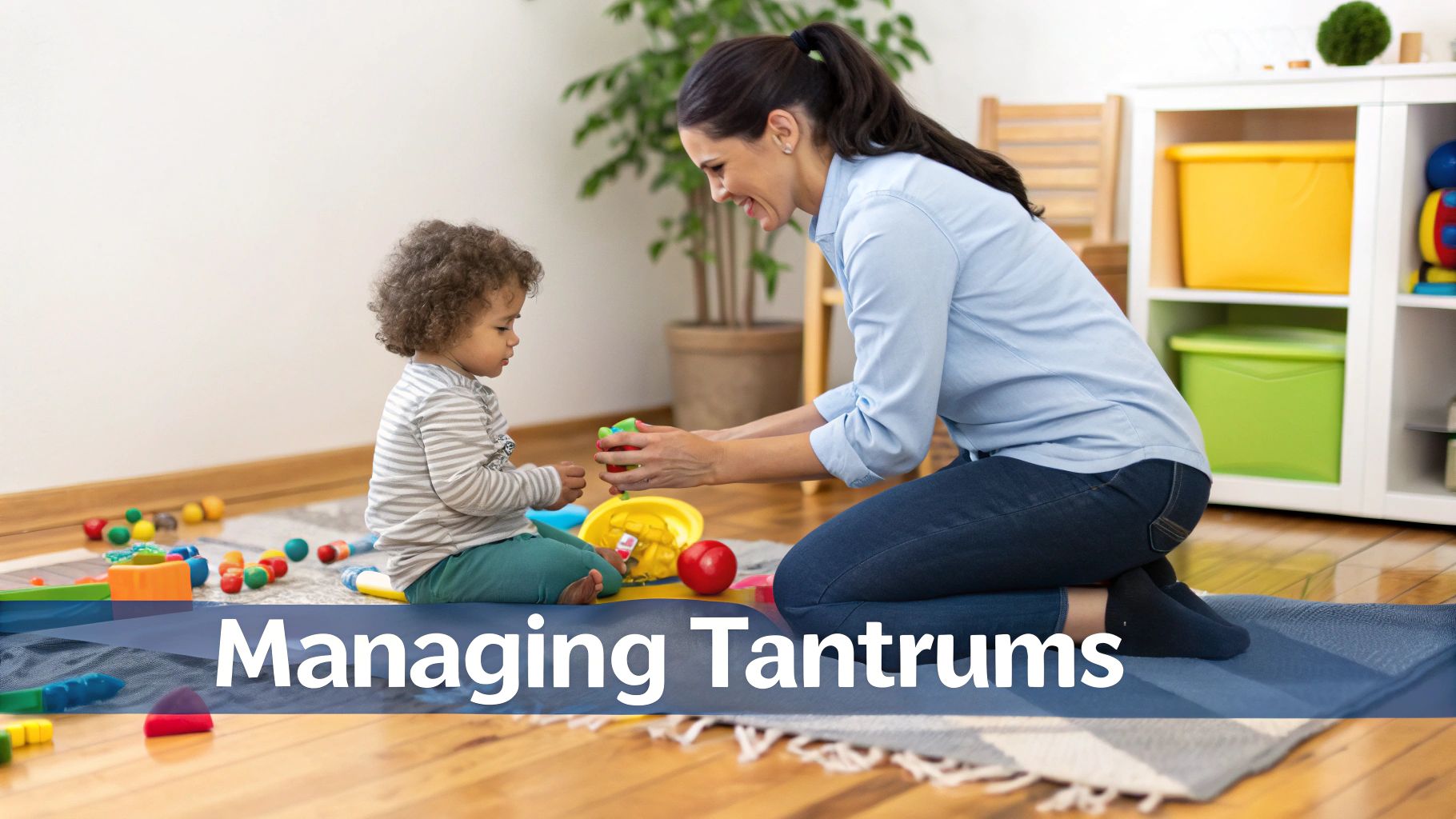
This real-world question moves beyond qualifications and into the day-to-day realities of caring for children. It’s designed to assess their understanding of child development, their approach to discipline, and their ability to remain a calm, steady presence under pressure. A child’s emotional outbursts are a normal part of growing up, and how a nanny responds reveals their core philosophy on nurturing resilience and emotional intelligence. This makes it one of the most crucial interview questions for nannies.
Why This Question is Essential
This question is a direct window into whether a candidate’s discipline and guidance style will align with your family’s values. Mismatched parenting philosophies can create confusion for your child and friction in your home. A strong candidate will describe an approach that is both effective and empathetic, focusing on teaching rather than punishing. Their answer will show you if they can be a trusted partner in raising well-adjusted, emotionally secure children.
What to Listen For
As they describe their methods, listen for a nuanced and adaptable approach that puts your child’s well-being first.
- Age-Appropriate Strategies: A professional nanny knows that one size doesn’t fit all. Listen for specific, age-appropriate techniques, like using distraction for toddlers versus discussing natural consequences with older children.
- Alignment with Your Values: Do their methods feel right to you? If you practise gentle parenting, an answer focused on strict, authoritative measures will be a clear sign it’s not the right fit. You can find excellent expert advice on tackling tantrums and power struggles to help benchmark their responses.
- Emphasis on De-escalation: Look for proactive strategies. A wonderful nanny will talk about getting down to the child’s eye level, validating their feelings (“I can see you are so upset”), and staying calm themselves. This shows emotional intelligence, which is one of the top 10 skills every superstar nanny must have.
- Communication with Parents: The best answers will include a plan for communicating with you about behavioural incidents. This shows respect for your role as the parent and highlights their commitment to working together as a team.
3. What would you do in case of a medical emergency?
This question moves beyond daily routines and into a critical area of responsibility: your child’s safety. It’s a non-negotiable part of any list of interview questions for nannies. The answer reveals a candidate’s preparedness, practical knowledge, and their ability to stay composed under extreme pressure. It’s designed to assess their logical thinking and protocol adherence when a child’s wellbeing is on the line, giving you that essential peace of mind.

Why This Question is Essential
A nanny’s most important duty is to keep your children safe and well. This question directly evaluates their competence in a worst-case scenario. A candidate who can confidently and clearly walk you through a step-by-step emergency plan shows professionalism and reliability. Their response will tell you whether they can act decisively and correctly, putting your child’s health above everything else. For families with specific medical needs, this question is even more critical.
What to Listen For
As they outline their emergency protocol, listen for a clear, logical, and calm thought process. You want to feel reassured.
- Systematic Approach: A strong answer will detail a clear sequence of actions, such as: assess the situation, secure the area, check the child’s responsiveness and breathing, and immediately call 999 if necessary before contacting the parents.
- Practical First Aid Knowledge: Look for mentions of specific actions like applying pressure to a bleeding wound, managing an allergic reaction with an EpiPen, or positioning a child correctly.
- Certification and Training: The candidate should readily mention their current Paediatric First Aid and CPR certifications. This is a baseline requirement, not a bonus. For families with more complex needs, considering a professional with advanced training may be beneficial; you can explore the advantages of hiring a private medical nurse for specialised care.
- Calm Demeanour: How they answer is just as important as what they say. A calm, assured tone suggests they can handle a high-stress situation without panicking.
4. How do you approach child development and educational activities?
This question moves beyond basic safety and care, exploring the candidate’s role as an educator and a partner in your child’s growth. It helps you understand if their philosophy aligns with yours and whether they are a proactive planner or a more passive supervisor. The answer reveals their understanding of age-appropriate milestones and their creativity in fostering a stimulating, learning-rich environment. This is a key differentiator between a babysitter and a professional career nanny.

Why This Question is Essential
A top-tier nanny actively contributes to a child’s intellectual, social, and emotional development. This question allows you to assess their commitment to this beautiful part of the role. A strong candidate will show not just a willingness but a real enthusiasm for planning activities that are both fun and developmental. Their response shows whether they will simply pass the time with your children or truly enrich it.
What to Listen For
As they describe their approach, look for specific, tangible examples that show their expertise and thoughtful planning.
- Age-Appropriate Knowledge: Do they suggest activities that sound perfect for your child’s specific developmental stage? For a toddler, this might be messy sensory bins and shape-sorting games. For a school-aged child, it might involve fun science experiments or supporting homework.
- Proactive Planning: A great nanny will talk about creating a loose weekly schedule of activities, balancing indoor and outdoor play, creative time, and quiet time. They should show initiative rather than waiting to be told what to do.
- Educational Philosophy: Listen for their approach to key areas like reading, screen time, and fostering independence. It’s also wonderful to hear their thoughts on fostering crucial life skills, such as how to teach problem-solving skills to kids, as this is critical for daily interactions and challenges.
- Resourcefulness: Do they mention using local resources like libraries, parks, or museums? This indicates they are resourceful and will ensure your child has a varied and engaging routine.
5. Why are you interested in working with our family specifically?
This question moves beyond general qualifications and gets to the heart of their motivation for joining your family. It’s a crucial filter, separating professionals who have thoughtfully considered the position from those who are simply sending out mass applications. A thoughtful answer shows that a candidate has done their research, understands your family’s unique dynamics, and sees a genuine connection between their skills and your needs. It signals a desire for a meaningful partnership, not just a job.
Why This Question is Essential
A candidate’s reason for applying can tell you so much. This is where you discover if their interest is authentic and if they have a vested interest in becoming a long-term, integrated member of your household. An answer rooted in specifics about your family’s lifestyle, values, or your children’s interests demonstrates wonderful initiative and a proactive mindset. It shows they are not just looking for any nanny position but for the right one, which is a key part of the process when finding the ideal nanny.
What to Listen For
As they explain their interest, listen for sincere and well-researched points that connect directly to your family.
- Specific References: Do they mention details from your job description or family profile? A candidate might say, “I was so drawn to your family’s love for outdoor activities,” or “I noted you are a bilingual household, and my fluency in French would be a great asset in supporting your children’s language development.”
- Alignment of Values: A strong candidate will connect their personal philosophy to yours. They might highlight a shared belief in positive discipline, a passion for creative play, or experience that matches a specific need you have, such as supporting a child with allergies.
- Forward-Thinking: Look for answers that show they’ve thought about how they would contribute. For example, “I saw that your son loves building with Lego, and I have experience leading fun STEM-based activities that he might really enjoy.”
- Genuine Enthusiasm: Pay attention to their tone and body language. Sincere excitement about the unique aspects of the role is a powerful indicator of a candidate who will be engaged, motivated, and committed.
6. What are your long-term career goals and availability?
This practical question moves beyond a candidate’s past experience to look toward the future of your working relationship. It’s designed to uncover a nanny’s commitment to the profession and determine if their personal timeline aligns with your family’s need for stable, consistent care. Understanding a candidate’s long-term aspirations helps you gauge whether they see this role as a temporary stepping stone or a dedicated career path, which is crucial for ensuring continuity for your children.
Why This Question is Essential
Hiring a nanny is a significant investment in your children’s well-being and development; stability is everything. This question helps you avoid the disruption that comes from a short-term placement when you’re hoping for a long-term solution. It provides a clear window into their professional dedication and lets you see if their goals are compatible with your family’s journey. A nanny who plans to be with you for several years offers a very different dynamic than one who intends to leave in a year to pursue something new.
What to Listen For
A transparent conversation about goals and availability is key to a successful placement. Pay attention to the following aspects of their answer.
- Timeline Alignment: Does their desired commitment length match your needs? Be clear about whether you are looking for someone for two years or someone to grow with your family for the next ten. A candidate might seem perfect, but if they plan to move abroad in 18 months and you need five years of care, they are not the right fit for you right now.
- Professional Ambition: Listen for goals that show a real commitment to childcare. For instance, a candidate might mention aspiring to become a Newborn Care Specialist after a few years, or perhaps opening their own home daycare in the distant future. These ambitions signal a true passion for the field.
- Flexibility and Growth: Consider how their goals might evolve with your family. A great nanny might see the potential to transition from caring for a toddler to taking on more of a governess or household manager role as the children get older.
- Honesty and Practicality: A candidate who is honest about their plans, such as starting their own family in 3-5 years, allows for open and realistic planning. This is far more valuable than someone who is vague or non-committal about their future.
7. Describe a challenging situation with a child and how you resolved it
This behavioural question moves beyond theories and into real-world application. It’s a powerful way to assess a nanny’s problem-solving skills, patience, and emotional intelligence under pressure. How a candidate recounts a difficult experience reveals their professional maturity, their approach to discipline, and their ability to remain calm and constructive when faced with the inevitable challenges of childcare. This is where you see their true character and professional strength shine through.
Why This Question is Essential
Past behaviour is often the best predictor of future performance. This question gives you a window into how a candidate handles stress, conflict, and unexpected hurdles. A thoughtful answer shows self-awareness, resilience, and a commitment to positive outcomes for the child. It helps you understand if their methods align with your family’s parenting philosophy, especially when it comes to discipline and emotional regulation. This is one of the most revealing interview questions for nannies you can ask.
What to Listen For
As they describe the situation, focus on their process and the outcome, not just the problem itself.
- Problem-Solving, Not Blame: Does the candidate take ownership of their role in the situation, or do they place blame on the child? Look for a structured approach: they assessed the situation, considered different strategies, implemented a solution, and reflected on what they learned.
- Communication with Parents: A key detail is how and when they communicated with the parents. A professional nanny understands the importance of keeping parents in the loop, especially during difficult times, and working together on a consistent approach.
- Emotional Intelligence: Listen for empathy and understanding towards the child. Did they try to understand the root cause of the behaviour (e.g., tiredness, hunger, feeling overwhelmed) rather than just reacting to the surface-level action?
- Lessons Learned: A strong candidate will be able to tell you what they learned from the experience and how it has shaped them as a caregiver. This shows a capacity for professional growth and a dedication to always doing better.
8. What questions do you have about our family, expectations, or this position?
The interview should always be a two-way street, and this question signals the shift from your assessment of them to their assessment of your family. It’s a critical moment that reveals so much about their professionalism, preparation, and what they truly prioritise in a working relationship. The quality and nature of their questions can be just as insightful as the answers they’ve given you, offering a glimpse into their experience and how they envision their role in your home.
Why This Question is Essential
This is your chance to see how deeply the candidate has considered the realities of the position beyond the basic job description. A candidate with no questions might be unprepared, uninterested, or too inexperienced to know what to ask. On the other hand, a candidate who comes with thoughtful, specific questions shows genuine interest, a proactive mindset, and an understanding of the nuances involved in becoming an integral part of a family. It shows they are interviewing you just as much as you are interviewing them—a hallmark of a true professional.
What to Listen For
The questions a nanny asks can reveal their priorities and level of experience. Pay close attention to the substance and thoughtfulness behind their inquiries.
- Professionalism and Foresight: Look for questions about your family’s discipline philosophy, your communication style, and how you like to give and receive feedback. Inquiries about daily routines, screen time rules, and expectations for their autonomy show they are already thinking about how to integrate seamlessly.
- Long-Term Mindset: Questions about performance reviews, opportunities for professional development, or how the role might evolve as the children grow suggest a candidate is looking for a long-term, stable home.
- Experience Level: An experienced nanny might ask detailed logistical questions about household management, petty cash, or protocols for visitors. These practical questions often come from having navigated similar situations in previous roles.
- Red Flags: Be wary if the only questions they ask are about pay, holidays, and perks. While these are important details to confirm, a sole focus on them might indicate their priorities aren’t primarily centred on your children’s wellbeing.
Interview Question Comparison for Nannies
| Interview Question | Implementation Complexity 🔄 | Resource Requirements ⚡ | Expected Outcomes 📊 | Ideal Use Cases 💡 | Key Advantages ⭐ |
|---|---|---|---|---|---|
| Tell me about your childcare experience and background | Low 🔄 – Open-ended, conversational | Minimal – interviewer listens and probes | Broad overview of qualifications and background | Opening question to establish candidate’s fit | Easy starter, reveals passion and professional growth |
| How would you handle a child having a tantrum or behavioral issue? | Medium 🔄 – Requires scenario explanation | Moderate – requires behavioral examples | Insight into discipline philosophy and problem-solving | Assessing behavioral management and emotional intelligence | Reveals practical skills, compatibility with family style |
| What would you do in case of a medical emergency? | Medium 🔄 – Specific protocols to explain | High ⚡ – Knowledge of first aid/CPR needed | Confidence in emergency preparedness and response | Evaluating safety readiness and crisis management | Ensures child safety, identifies certification status |
| How do you approach child development and educational activities? | Medium 🔄 – Needs examples of planning and methods | Moderate – creativity and knowledge tested | Understanding of developmental support and engagement | Assessing educational involvement beyond supervision | Shows initiative, educational philosophy, and creativity |
| Why are you interested in working with our family specifically? | Low 🔄 – Motivational and research-based | Minimal – candidate preparation required | Gauges genuine interest and cultural fit | Determining alignment with family values and long-term fit | Identifies committed, enthusiastic candidates |
| What are your long-term career goals and availability? | Low 🔄 – Direct question about plans | Minimal – honest responses expected | Understanding job stability and professional ambitions | Planning for long-term childcare continuity | Helps predict retention, aligns expectations |
| Describe a challenging situation with a child and how you resolved it | Medium 🔄 – Behavioral storytelling | Moderate – relies on past experience | Demonstrates problem-solving and emotional intelligence | Assessing real-life conflict resolution and adaptability | Provides evidence of skills, maturity, and growth |
| What questions do you have about our family, expectations, or this position? | Low 🔄 – Candidate-driven questions | Minimal – opportunity for candidate to engage | Reveals candidate’s professionalism and preparation | Evaluating candidate engagement and mutual fit | Identifies thoughtful, interested candidates |
Making the Right Choice for Your Family’s Peace of Mind
Choosing the person who will care for your children is one of the most important decisions you will ever make. This comprehensive list of interview questions for nannies is designed to move beyond surface-level conversations, giving you a framework to truly understand a candidate’s capabilities, character, and connection to your family’s unique spirit. The process isn’t just about ticking boxes; it’s about starting a conversation that will form the foundation of a trusting and respectful relationship.
Remember, the goal is to create a warm atmosphere where a candidate feels comfortable sharing genuine insights into their professional approach. By asking probing questions about their experience, discipline philosophy, and emergency preparedness, you gain a clear picture of their practical skills. Enquiring about their views on child development reveals their commitment to nurturing your child’s growth, while understanding their long-term goals ensures alignment and stability for your household. The most insightful interviews are those that feel less like an interrogation and more like a collaborative exploration of a potential partnership.
Key Takeaways for a Successful Nanny Interview
As you move forward, keep these core principles at the forefront of your hiring journey:
- Listen Beyond the Words: Pay close attention to the candidate’s tone, enthusiasm, and the thoughtfulness behind their answers. Their responses to situational questions, such as handling a tantrum or a medical emergency, reveal their problem-solving skills and composure under pressure.
- Prioritise Personal Connection: While qualifications and experience are non-negotiable, that ‘click’ factor is just as vital. A candidate’s specific interest in your family and the insightful questions they ask you are strong indicators of genuine engagement and a desire for a meaningful role.
- Trust Your Intuition: You are the expert on your own family. After all the questions have been asked and the references checked, your gut feeling plays a crucial role. The right nanny will not only have excellent answers but will also leave you with a profound sense of confidence and peace of mind.
Ultimately, using these interview questions for nannies is about creating clarity and confidence. It empowers you to make an informed, intelligent choice, ensuring the professional you welcome into your home will not only safeguard your children but also enrich their lives and bring harmony to your household. This structured approach, combined with your parental insight, is the key to finding a nanny who will become a cherished and invaluable extension of your family.
Ready to find a professional who exceeds every expectation without the exhaustive search? Superstar Nannies specialises in bespoke placements for discerning families, handling the rigorous vetting so you can focus on finding the perfect personal fit. Visit us at Superstar Nannies to discover how our elite service can bring unparalleled expertise and trust into your home.
Article created using Outrank