

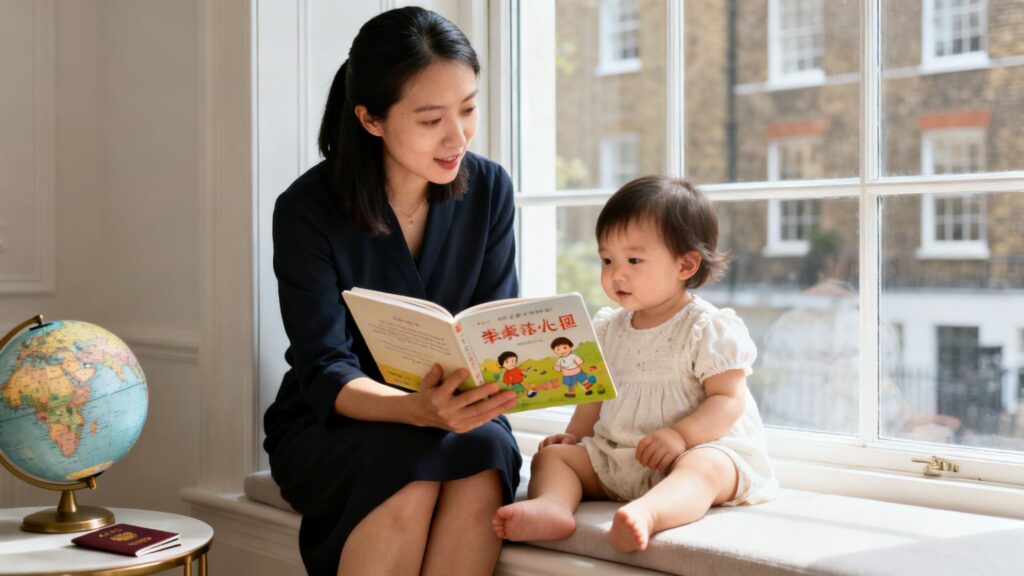
Raising a bilingual child is no longer seen as an optional advantage; it is increasingly viewed as an essential part of a well-rounded upbringing.
In a global city like London, where cultures, languages, and international lifestyles intersect, more families are recognising the long-term value of introducing a second language from an early age.
Beyond the ability to communicate in another language, bilingualism shapes how a child thinks, learns, and engages with the world around them.
At its core, language is not simply about words; it is about understanding, identity, and connection. When a child grows up hearing and using two or more languages, they are exposed to different ways of expressing ideas, emotions, and perspectives.
This early exposure fosters adaptability and awareness that extend far beyond communication.
How Bilingualism Supports Cognitive Development
One of the most widely recognised benefits of bilingualism is its impact on cognitive development. Children who grow up with more than one language often develop stronger problem-solving skills and greater mental flexibility.
Switching between languages encourages the brain to adapt quickly, improving focus, memory, and the ability to process information efficiently.
Over time, this creates a more agile way of thinking, allowing children to approach challenges with creativity and confidence. This cognitive flexibility is not limited to language itself; it extends into how children learn, analyse, and respond to the world around them.
The Impact On Early Education And Academic Growth
Bilingualism plays a significant role in early education. Children who are introduced to a second language at a young age often develop a deeper understanding of how language works.
This enhanced awareness supports stronger reading, writing, and comprehension skills across both languages.
Rather than confusing, early exposure to multiple languages strengthens a child’s linguistic foundation.
As they progress through school, bilingual children are often better equipped to grasp complex concepts, communicate effectively, and engage confidently in academic environments.

Improved Focus, Memory, And Mental Agility
Growing up in a bilingual environment requires children to constantly distinguish between sounds, meanings, and contexts. This ongoing mental engagement strengthens attention control and improves their ability to concentrate.
As a result, bilingual children often develop stronger memory retention and greater mental discipline.
They become more adept at filtering distractions and focusing on tasks, skills that are invaluable in both education and everyday life.
Building Cultural Awareness And Global Perspective
Beyond cognitive and academic advantages, bilingualism offers a profound cultural benefit. Language is deeply connected to culture, tradition, and identity. When children learn a second language, they gain insight into different ways of life, fostering empathy and curiosity from a young age.
For families with international backgrounds, bilingualism helps maintain cultural heritage and strengthens connections with extended family.
For others, it provides children with a broader worldview, encouraging openness and appreciation for diversity in an increasingly interconnected world.
Long-Term Advantages In Education and Career Opportunities
As the world becomes more global, the ability to speak multiple languages is becoming an increasingly valuable skill. Many parents view bilingualism as a way to prepare their children for future academic and professional opportunities.
Whether attending international schools, studying abroad, or pursuing global careers, multilingual individuals often have a distinct advantage. However, these long-term benefits are built gradually, through consistent exposure and use of language from an early age.
Why Immersion Is The Most Effective Way To Learn
Children learn languages most effectively when they are immersed in them. Unlike structured lessons, which can feel formal or restrictive, immersion allows language to develop naturally through everyday experiences.
When a child hears and uses a second language during play, conversation, and routine activities, learning becomes intuitive rather than forced. This approach builds confidence and fluency over time, without the pressure often associated with traditional language learning.

Creating a Natural Bilingual Environment At Home
In a home setting, immersion can be seamlessly integrated into daily life. From storytelling and reading to simple conversations and shared activities, language becomes part of a child’s environment rather than a separate task.
As familiarity grows, children begin to understand and respond naturally. Over time, this consistent exposure allows them to develop fluency that feels effortless and engaging.
The Social Confidence Of Bilingual Children
Bilingual children often display greater confidence in social settings. Their ability to communicate across languages allows them to adapt more easily to different environments and connect with a wider range of people.
This confidence extends beyond language itself. It influences how children interact, express themselves, and navigate new situations, contributing to a more well-rounded and self-assured personality.
A Lifelong Investment In Your Child’s Future
Raising a bilingual child is ultimately about opportunity. It is an opportunity to enhance cognitive development, support academic success, and nurture cultural awareness from an early age.
More importantly, it equips children with skills that will benefit them throughout their lives. In a world where communication, adaptability, and global understanding are increasingly important, bilingualism offers a meaningful and lasting advantage.
Rather than being a short-term goal, it is a lifelong investment, one that begins in early childhood and continues to shape how a child learns, connects, and thrives in the world around them.