


Welcoming a newborn is a whirlwind of joy, but those moments when your little one is inconsolable can feel deeply unsettling. Many new parents feel overwhelmed, but learning how to settle a newborn is a process of discovery. The secret often lies in recreating the one place they’ve ever known: the womb. It’s about triggering their calming reflex, and with the right techniques, you can become an expert at soothing your baby.
This guide, brought to you by the childcare experts at Superstar Nannies, will walk you through the foundational techniques we've shared with countless families, starting with the classic ‘Five S’s’—Swaddling, Side/Stomach Position, Shushing, Swinging, and Sucking—to give you an immediate, authoritative plan for those first challenging nights.
Your Guide to a Calm and Settled Newborn

The first few weeks are a beautiful, hazy time filled with firsts. Yet, when your baby is distressed and simply won’t settle, it can put a strain on the entire household. Please know you are not alone in this. Every parent, from first-timers to seasoned pros, goes through the steep learning curve of decoding their baby’s unique cues and finding what works.
The key is to remember the incredible transition your baby has just made. After nine months in a dark, noisy, and constantly swaying environment, the bright, quiet, and still world can be jarring. The most effective settling techniques are all about mimicking that familiar, secure feeling they miss, helping them navigate this "fourth trimester" with your comforting presence.
The goal isn’t to silence your baby—crying is their only language. It’s about building your own toolkit of responses that make them feel safe and understood, so they can relax and rest.
Building a Foundation for Calm
In the early days, forget about rigid schedules. It’s all about responsive, loving care. Mastering just a handful of core techniques can absolutely transform your experience, giving you a first line of defence against fussiness and creating a predictable, soothing rhythm that benefits the entire family.
Here are the cornerstones of newborn soothing:
- Swaddling: A snug wrap does wonders. It contains their Moro (startle) reflex, which often jolts them awake, and recreates that contained feeling of the womb.
- Gentle Movement: Think rhythmic rocking, swaying, or a walk in the pram. Your baby was in constant motion before birth, and this reminds them of that safe place.
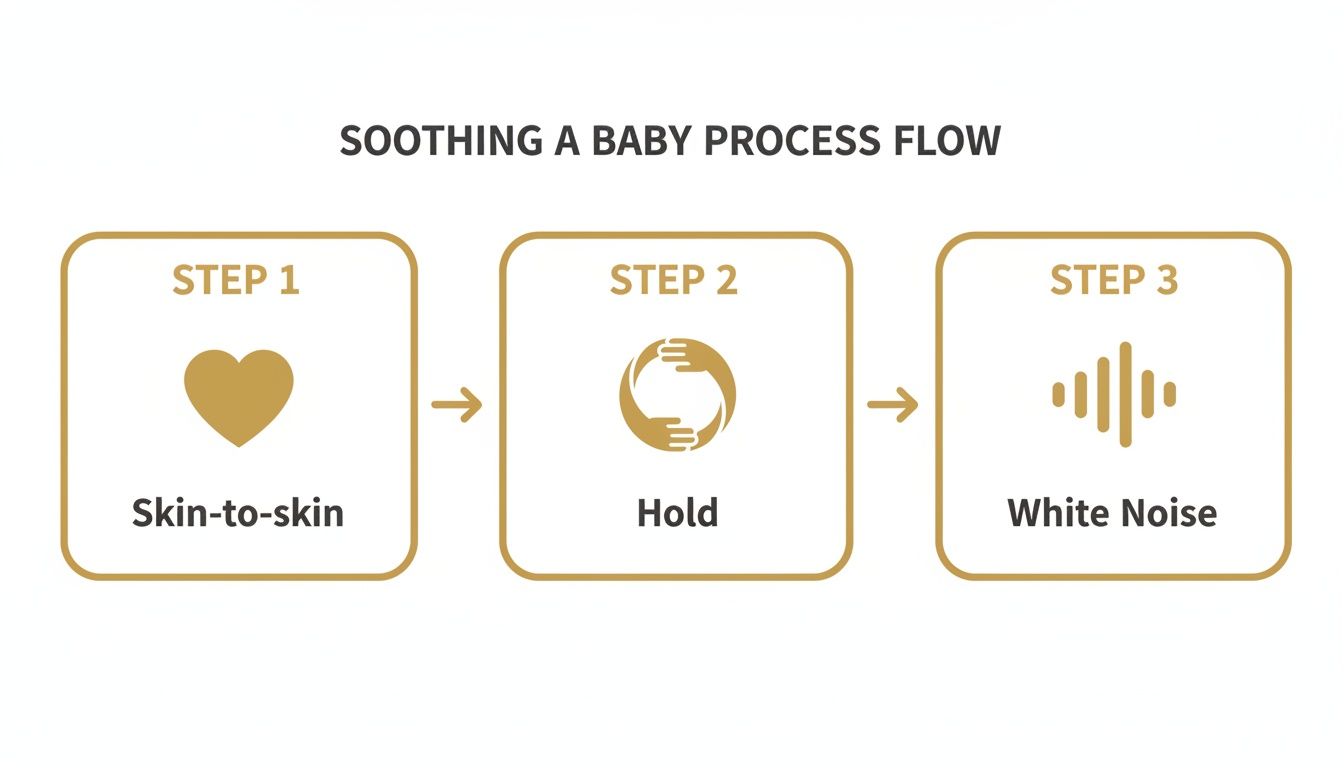
- White Noise: The womb is surprisingly loud. A white noise machine, a fan, or even a consistent ‘shushing’ sound can mask jarring household noises and lull them into a state of calm.
- Sucking: Sucking is a powerful, innate reflex that helps infants self-soothe. A dummy, a clean finger, or comfort nursing can be incredibly effective at calming a fussy baby.
Getting these basics right is your first big win. If you're looking for more ways to prepare, a qualified nanny or newborn care specialist can provide a wealth of practical advice to help you feel more confident.
When You Might Need Expert Support
Sometimes, the challenge of settling a newborn is layered with other complexities. According to the NHS, around 1 in 7 babies in the UK require some form of neonatal care each year, often due to prematurity or a difficult start. This is a situation where expert settling strategies become absolutely essential, right from day one.
These early days are critical for infant wellbeing and parental confidence. This is precisely where a specialist can be invaluable. A Superstar Nannies newborn care specialist or maternity nurse has extensive experience in these scenarios, using gentle, evidence-based methods to bring calm to your home and, just as importantly, build your own confidence as a new parent.
The Art of Soothing Your Newborn
The first step in settling a crying baby isn’t just running through a checklist of hunger or a wet nappy. It’s learning to become a true detective of their needs. The most profound shift for new parents happens when they truly grasp what we call the ‘fourth trimester’.
For the first three months of their life, your baby is on a massive journey of adjustment. They’ve gone from the warm, dark, constantly moving world of the womb to a place that’s bright, still, and often overwhelmingly stimulating. The secret to soothing them? Recreating that familiar, secure feeling of the world they’ve just left behind.
Learning to Read Your Baby’s Cues
Beyond the obvious, your baby’s fussiness is a form of communication. Tuning into their subtle cues is what allows you to respond with confidence, building a powerful bond based on trust.
One of the most common culprits our nannies see is trapped wind. This often leads to sharp, intense crying spells where a baby might pull their legs up towards their chest or arch their back. There’s a particular hold that works wonders for this.
- The 'Tiger in the Tree' Hold: We teach this to almost every family we work with. You simply lay your baby tummy-down along your forearm, with their head resting in the crook of your elbow and your hand cupping their nappy area. The gentle pressure on their abdomen is often enough to help release that trapped gas and bring near-instant relief.
Another incredibly effective, yet simple, tool is skin-to-skin contact. The warmth from your body, the sound of your heartbeat, and your unique scent are powerfully regulating for a newborn's nervous system. It lowers stress hormones (for both of you!), helps stabilise their breathing, and makes them feel profoundly safe.
A key piece of advice we always give: you cannot spoil a newborn with too many cuddles. Answering their call for closeness is absolutely fundamental to their emotional development. It builds the secure attachment that forms the very foundation for their future confidence and independence.
Navigating the Dreaded ‘Witching Hour’
Many parents dread the late afternoon or early evening. It’s that time when their otherwise calm baby suddenly becomes inconsolably fussy, and it’s often dubbed the 'witching hour'. This isn't just a myth; it's usually a clear sign your baby is overstimulated from the day. But it's not something you have to passively endure.
When your baby is crying like this, having a toolkit of proven strategies is vital for bringing them back to a state of calm.
The best way to manage this period is to think ahead. Try reducing stimulation an hour or two before the fussiness typically kicks in.
- Dim the lights around the house.
- Turn off the television and switch to quiet, gentle music or silence.
- Avoid a game of 'pass the parcel' with the baby.
- Instead, opt for quiet, calming activities like gentle rocking or a warm bath.
The Power of Womb-Like Sounds
The womb is a surprisingly noisy place, filled with the constant whoosh of blood flow and the rhythmic thump of a heartbeat. For a newborn, a perfectly silent room can actually feel quite unsettling. This is where white noise becomes an indispensable part of your settling toolkit.
A good white noise machine does more than just make a sound; it replicates those low, rumbling frequencies of the womb. It creates a consistent auditory backdrop that masks sudden household noises—a dropped spoon, a dog barking—that might otherwise startle your baby awake. The key is to play it continuously at a volume similar to a running shower.
While it's a simple tool, using it safely is paramount. It’s always wise to ensure you're up-to-date on the latest safety practices, which is why we encourage parents and caregivers to complete a paediatric first aid course for total peace of mind.
Creating the Ideal Environment for Newborn Sleep
The room where your baby sleeps has a profound influence on their ability to settle and rest. A thoughtfully prepared nursery isn't just about decor; it's one of the most powerful tools you have for signalling to your baby that it’s time for sleep. Getting this sanctuary right is a foundational step in learning how to settle a newborn for more predictable, restful nights.
Think of it as gently easing your baby from the world of the womb into their new one. We want to replicate that dark, calm, and consistently comfortable space to help their brand-new circadian rhythm—the internal clock governing sleep—begin to take shape. By carefully managing light, sound, and temperature, you provide the clear, consistent cues that guide them towards sleep.
Mastering the Sleep Essentials: Dark, Cool, and Quiet
For a newborn, a truly dark room is non-negotiable. Their sleep cycles are incredibly short, and even a sliver of light filtering through can be enough to tell their brain it's 'wake up time,' cutting a much-needed nap short. This is just as important during the day as it is at night.
- Darkness: Your goal should be pitch black. We always tell clients, if you can see your hand in front of your face, it’s not dark enough. Invest in high-quality blackout blinds or even temporary travel blinds to completely eliminate outside light. This darkness triggers the brain to produce melatonin, the all-important sleep hormone.
- Temperature: A cool room is vital for both comfort and safety. The NHS recommends maintaining a room temperature between 16-20°C. A simple room thermometer is an absolute must-have for any nursery.
- Sound: Newborns are not used to silence. A white noise machine is brilliant for replicating the constant, low-rumbling sounds of the womb. It works wonders to mask sudden household noises—a doorbell, a dog barking—that can otherwise startle a baby awake.
These simple, womb-like comforts create a powerful foundation for calm, helping to guide your baby from a state of distress to deep relaxation.
The Art and Science of Swaddling
From our first day as professional nannies, we realised that swaddling isn't just an old-fashioned tradition; it’s a game-changer. It beautifully recreates the snug, secure feeling of being held in the womb. Crucially, it also suppresses the Moro (or startle) reflex. This is that involuntary arm-flailing reflex that can easily jolt a baby awake, but a secure swaddle keeps them contained, leading to much longer, more peaceful stretches of sleep.
Of course, getting the technique right is paramount for safety. The wrap should feel snug around their arms but must remain loose around the hips and legs to allow for natural movement and healthy hip development. And remember, a swaddled baby must always be placed on their back to sleep.
A common mistake we see parents make is giving up on the swaddle too quickly. An overtired baby might fight being wrapped at first, but this is often the very sign that they need it most. Persevere gently—it can make all the difference.
You must stop swaddling as soon as your baby shows any signs of trying to roll over, which can happen as early as two months. At that point, it’s time to transition to a baby sleeping bag that keeps them warm while allowing their arms to be free.
Choosing the Right Sleep Environment for Your Newborn
Just as important as the room's atmosphere is where your baby sleeps. For the first six months, all expert guidance agrees: the safest place is their own separate sleep space, in the same room with you. This practice is one of the most significant factors in reducing the risk of Sudden Infant Death Syndrome (SIDS).
Choosing that sleep space often comes down to your home, your lifestyle, and what feels right for your family. Here’s a breakdown of the most common options we help families navigate.
| Sleep Space | Key Safety Considerations | Best For | Superstar Nanny Tip |
|---|---|---|---|
| Co-Sleeper/Bedside Cot | Must attach securely to the adult bed with absolutely no gaps. The mattress must be firm, flat, and kept clear of all adult bedding. | Families wanting their baby within arm's reach for night feeds while maintaining a separate, safe sleep surface. | An excellent choice for mothers recovering from a C-section, as it minimises the need to bend and lift the baby during the night. |
| Moses Basket | Lightweight and portable. Always ensure the mattress is firm, flat, and brand new for your baby. Stop using it once the baby can pull themselves up. | The first 3-4 months, offering the flexibility to have the baby nap safely in different rooms around the house. | The small, contained size provides a cosy, womb-like feel that many newborns find incredibly comforting and settling. |
| Cot or Cot Bed | Must meet current UK safety standards (BS EN 716) with correctly spaced bars. The mattress must be firm, clean, and fit snugly with no gaps at the edges. | Long-term use from birth right up to toddlerhood. It provides a consistent sleep environment as your child grows. | Start with the mattress on its highest setting for easy access to your newborn. Lower it as soon as your baby can sit up, and again when they start to stand. |
Ultimately, creating a secure and comfortable sleeping space is a cornerstone of safe baby care. You can find excellent, detailed guidance on how to create a safe sleep environment for infants from trusted specialists.
The golden rule is simple but non-negotiable: the safest sleep surface is always firm, flat, and completely clear of pillows, duvets, bumpers, and soft toys.
The Connection Between Feeding and Settling

For a newborn, feeding and settling are two sides of the same coin. It’s a simple truth we’ve seen play out in countless homes: a hungry baby won’t sleep, and an overtired, fussy baby won’t feed well. Grasping this interplay is the first real step toward establishing a peaceful rhythm in your home.
Many new parents find themselves caught in a frustrating loop. The baby cries, so they offer a feed, but the baby just fusses at the breast or bottle, and the crying simply continues. This isn't a sign you're doing anything wrong; it's your baby's way of telling you to look closer at the how of feeding, not just the what. A successful feed isn’t just about milk—it’s about creating a calm, comfortable experience.
Decoding Hunger Cues vs Comfort Needs
One of the first skills our nannies teach new parents is how to tell the difference between genuine hunger and a baby’s deep-seated need for comfort. A newborn's powerful sucking reflex is used for both, and it's easy to misread the signs. Offering a full feed when all they need is to comfort-suck can lead to overfeeding, which then causes trapped wind and even more fussiness.
Before the tears start, look for these early, subtle hunger cues:
- Rooting: Your baby will turn their head and open their mouth, actively searching for the nipple.
- Sucking motions: You might see them making little sucking movements with their mouth or bringing their fists up to their face.
- Restlessness: They’ll start to get a bit wriggly and more alert.
Crying is actually a late sign of hunger. By responding to these earlier cues, you create a much calmer, more positive feeding experience for everyone. If your baby has been fed within the last hour or two but is still unsettled, they are likely looking for comfort, not calories. This is the perfect time to offer a dummy or even a clean little finger to suck on.
A key insight for new parents is that a feed doesn't 'fail' if the baby only takes a small amount and then settles. Sometimes, that small top-up or the comfort of closeness is all they needed to drift off peacefully.
Techniques for Comfortable Bottle Feeding
If you're bottle-feeding, how you offer the bottle is just as important as what's in it. When a baby gulps milk down too quickly, they inevitably swallow air, leading to painful gas and reflux. This makes settling for sleep almost impossible. This is where paced bottle-feeding can be a complete game-changer.
This technique is designed to mimic the natural, slower flow of breastfeeding, putting your baby firmly in control.
- Hold your baby upright: Rather than lying them flat, support your baby in a more upright, seated position on your lap.
- Keep the bottle horizontal: Tilt the bottle just enough to fill the teat with milk. This encourages your baby to suck actively to draw the milk out, preventing it from flooding their mouth.
- Take frequent breaks: Every 20-30 sucks, gently tip the bottle down to pause the flow of milk. This gives your baby a moment to breathe and helps them register their own fullness cues, preventing them from taking in too much, too fast.
Adopting this simple method can dramatically reduce the fussiness that so often follows a feed, making the transition to sleep a much smoother one.
The Importance of Effective Winding
Whether breastfed or bottle-fed, every baby swallows some air. That trapped wind is one of the most common culprits behind newborn distress—you’ll recognise it by the sharp cries, arched back, and legs pulled up to the tummy. Mastering a few good winding techniques is non-negotiable.
- Over the Shoulder: The classic for a reason. Make sure your baby's tummy is resting gently against your shoulder to create light pressure.
- Sitting Up: Sit your baby on your lap, using one hand to support their chin and chest while you firmly pat or rub their back with the other.
- Across the Lap: Lay your baby tummy-down across your knees, ensuring their head is supported and slightly higher than their chest.
Don’t rush it; sometimes it takes a good few minutes for a stubborn bubble to come up. It’s also wise to wind your baby midway through a feed, not just at the end. For babies prone to reflux, keeping them upright for 20-30 minutes after each feed is crucial for comfortable digestion.
This expert attention to detail during feeding makes a profound difference. With over 90,000 babies admitted to neonatal units in the UK each year, often for issues where settling is a major challenge, skilled support is vital. As noted by the UK charity Bliss, these situations are incredibly stressful for families. Our nannies excel in these environments, using proven methods to solve feeding and sleep disturbances. A professional like a maternity nurse can implement these strategies from day one, offering immense relief. Our detailed guide on what is a maternity nurse explains exactly how their expertise can transform your postnatal experience.
When to Seek Professional Newborn Support
Even with all the best techniques in your toolkit, there are times when the most powerful thing you can do for your family is to call in an expert. It’s not about admitting defeat; it’s a strategic choice to protect your wellbeing and get your family off to the best possible start.
Learning how to settle a newborn is a steep learning curve. When you’re also recovering from birth, managing a household, or looking after older children, it can feel completely overwhelming. Professional support is designed to lift that weight, giving you not just immediate relief but also expert guidance that builds your confidence for the months ahead.
Understanding the Different Types of Newborn Support
When you decide to bring in a specialist, it helps to know who does what. The roles are often talked about interchangeably, but they are quite distinct and serve different family needs. Choosing the right one is key to getting the support you actually need.
- Maternity Nurse: Think of a maternity nurse as your live-in expert for the first few weeks or months. They typically provide 24-hour support, helping you establish brilliant feeding and sleeping routines while also looking after both mother and baby. It's a complete, wrap-around service.
- Newborn Care Specialist (NCS): An NCS is intensely focused on the baby. They are trained in every aspect of newborn care and often work overnight or on flexible daytime schedules. Their expertise lies in feeding, changing, sleep conditioning, and troubleshooting common issues like reflux and colic.
- Night Nanny: As the name suggests, a night nanny’s primary role is to manage the nights, allowing exhausted parents to get vital, uninterrupted sleep. They will handle all the feeds, nappy changes, and resettling, so you can wake up feeling human again.
While each role is different, the goal is always the same: to bring a sense of calm, order, and deep-seated expertise into your home during a time of huge change.
Scenarios Where Expert Help Is a Game-Changer
Any new family can find enormous value in professional support, but in some situations, it's nothing short of essential. If you recognise your family in any of these scenarios, bringing in a specialist could completely transform your postnatal experience.
Consider hiring an expert if you are:
- Parents of Multiples: The reality of caring for twins or triplets is logistically and physically immense. An extra pair of skilled hands isn’t a luxury; it’s often crucial for making sure each baby gets the attention they need.
- Recovering from a Difficult Birth: A challenging delivery or a C-section demands significant physical recovery. Having a professional manage the nights allows a mother to heal properly, without the compounding exhaustion of sleep deprivation.
- Lacking a Local Support Network: For families living far from relatives, particularly those in global hubs like Dubai or London, a newborn care specialist can become that trusted, on-the-ground support system you’re missing.
- Needing to Establish Routines Quickly: If you're a busy professional or have other children to care for, you may need to get a predictable routine in place fast. An expert can gently implement an effective structure in a matter of weeks, a process that can otherwise take months of trial and error.
The value here goes far beyond just catching up on sleep. It's about having an expert partner by your side, offering reassurance, evidence-based advice, and the hands-on help that allows you to truly enjoy those precious first few weeks with your baby.
At Superstar Nannies, we specialise in understanding the unique needs of discerning families. We pride ourselves on our discreet, bespoke matching process, ensuring the professional you welcome into your home aligns perfectly with your family’s lifestyle and values.
Whether you need the 24/7 care of a maternity nurse or the targeted relief of overnight support, we connect you with rigorously vetted experts who bring peace of mind. To explore how this could work for your family, you might find our guide on the benefits of night nurses for newborns helpful.
Frequently Asked Questions About Settling a Newborn
As you get to know your new baby, it’s completely normal for questions to pop up—often in the middle of the night! We’ve been supporting families through this stage for years, and we tend to hear the same concerns time and again. Here are our insights into some of the most common queries we receive.
How Long Does It Take for a Newborn to Self-Settle?
The truth is, genuine self-settling is a skill that comes much later, usually around the 4-6 month mark. In these first three months, the goal isn't independence; it's what we call ‘co-regulation’. This is where you actively teach your baby how to feel calm and secure.
Every time you swaddle, rock, or shush your baby to sleep, you aren't just getting them to sleep now—you're building their internal library of what 'calm' feels like. You're creating a secure attachment that forms the foundation for independent sleep skills down the line. When the time is right, a Newborn Care Specialist can help you gently guide your baby toward this next milestone without any stress.
Can I Spoil My Newborn by Holding Them Too Much?
Let us be perfectly clear: it is absolutely impossible to spoil a newborn. Responding to their cries with a cuddle isn't creating a bad habit; it's meeting a fundamental biological need.
Physical closeness builds trust and security, which is vital for their emotional and neurological development. It actually helps regulate their heart rate, breathing, and temperature. This is why baby-wearing with a quality sling or carrier is such a brilliant strategy. It keeps your baby feeling safe and connected while giving you your hands back.
My Newborn Is Extra Fussy in the Evenings—What Can I Do?
Ah, the infamous ‘witching hour’. This period of intense fussiness, usually in the late afternoon or evening, is incredibly common. It’s not your baby being difficult; their little nervous system is simply overloaded after a full day of sights, sounds, and stimulation.
The key is to get ahead of it. Try winding things down before the fussiness typically begins.
- Dim the lights and turn down the television or music.
- Avoid a game of ‘pass the baby’ with well-meaning visitors.
- A warm bath followed by a gentle infant massage can work wonders to reset their system.
- Don’t be surprised if they want to feed more often—this is called cluster feeding, and it’s a perfectly normal and effective comfort strategy.
This is often the time of day when parents feel most depleted. A Night Nanny can be an absolute game-changer, stepping in with expert settling techniques to soothe your baby while you take a much-needed break.
What Is the Difference Between a Maternity Nurse and a Night Nanny?
While both roles provide invaluable newborn support, they are designed to meet different needs. Think of a Maternity Nurse as a comprehensive, live-in project manager for the first few months. They typically offer 24-hour support, helping establish robust feeding and sleep routines, supporting the mother's postnatal recovery, and empowering you with the skills to feel confident.
A Night Nanny, on the other hand, is a specialist with a laser focus on overnight care. They arrive in the evening and handle every feed, change, and settle, allowing parents to get the deep, restorative sleep they need to function at their best. If you're unsure which is right for you, we at Superstar Nannies can consult with you to help pinpoint the perfect support for your family's unique situation.
Conclusion: Your Journey to a Settled Baby
Learning how to settle a newborn is a marathon, not a sprint. It’s a journey of patience, love, and responsiveness. By understanding your baby’s needs, recreating the comfort of the womb, and creating a calm environment, you build a powerful foundation for peaceful days and nights. Remember to be kind to yourself during this "fourth trimester" and never hesitate to seek expert help when you need it.
Navigating the newborn stage is a profound journey, and you don’t have to do it alone. If you're seeking expert guidance and hands-on support to bring calm and confidence into your home, Superstar Nannies is here to help. Contact us today to find the perfect maternity nurse or newborn care specialist for your family.